
Written by: MedLifeGuide Clinical Editorial Team | Medically Reviewed by: Dr. Adam N. Khan, M.D. (Licensed Internal Medicine Physician) | Last Updated: November 2026
| QUICK CLINICAL ANSWER: FLU A SYMPTOMS RETURNING ON DAY 71. It Is a Classic Triage Signal, Not Routine Recovery: When Influenza A fever breaks on Days 4 or 5 and then spikes back above 100.4°F (38.0°C) with a heavier cough on Day 7, clinicians treat it as a secondary bacterial infection (such as post-flu pneumonia, strep throat, sinusitis, or an ear infection) until proven otherwise.2. Benign Viral Rebound Exists, but Looks Milder: A true biphasic viral fever can cause a brief second temperature bump lasting 12 to 36 hours, especially in children and occasionally in adults, yet breathing remains steady, oxygen stays normal, and energy rebounds quickly once that short wave passes.3. Do Not Blame “Tamiflu Rebound”: Unlike COVID-19 Paxlovid rebound, worsening fever and chest symptoms after finishing oseltamivir (Tamiflu) or baloxavir (Xofluza) rarely stem from harmless antiviral bounce and warrant same-day medical evaluation. |
| EMERGENCY SAFETY WARNING: WHEN TO GO STRAIGHT TO THE ERDo not wait for an outpatient appointment if returning flu symptoms occur alongside difficulty breathing at rest, rapid shallow breathing (over 24 breaths per minute in adults), sharp chest pain or pressure when inhaling, pulse oximeter readings below 92% on room air, bluish lips or fingernails, sudden dizziness, confusion, extreme drowsiness, or inability to keep fluids down. Call 911 (or your local emergency number) or go to the nearest emergency department immediately. |
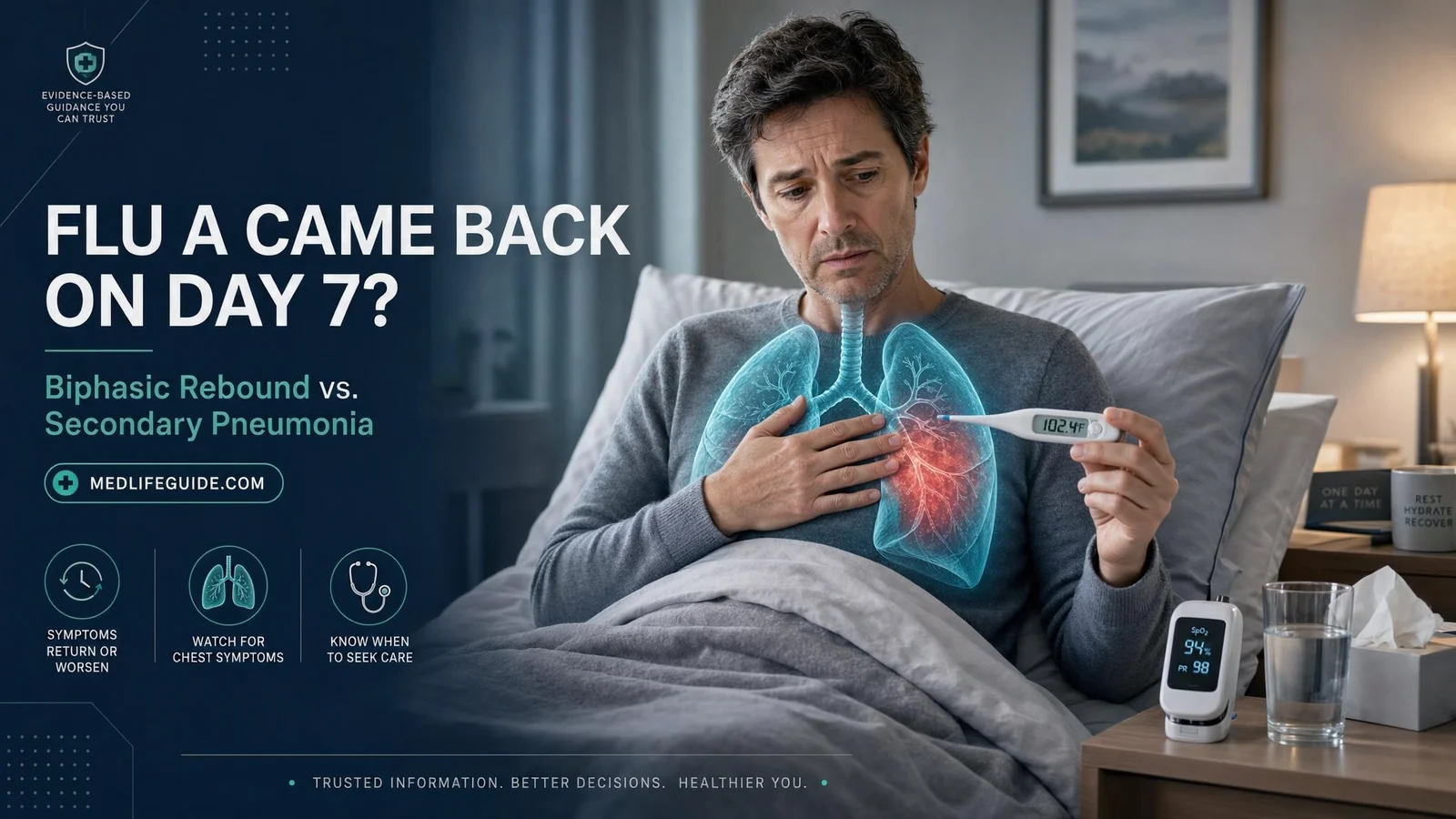
Few moments in an illness feel more alarming than waking up on Day 7 of Type A flu with shaking chills and a fresh 102°F fever after you already spent two days feeling human again. On Day 4 or Day 5, your initial fever broke. Your muscle aches eased, you ate a real meal, and you may have answered work emails or folded laundry, convinced the worst was behind you. When flu a symptoms came back day 7 rebound or pneumonia immediately becomes the urgent question on your mind, that instinct deserves serious clinical respect.
In internal medicine and emergency triage, a fever and cough that improve for 24 to 48 hours and then return worse around Day 6 to Day 8 have a specific clinical nickname: “double sickening.” Both the Centers for Disease Control and Prevention and the Infectious Diseases Society of America classify this pattern as a primary warning sign of secondary bacterial superinfection, most notably post-influenza bacterial pneumonia. At the same time, not every Day 7 setback is pneumonia. A smaller share of patients experience a brief, self-limited biphasic viral fever, an upper-airway bacterial infection such as strep throat or acute sinusitis, or an exhaustion crash triggered by returning to normal activity while fever reducers were still masking low-grade inflammation.
Sorting those possibilities requires looking past single symptoms like mucus color or fatigue and examining your fever curve, breathing mechanics, antiviral history, and resting vital signs.
Can Flu A Symptoms Come Back on Day 7, or Is It a New Complication?
During an uncomplicated Influenza A infection in a healthy adult, viral replication in the upper respiratory tract peaks between 48 and 72 hours after symptoms start. High fever, headache, and deep muscle pain dominate Days 1 through 4. By Day 5, adaptive immune antibodies and cytotoxic T cells clear most infectious virus particles, allowing body temperature to settle back below 100.0°F (37.8°C) even while a dry, ticklish airway cough and post-viral fatigue linger for another one to two weeks.
When that downward recovery curve abruptly reverses on Day 7, one of three distinct biological processes is usually responsible:
- Secondary Bacterial Pneumonia or Upper-Tract Superinfection: Influenza A strips away the protective cellular lining of your airways. Bacteria that normally sit harmlessly in your nose and throat seize that opening around Days 5 to 8, sparking a brand-new bacterial infection in the lungs, sinuses, middle ear, or throat.
- Benign Biphasic Influenza Fever: A two-humped temperature pattern caused by a late inflammatory cytokine wave or residual viral clearance, seen most often in children and occasionally in adults, without bacterial invasion of the lung air sacs.
- Physiological Decompensation or Sequential Co-Infection: Either pushing physical exertion too early while dehydrated and medicated, or catching a second circulating respiratory virus (such as RSV, COVID-19, or Influenza B) while mucosal immunity is temporarily depleted.
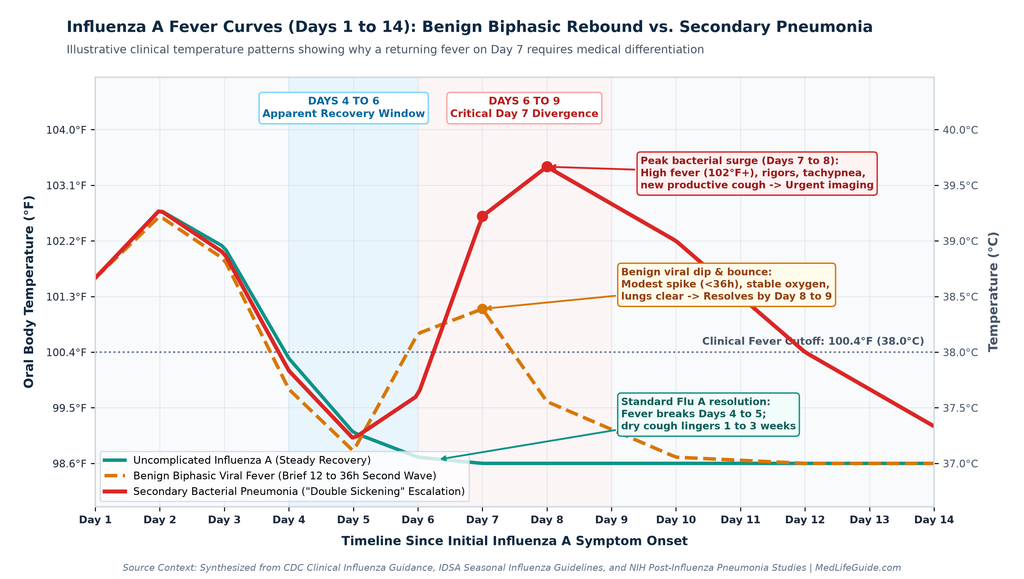
Biphasic Viral Rebound vs. Secondary Pneumonia: How Clinicians Tell Them Apart
Online health articles often swing to extremes. Some claim that any returning flu symptom simply means you skipped a nap, while others state that viral flu relapse does not exist at all. Published clinical surveillance tells a more accurate story.
Observational fever-curve studies published in the Journal of Medical Virology and pediatric neuraminidase-inhibitor trials tracked via the National Library of Medicine document that benign biphasic fever occurs in roughly 7% to 12% of children with Influenza A (and up to 19% to 40% in Influenza B), with occasional cases in adults. Crucially, in confirmed benign biphasic viral fever, the second temperature spike is typically modest and short, lasting a median of roughly 13.5 hours and rarely exceeding 36 to 48 hours. During that brief bounce, resting oxygen levels stay normal, breathing remains unlabored, and the patient feels noticeably clearer the very next day without antibiotics.
Secondary bacterial pneumonia follows a steeper, uglier trajectory. In a hospital cohort analysis of laboratory-confirmed community-acquired influenza published in BMC Infectious Diseases (archived on PubMed Central), 14.4% of hospitalized adult influenza patients developed secondary bacterial pneumonia, with a median onset of 8.0 days after their first flu symptom began, and secondary bacterial pneumonia more than tripled in-hospital mortality risk (cause-specific hazard ratio 3.38). Rather than peaking briefly and fading, bacterial pneumonia builds momentum hour by hour: fever climbs higher, shaking chills (rigors) return, resting breathing speeds up, and the cough shifts deeper into the chest.
| Clinical Feature | Benign Biphasic Viral Rebound | Secondary Bacterial Pneumonia | Post-Flu Strep, Sinus, or Ear Infection |
|---|---|---|---|
| Typical Timing | Day 5 to Day 7 after a 24 to 36 hour fever-free dip. | Day 5 to Day 10 (peak onset Days 6 to 8) after initial flu improvement. | Day 5 to Day 10 as nasal and Eustachian tube swelling traps fluid. |
| Second Fever Pattern | Low to moderate (100.4°F to 101.5°F / 38.0°C to 38.6°C); resolves within 12 to 36 hours. | Often abrupt and high (101.8°F to 104.0°F / 38.8°C to 40.0°C), or abnormally low/absent in adults over 65. | Moderate to high (100.5°F to 102.5°F); persists past 24 to 48 hours until treated. |
| Cough & Sputum | Same dry or mildly productive throat/airway cough you already had. | Sudden shift to deeper, painful, relentless cough; may produce thick rust, dark yellow, or green sputum. | Cough often triggered by postnasal drip when lying flat rather than deep lung congestion. |
| Breathing & Oxygen | Normal resting rate (12 to 18 breaths/min in adults); SpO2 95% to 100%. | Fast or labored breathing (>20 to 24 breaths/min); SpO2 may drop below 94% at rest or when walking. | Normal lung oxygenation and normal resting breathing rate. |
| Chest vs. Head Pain | Mild generalized rib soreness from days of coughing. | Sharp, stabbing one-sided chest or upper back pain when taking a deep breath (pleuritic pain). | Throbbing one-sided cheek/forehead pain when leaning forward, severe earache, or razor-like sore throat. |
| Right Clinical Action | Medical check if fever exceeds 24 hours or host is high-risk; supportive rest and hydration. | Urgent same-day medical exam, lung imaging (X-ray or ultrasound), and targeted prescription antibiotics. | Same-day outpatient or urgent care visit for rapid strep swab, ear exam, or sinus evaluation. |
Why Day 7 Is the Biological Flashpoint After Influenza A
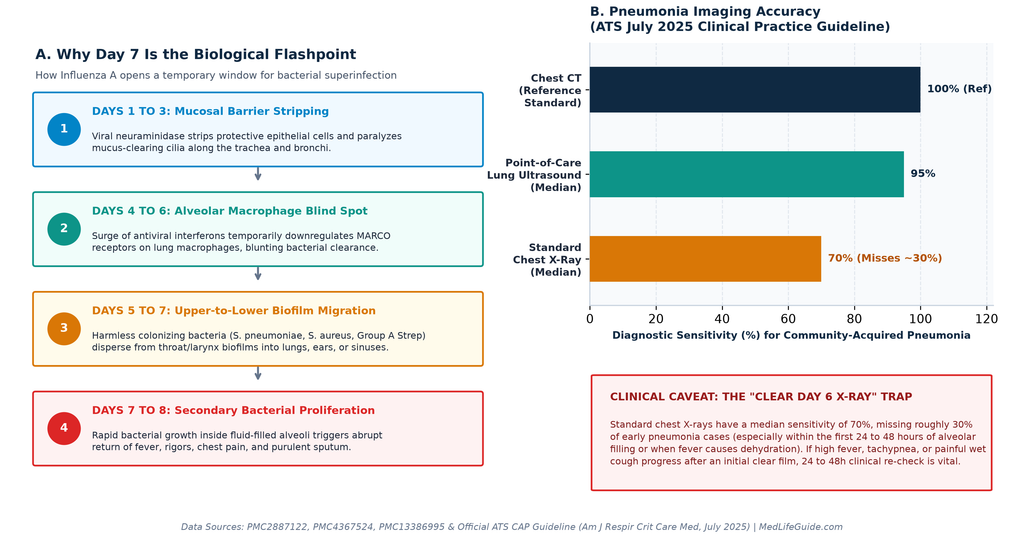
Patients are often puzzled by why a bacterial lung infection would wait a full week to strike instead of starting on Day 1. Translational immunology research from the National Institutes of Health and respiratory pathology reviews show that Influenza A methodically dismantles three layers of lung protection over five to seven days, creating a narrow window of maximum bacterial vulnerability right around Day 7.
1. Physical Stripping of the Mucociliary Escalator (Days 1 to 3)
Healthy airways are lined with microscopic hair-like cilia that beat upward continuously, sweeping inhaled bacteria out of your bronchial tubes before they ever reach delicate lung air sacs (alveoli). Influenza A uses its surface enzyme, neuraminidase, to cleave sialic acid receptors and strip away sheets of ciliated epithelial cells. That raw, denuded tissue exposes basement-membrane proteins like fibrin and collagen, which act like Velcro for invading bacteria.
2. The Interferon Macrophage Blind Spot (Days 4 to 6)
Around Days 4 to 6, your immune system floods the lungs with Type I and Type II interferons (especially interferon-gamma) to shut down viral replication. That antiviral surge breaks your initial flu fever, making you feel much better. Paradoxically, peer-reviewed studies indexed in PubMed Central demonstrate that high interferon-gamma temporarily downregulates a scavenger receptor called MARCO on alveolar macrophages and impairs neutrophil phagocytosis. For a few critical days, your lungs become triumphant against the virus yet temporarily half-blind against bacteria.
3. Upper-Airway Biofilm Dispersion Into the Lungs (Days 5 to 8)
Many healthy children and adults quietly carry bacteria such as Streptococcus pneumoniae, Staphylococcus aureus (including methicillin-resistant MRSA strains), Haemophilus influenzae, or Group A Streptococcus (Streptococcus pyogenes) in harmless upper-throat biofilms. Experimental respiratory research published in 2026 shows that Influenza A infection destabilizes commensal Streptococcus pneumoniae biofilms in the larynx, triggering rapid bacterial proliferation and downward migration into bronchoalveolar fluid that peaks sharply by Day 7. Once those bacteria multiply inside fluid-filled alveoli, the body launches an intense second inflammatory alarm, producing the sudden Day 7 fever crash.
Did Tamiflu or Xofluza Cause a Flu Rebound? Separating COVID Myths From Influenza Data
Since the widespread use of Paxlovid for COVID-19, millions of patients have learned the phrase “antiviral rebound.” If you started oseltamivir (Tamiflu) on Day 1 or Day 2, finished your last capsule on Day 5 or Day 6, and spiked a new fever on Day 7, blaming a harmless “Tamiflu rebound” feels completely logical. Clinically, however, assuming your fever is just an antiviral bounce can delay vital treatment.
Randomized controlled trials of oseltamivir published in JAMA found no surge of viral shedding rebound upon stopping the 5-day regimen in healthy adults. In smaller sequential-sampling pediatric studies published in the Journal of Infectious Diseases, minor transient rebounds in viral titers occurred in roughly 13% to 15% of wild-type Influenza A infections treated with either baloxavir or oseltamivir, yet those laboratory blips rarely produced a dramatic second high fever.
With single-dose baloxavir marboxil (Xofluza), clinical trials including CAPSTONE-1, CAPSTONE-2, and recent pediatric comparative studies noted that polymerase acidic protein substitutions (PA/I38X variants) can emerge around Day 5, particularly in young children with low baseline influenza antibody levels. While PA/I38X variants can prolong infectious viral shedding and modestly slow final symptom resolution, clinical investigators found no consistent pattern of severe high-fever relapse driven by the drug itself.
Most importantly, Recommendation 25 of the Infectious Diseases Society of America seasonal influenza clinical practice guidelines states directly that clinicians should investigate and empirically treat bacterial coinfection in patients who deteriorate after initial improvement, particularly in those treated with antivirals. If you completed antiviral therapy, felt substantially better, and now feel sicker on Day 7, treat that shift as a prompt for medical examination rather than waiting out an assumed medication rebound.
| Treatment Scenario | Mechanism & Dosing | True Virologic Rebound Profile | What a Day 7 Fever Return Usually Means |
|---|---|---|---|
| Oseltamivir (Tamiflu) | Neuraminidase inhibitor; taken twice daily for 5 days (blocks release of new virus particles). | Low clinical rebound rate; landmark adult RCTs showed no viral shedding spike after Day 5 completion. | High clinical suspicion for secondary bacterial infection (pneumonia, sinusitis, otitis, strep) rather than drug rebound. |
| Baloxavir Marboxil (Xofluza) | Cap-dependent endonuclease inhibitor; single oral dose (halts viral RNA replication early). | Treatment-emergent PA/I38X variants around Day 5 can cause transient viral titer bounce (mainly in children), prolonging mild symptoms. | Mild lingering congestion can reflect prolonged viral clearance, but a new high fever or worsening cough still requires ruling out bacterial superinfection. |
| No Antiviral Taken | Natural innate and adaptive immune clearance over 5 to 7 days. | Roughly 7% to 12% of pediatric Flu A cases (fewer adults) show a brief 12 to 36 hour benign biphasic fever. | If fever exceeds 24 to 36 hours or occurs with fast breathing, chest pain, or purulent cough, evaluate promptly for secondary pneumonia. |
Four Overlooked Reasons Flu Symptoms Flare on Day 7 Besides Pneumonia
When patients walk into urgent care on Day 7 terrified of pneumonia, clinicians frequently find clear lungs on exam and uncover one of four alternative culprits instead.
1. Strep Throat, Acute Bacterial Sinusitis, or Middle Ear Infections
Viral inflammation swells the narrow drainage passages of your sinuses and Eustachian tubes. By Day 7, trapped mucus behind the cheekbones, forehead, or eardrum can turn into acute bacterial rhinosinusitis or acute otitis media, spiking a fresh 101°F to 102°F fever even when the lungs are completely clear. Understanding how post-viral sinus infections evolve helps explain why severe one-sided facial pressure or pain in your upper teeth when bending forward points upward rather than into the chest. Similarly, Group A Streptococcus frequently colonizes raw upper-airway tissue right after Influenza A; many patients with a Day 7 returning fever and clear lungs test positive on a rapid throat swab for strep pharyngitis.
2. Antipyretic Masking and the Day 5 Premature Exertion Trap
Many adults take scheduled ibuprofen or acetaminophen every six hours through Day 4, wake up with a normal temperature on Day 5, and immediately jump back into long work shifts, heavy housework, or a jog to “sweat it out.” Uncontrolled fever-reducer use can mask smoldering inflammation, and if you manage hypertension or heart disease, choosing safe cold and flu medications for high blood pressure matters just as much because oral decongestants like pseudoephedrine or phenylephrine can spike blood pressure and heart rate. Even more seriously, intense exercise before systemic viral inflammation resolves increases mechanical and viral stress on heart muscle tissue, raising the risk of viral myocarditis. If returning symptoms feature crushing fatigue, chest tightness, or a racing pulse out of proportion to your temperature, stop all exertion and get evaluated.
3. Cumulative Dehydration and Acute Kidney Stress
Six days of fever sweats, rapid breathing, poor appetite, and frequent nonsteroidal anti-inflammatory drug (NSAID) doses like ibuprofen or naproxen quietly deplete intravascular fluid volume. By Day 7, moderate dehydration can trigger throbbing headaches, extreme weakness, dizziness upon standing, dark amber urine, and even dehydration-related acute kidney injury in vulnerable adults. Patients often interpret that sudden wave of clammy dizziness as “the flu coming back,” when their circulatory system and kidneys urgently need electrolyte rehydration and a pause on NSAIDs.
4. Back-to-Back Viral Co-Infection
During peak winter respiratory months, Influenza A circulates simultaneously alongside Influenza B, RSV, adenovirus, and SARS-CoV-2. Testing positive for Flu A last Tuesday does not shield you from picking up COVID-19 or RSV in a waiting room or household days later. Reviewing symptoms of COVID-19 versus flu shows how closely these illnesses overlap, which is why clinics frequently run a multiplex PCR swab on Day 7 when fever returns.
What Real Patients Report During Day 7 Flu Setbacks
Reviewing hundreds of public illness timelines shared by patients and parents on health forums such as Reddit (including r/flu and r/toddlers) and Quora reveals three recurring real-world blind spots that catch families off guard during Influenza A recovery:
| DOCUMENTED PATIENT TIMELINE PATTERNS FROM PUBLIC HEALTH FORUMSPattern 1. The “Day 6 Workout or Shift-Work Crash”: Multiple adult posters in r/flu describe feeling 85% recovered on Day 5 or Day 6 after two fever-free days, returning to shift work or going for a short run to clear brain fog, and spiking a 103°F to 105°F fever that same night, followed days later by a confirmed diagnosis of acute bronchitis or pneumonia.Pattern 2. Expecting Pneumonia, Finding Strep or Ear Infection: In widely discussed parent threads on r/toddlers, caregivers rushing children to the clinic for a sudden Day 7 fever return frequently report that lung auscultation was completely clear, while a throat swab or ear check revealed acute strep throat or bilateral otitis media that resolved rapidly on targeted antibiotics.Pattern 3. The “Clear Wednesday X-Ray, Positive Friday Pneumonia” Surprise: Several patient and caregiver accounts describe getting a normal chest X-ray on Day 6 when fever first crept back, only to return 48 hours later because wet coughing and inability to hold fluids worsened, at which point focal crackles or lung infiltrates became clinically unmistakable. |
Those public accounts are observational rather than controlled clinical trials, yet every single one aligns with established internal medicine physiology, especially the third pattern involving early chest radiographs.
Why an Early Chest X-Ray Can Miss Post-Flu Pneumonia and What Doctors Check Next
One of the most important updates in modern pulmonary medicine explains why a single early chest X-ray is not an ironclad all-clear. In July 2025, the American Thoracic Society published its updated Clinical Practice Guideline on the Diagnosis and Management of Community-Acquired Pneumonia in the American Journal of Respiratory and Critical Care Medicine. Aggregating meta-analysis data against reference-standard chest CT scans, the guideline panel highlighted that standard chest X-rays carry a median sensitivity of 70% (with individual study ranges lower in early presentations), meaning roughly 30% of true community-acquired pneumonia cases can initially appear negative or equivocal on a plain chest film.
Two factors make early post-flu X-rays especially prone to false negatives on Day 6 or Day 7. First, visible radiographic consolidation requires enough pus and inflammatory fluid to fill alveoli; within the first 24 hours of bacterial invasion, lung tissue may not yet cast a dense shadow. Second, febrile dehydration reduces intravascular volume, muting early infiltrate visibility until the patient is rehydrated.
To close that diagnostic gap, the July 2025 American Thoracic Society adult guideline and the February 2026 Infectious Diseases Society of America / Pediatric Infectious Diseases Society pediatric guideline endorse bedside lung ultrasound where trained clinicians are available, noting a median sensitivity of 94% to 95% without radiation exposure. Clinicians also pair imaging with four practical checks:
- Pulse Oximetry at Rest and Walking: Some early pneumonia patients maintain 96% oxygen sitting on an exam table but drop 3% to 4% during a brief hallway walk.
- Targeted Stethoscope Auscultation: Listening for focal end-inspiratory crackles (rales), bronchial breath sounds, or asymmetric air entry over a single lung lobe.
- Multiplex Viral and Bacterial Swabs: Checking rapid Group A Strep, SARS-CoV-2, RSV, and sputum or blood cultures when severe illness or MRSA risk is suspected.
- Careful Interpretation of Blood Biomarkers: Both American Thoracic Society and Infectious Diseases Society of America guidelines caution that serum procalcitonin has imperfect sensitivity (roughly 65% to 75%) in early bacterial pneumonia; a low procalcitonin test alone should never be used to withhold antibiotics when clinical and imaging findings point to pneumonia.
Silent Post-Flu Pneumonia Warning Signs in Older Adults, Diabetes, and Kidney Disease
Waiting for a 103°F fever before calling a doctor can be hazardous for older adults and people managing chronic conditions. According to Centers for Disease Control and Prevention clinical guidance, adults aged 65 and older, immunocompromised individuals, and patients living with diabetes and chronic kidney disease frequently mount a blunted hypothalamic fever response. In these groups, secondary bacterial pneumonia on Day 7 may unfold with normal or even slightly below-normal oral temperatures (below 96.8°F / 36.0°C).
Family members and caregivers often spot “silent” post-flu pneumonia first by watching for non-fever clues: sudden unsteadiness or a near-fall, new mental fog or uncharacteristic confusion, sleeping almost continuously through the day, complete refusal of food, a resting breathing rate creeping above 22 breaths per minute, or unexplained blood sugar spikes above 250 mg/dL in people with diabetes. Likewise, parents monitoring warning signs of flu complications in children should watch breathing effort (nostril flaring, belly breathing, or skin pulling inward between the ribs) and alertness rather than focusing on thermometer numbers alone.
Your 3-Minute Home Vital-Sign Check and Where to Go Today
Before deciding whether you can monitor mild symptoms overnight or need to head out for an exam right now, sit upright quietly for five minutes and check four objective bedside markers:
- 1. Count Your Full 60-Second Resting Breathing Rate: Set a phone timer for 60 seconds and count how many times your chest rises at rest. Normal adult resting respiration is 12 to 18 breaths per minute. A sustained resting rate of 20 to 24 breaths per minute warrants same-day evaluation; above 24 breaths per minute (or above 30 in severe cases) is an urgent red flag for pneumonia or hypoxia.
- 2. Check Finger Pulse Oximetry (If You Own One): Warm your hands first so cold fingers do not skew the sensor. Normal room-air SpO2 in healthy lungs is 95% to 100%. Any sustained reading at or below 92% (or a 3-percentage-point drop below your usual chronic lung baseline) calls for immediate emergency care; readings of 93% to 94% with returning fever merit prompt same-day assessment.
- 3. Compare Heart Rate Against Temperature: Heart rate naturally rises by roughly 8 to 10 beats per minute for every 1°F (about 18 beats per 1°C) of fever. If your temperature is normal (98.6°F) yet your resting pulse stays persistently above 110 to 120 beats per minute after resting quietly, clinicians check promptly for dehydration, hidden sepsis, pulmonary strain, or viral myocarditis.
- 4. Check Unmasked Temperature and Hydration Output: Note how many hours have passed since your last dose of acetaminophen (paracetamol) or ibuprofen, and confirm you have passed pale-to-medium yellow urine at least once in the past 6 to 8 hours.
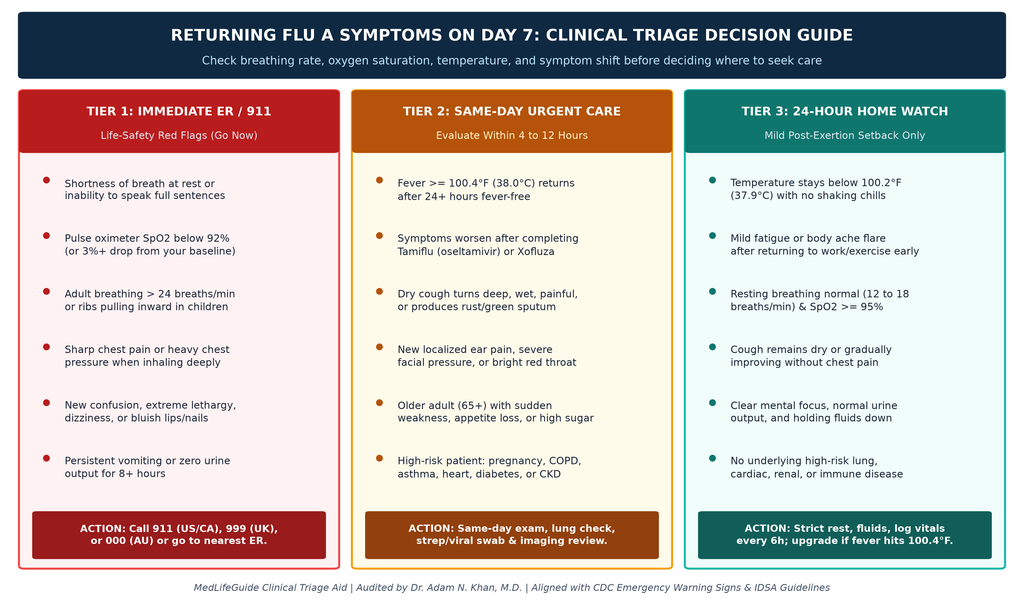
| Country / Healthcare System | Emergency Red Flags (Tier 1) | Same-Day Urgent Assessment (Tier 2) | Nurse Triage / After-Hours Guidance |
|---|---|---|---|
| United States | Call 911 or go to nearest Hospital Emergency Department. | Walk-in Urgent Care Center (confirm on-site X-ray/ultrasound) or Primary Care same-day sick slot. | Health plan 24/7 nurse triage line or on-call primary care physician. |
| United Kingdom | Call 999 or go straight to nearest Hospital A&E. | Urgent Treatment Centre (UTC) or same-day urgent GP appointment. | Call NHS 111 (or visit 111.nhs.uk) for immediate clinical triage. |
| Canada | Call 911 or go to nearest Hospital Emergency Department. | Urgent Primary Care Centre (UPCC) or walk-in medical clinic with imaging referral. | Call 811 (Provincial HealthLine / Telehealth) to speak with a registered nurse. |
| Australia | Call Triple Zero (000) or attend nearest Hospital Emergency Department. | Medicare Urgent Care Clinic (UCC) or same-day General Practitioner visit. | Call Healthdirect on 1800 022 222 (24/7 registered nurse triage). |
Visual Medical Explainers: Recommended Videos on Influenza and Secondary Pneumonia
If you or a family member prefer visual anatomy walkthroughs while preparing questions for your doctor, these verified medical education videos clearly illustrate how Influenza A affects airway tissue and how Streptococcus pneumoniae causes secondary lung infection:
- Influenza Pathology, Complications, and Clinical Timeline (Osmosis Medical Education): Visualizes viral hemagglutinin attachment, epithelial shedding, and secondary bacterial pneumonia risk. Watch at Osmosis Influenza Clinical Overview on YouTube.
- Streptococcus pneumoniae Pathogenesis in the Alveoli (Osmosis Preview): Shows how pneumococcal bacteria colonize upper airways and trigger fluid consolidation inside lung air sacs. Watch at Streptococcus pneumoniae Alveolar Mechanism on YouTube.
- Seasonal Influenza Testing and Clinical Progression (Mayo Clinic Microbiology): Dr. Matthew Binnicker explains viral testing windows and complication monitoring. Watch at Mayo Clinic Microbe Watch Influenza Briefing on YouTube.
| EDITORIAL MULTIMEDIA BONUS: 60-SECOND MEDLIFEGUIDE VIDEO EMBED SCRIPTRecommended Placement: Embed directly beneath the Quick Clinical Answer box with VideoObject schema to qualify for Google Video Rich Snippets.0:00 to 0:12 (Hook): “Did your Flu A fever break on Day 4, only to slam back on Day 7 with chills and a deeper cough? Doctors call this pattern double sickening, and here is how we tell viral rebound from pneumonia.”0:13 to 0:35 (Core Distinction): “A harmless biphasic flu bounce is usually mild, stays under 36 hours, and leaves your resting breathing and oxygen completely steady. Secondary bacterial pneumonia happens because Flu A strips your airway lining, letting throat bacteria reach the lungs around Day 7. Fever climbs higher, breathing speeds past 20 breaths a minute, and coughing turns painful.”0:36 to 0:60 (Actionable Takeaway): “Do not assume it is just Tamiflu rebound, and remember early chest X-rays can miss 30% of brand-new pneumonias. Check your 60-second breathing rate, bring your fever timeline to urgent care today, and head straight to the ER for shortness of breath or chest pain.” |
Frequently Asked Questions About Flu A Symptoms Returning on Day 7
1. Am I contagious again if my Flu A fever comes back on Day 7?
Potentially, yes, though it depends on the cause. Healthy adults typically shed infectious Influenza A virus from one day before symptoms start through Days 5 to 7, while young children, older adults, and immunocompromised patients can shed live virus past Day 10. If you want a full breakdown of how long you remain contagious with Influenza A, public health guidance advises staying home from work or school until your returning fever has stayed below 100.4°F (38.0°C) for a full 24 hours without fever-reducing medication, especially since strep throat or a new viral co-infection can also spread to others.
2. Does coughing up yellow or green mucus on Day 7 automatically prove I have pneumonia?
No. Sputum color mostly reflects white blood cell enzymes (myeloperoxidase) and sloughed airway cells concentrated overnight, which occurs routinely during normal viral bronchitis recovery. Clinicians care far more about whether sputum production suddenly surges alongside a returning fever, fast breathing, or chest pain. By contrast, an isolated lingering dry cough three weeks after the flu without fever or breathlessness usually reflects hypersensitive airway nerves rather than pneumonia.
3. Should I start leftover antibiotics at home if my fever returns after the flu?
Never take leftover antibiotics without a medical exam. Different post-flu bacterial complications require specific drug classes and doses; for instance, an incomplete or mismatched antibiotic may fail to cover post-influenza Staphylococcus aureus (including MRSA) or resistant Streptococcus pneumoniae, mask blood or sputum cultures, and trigger preventable Clostridioides difficile diarrhea.
4. If post-flu bacterial pneumonia is confirmed, how quickly should antibiotics bring my fever down?
According to American Thoracic Society and Infectious Diseases Society of America community-acquired pneumonia monitoring standards, patients started on appropriate empiric antibiotics typically show measurable clinical stability (falling fever curve, steadier breathing, and improving heart rate) within 48 to 72 hours, even though fatigue and a clearing cough take two to four weeks to fully resolve. Worsening breathing or persistent high fever past 48 to 72 hours of antibiotics requires prompt re-evaluation.
5. When is it actually safe to resume workouts or running after a Day 7 flu setback?
Sports medicine and cardiology return-to-play protocols advise waiting until you have been completely fever-free for at least 48 to 72 hours off all antipyretics, systemic symptoms below the neck (chest tightness, deep body aches, hacking chest cough, or abnormal resting heart rate) have resolved, and everyday walking causes zero unusual breathlessness. Step back in gradually at 50% effort rather than jumping straight into high-intensity training.
Your Practical Next Step Before Heading to the Clinic
If your fever returned today after a clear mid-week improvement, do not spend the next 24 hours guessing in bed or taking extra fever reducers just to push through your schedule. Open the notes app on your phone right now and write down four specific details to hand to the triage nurse or physician:
- 1. Day 1 Onset Date & Test Result: The exact day your initial flu symptoms started and whether a rapid or PCR swab confirmed Influenza A.
- 2. Your Fever-Free Gap: Which days your temperature stayed normal without acetaminophen or ibuprofen, and the exact hour the new fever spiked.
- 3. Medication Log: Whether you took oseltamivir or baloxavir (and when you finished), plus the exact time and dose of your last fever reducer.
- 4. Today’s Resting Vitals & Localized Clues: Your 60-second resting breathing rate, pulse rate, pulse oximeter reading (if available), and any new one-sided chest pain, sinus pressure, earache, or sore throat.
Walking into an urgent care clinic (ideally one equipped with on-site chest imaging) with those four data points gives your clinician an immediate, high-precision picture of your Day 7 curve so you can either rule out secondary pneumonia with confidence or start targeted treatment early.
| AUTHOR & MEDICAL REVIEW AUDIT: DR. ADAM N. KHAN, M.D.Medical Reviewer: Dr. Adam N. Khan, M.D. | Licensed Internal Medicine Physician & Healthcare Compliance Advocate (MedLifeGuide.com).Academic & Clinical Credentials: Doctor of Medicine (M.D.), King Edward Medical University; Post-Graduate Internal Medicine Clinical Residency, Mayo Hospital; Active Licensed Physician (PMDC/PMC); Member, Association of Medical Writers and Editors; Contributor, International Federation of Health Literacy Advocates.Scope of Clinical Audit: This guide was audited against current Centers for Disease Control and Prevention (CDC) influenza complication criteria, Infectious Diseases Society of America (IDSA) seasonal influenza management guidelines, and the July 2025 American Thoracic Society (ATS) Community-Acquired Pneumonia clinical practice guideline to verify diagnostic accuracy, pharmacologic safety, and patient triage clarity. Full reviewer profile: https://medlifeguide.com/author-bio/ |
| MEDICAL DISCLAIMEREducational Purpose Only: The information provided on MedLifeGuide, including this article, clinical tables, infographics, and medical review notes, is strictly for general educational and informational purposes. It is not a substitute for professional medical advice, clinical diagnosis, or personalized treatment.No Doctor-Patient Relationship: Reading this resource or relying on Dr. Adam N. Khan’s editorial audit does not create a physician-patient relationship between you and MedLifeGuide or any of its contributors. Never disregard professional medical advice or delay seeking in-person care because of information read online.Individual Risk & Contraindications: Symptoms, medication safety, and infection risks vary substantially based on age, pregnancy status, kidney or liver function, cardiovascular health, and current prescriptions. Always consult your physician or a licensed healthcare provider before starting, stopping, or changing any medication.Medical Emergencies: Do not use MedLifeGuide for acute medical emergencies. If you experience difficulty breathing, chest pain, confusion, bluish lips, persistent vomiting, or any suspected emergency, call 911 (or your local emergency services) or go to the nearest emergency room immediately. Official policy: https://medlifeguide.com/disclaimer/ |
Clinical Sources and Verified References
1. Centers for Disease Control and Prevention (CDC). Signs and Symptoms of Flu (including Emergency Warning Signs of Flu Complications). Updated July 22, 2025. https://www.cdc.gov/flu/signs-symptoms/index.html
2. Centers for Disease Control and Prevention (CDC). Clinical Signs and Symptoms of Influenza (Healthcare Professionals Guidance). Updated March 19, 2026. https://www.cdc.gov/flu/hcp/clinical-signs/
3. Centers for Disease Control and Prevention (CDC). Epidemiology and Prevention of Vaccine-Preventable Diseases (The Pink Book), Chapter 12: Influenza. Updated August 3, 2026. https://www.cdc.gov/pinkbook/hcp/table-of-contents/chapter-12-influenza.html
4. Centers for Disease Control and Prevention (CDC). Treating Flu with Antiviral Drugs & Influenza Antiviral Drug Baloxavir Marboxil. Updated July to October 2026. https://www.cdc.gov/flu/treatment/antiviral-drugs.html
5. Uyeki TM, Bernstein HH, Bradley JS, et al. Clinical Practice Guidelines by the Infectious Diseases Society of America: Update on Diagnosis, Treatment, Chemoprophylaxis, and Institutional Outbreak Management of Seasonal Influenza. Clinical Infectious Diseases. 2019;68(6):e1-e47. https://www.idsociety.org/globalassets/idsa/practice-guidelines/2018-seasonal-influenza.pdf
6. Jones BE, Ramirez JA, Oren E, et al. Diagnosis and Management of Community-Acquired Pneumonia: An Official American Thoracic Society Clinical Practice Guideline. American Journal of Respiratory and Critical Care Medicine. Published July 18, 2025 (doi:10.1164/rccm.202507-1692ST). https://pubmed.ncbi.nlm.nih.gov/40679934/
7. Metlay JP, Waterer GW, Long AC, et al. Diagnosis and Treatment of Adults with Community-Acquired Pneumonia: An Official Clinical Practice Guideline of the ATS and IDSA. American Journal of Respiratory and Critical Care Medicine. 2019;200(7):e45-e67. https://www.idsociety.org/globalassets/idsa/practice-guidelines/community-acquired-pneumonia-in-adults/executive_summary.pdf
8. Infectious Diseases Society of America (IDSA) & Pediatric Infectious Diseases Society (PIDS). 2026 Guidelines for the Management of Community-Acquired Pneumonia in Infants and Children Older Than 3 Months of Age. Published February 24, 2026. https://www.idsociety.org/practice-guideline/community-acquired-pneumonia-in-infants-and-children/
9. Robinson KM, Kolls JK, Alcorn JF. Postinfluenza Bacterial Pneumonia: Host Defenses Gone Awry. National Institutes of Health / PubMed Central. https://pmc.ncbi.nlm.nih.gov/articles/PMC4367524/
10. van der Sluijs KF, van Elden LJR, Nijhuis M, et al. Bench-to-Bedside Review: Bacterial Pneumonia With Influenza, Pathogenesis and Clinical Implications. Critical Care / PubMed Central (PMC2887122). https://pmc.ncbi.nlm.nih.gov/articles/PMC2887122/
11. National Library of Medicine / PubMed Central. Influenza A Virus Infection Induces Initial Proliferation of Commensal Streptococcus pneumoniae in the Larynx Leading to Dissemination Into the Lower Respiratory Tract. Published June 29, 2026 (PMC13386995). https://pmc.ncbi.nlm.nih.gov/articles/PMC13386995/
12. BMC Infectious Diseases Cohort Study. Risk Factors for In-Hospital Mortality and Secondary Bacterial Pneumonia Among Hospitalized Adult Patients With Community-Acquired Influenza. PubMed Central, March 31, 2023 (PMC10064953). https://pmc.ncbi.nlm.nih.gov/articles/PMC10064953/
13. Suzuki E, Ichihara K. The Course of Fever Following Influenza Virus Infection in Children Treated With Oseltamivir (Biphasic Fever Analysis). Journal of Medical Virology. 2008;80(6):1065-1071. https://pubmed.ncbi.nlm.nih.gov/18428131/
14. Treanor JJ, Hayden FG, Vrooman PS, et al. Efficacy and Safety of the Oral Neuraminidase Inhibitor Oseltamivir in Treating Acute Influenza: A Randomized Controlled Trial. JAMA. 2000;283(8):1016-1024. https://jamanetwork.com/journals/jama/fullarticle/192425
15. Takashita E, Ichikawa M, Morita H, et al. Detection of Variants With Reduced Baloxavir Marboxil and Oseltamivir Susceptibility in Children With Influenza A. Journal of Infectious Diseases. 2021;224(10):1735-1744. https://academic.oup.com/jid/article/224/10/1735/6219607
16. Public Patient Timeline Discussions (Observational Context). Documented community discussions on Reddit r/flu (“Rebound Flu A?” and “DO NOT PUSH RECOVERY”, Jan-Feb 2025) and r/toddlers (“Day 7 of flu, fever returns”, Jan 2025). https://www.reddit.com/r/flu/comments/1hrj47b/rebound_flu_a/