
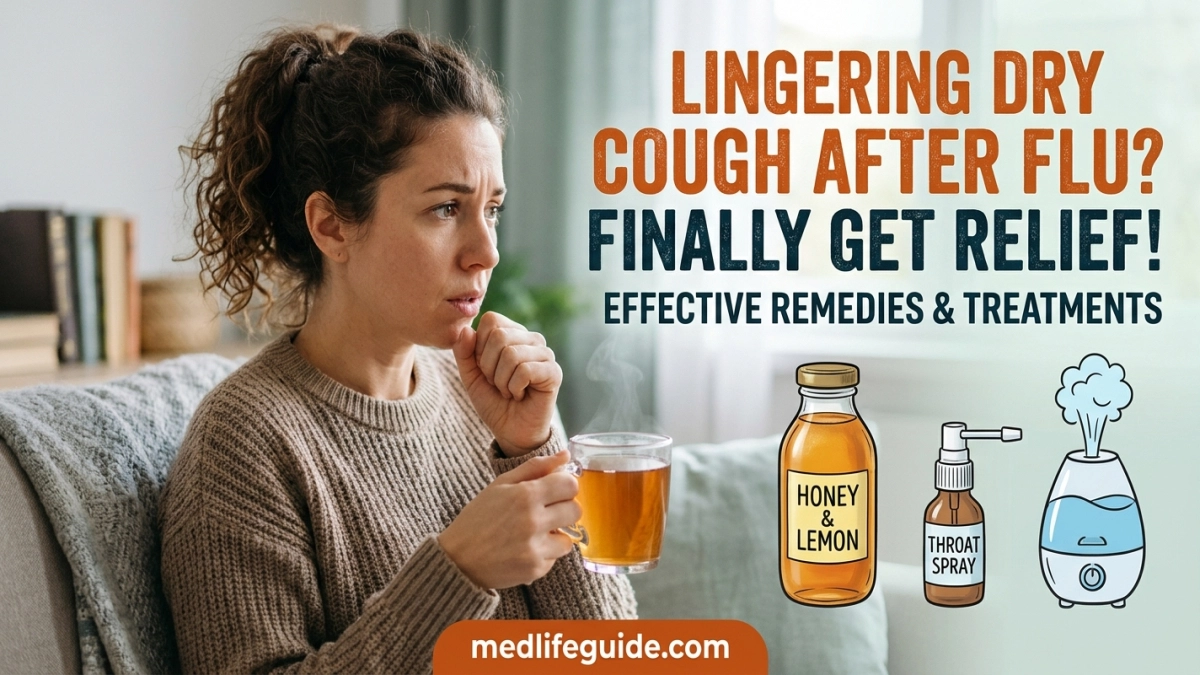
Quick Answer:
- A dry cough lasting three weeks after flu recovery is usually a “post-viral cough” caused by airway inflammation and hypersensitive cough nerves.
- Home remedies like pure honey, warm hydration, and room humidifiers help soothe throat irritation while the airway lining heals.
- Seek medical evaluation if your cough worsens, lasts beyond eight weeks, or occurs alongside red-flag symptoms like chest pain or shortness of breath.
Medically Reviewed and Compiled by Dr. Adam N. Khan, MD.
EMERGENCY WARNING: Seek immediate medical attention or go to the nearest emergency room if your cough is accompanied by severe shortness of breath, sudden chest pain, coughing up blood or pink-tinged mucus, high fever, severe difficulty swallowing, or bluish lips or face. Do not rely on home remedies for acute respiratory distress.
What Is a Lingering Post-Flu Cough?
Recovering from influenza can feel like a major victory. However, many people find themselves struggling with a stubborn dry cough three weeks after their fever, body aches, and fatigue have completely disappeared.
Medical professionals refer to this condition as a post-viral cough or post-infectious cough. Studies show that up to 25 percent of adults experience a persistent cough following an upper respiratory viral infection.
Unlike an active flu virus, a post-viral cough does not mean you are still contagious or actively infected. Instead, it is your respiratory tract’s slow response to recovery. Respiratory tissue takes time to rebuild after viral clearance.
Why Does a Dry Cough Last 3 Weeks After the Flu?
Understanding the underlying mechanisms of a post-viral cough can help relieve anxiety during recovery. Three primary biological factors contribute to this condition:
1. Temporary Loss of the Protective Airway Lining
The influenza virus damages the cilia and epithelial cell layers that line your respiratory tract. Think of these epithelial cells as a protective coat of paint on your airway walls. When the virus strips away this coating, sensitive nerve endings beneath become directly exposed to airborne dust, dry air, and temperature shifts.
2. Transient Nerve Hypersensitivity
Viral inflammation triggers hyper-reactivity in the transient receptor potential (TRP) channels of the airway cough receptors. As a result, mild stimuli that normal lungs would ignore—such as taking a deep breath of cool air—trigger sudden, ticklish coughing spasms.
3. Persistent Low-Grade Inflammation
Even after your immune system neutralizes the flu virus, microscopic inflammatory markers linger in the bronchial tissue. This sustained swelling keeps the cough reflex on constant high alert.
Unique Clinical Takeaways
Beyond standard health advice, clinical practice highlights several critical insights for managing a post-viral cough:
- The “Micro-Climate Barrier” Principle: Wearing a lightweight mask outdoors in cool weather acts as an thermal exchanger. It captures your body’s heat and humidity, protecting hyper-sensitive airway TRP nerve receptors from cold air shocks.
- Post-Infectious Cough Variant Asthma (CVA) Risk: If a dry cough persists beyond 3 to 4 weeks with nocturnal spasms or chest tightness, it may represent transient cough-variant asthma rather than simple irritation. Early medical evaluation can prevent long-term airway remodeling.
- The Silent Reflux-Cough Vicious Cycle: Persistent coughing creates negative intrathoracic pressure, which can force stomach acid up into the lower esophagus. This acid reflux further irritates hypersensitive throat nerves, driving a self-sustaining cycle of coughing and reflux.
Effective Home Remedies for Post-Flu Dry Cough
For uncomplicated post-viral dry coughs, home remedies focus on lubricating throat mucosa, calming nerve activity, and protecting vulnerable airways.
1. Natural Honey Therapy
Pure natural honey acts as a demulcent, creating a soothing film over irritated pharyngeal mucosa. Clinical evidence suggests honey can calm nighttime coughing spasms effectively.
- Usage: Take 1 to 2 teaspoons of raw honey directly or mixed into warm decaffeinated tea.
- Safety Note: Never give honey to infants under 12 months due to the risk of infant botulism.
2. Micro-Dew Humidification
Dry room air extracts moisture from damaged airway mucosa, worsening ticklish throat sensations. Using a cool-mist humidifier maintains room humidity between 40 and 50 percent, keeping mucosal membranes hydrated.
3. Targeted Hydration
Drinking warm broths, herbal teas, and water helps thin lingering postnasal secretions and lubricates raw vocal cords. Aim for small, frequent sips throughout the day rather than large quantities at once.
Over-the-Counter and Prescription Medical Treatments
When home remedies provide insufficient relief, healthcare providers may recommend target medical options:
| Category | Options | Clinical Mechanism |
| Demulcents & Drops | Menthol lozenges, pectin drops | Temporarily numb hypersensitive throat nerves. |
| OTC Suppressants | Dextromethorphan | Acts on the brainstem cough center to reduce reflex frequency. |
| Inhaled Therapies | Inhaled Corticosteroids (ICS) | Prescribed by physicians to reduce localized airway inflammation. |
| Reflux Safeguards | H2 Blockers / PPIs | Prescribed if stomach acid exacerbates throat tickles. |
Note: Antibiotics are ineffective against post-viral coughs, as viral infections do not respond to antibacterial medications.
Red-Flag Symptoms: When to See a Doctor
While a 3-week post-flu dry cough is often part of normal viral recovery, certain signs require prompt medical evaluation:
- Coughing lasting more than 8 weeks (classified as chronic cough).
- Blood or rust-colored sputum in cough secretions.
- Unexplained weight loss, drenching night sweats, or recurring fevers.
- New wheezing, shortness of breath, or chest discomfort during exertion.
- Swelling in the lower legs or feet.
Frequently Asked Questions (FAQs)
No, a post-viral cough lasting three weeks is typically caused by lingering airway inflammation rather than an active infection, meaning you are generally no longer contagious.
Lying flat allows postnasal secretions to pool near the back of the throat and removes gravity’s help in preventing stomach acid reflux, both of which trigger cough reflexes.
No, antibiotics treat bacterial infections and have no effect on post-viral airway inflammation or nerve hypersensitivity.
While a post-viral cough does not directly cause asthma, viral infections can unmask underlying airway hyper-reactivity or trigger temporary cough-variant asthma.
A post-infectious cough commonly lasts between 3 and 8 weeks as mucosal tissues heal and hypersensitive nerve pathways normalize.
References and Citations
- CDC: Clinical Signs and Symptoms of Influenza – Centers for Disease Control and Prevention.
- Mayo Clinic: Chronic Cough – Symptoms and Causes – Mayo Clinic Guidelines on Persistent Coughs.
- Cleveland Clinic: Post-Infectious Cough Overview & Management – Cleveland Clinic Health Library.
- UCLA Health: Post-Infectious Cough Care & Recovery – UCLA Health Medical Insights.
- Global Initiative for Asthma: Asthma Management and Prevention – GINA Scientific Reports.
Reviewer Bio & Disclosures
Dr. Adam N. Khan, M.D. earned his medical degree from King Edward Medical University and completed his Internal Medicine residency at Mayo Hospital. He is an active PMDC-licensed physician dedicated to global health literacy, translating complex peer-reviewed research into accurate, safe, and actionable health guidance for MEDLIFEGUIDE readers.
Conflict of Interest Disclosure: Dr. Khan reports no relevant financial conflicts of interest or commercial ties related to the remedies or pharmaceutical products mentioned in this article.
Medical Disclaimer
This article is provided for educational and informational purposes only and does not constitute formal medical advice, diagnosis, or treatment. Always consult a qualified healthcare provider regarding any lingering symptoms or medical conditions. Never disregard professional medical advice or delay seeking care because of information read on medlifeguide.com.