
Medically Reviewed and Compiled by Dr. Adam N. Khan, MD.
Quick Summary:
- What is happening: Eating redirects significant blood flow to your stomach, causing your heart to pump faster to keep blood circulating to your brain. In Long COVID dysautonomia, this normal response becomes exaggerated.
- Primary triggers: Heavy carbohydrates, high-histamine foods, large meal portions, and sitting upright right after eating worsen heart rate spikes.
- Key remedies: Shift to smaller low-carb meals, stay hydrated before eating, use compression garments, and practice light resting postures after meals.
EMERGENCY WARNING: Post-meal heart rate spikes are usually related to autonomic nervous system dysfunction, but severe cardiac symptoms require immediate emergency medical care. Call 911 or visit the nearest emergency room right away if your high heart rate is accompanied by chest pain, pressure, crushing discomfort, severe shortness of breath, sudden weakness on one side of your body, or loss of consciousness (fainting).
Understanding Post-Meal Heart Spikes in Long COVID
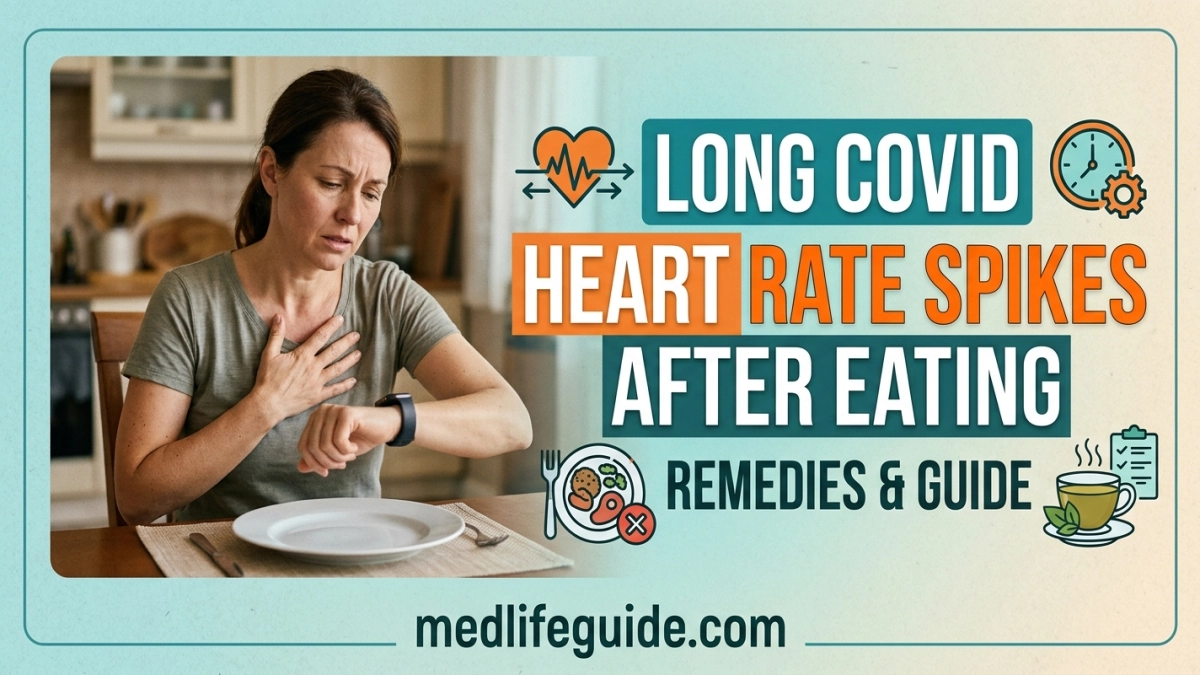
If your heart starts pounding or racing shortly after you finish a meal, you are not alone. Many individuals recovering from SARS-CoV-2 infection experience persistent post-viral symptoms known as Long COVID or Post-Acute Sequelae of SARS-CoV-2 (PASC). One of the most common and distressing complications of Long COVID is dysautonomia—an imbalance or malfunction of the autonomic nervous system.
The autonomic nervous system acts as your body’s automatic control center. It regulates non-voluntary body functions like blood pressure, digestion, breathing, body temperature, and heart rate without conscious effort. When Long COVID disrupts these autonomic pathways, everyday processes like digesting a meal can trigger intense, rapid heart rates (postprandial tachycardia).
What Is Dysautonomia and Postprandial Tachycardia?
Dysautonomia describes a family of medical conditions where autonomic signaling misfires. Postural Orthostatic Tachycardia Syndrome (POTS) is a prevalent subtype of dysautonomia frequently diagnosed in Long COVID patients.
When you eat, your digestive system requires extra blood to process food—a natural physiological event known as postprandial splanchnic hyperemia. In a healthy body, the nervous system makes quick, subtle adjustments to keep blood pressure steady and brain perfusion optimal without dramatically increasing your heart rate. However, in Long COVID dysautonomia, blood vessels in the abdomen dilate excessively while blood vessels in the limbs fail to constrict properly. To compensate for pooled blood in the gut and maintain blood pressure, your brain signals the heart to beat much faster.
Unique Clinical Takeaways
Beyond standard recommendations like “eating smaller meals,” clinical management of postprandial tachycardia in Long COVID requires targeted, physiology-driven interventions. Here are three original clinical insights that can dramatically reduce your post-meal heart rate surges:
1. The Pre-Meal Salt-Fluid Bolus Strategy
- The Clinical Mechanism: Drinking 16 ounces (about 500 mL) of cold water mixed with a recommended electrolyte supplement 15 to 20 minutes before your first bite stimulates an autonomic reflex known as the osmo-pressor response.
- Actionable Application: Water intake rapidly expands blood volume and triggers a temporary, beneficial rise in vascular resistance before digestive vasodilation occurs. This pre-emptively fills the circulatory reservoir, softening the sudden blood drop to the gut during digestion.
2. Post-Meal Mechanical Gravity Offloading
- The Clinical Mechanism: Sitting upright at a 90-degree angle after eating forces your circulatory system to fight two massive stressors at once: gravity pulling blood down to your legs and splanchnic pooling drawing blood into your digestive organs.
- Actionable Application: Instead of sitting upright or lying completely flat (which can trigger gastroesophageal reflux), adopt a semi-recumbency posture at a 30- to 45-degree angle with your legs slightly elevated for 30 minutes after eating. This mechanical adjustment reduces orthostatic gravity pull, allowing blood to return to your heart with far less effort.
3. Splanchnic Compression via Abdominal Binders
- The Clinical Mechanism: Lower-leg compression socks help with standing symptoms, but they do not prevent massive blood pooling in the abdomen after meals.
- Actionable Application: Applying an adjustable medical-grade abdominal binder (compressing from the pubic bone up to the ribcage) immediately before eating physically restricts excessive blood pooling in the splanchnic bed. Clinical observations show that abdominal compression is significantly more effective at controlling postprandial heart rate spikes than leg compression alone.
Why Eating Triggers High Heart Rates in Long COVID
To manage your symptoms effectively, it helps to understand the underlying physiological pathways that link eating to rapid heart rhythms.
┌─────────────────────────────────────────────────────────┐
│                      Ingesting Meal                     │
└────────────────────────────┬────────────────────────────┘
                             │
                             ▼
┌─────────────────────────────────────────────────────────┐
│       Blood Redirected to Stomach (Splanchnic Bed)       │
└────────────────────────────┬────────────────────────────┘
                             │
                             ▼
┌─────────────────────────────────────────────────────────┐
│     Long COVID Dysautonomia: Impaired Vasoconstriction  │
└────────────────────────────┬────────────────────────────┘
                             │
                             ▼
┌─────────────────────────────────────────────────────────┐
│  Compensatory Sympathetic Surge & Catecholamine Release │
└────────────────────────────┬────────────────────────────┘
                             │
                             ▼
┌─────────────────────────────────────────────────────────┐
│       Postprandial Tachycardia (Heart Rate Spike)       │
└─────────────────────────────────────────────────────────┘
Autonomic Nervous System Misfiring
SARS-CoV-2 can trigger immune-mediated inflammation, autoantibody production, or direct damage to small nerve fibers (small fiber neuropathy) that control involuntary blood vessel movement. When these nerve fibers are impaired, your body loses its fine-tuned control over vascular resistance.
Blood Redistribution and Splanchnic Pooling
During digestion, your gastrointestinal tract releases vasoactive peptides that widen blood vessels in the stomach and intestines. In healthy individuals, autonomic reflexes compensate by narrowing blood vessels elsewhere. In dysautonomia, this compensation fails. Up to 20% to 30% of your total blood volume can collect in your digestive tract, leaving less blood returning to your heart and circulating to your brain.
Carbohydrates and Insulin Response
High-carbohydrate meals—especially refined sugars and white flour—cause a rapid surge in blood glucose and insulin levels. Insulin is a powerful vasodilator (a substance that widens blood vessels). High insulin spikes further expand abdominal blood vessels, accelerating blood pooling and worsening post-meal tachycardia.
Mast Cell Activation and Histamines
A significant sub-group of Long COVID patients develops Mast Cell Activation Syndrome (MCAS) or histamine intolerance. Mast cells are immune cells that release histamine and inflammatory chemicals when activated. High-histamine foods (such as aged cheeses, fermented items, processed meats, and alcohol) can trigger mast cell degranulation. Circulating histamine dilates blood vessels and directly stimulates heart tissue, causing dramatic post-meal palpitations, flushing, and rapid heart rate.
Effective Home Remedies and Lifestyle Adjustments
Managing post-meal dysautonomia requires a combination of smart dietary changes, physical strategies, and autonomic nervous system regulation.
| Strategy Category | Specific Action | Primary Mechanism / Benefit |
| Meal Sizing | 5 to 6 small meals instead of 3 large meals | Minimizes sudden large blood shifts to the digestive system. |
| Macronutrient Balance | Low-glycemic, low-carb, moderate-protein, healthy fats | Prevents sharp insulin spikes that dilate abdominal blood vessels. |
| Hydration & Electrolytes | Drink 16 oz electrolyte fluid 15–20 min before meals | Expands circulating blood volume to cushion postprandial drops. |
| Temperature Control | Avoid scalding hot soups, hot drinks, or hot baths after meals | Thermal heat dilates peripheral blood vessels and aggravates tachycardia. |
| Histamine Management | Follow a low-histamine diet; avoid aged, fermented, or spoiled foods | Reduces immune-driven vasodilatory histamine release. |
| Physical Support | Wear an abdominal binder during and for 1 hour after eating | Mechanically reduces splanchnic blood pooling. |
Dietary Modifications
- Reduce Refined Carbohydrates: Replace white rice, sugary snacks, white bread, and processed pasta with complex, fiber-rich carbohydrates like quinoa, non-starchy vegetables, and legumes.
- Track Histamine Triggers: Keep a detailed food and symptom journal for two weeks. Note any correlation between specific foods (e.g., tomatoes, spinach, cured meats, wine) and post-meal heart rate spikes.
- Eat at Room Temperature: Avoid eating piping hot meals or drinking hot tea, as heat expands blood vessels in the esophagus and stomach, worsening autonomic symptoms.
Mealtime Habits
- Eat Slowly and Chew Thoroughly: Fast eating forces your digestive system to work harder and release larger bursts of digestive hormones.
- Avoid Standing Immediately After Meals: Remain seated or semi-reclined for at least 30 to 45 minutes after finishing your food.
- Avoid Combining Heavy Physical Activity with Digestion: Do not attempt chores, exercise, or hot showers right after eating.
Medical Diagnostic Tests and Clinical Evaluations
If you regularly experience heart rate spikes after eating, a thorough medical evaluation is essential to rule out structural heart disease and confirm a dysautonomia diagnosis.
┌─────────────────────────────────────────────────────────┐
│             Initial Clinical Evaluation                 │
│      (Comprehensive History & Physical Exam)            │
└────────────────────────────┬────────────────────────────┘
                             │
                             ▼
┌─────────────────────────────────────────────────────────┐
│             Rule Out Structural Heart Disease           │
│        (12-Lead ECG, 24-48h Holter, Echocardiogram)    │
└────────────────────────────┬────────────────────────────┘
                             │
                             ▼
┌─────────────────────────────────────────────────────────┐
│               Autonomic Reflex Testing                  │
│     (10-Minute Stand Test / Head-Up Tilt Table Test)    │
└────────────────────────────┬────────────────────────────┘
                             │
                             ▼
┌─────────────────────────────────────────────────────────┐
│             Specialized & Subtype Testing               │
│     (Mast Cell Markers, Sudomotor / Small Fiber Test)   │
└─────────────────────────────────────────────────────────┘
Essential Diagnostic Workup
- 12-Lead Electrocardiogram (ECG) & Holter Monitor: Checks for underlying heart rhythm abnormalities (arrhythmias) or electrical defects.
- Echocardiogram: Uses ultrasound to assess heart structure, valve function, and pumping efficiency.
- 10-Minute NASA Lean Test or Head-Up Tilt Table Test (TTT): Measures your heart rate and blood pressure responses when transitioning from lying down to standing up. A sustained heart rate increase of 30 beats per minute (bpm) or more in adults (or 40 bpm in adolescents) without a significant drop in blood pressure confirms POTS.
- Postprandial Challenge Evaluation: Monitoring blood pressure and heart rate before, during, and 60 minutes after a standard meal to document postprandial orthostatic intolerance.
Medical Management and Pharmacological Considerations
When lifestyle adjustments, dietary changes, and mechanical supports are not enough to control post-meal tachycardia, healthcare providers may consider prescription treatments.
Note: All medications must be evaluated and prescribed by a licensed physician tailored to your specific dysautonomia subtype (e.g., hyperadrenergic vs. hypovolemic POTS).
Common Pharmacological Options Under Medical Supervision
- Beta-Blockers (e.g., Low-Dose Propranolol, Metoprolol): Lower heart rate by blunting the effects of excess adrenaline. Low doses taken shortly before meals can help reduce postprandial heart rate spikes.
- Sinus Node Inhibitors (e.g., Ivabradine): Slows heart rate directly at the heart’s natural pacemaker without lowering blood pressure, making it useful for patients with low or unstable blood pressure.
- Acetylcholinesterase Inhibitors (e.g., Pyridostigmine): Enhances autonomic nerve signal transmission, improving parasympathetic tone and reducing heart rate spikes while supporting digestive motility.
- Alpha-2 Agonists (e.g., Clonidine): Reduces central sympathetic outflow, particularly helpful for individuals with hyperadrenergic dysautonomia who experience high blood pressure surges along with tachycardia.
- H1 and H2 Histamine Blockers (e.g., Fexofenadine, Famotidine): Recommended when Mast Cell Activation Syndrome or histamine intolerance contributes to post-meal flares. Blocked histamine receptors help reduce heart rate spikes, flushing, and gastrointestinal distress.
Frequently Asked Questions (FAQs)
Eating directs large amounts of blood to your digestive organs. In Long COVID dysautonomia, impaired nervous system signals fail to constrict blood vessels properly, causing your heart to beat much faster to maintain overall circulation and blood pressure.
Postprandial tachycardia usually starts within 15 to 30 minutes after eating and can last anywhere from 45 minutes to two hours, depending on meal size, carbohydrate content, and your posture.
While frightening, post-meal tachycardia caused by dysautonomia is generally a functional nervous system misfire rather than an immediate heart attack. However, you should consult a doctor to rule out underlying structural heart disease.
No, but you should limit refined sugars and simple carbohydrates. Complex, high-fiber carbohydrates digested slowly cause smaller insulin surges, which reduces blood vessel widening and heart rate spikes.
Yes, using an abdominal binder during and after meals is particularly effective. It physically compresses abdominal blood vessels, preventing excess blood from pooling in your stomach.
References and Citations
- National Institutes of Health (NIH) – StatPearls. Postural Orthostatic Tachycardia Syndrome./references/nih-statpearls-pots-guide
- Johns Hopkins Medicine. Postural Orthostatic Tachycardia Syndrome (POTS) Overview./references/johns-hopkins-pots-overview
- National Center for Biotechnology Information (NCBI / NLM). Antihistamines improve cardiovascular manifestations and other symptoms of long-COVID attributed to mast cell activation./references/ncbi-long-covid-mcas-cardiovascular
- Oregon Health & Science University (OHSU). Clinical Guidelines: Long COVID-19 Management./references/ohsu-clinical-guidelines-long-covid
- Cleveland Clinic. Dysautonomia: Symptoms, Types, and Management./references/cleveland-clinic-dysautonomia-guide
Reviewer Bio & Medical Disclaimer
Dr. Adam N. Khan, M.D.
Dr. Adam N. Khan, M.D., earned his medical degree from King Edward Medical University and completed his Internal Medicine residency at Mayo Hospital. He is an active PMDC-licensed physician dedicated to global health literacy, translating complex peer-reviewed research into accurate, safe, and actionable health guidance for MEDLIFEGUIDE readers.
Conflict of Interest Disclosure: Dr. Khan reports no relevant financial conflicts of interest or commercial ties related to the diagnostic tools or pharmacological therapies discussed in this article.
Medical Disclaimer
This article is for informational and educational purposes only and is not a substitute for professional medical advice, diagnosis, or treatment. Always seek the advice of your physician or other qualified health provider with any questions you may have regarding a medical condition. Never disregard professional medical advice or delay seeking it because of something you have read on this website. If you think you may have a medical emergency, call 911 or your local emergency number immediately.