
Medically Reviewed and Compiled by Dr. Adam N. Khan, MD.
Quick Summary:
- Beyond Normal Cramps: Endometriosis involves uterine-like tissue growing outside the uterus, driving chronic inflammation, severe menstrual pain, and deep pelvic aching.
- Wide Range of Symptoms: Common warning signs include painful periods, pain during intercourse, digestive issues during menstruation, and difficulty conceiving.
- Early Action Matters: Symptom severity does not always match disease stage; seeking expert care early helps manage pain and protect fertility.
EMERGENCY WARNING: Seek emergency medical care immediately if you experience sudden, severe, or worsening lower abdominal pain accompanied by a high fever, uncontrollable vomiting, dizziness, fainting, or heavy vaginal bleeding (soaking through more than two pads or tampons per hour for two consecutive hours). These symptoms may signal an ovarian cyst rupture, pelvic infection, or ectopic pregnancy.
What Is Endometriosis?
Endometriosis is a long-term health condition where tissue similar to the lining of the uterus grows outside the uterine cavity. These abnormal growths—often called implants or lesions—most commonly attach to the ovaries, fallopian tubes, outer surface of the uterus, and pelvic sidewalls.
During a normal menstrual cycle, hormones instruct the uterine lining to thicken and then break down through monthly bleeding. Endometrial-like lesions outside the uterus react to these same hormonal signals. However, because this blood has no way to exit the body, it becomes trapped. Over time, this trapped tissue triggers local swelling, internal irritation, scar tissue formation (adhesions), and fluid-filled cysts known as endometriomas.
The World Health Organization (WHO) estimates that endometriosis affects roughly 10% of reproductive-age women globally. Despite its prevalence, diagnosis is frequently delayed due to normalized menstrual pain and overlapping digestive symptoms.
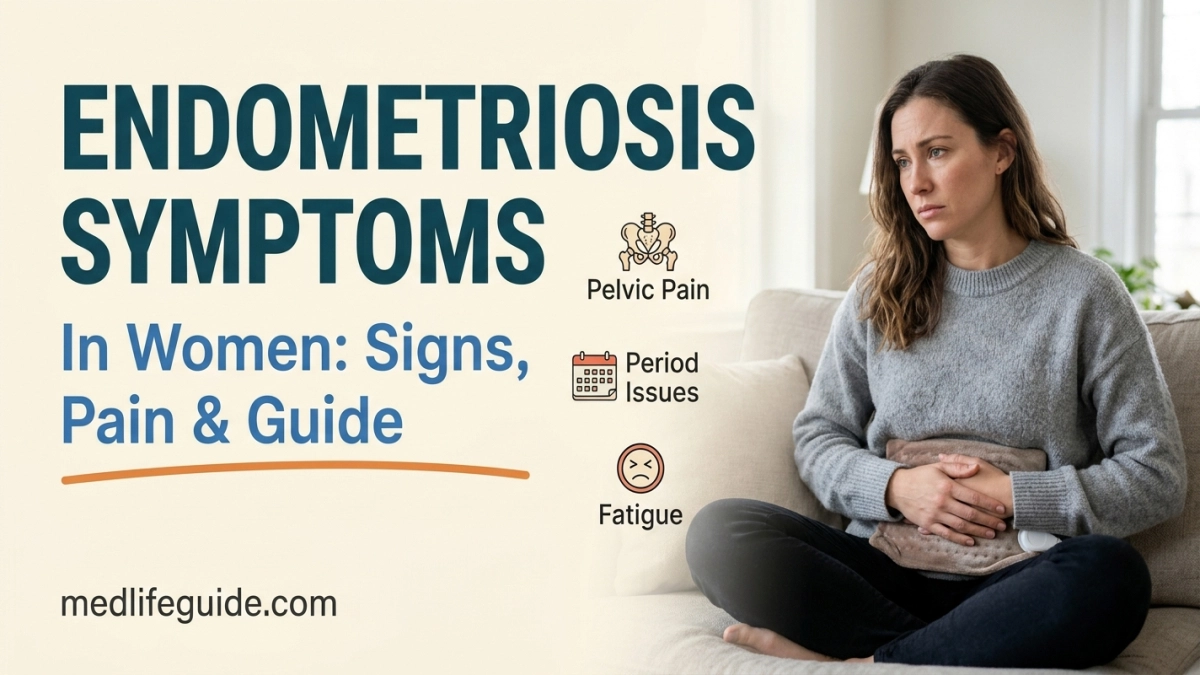
Primary Endometriosis Symptoms in Women
While every woman experiences this condition differently, specific physical signs frequently appear. Recognizing these early symptoms allows patients to seek timely medical evaluations.
1. Severe Menstrual Cramps (Dysmenorrhea)
Painful periods are the hallmark sign of endometriosis. Unlike mild menstrual cramps that resolve with mild over-the-counter medication, endometriosis pain often starts days before bleeding begins and persists throughout the cycle. Patients often describe it as a deep, throbbing, or burning sensation that impairs daily activities.
2. Chronic Pelvic Pain
In addition to menstrual cramps, many women report persistent aching in the lower abdomen, lower back, and pelvic floor. This pain may occur continuously throughout the month or intensify during ovulation.
3. Pain During or After Intercourse (Dyspareunia)
Endometriosis lesions located behind the uterus or along the uterosacral ligaments can make penetration painful. The discomfort is typically felt deep within the pelvis during or after sexual activity.
4. Painful Bowel Movements and Urination
When tissue attaches to the intestines, rectum, or bladder, routine bodily functions become uncomfortable—especially during menstrual periods. Symptoms include sharp pains while passing stool, painful urination, frequency, or blood in the urine or stool.
5. Fertility Challenges
Endometriosis is a leading factor in female subfertility and infertility. Structural scarring can block fallopian tubes, while localized inflammatory responses may impair egg quality and embryo implantation.
6. Gastrointestinal Distress (“Endo Belly”)
Endometriosis is frequently misdiagnosed as Irritable Bowel Syndrome (IBS). Many women experience cyclic bloating, nausea, constipation, and abdominal swelling that mirrors gastrointestinal conditions.
Unique Clinical Takeaways
Clinical experience and clinical research reveal several critical aspects of endometriosis that extend beyond traditional symptom lists:
- Symptom Severity Does Not Match Disease Extent: A patient with mild, superficial tissue lesions may experience agonizing pelvic pain, while another with extensive deep infiltrating lesions and large cysts may report minimal symptoms. Diagnostic evaluations must rely on comprehensive clinical histories and imaging rather than pain intensity alone.
- Neuropathic Central Sensitization: Over time, chronic tissue inflammation can alter sensory nerve pathways in the central nervous system. This process causes normal pelvic signals to be interpreted by the brain as severe pain, explaining why pain can persist even after surgical removal of visible lesions.
- The Multidisciplinary Care Imperative: Effective long-term relief rarely comes from a single medical discipline. Optimal management requires integrated care combining specialized minimally invasive gynecologic surgery, pelvic floor physical therapy, dietary modifications, and non-hormonal nerve-pain strategies.
Diagnostic Paths: How Endometriosis Is Identified
Diagnosing endometriosis historically required invasive exploratory surgery. Today, medical organizations emphasize a modern clinical approach to reduce delays in diagnosis:
- Detailed Symptom History: Tracking pain patterns, menstrual characteristics, and family history.
- High-Resolution Transvaginal Ultrasound: Specialized imaging to detect ovarian endometriomas, deep nodules, and organ immobility.
- Pelvic Magnetic Resonance Imaging (MRI): Advanced imaging used to map deep infiltrating tissue before planned procedures.
- Diagnostic Laparoscopy: A minimally invasive surgical procedure that allows direct visual inspection and tissue biopsy for definitive histological confirmation.
Overview of Medical Management Options
Management strategies focus on reducing pain, preventing progression, and supporting fertility goals. Treatment plans are individualized based on patient priorities.
| Treatment Category | Common Modalities | Key Clinical Objectives |
| Pain Relief | Nonsteroidal Anti-Inflammatory Drugs (NSAIDs) | Reduce local inflammatory prostaglandin production. |
| Hormonal Suppression | Combined Oral Contraceptives, Progestins, GnRH Agonists | Suppress estrogen production to atrophy endometrial implants. |
| Surgical Management | Laparoscopic Excision or Ablation | Remove visible lesions, restore pelvic anatomy, and alleviate pain. |
| Physical Rehabilitation | Pelvic Floor Physical Therapy | Desensitize hypertonic pelvic floor musculature and reduce dyspareunia. |
Frequently Asked Questions (FAQs)
Yes, symptoms can recur over time because medical and surgical treatments manage lesions rather than curing the underlying inflammatory process.
While menopause lowers estrogen levels and typically reduces symptoms, dormant lesions can sometimes remain active—especially if hormone replacement therapy is utilized.
No, endometriosis occurs when uterine-like tissue grows outside the uterus, whereas adenomyosis occurs when that tissue grows directly into the muscular wall of the uterus itself.
Anti-inflammatory nutrition, routine low-impact exercise, and stress reduction may help diminish overall systemic inflammation and ease digestive discomfort associated with the condition.
Endometriosis can create anatomical blockages in the fallopian tubes, form ovarian cysts, and generate localized pelvic inflammation that impairs egg quality and implantation.
{
  "@context": "https://schema.org",
  "@graph": [
    {
      "@type": "MedicalWebPage",
      "@id": "https://medlifeguide.com/references/endometriosis-symptoms-in-women/#webpage",
      "url": "https://medlifeguide.com/references/endometriosis-symptoms-in-women/",
      "name": "Endometriosis Symptoms in Women: Signs, Pain & Guide",
      "description": "Discover key endometriosis symptoms in women, from severe pelvic pain to fertility challenges. Learn unique clinical insights and when to seek help.",
      "aspect": "Diagnosis, Symptoms, Treatment",
      "medicalAudience": "Patient"
    },
    {
      "@type": "Article",
      "@id": "https://medlifeguide.com/references/endometriosis-symptoms-in-women/#article",
      "headline": "Endometriosis Symptoms in Women: What You Must Know",
      "author": {
        "@type": "Person",
        "name": "Dr. Adam N. Khan, M.D."
      },
      "publisher": {
        "@type": "Organization",
        "name": "MEDLIFEGUIDE",
        "url": "https://medlifeguide.com"
      }
    }
  ]
}
Reviewer Bio
Dr. Adam N. Khan, M.D., earned his medical degree from King Edward Medical University and completed his Internal Medicine residency at Mayo Hospital. He is an active PMDC-licensed physician dedicated to global health literacy, translating complex peer-reviewed research into accurate, safe, and actionable health guidance for MEDLIFEGUIDE readers. Financial Disclosure: Dr. Khan reports no financial conflicts of interest or commercial ties relevant to this content.
Medical Disclaimer
The content provided on medlifeguide.com is intended solely for educational and informational purposes and does not constitute medical advice, diagnosis, or treatment. Always consult a qualified healthcare professional regarding any medical condition or symptoms. Never disregard professional medical advice or delay seeking care because of content read on this website.
References and Citations
- Mayo Clinic. Endometriosis: Symptoms and Causes.https://medlifeguide.com/references/mayo-clinic-endometriosis-symptoms
- World Health Organization (WHO). Endometriosis Fact Sheet.https://medlifeguide.com/references/who-endometriosis-factsheet
- National Institutes of Health (NIH) / NCBI PMC. Diagnosis and Management of Endometriosis.https://medlifeguide.com/references/nih-ncbi-endometriosis-diagnosis-management
- American Academy of Family Physicians (AAFP). Endometriosis: Evaluation and Treatment.https://medlifeguide.com/references/aafp-endometriosis-evaluation-treatment
- Cleveland Clinic. Endometriosis Overview, Symptoms, and Complications.https://medlifeguide.com/references/cleveland-clinic-endometriosis-overview