
Medically Reviewed and Compiled by Dr. Adam N. Khan, M.D.
Quick Answer:
- Sinusitis itself is not contagious: The anatomical swelling and mucus buildup in your sinus cavities cannot spread to another person.
- The underlying virus is contagious: Most sinus infections start as common cold or flu viruses, which easily spread through air droplets and shared surfaces during the first 3 to 5 days.
- Bacterial and allergic sinusitis do not spread: Secondary bacterial infections and allergy flares are localized to your body and cannot infect family or coworkers.
EMERGENCY WARNING:
Seek immediate emergency medical care if you or someone in your care experiences high fever, sudden vision changes, double vision, swelling or redness around one or both eyes, a severe unremitting headache, stiff neck, confusion, or severe facial numbness. These severe signs may indicate dangerous complications such as orbital cellulitis, meningitis, or intracranial spread that require urgent emergency evaluation.
If you have ever woken up with throbbing pressure behind your cheeks, a dull ache above your eyes, and a completely stuffed nose, your first thought might be staying isolated in bed. Shortly after comes the big question: are sinus infections contagious? Should you stay away from your children, partner, or coworkers so they do not catch it too?
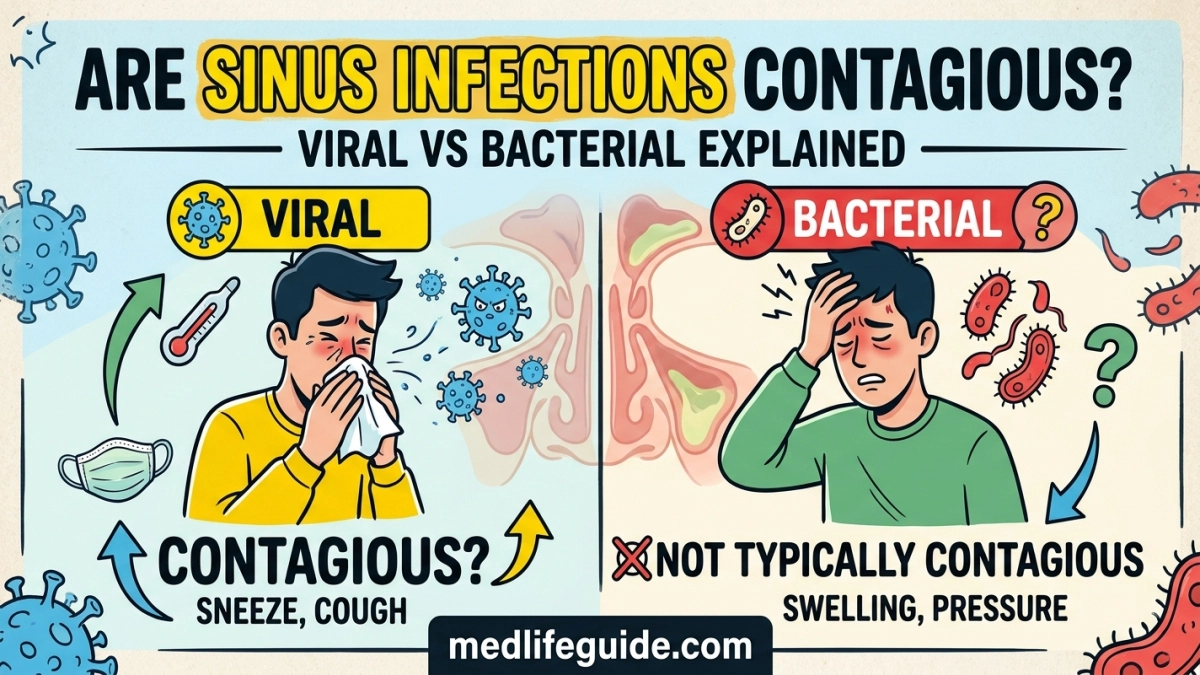
The simple medical answer is both yes and no, depending on what stage of illness you are in and what caused the inflammation in the first place. While the sinus infection itself—the physical swelling of your nasal passages—cannot jump from person to person, the underlying viral infection that started it can easily spread.
Unique Clinical Takeaways
Beyond standard lists of nasal congestion and facial pain, clinical practice reveals subtle patterns in how sinus inflammation develops and spreads. Here are three critical insights from clinical observations:
1. The “Double Sickening” Pattern Points to Bacterial Shift
Most patients assume that green or yellow nasal mucus means an infection is contagious. In reality, color change is simply a sign that your white blood cells are doing their job clearing debris. A far more reliable indicator of a bacterial sinus infection is the “double sickening” phenomenon. This occurs when a cold or viral illness starts to improve around day 5 or 6, only to suddenly worsen on day 7 or 8 with higher fever, increased facial pain, and thick discharge. At this secondary stage, the illness is usually no longer contagious, but it may require professional medical intervention or targeted prescription therapy.
2. Contagiousness Peaks Before Severe Sinus Pressure Begins
Patients are often most contagious before their sinus pressure reaches its painful peak. During the first 48 to 72 hours of a viral illness, sneezes and watery nasal discharge spread millions of viral particles through the air. By day 7, when thick nasal congestion and intense facial pressure make you feel sickest, viral shedding has typically dropped significantly. Paradoxically, you are often least contagious when you feel at your absolute worst.
3. Biofilm Persistence Explains Non-Contagious Chronic Flares
If you suffer from recurrent or chronic sinusitis (lasting longer than 12 weeks), your flare-ups are virtually never contagious. Chronic sinus issues are frequently driven by bacterial biofilms—protective microscopic communities of bacteria anchored to the lining of your sinus tissues—or structural blockages like nasal polyps and a deviated septum. Because these organisms are shielded inside a matrix in your nasal passages, they do not shed into the air or spread to others during casual contact, even when symptoms intensify.
What Is a Sinus Infection (Sinusitis)?
To understand why sinus infections act the way they do, it helps to look at human facial anatomy.
Your paranasal sinuses are four paired, hollow, air-filled spaces located inside the bones of your face:
- Frontal sinuses: Located in the lower forehead above your eyebrows.
- Maxillary sinuses: Located behind your cheekbones.
- Ethmoid sinuses: Located between your eyes and behind the bridge of your nose.
- Sphenoid sinuses: Located deep behind your eyes toward the center of your head.
Under healthy conditions, these hollow cavities are lined with a thin, moist membrane covered in tiny hair-like structures called cilia. Cilia sweep a small layer of clear mucus across the lining to catch microscopic dust, bacteria, and debris, sweeping them toward small drainage pathways (ostia) that empty into your nasal cavity.
How Inflammation Traps Mucus
When a virus, allergen, or environmental irritant triggers inflammation in these tissues, the delicate sinus lining swells rapidly. This swelling blocks the narrow drainage ostia. Trapped mucus builds up inside the dark, moist sinus chambers, creating a high-pressure environment that compresses local nerve endings. This buildup causes classic symptoms like facial pressure, headaches, postnasal drip, and nasal congestion.
Viral vs. Bacterial vs. Non-Infectious Sinusitis
Understanding what caused your sinus symptoms is key to knowing whether you pose a contagious risk to others.
┌─────────────────────────────────────────────────────────────────────────┐
│                      IS MY SINUS ISSUE CONTAGIOUS?                       │
└─────────────────────────────────────────────────────────────────────────┘
                                     │
             ┌───────────────────────┴───────────────────────┐
             ▼                                               ▼
   [ INFECTIOUS CAUSES ]                           [ NON-INFECTIOUS ]
             │                                               │
     ┌───────┴───────┐                             ┌─────────┴─────────┐
     ▼               ▼                             ▼                   ▼
  Viral           Bacterial                    Allergies          Structural
(CONTAGIOUS)   (NOT CONTAGIOUS)             (NOT CONTAGIOUS)    (NOT CONTAGIOUS)
1. Viral Sinusitis (Contagious Trigger)
Viral infections cause about 90% of all acute sinus cases in adults. Rhinoviruses, influenza viruses, respiratory syncytial virus (RSV), and adenoviruses cause inflammation across the entire upper respiratory tract. While the resulting sinusitis is localized to your head, the underlying virus circulates throughout your respiratory secretions and is easily transmitted to others.
2. Acute Bacterial Sinusitis (Not Contagious)
Only about 2% to 10% of viral sinus infections progress to secondary bacterial infections. When trapped fluid sits in blocked sinus cavities for days, common resident bacteria like Streptococcus pneumoniae or Haemophilus influenzae multiply rapidly. These bacteria grow deep inside your blocked sinus cavities rather than shedding into outgoing air. As a result, acute bacterial sinusitis is not considered contagious between individuals.
3. Non-Infectious Sinusitis (Not Contagious)
Many people experience chronic or seasonal sinus inflammation without any germ involved.
- Allergies: Pollen, pet dander, dust mites, and mold trigger histamine releases that swell nasal tissues.
- Structural Issues: A deviated nasal septum or soft growths called nasal polyps can physically block drainage routes.
- Environmental Irritants: Cigarette smoke, dry indoor air, and chemical fumes can inflame sinus linings directly.
None of these non-infectious causes can be transmitted to anyone else.
How Long Are Sinus Infections Contagious?
If your sinus symptoms stem from a viral illness, your contagious timeline follows the lifecycle of upper respiratory viruses.
| Day Range | Primary Symptoms | Contagion Status | Recommended Action |
| Days 1–3 | Clear runny nose, sneezing, mild sore throat, low fever | Peak Contagiousness | Stay home, rest, hydrate, and mask around others. |
| Days 4–7 | Increasing facial pressure, nasal congestion, thick discharge | Moderate to Low | Practice strict hand hygiene; symptoms shift to localized sinuses. |
| Days 8–10+ | Lingering pressure, sinus cough, clearing congestion | Minimal to None | Viral shedding has mostly stopped; monitor for secondary bacterial shift. |
How Germs Spread Between People
Viral triggers spread through three main pathways:
- Airborne Droplets: Talking, coughing, or sneezing sprays microscopic droplets into the air, where nearby people can inhale them.
- Direct Contact: Shaking hands, kissing, or touching someone who has viral particles on their hands.
- Fomites (Contaminated Surfaces): Viruses can survive for hours on doorknobs, smartphone screens, light switches, and shared utensils. Touching these items and then touching your eyes, nose, or mouth introduces the virus to your mucous membranes.
At-Home Comfort Measures and Care
While your immune system clears a viral illness, targeted at-home care can relieve uncomfortable facial pressure and keep mucus flowing smoothly.
      HYDRATION             WARM STEAM            SALINE RINSES          ELEVATED HEAD
┌───────────────────┐ ┌───────────────────┐ ┌───────────────────┐ ┌───────────────────┐
│ Thin nasal mucus  │ │ Soothe inflamed   │ │ Flush trapped     │ │ Reduce nighttime  │
│ with water, tea,  │ │ membranes with    │ │ irritants using   │ │ sinus pressure    │
│ and broths.       │ │ hot showers.      │ │ distilled water.  │ │ with extra pillows│
└───────────────────┘ └───────────────────┘ └───────────────────┘ └───────────────────┘
- Nasal Saline Irrigation: Rinsing your nasal passages with a isotonic saline spray or a neti pot helps clear thick mucus and crusting. Crucial safety note: Always use distilled, sterile, or previously boiled and cooled water to prepare saline rinses. Never use untreated tap water.
- Steam Inhalation: Breathing in moist steam from a warm shower or a bowl of hot water helps hydrate dry, irritated tissue.
- Optimal Hydration: Drinking plenty of water, warm herbal teas, and clear broths thins mucus, making it easier for cilia to clear trapped fluid.
- Over-the-Counter Relief: Non-prescription pain relievers like acetaminophen or ibuprofen can reduce facial soreness and sinus headaches. Short-term oral or nasal decongestants can ease swelling. Note: Do not use OTC topical decongestant sprays (such as oxymetazoline) for more than 3 to 5 consecutive days to prevent “rebound congestion” (rhinitis medicamentosa).
When to See a Doctor
Most acute sinus infections resolve naturally within 7 to 10 days without prescription medication. However, you should consult a primary care provider or an Ear, Nose, and Throat (ENT) specialist if you experience:
- Symptoms that last longer than 10 days without any sign of improvement.
- Severe or worsening facial pain, dental pain, or localized tenderness.
- Symptoms that start to improve but then suddenly worsen with a high fever (“double sickening”).
- Multiple recurrent sinus infections over the course of a single year.
References and Citations
- Harvard Health Publishing: Are sinus infections contagious? – Harvard Medical School
- Centers for Disease Control and Prevention (CDC): Common Cold and Sinus Infection Basics – U.S. Department of Health & Human Services
- Cleveland Clinic: Acute Sinusitis Overview, Causes, and Management – Cleveland Clinic Health Library
- National Institute of Allergy and Infectious Diseases (NIAID): Sinusitis Clinical Insights – National Institutes of Health
- American Academy of Otolaryngology–Head and Neck Surgery (AAO-HNS): Clinical Practice Guideline: Adult Sinusitis – AAO-HNS peer-reviewed guidelines
Frequently Asked Questions (FAQs)
Can I pass a sinus infection to my partner through kissing?
You cannot transmit the physical sinus inflammation itself, but kissing can spread the underlying cold or flu virus if you are in the first few days of a viral infection.
Is a sinus infection contagious if the mucus is green or yellow?
No, green or yellow mucus is caused by white blood cells fighting the illness and does not automatically mean an infection is contagious or bacterial.
Should I stay home from work or school if I have a sinus infection?
You should stay home during the first 3 to 5 days if you have cold symptoms, a fever, or frequent sneezing to protect others from the underlying virus.
Are bacterial sinus infections contagious to family members?
No, bacterial sinus infections stay localized within blocked nasal cavities and do not spread through casual contact or shared air.
How can I keep my family from catching my cold before it turns into sinusitis?
Wash your hands frequently with soap, cover coughs with your elbow, disinfect high-touch surfaces, and avoid sharing towels or drinkware.
Reviewer Bio & Disclosures
Dr. Adam N. Khan, M.D., earned his medical degree from King Edward Medical University and completed his Internal Medicine residency at Mayo Hospital. He is an active PMDC-licensed physician dedicated to global health literacy, translating complex peer-reviewed research into accurate, safe, and actionable health guidance for MEDLIFEGUIDE readers.
- Affiliation: Senior Medical Reviewer at MEDLIFEGUIDE.
- Financial Conflict Disclosure: Dr. Khan reports no financial relationships, commercial interests, or conflicts of interest with pharmaceutical companies or medical device manufacturers relevant to this content.
Standard Medical Disclaimer
This article is provided for educational and informational purposes only and is not intended as medical advice, diagnosis, or treatment. Always seek the advice of your physician or another qualified healthcare provider with any questions you may have regarding a medical condition. Never disregard professional medical advice or delay seeking it because of something you have read on this website. If you think you may have a medical emergency, call your doctor or 911 immediately.