
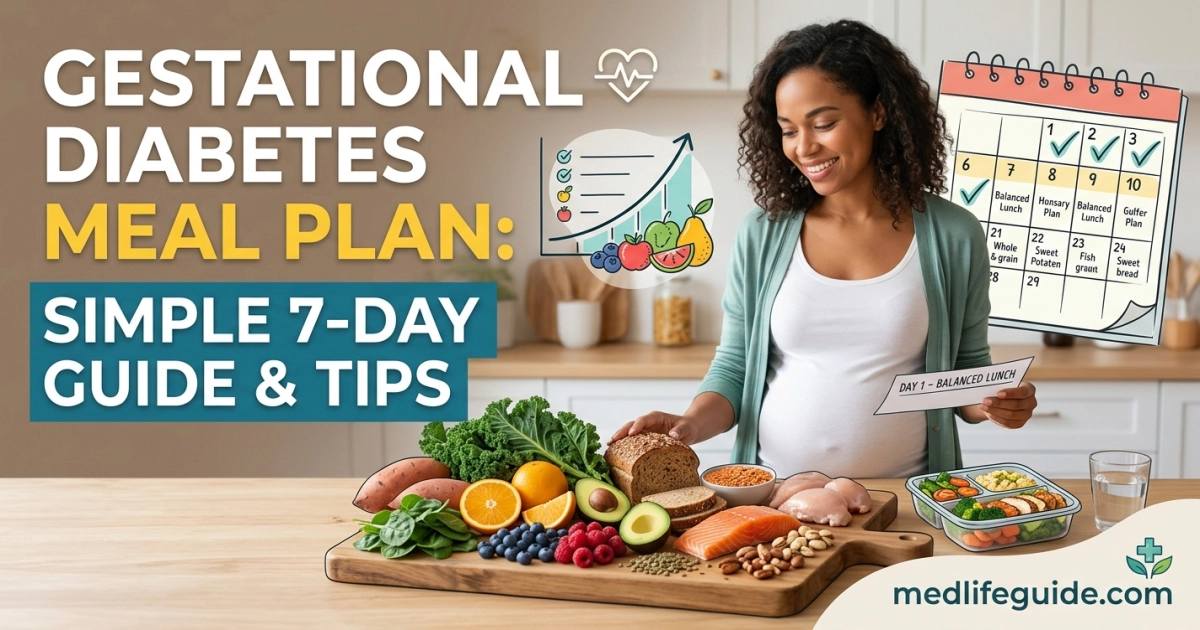
Medically Reviewed and Compiled by Dr. Adam N. Khan, MD.
Quick Takeaways
- Carbs need control, not elimination: You need healthy carbohydrates to support your baby’s growth, but they must be spread evenly across 3 meals and 2 to 3 snacks each day.
- Pairing is essential: Always pair carbohydrates with healthy protein, fiber, or healthy fats to slow down sugar absorption into your bloodstream.
- Breakfast requires special care: Morning hormones make blood sugar harder to control early in the day, so breakfast usually requires fewer carbohydrates than dinner.
EMERGENCY WARNING: If you experience extreme dizziness, blurred vision, severe headache, confusion, sweating, trembling, or feel like you might pass out, check your blood sugar immediately if possible. If your blood sugar drops below 70 mg/dL or if you experience severe symptoms, consume 15 grams of fast-acting sugar (such as 4 ounces of fruit juice) and call your doctor or seek emergency medical care immediately.
What Is Gestational Diabetes?
Gestational diabetes is a type of high blood sugar that develops during pregnancy in people who did not have diabetes before. During pregnancy, your placenta makes hormones to help your baby grow. However, these hormones can stop your body’s insulin from working as well as it should. This condition is called insulin resistance.
When insulin cannot clear sugar from your blood effectively, your blood glucose levels rise. Managing your diet is the primary and most effective way to keep these numbers in a healthy range.
When blood sugar stays elevated, extra glucose crosses the placenta to your baby. Your baby’s pancreas then has to work overtime to produce extra insulin. This can cause the baby to grow larger than usual (a condition called macrosomia), making delivery more difficult. Managing your diet keeps both you and your baby safe.
┌─────────────────────────────────────────────────────────┐
│              How Food Affects Blood Sugar               │
└─────────────────────────────────────────────────────────┘
                            │
       ┌────────────────────┴────────────────────┐
       ▼                                         ▼
  Complex Carbs                             Simple Carbs
  (Oats, Beans, Veggies)                    (Juice, White Bread)
       │                                         │
       ▼                                         ▼
  Slow Digestion                            Fast Digestion
       │                                         │
       ▼                                         ▼
  Steady Glucose Level                      Rapid Sugar Spike
       │                                         │
       ▼                                         ▼
  Stable Energy & Baby Safety               High Blood Sugar Strain
Daily Carbohydrate Goals and Portions
Carbohydrates are not the enemy; they provide vital energy for your baby’s brain and body development. The key is controlling the type and amount you eat at one time.
┌─────────────────────────────────────────────────────────┐
│               Daily Carbohydrate Targets                │
└─────────────────────────────────────────────────────────┘

  Breakfast  ───►  15 – 30 Grams (Lowest carb allowance)

  Lunch      ───►  30 – 45 Grams

  Dinner     ───►  30 – 45 Grams

  Snacks     ───►  15 – 20 Grams (2 to 3 times per day)
Understanding Food Groups
To keep your blood sugar balanced, it helps to understand how different food groups affect glucose levels:
- Carbohydrates (Raise Blood Sugar): Whole grains, starchy vegetables (potatoes, corn, peas), fruits, milk, yogurt, beans, and lentils.
- Proteins (Neutral for Blood Sugar): Chicken, turkey, fish, eggs, tofu, beef, pork, and cheese.
- Fats (Neutral for Blood Sugar): Olive oil, avocado, nuts, seeds, and butter.
- Non-Starchy Vegetables (Minimal Effect): Spinach, broccoli, cauliflower, cucumbers, peppers, and green beans.
Foods to Eat vs. Foods to Limit
Choosing nutrient-dense whole foods keeps you full and prevents sudden blood sugar spikes.
| Food Category | Foods to Choose (Emphasize) | Foods to Limit or Avoid |
| Grains | Steel-cut oats, quinoa, brown rice, 100% whole-wheat bread, wild rice | White bread, bagels, sugary cereals, white pasta, pastries |
| Proteins | Eggs, grilled chicken, turkey breast, salmon, tofu, Greek yogurt | Fried meats, high-sodium processed meats, fish high in mercury |
| Vegetables | Spinach, kale, broccoli, cucumbers, peppers, zucchini | Sugary canned vegetables with added syrups |
| Fruits | Fresh berries (blueberries, raspberries), small apples, pears | Fruit juices, dried fruits, canned fruit in heavy syrup |
| Fats & Oils | Avocados, extra virgin olive oil, almonds, walnuts, chia seeds | Trans fats, excessive fried foods, commercial salad dressings |
Simple 7-Day Sample Meal Plan
This sample meal plan shows how balanced daily eating looks in practice. Always tailor portion sizes to your personal glucose monitoring logs.
Day 1
- Breakfast: 2 scrambled eggs with spinach, served with 1 slice of 100% whole-wheat toast spread with 1/2 avocado.
- Morning Snack: 1 small apple sliced with 2 tablespoons of unsalted almond butter.
- Lunch: Grilled chicken salad with mixed greens, cucumbers, cherry tomatoes, olive oil dressing, and 1/2 cup of cooked quinoa.
- Afternoon Snack: 1/2 cup of low-fat cottage cheese with a handful of fresh blueberries.
- Dinner: 5 oz baked salmon, 1 cup of steamed broccoli, and 1/2 cup of roasted sweet potato cubes.
- Bedtime Snack: 1 string cheese stick and 10-12 unsalted walnuts.
Day 2
- Breakfast: 2-egg omelet with diced bell peppers and cheddar cheese, plus 1 slice of sprouted grain bread.
- Morning Snack: 1/3 cup of hummus with 1 cup of raw cucumber and bell pepper slices.
- Lunch: Turkey wrap using a high-fiber, low-carb whole-wheat tortilla, turkey breast, lettuce, tomato, and mayonnaise, served with a small side green salad.
- Afternoon Snack: 1 plain, full-fat Greek yogurt (unsweetened) topped with 1 tablespoon of chia seeds.
- Dinner: Lean ground beef stir-fry cooked with green beans, zucchini, and snap peas, served over 1/2 cup of brown rice.
- Bedtime Snack: 2 tablespoons of natural peanut butter spread on 2 celery stalks.
Day 3
- Breakfast: 1/2 cup cooked steel-cut oatmeal (measured after cooking) topped with 1 tablespoon of chopped chia seeds and 2 hard-boiled eggs on the side.
- Morning Snack: 1/2 cup of fresh raspberries paired with a handful of raw almonds.
- Lunch: Tuna salad mixed with olive oil mayonnaise, served over a bed of spinach with 5-6 whole-grain flax crackers.
- Afternoon Snack: 1 boiled egg and a small handful of pumpkin seeds.
- Dinner: Grilled chicken breast with 1 cup of roasted asparagus and 1/2 cup of cooked wild rice.
- Bedtime Snack: 1 glass of unsweetened almond milk and 1 tablespoon of almond butter.
Day 4
- Breakfast: 2 poached eggs over 1 slice of rye toast with a side of sliced tomatoes.
- Morning Snack: 1 small pear with 1 ounce of cheddar cheese.
- Lunch: Lentil soup (1 cup) paired with a large garden salad topped with grilled shrimp and olive oil.
- Afternoon Snack: Edamame (1 cup in pods, steamed) sprinkled with sea salt.
- Dinner: Baked cod with lemon and herbs, served with 1 cup of roasted cauliflower and 1/2 cup of baked winter squash.
- Bedtime Snack: 1/2 cup of plain Greek yogurt with a dash of cinnamon.
Day 5
- Breakfast: Scrambled tofu with spinach and turmeric, served with 1 slice of whole-wheat sourdough toast.
- Morning Snack: 1 small peach sliced with 1 ounce of goat cheese.
- Lunch: Chicken Caesar salad (light dressing) with whole-wheat croutons (limited to 15g carbs worth).
- Afternoon Snack: 1 string cheese and 10 cashew nuts.
- Dinner: Grilled pork tenderloin, 1 cup of sautéed green beans, and 1/2 cup of mashed red potatoes (skin on).
- Bedtime Snack: 1 hard-boiled egg with a small spoonful of guacamole.
Day 6
- Breakfast: 2 egg muffins baked with spinach, tomatoes, and feta cheese, served with 1/2 grapefruit.
- Morning Snack: 1/2 cup of cottage cheese with sliced cucumbers and black pepper.
- Lunch: Black bean and chicken bowl with lettuce, salsa, 1/4 avocado, and 1/3 cup of brown rice.
- Afternoon Snack: Celery sticks with 2 tablespoons of sunflower seed butter.
- Dinner: Baked turkey meatballs over zucchini noodles, served with 1/2 cup of whole-wheat pasta mixed in and warm marinara sauce.
- Bedtime Snack: 1 ounce of pumpkin seeds and 1 cup of warm unsweetened soy milk.
Day 7
- Breakfast: 2 scrambled eggs, 2 strips of turkey bacon, and 1 slice of avocado toast on whole-wheat bread.
- Morning Snack: 1/2 cup of fresh blackberries with 1 ounce of pecan halves.
- Lunch: Grilled salmon wrap in a low-carb tortilla with spinach and tzatziki sauce.
- Afternoon Snack: 1 cup of bell pepper strips with 2 tablespoons of guacamole.
- Dinner: Sirloin steak strips stir-fried with broccoli, mushrooms, and snow peas, served over 1/2 cup of cooked quinoa.
- Bedtime Snack: 2 tablespoons of peanut butter on 1 slice of high-protein, low-carb bread.
Practical Cooking Tips & Meal Prep Advice
- Batch-Cook Proteins: Keep hard-boiled eggs, grilled chicken breasts, and baked tofu in your refrigerator so you always have immediate access to fast, protein-dense options.
- Plate Method: Fill half your plate with non-starchy vegetables, one-quarter with lean protein, and one-quarter with complex carbohydrates.
- Read Nutrition Labels: Pay close attention to “Total Carbohydrates” rather than just “Sugars.” Subtract dietary fiber if calculating net carbs, but generally, focus on keeping total carbs per meal predictable.
- Hydrate Correctly: Drink plenty of water throughout the day. Dehydration can cause blood sugar levels to become more concentrated, leading to higher readings.
Frequently Asked Questions
Yes, but choose low-glycemic fruits like fresh berries, small apples, or pears, and always pair them with a protein or healthy fat to slow down sugar absorption.
No, eliminating carbohydrates completely is unsafe during pregnancy because your developing baby needs glucose for healthy growth and brain development.
Drink a large glass of water and take a gentle 15-minute walk, then log what you ate so you and your care team can adjust future portions.
In most cases, gestational diabetes resolves shortly after giving birth once placental hormones return to baseline levels.
Skipping snacks is not recommended because regular, balanced snacks prevent extreme blood sugar drops and keep your liver from overproducing glucose.
Unique Clinical Takeaways
Here are three practical insights that go beyond standard food lists to help you succeed:
1. The “Dawn Insulin Resistance” Effect
Your placenta produces higher levels of counter-regulatory hormones (such as cortisol and human placental lactogen) in the early morning hours. These hormones make your body naturally more resistant to insulin when you first wake up.
Because of this, breakfast is the hardest meal for blood sugar control. You should keep your morning carbohydrate goal strictly to 15–30 grams and avoid liquid carbs or fruits at breakfast entirely.
2. The Post-Meal Walking Window
Light physical activity triggers muscle contraction without requiring extra insulin. Taking a 10- to 15-minute gentle walk within 30 minutes after finishing a main meal allows your skeletal muscles to soak up excess glucose directly from your bloodstream. This simple habit can lower peak post-meal sugar readings by 15% to 20%.
3. The Bedtime Protein-Fat Anchor
Fast overnight leads to a phenomenon where your liver releases stored glucose into your blood, raising your morning fasting numbers.
To prevent this morning spike, consume a small bedtime snack containing at least 8–10 grams of protein and healthy fats (such as a spoonful of natural peanut butter with a hard-boiled egg or string cheese). This keeps your digestion slow overnight and stops your liver from dumping excess sugar into your blood before breakfast.
Reviewer Bio & Disclosures
Dr. Adam N. Khan, MD is a board-certified physician specializing in internal medicine and patient preventive health education, with over 12 years of clinical experience.
Financial & Conflict Disclosure: Dr. Khan receives no direct financial compensation or royalties from any dietary supplement, food brand, or commercial entity mentioned in this guide.
1 thought on “Gestational Diabetes Meal Plan: Simple 7-Day Guide & Tips”
Comments are closed.