
Medically Reviewed and Compiled by Dr. Adam N. Khan, MD.
Quick Answer
- Yes, blood is the primary transmitter: Ebola spreads extremely rapidly through direct contact with infected blood or bodily fluids via cuts, scrapes, or mucous membranes.
- No spread before symptoms: A person infected with Ebola cannot pass the virus through blood or other fluids until they develop noticeable symptoms like fever.
- Extreme durability: The virus can survive on surfaces contaminated with blood for hours to days, requiring specialized medical disinfectants for complete clearance.
EMERGENCY WARNING: If you or a loved one have recently traveled to an area with an active Ebola outbreak and develop a fever, severe headache, muscle pain, vomiting, or unexpected bleeding, seek emergency medical care immediately. Call ahead to your local emergency department before arriving so healthcare staff can prepare appropriate isolation protocols. Do not drive yourself or ride public transportation.
Understanding Ebola and Blood Transmission
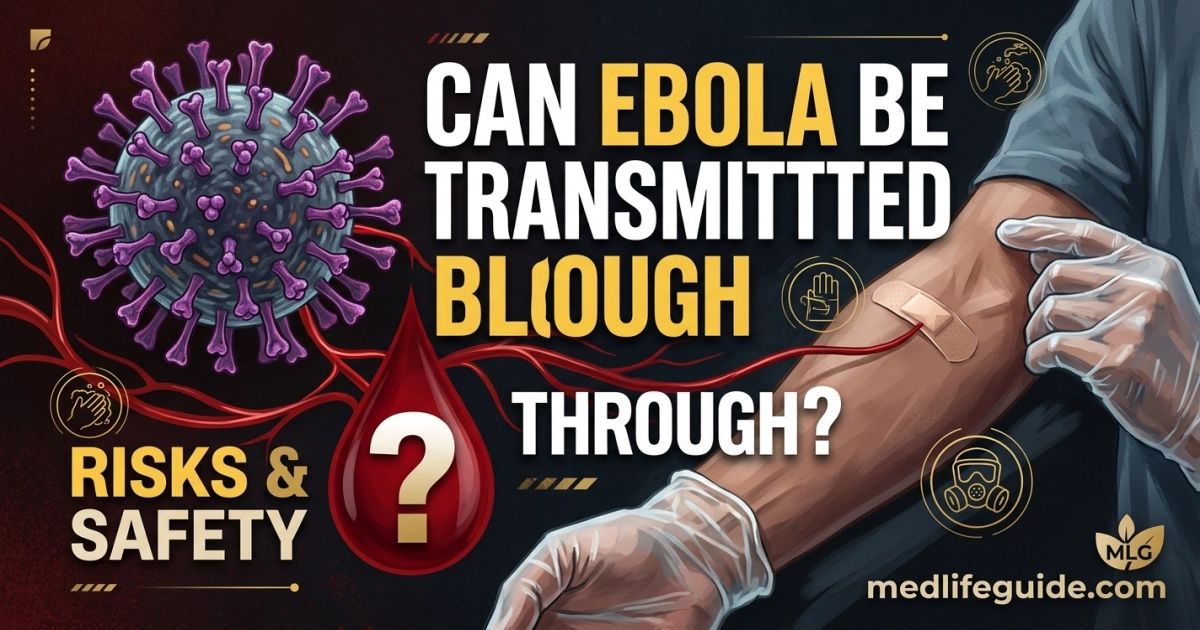
Ebola virus disease is a rare but severe and often fatal illness in humans. When asking can ebola be transmitted through blood, the definitive medical answer is yes. In fact, blood is one of the most potent carriers of the Ebola virus. High levels of the virus replicate within the bloodstream during an active infection, making contact with infected blood extraordinarily hazardous.
Unlike common respiratory illnesses such as influenza or COVID-19, Ebola does not spread through the air or through casual conversation. Instead, transmission requires direct physical contact with blood or other infectious fluids.
How Blood Transmission Occurs
Transmission happens when blood from an infected person enters another person’s body through micro-tears in the skin, open wounds, or mucous membranes. The primary entry points include:
- The Eyes: Rubbing your eyes with hands that have touched infected blood.
- The Nose and Mouth: Accidental splashing or touching the inner membranes.
- Broken Skin: Pre-existing cuts, scrapes, paper cuts, or skin conditions like eczema.
- Puncture Wounds: Accidental needle-stick injuries among medical personnel or shared needles.
+-----------------------------------------------------------------------+
|                       EBOLA TRANSMISSION PATHWAY                      |
+-----------------------------------------------------------------------+
|  Infected Person's Blood / Body Fluids (Symptomatic Phase)           |
|                                  │                                    |
|                                  ▼                                    |
|  Direct Contact (Broken Skin, Mucous Membranes, Needle Sticks)        |
|                                  │                                    |
|                                  ▼                                    |
|  Entry into Host Bloodstream / Immune System Cells                    |
|                                  │                                    |
|                                  ▼                                    |
|  Viral Replication -> Symptom Onset (Fever, Bleeding, Organ Failure)  |
+-----------------------------------------------------------------------+
Unique Clinical Takeaways
Beyond basic symptom lists and standard precautions, managing bloodborne risks during an viral outbreak requires specialized clinical knowledge. The following takeaways highlight key aspects of Ebola transmission:
1. Viral Load and Contagion Scales Exponentially
In the early stages of Ebola infection, symptoms may resemble a mild flu, and the volume of virus circulating in the blood is relatively low. However, as the illness progresses, the viral load inside the bloodstream increases exponentially. By the late stages of disease, a single drop of blood can contain millions of infectious viral particles. This exponential growth means that late-stage patients and deceased individuals pose an extremely high transmission risk to caregivers and healthcare workers.
2. Blood Testing Has a “Diagnostic Window”
Early in the course of the infection—specifically during the first 1 to 3 days after a fever begins—the concentration of viral genetic material in the bloodstream may be too low for standard laboratory tests to detect. A Polymerase Chain Reaction (PCR) blood test performed within 24 hours of initial symptom onset can occasionally return a false negative. If a patient has a known exposure, clinicians must keep the individual isolated and repeat the blood test after 72 hours to definitively confirm or rule out infection.
3. Persistent Immune-Privileged Reservoirs
Even after a patient recovers and blood tests show zero detectable Ebola virus in the bloodstream, the virus can remain hidden in specific areas of the body known as “immune-privileged sites.” These are organs where the body’s immune response is naturally restrained, including the inside of the eyes, the central nervous system, and seminal fluid. While blood is completely cleared of the virus during convalescence, virus particles in semen can persist for months, requiring ongoing monitoring and protected sexual practices.
How Ebola Spreads: Blood vs. Other Body Fluids
While blood carries the highest concentration of the virus during peak illness, Ebola is also present in other bodily fluids. Understanding how blood compares to other fluids helps clarify isolation requirements:
| Body Fluid | Contagion Level | Primary Route of Exposure |
| Blood | Extremely High | Needle-sticks, broken skin, mucous membranes |
| Vomit & Stool | High | Caregiver contact during acute gastrointestinal illness |
| Saliva & Sweat | Moderate to High | Direct physical contact, sharing utensils/bedding |
| Semen | High (Long-term) | Sexual contact (can persist months after recovery) |
| Urine | Moderate | Contact during toilet assistance or linen changing |
Can Ebola Spread Through Casual Contact?
Ebola cannot spread through casual contact such as sitting next to someone on a bus, shaking hands (if skin is intact and free of fluids), or walking through an airport. An individual must be actively showing symptoms to transmit the virus. If a person has been exposed to Ebola but does not have a fever or symptoms, their blood does not yet contain enough viral particles to infect others.
Incubation Period and Contagious Timeline
The time from exposure to the virus until symptoms appear (the incubation period) ranges from 2 to 21 days, with an average of 8 to 10 days.
Day 0           Day 2 - 21                      Late Stage             Recovery
  │                  │                              │                      │
  ▼                  ▼                              ▼                      ▼
Exposure ──► No Symptoms/Not Contagious ──► Fever Onset (Contagious) ──► High Viral Load ──► Clearance from Blood
- Exposure Phase (Day 0): The virus enters the body via blood or fluid contact.
- Asymptomatic Phase (Days 2–21): The virus replicates silently. The patient feels healthy and cannot infect others through blood or fluids.
- Early Symptom Phase: Sudden onset of fever, fatigue, and muscle aches. The patient becomes contagious as viral particles enter blood and secretions.
- Severe Phase: High fever, vomiting, severe diarrhea, and internal or external bleeding. Blood viral load reaches peak concentration.
- Recovery/Convalescence: The immune system clears the virus from the blood. Once cleared from blood, the patient is no longer contagiously ill through standard blood contact.
Medical Precautions and Blood Safety
Because blood contact is the primary driver of Ebola transmission in clinical settings, healthcare facilities follow stringent biological protocols to protect workers and patients.
Healthcare Personal Protective Equipment (PPE)
Caring for a patient with suspected or confirmed Ebola requires complete skin coverage. PPE standards established by global health authorities include:
- Waterproof gowns or full-body coveralls.
- Double-gloving with extended cuffs.
- Respiratory protection (N95 or Powered Air-Purifying Respirators – PAPR).
- Face shields or full goggles to protect mucous membranes from blood splashes.
- Fluid-resistant boot covers.
Safe Needle and Sharp Handling
Needle-stick injuries represent one of the most direct avenues for bloodborne transmission. Medical teams use safety-engineered needles, eliminate unnecessary sharps, and utilize rigid disposal containers immediately at the point of use to prevent accidental punctures.
Blood Donation Screening
To safeguard the global blood supply, blood collection agencies strictly screen potential donors. Anyone who has been diagnosed with Ebola, lived in or traveled to an active outbreak area, or had direct contact with an infected individual is deferred from donating blood according to regulatory guidelines.
Frequently Asked Questions (FAQs)
If your skin is entirely intact with no microscopic cuts or scrapes, the virus cannot easily penetrate; however, you must wash the area immediately with soap and water or a chlorine solution because invisible skin breaks can allow entry.
In theory, receiving blood from an infected individual could transmit Ebola, but strict donor screening and travel deferral protocols prevent individuals with exposure or illness from donating blood.
The Ebola virus can survive in dried blood on room-temperature surfaces for several hours to a few days depending on environmental factors like humidity and sunlight.
No, there is no evidence that mosquitoes, ticks, or other biting insects can transmit the Ebola virus.
Once a patient fully recovers and is discharged, the virus is completely cleared from their bloodstream, though it may persist in isolated body sites like semen or ocular fluid for a longer duration.
References and Citations
Below are the primary scientific references and regulatory authorities informing this article. For additional reading and clinical summaries on medlifeguide, view our internal documentation hubs:
- Centers for Disease Control and Prevention (CDC). (2026). Ebola Disease Basics and Transmission Routes. /references/cdc-ebola-basics
- World Health Organization (WHO). (2025). Ebola Virus Disease Fact Sheet and Infection Control Guidelines. /references/who-ebola-factsheet
- European Centre for Disease Prevention and Control (ECDC). (2023). Factsheet about Ebola Disease Transmission. /references/ecdc-ebola-factsheet
- Judson, S., Prescott, J., & Munster, V. (2015). Understanding Ebola Virus Transmission. Viruses, 7(2), 511-521. /references/nih-pmc-ebola-transmission
- Caviness, K., Kuhn, J. H., & Palacios, G. (2017). Ebola Virus Persistence as a New Focus in Clinical Research. Current Opinion in Virology, 23, 43-48. /references/pubmed-ebola-persistence
Reviewer Profile
Medically Reviewed and Compiled by Dr. Adam N. Khan, MD
Affiliation: Infectious Disease Specialist & Clinical Medical Editor at MedLifeGuide.
Conflict Disclosure: Dr. Khan has no financial interests, commercial ties, or conflicts of interest regarding treatments, pharmaceuticals, or diagnostics mentioned in this work.