
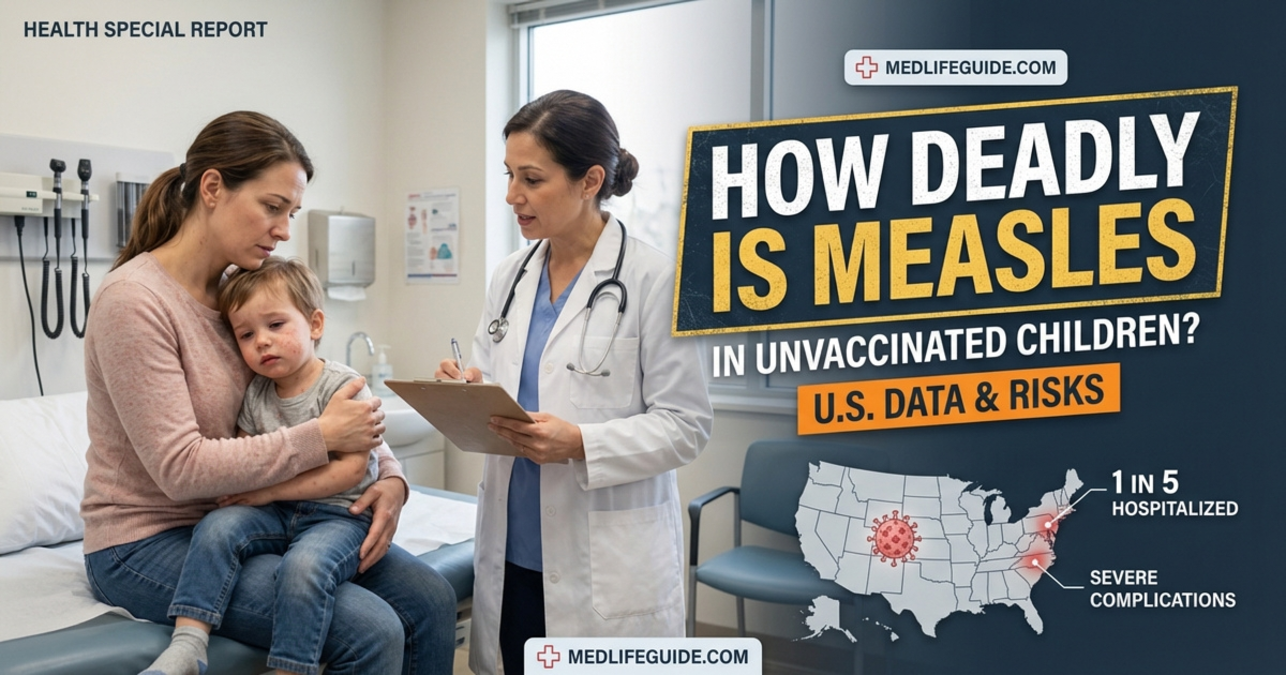
- U.S. fatality rate: Nearly 1 to 3 out of every 1,000 children infected with measles in the United States die from respiratory or neurological complications, even with modern hospital care.
- Hospitalization risk: Roughly 1 in 5 unvaccinated people in the U.S. who contract measles require hospitalization, with children under age 5 facing the highest rates of severe illness.
- Primary drivers of death: Measles rarely kills through the rash itself; deaths are primarily caused by measles pneumonia (affecting up to 1 in 20 infected children), acute encephalitis (brain swelling in about 1 in 1,000 cases), and delayed central nervous system damage.
How Deadly Is Measles for Unvaccinated Children in the U.S.?
In the United States, measles carries a case fatality rate of approximately 0.1% to 0.3%—meaning 1 to 3 children die for every 1,000 who become infected. While that percentage may sound small in isolation, measles is one of the most contagious human viruses known. Roughly 90% of unvaccinated people exposed to an infected person will contract the virus, and live viral particles can remain suspended in the air for up to two hours after an infected person leaves a room.
During U.S. outbreaks tracked by the Centers for Disease Control and Prevention (CDC), the overwhelming majority of cases—93% to 96%—occur in individuals who are unvaccinated or have unknown vaccination status. Among children under age 5 who contract measles in the U.S., roughly 17% to 18% require inpatient hospital care for oxygen support, intravenous fluids, or secondary infections.
(Read also: Texas Measles Outbreak Guide)
Why Global Measles Death Rates Are Much Higher
Caregivers reading international health reports often see much higher fatality figures. According to the World Health Organization (WHO) and Pan American Health Organization (PAHO), measles kills 3% to 6% of infected children in populations with high rates of malnutrition and limited healthcare access—and up to 30% in displaced or crisis-affected communities.
The lower U.S. fatality rate reflects access to pediatric intensive care, mechanical ventilation, antibiotics for secondary bacterial infections, and baseline nutritional health—not a milder virus.
(Read also: Measles Cases Florida 2026 Updates)
Measles Risk Comparison by Vaccination Status
| Outcome / Metric | Unvaccinated Child | 1 Dose of MMR Vaccine | 2 Doses of MMR Vaccine | Primary Source |
|---|---|---|---|---|
| Infection risk after household/close exposure | ~90% (9 in 10 exposed) | ~7% (93% effective against infection) | ~3% (97% effective against infection) | CDC |
| Share of U.S. outbreak cases (2025–2026) | 93%–96% (unvaccinated/unknown) | 2%–3% | 2%–4% | CDC Surveillance |
| Hospitalization rate | ~1 in 5 overall (~17%–18% in under-5s) | Substantially lower; milder illness if infected | Rare; breakthrough cases are typically mild | CDC |
| Risk of death | 1 to 3 per 1,000 infected children | Extremely rare in immunocompetent children | Extremely rare in immunocompetent children | CDC |
What Actually Causes Death in Pediatric Measles Cases?
Measles begins 7 to 14 days after exposure with a high fever (often spiking above 104°F), cough, runny nose, and red, watery eyes, followed by tiny white spots inside the mouth (Koplik spots) and a red blotchy rash starting at the hairline. Death occurs when the virus damages vital organs or allows secondary bacteria to invade.
1. Measles Pneumonia (Most Common Cause of Death)
Up to 1 in 20 children (5%) with measles develop pneumonia. This is the leading cause of measles-related death in young children. It happens in two ways:
- Primary viral pneumonitis: The measles virus directly inflames and damages the small airways and air sacs of the lungs.
- Secondary bacterial pneumonia: Because measles strips away protective cells lining the respiratory tract, bacteria such as Streptococcus pneumoniae or Staphylococcus aureus can trigger severe, life-threatening lung infections.
2. Acute Encephalitis (Brain Swelling)
Approximately 1 in 1,000 children with measles develop acute encephalitis—dangerous inflammation of the brain that can occur during the rash phase or weeks later. Encephalitis can trigger prolonged seizures, coma, and death. Among children who survive measles encephalitis, many experience permanent neurological disabilities, including deafness or intellectual impairment.
3. Severe Dehydration and Secondary Sepsis
High fevers combined with painful mouth sores, vomiting, and measles-related diarrhea (occurring in nearly 1 in 10 cases) can rapidly dehydrate infants and toddlers. Without prompt medical rehydration, severe electrolyte imbalances and shock can become fatal.
4. Subacute Sclerosing Panencephalitis (SSPE)
SSPE is a rare, progressive, and universally fatal brain disorder caused by a persistent measles virus infection that remains dormant in the central nervous system. Symptoms—such as subtle behavioral changes, declining school performance, and involuntary muscle jerks—typically appear 7 to 10 years after the child appears to have fully recovered from measles.
- Based on U.S. resurgence data (1989–1991), the CDC estimates SSPE occurs in 7 to 11 per 100,000 measles cases overall.
- Risk is significantly higher—estimated in some pediatric studies at roughly 1 in 600 to 1 in 1,300—when a child contracts measles before age 1 or 2, before their immune system is mature enough to clear the virus completely.
The Hidden Risk After Recovery: Measles “Immune Amnesia”
Even when an unvaccinated child recovers from acute measles without pneumonia or encephalitis, the virus leaves behind a silent vulnerability known as immune amnesia.
Research led by Harvard Medical School and international virology teams demonstrated that the measles virus specifically infects and destroys memory B cells and memory T cells—the immune cells responsible for remembering past infections and vaccines. In a landmark study published in Science, children who contracted measles lost between 11% and 73% of their preexisting antibody repertoire against other bacteria and viruses.
What this means for families: For months to up to 2–3 years after recovering from measles, a child’s immune system behaves partly like an infant’s. They face elevated risks of severe illness or death from everyday pathogens they were previously immune to, such as influenza, RSV, and bacterial ear or lung infections.
Why Some Unvaccinated Children Face Higher Risk Than Others
While any non-immune child can develop life-threatening complications, clinical data identifies four groups at highest risk of hospitalization and death:
- Infants under 12 months of age: Babies are routinely scheduled for their first MMR dose at 12 to 15 months, leaving infants under age 1 reliant on community immunity. Maternal antibodies passed during pregnancy typically wane by 4 to 6 months of age, creating a critical window of vulnerability.
- Children under age 5: Narrower airways and immature immune responses make toddlers far more susceptible to respiratory failure from measles pneumonia and croup.
- Immunocompromised children: Children undergoing chemotherapy, taking immunosuppressive medications, or living with primary immunodeficiencies or untreated HIV can develop fatal giant-cell pneumonia or measles inclusion-body encephalitis—sometimes without ever developing the classic measles rash.
- Children with low Vitamin A levels: Measles rapidly depletes the body’s vitamin A stores, which are essential for maintaining healthy epithelial linings in the eyes and lungs. Low vitamin A increases the risk of corneal scarring (blindness) and severe respiratory complications.
(Read also: Measles Symptoms in Adults)
What Evidence Supports—and Where Uncertainty Remains
Caregivers navigating outbreak news often encounter conflicting claims about treatments and outcomes. Separating established clinical evidence from ongoing medical uncertainty helps clarify what actually protects children.
Established Clinical Evidence
- No antiviral cure exists: There is no FDA-approved antiviral medication that stops measles once infection begins; medical care is strictly supportive (oxygen, fluids, fever control, and treating secondary bacterial infections).
- Two-dose MMR prevention: Two doses of the MMR vaccine are approximately 97% effective at preventing measles infection.
- Hospital-grade Vitamin A for severe cases: Both the WHO and the American Academy of Pediatrics (AAP) recommend two high, age-specific doses of vitamin A (given 24 hours apart under physician supervision) for children hospitalized with severe measles to reduce eye damage and mortality risk.
Scientific Uncertainty & Clinical Nuance
- Vitamin A in mild U.S. outpatient cases: While the WHO recommends vitamin A for all children with acute measles globally, clinical trial evidence showing clear mortality reduction comes predominantly from low- and middle-income countries where baseline vitamin A deficiency is common. In well-nourished U.S. children with mild outpatient measles, the exact magnitude of benefit is less certain, though many U.S. infectious disease specialists still administer it under medical supervision.
- Duration of immune amnesia: Studies consistently show significant antibody depletion following measles, but individual recovery time varies—ranging from several months to over two years depending on subsequent pathogen exposures and re-vaccination.
Important Safety Warning on Home Vitamin A
Vitamin A does not prevent measles. Because vitamin A is fat-soluble, giving a child over-the-counter high-dose supplements at home without a pediatrician’s exact dosing calculation can cause acute hypervitaminosis A—leading to liver toxicity, intracranial pressure (bulging fontanelle or severe headache), vomiting, and blurred vision.
Step-by-Step Caregiver Decision Guide After Exposure or Symptoms
If your unvaccinated child has been near a confirmed measles case or develops a suspicious fever and rash, timing and infection control are critical.
| Scenario | Time Window | Recommended Clinical Action | Why Timing Matters |
|---|---|---|---|
| Known exposure (child ≥ 6 months, not immunocompromised) | Within 72 hours of exposure | Contact your pediatrician or local health department immediately about post-exposure MMR vaccination. | An MMR dose given within 72 hours can prevent the disease or significantly reduce its severity. |
| Known exposure (infants < 6 months, pregnant, or immunocompromised) | Within 6 days of exposure | Ask a specialist immediately about Immune Globulin (IG) administration. | IG provides temporary antibodies that can prevent or blunt severe measles in high-risk patients who cannot get MMR. |
| Exposure occurred > 6 days ago (no symptoms yet) | Days 7–21 post-exposure | Keep your child home in quarantine; monitor temperature daily and notify your local health department. | Symptoms usually start 7–14 days after exposure; children become contagious 4 days before the rash appears. |
| Child has fever + cough/red eyes/rash | Active illness | Call the clinic or ER BEFORE arriving. Do not walk into a shared waiting room unannounced. | Measles stays airborne for up to 2 hours; calling ahead lets staff use an isolation entrance to protect infants and cancer patients. |
Emergency Red Flags: When to Seek Immediate Medical Care
Call your pediatrician immediately—or call ahead to the nearest emergency department—if a child with suspected or confirmed measles develops any of the following warning signs:
- Breathing difficulties: Fast or labored breathing, flaring nostrils, skin pulling in around the ribs (retractions), bluish lips or fingernails, or a worsening, deep cough (signs of pneumonia).
- Neurological changes: Extreme lethargy, difficulty waking up, confusion, stiff neck, severe headache, or seizures/convulsions (signs of encephalitis).
- Severe dehydration: No wet diapers or urination for 6 to 8 hours, crying without tears, sunken eyes, dry cracked lips, or inability to keep fluids down.
- Persistent or returning high fever: A fever above 104°F that does not respond to weight-based acetaminophen or ibuprofen, or a fever that subsides and then spikes again (often signaling a secondary bacterial ear or lung infection).
- Eye pain or vision changes: Extreme sensitivity to light, thick pus discharge, or blurred vision.
Note: Never give aspirin to a child or teenager with a viral illness due to the risk of Reye’s syndrome.
Questions to Ask Your Child’s Pediatrician
If you are navigating a local outbreak or caring for an exposed or unvaccinated child, consider asking your doctor:
- “Given my child’s exact age and health history, are they eligible for an early MMR dose (such as at 6–11 months during an outbreak or before travel) or post-exposure prophylaxis?”
- “Should my child receive physician-supervised vitamin A dosing, and what exact formulation and dose should be used?”
- “What specific breathing rate or hydration benchmarks should I track at home over the next 7 days?”
- “If my child recovers from measles, should we review or repeat any routine childhood vaccinations afterward due to immune amnesia?”
Frequently Asked Questions
Yes. While malnutrition and underlying immune conditions sharply increase fatality risk, previously healthy children in the United States still develop fatal measles pneumonia and acute encephalitis. In U.S. outbreaks, roughly 1 in 5 unvaccinated patients require hospitalization, and 1 to 3 per 1,000 infected children die despite full access to modern pediatric intensive care.
Yes. Children younger than 5—and especially infants under 12 months—experience the highest rates of hospitalization, pneumonia, ear infections, and severe dehydration. Infants infected before age 1 or 2 also carry a substantially higher risk of developing subacute sclerosing panencephalitis (SSPE), a fatal brain complication that emerges years later.
Both natural measles infection and two doses of the MMR vaccine produce strong, long-lasting immunity against measles. However, natural infection carries a 1-in-5 risk of hospitalization, a 1-in-1,000 risk of brain swelling, a 1-to-3-in-1,000 risk of death, and wipes out preexisting immune memory against other diseases. Two doses of the MMR vaccine provide 97% protection without those life-threatening risks.
No. Vitamin A does not prevent measles infection. In clinical medicine, specific high doses of vitamin A are used strictly as supportive treatment after a child is diagnosed with measles to help prevent blindness and lower complication severity. Giving high doses of vitamin A or cod liver oil preventatively at home can cause toxic liver damage and dangerously high pressure around the brain.
Call your pediatrician or local health department immediately—do not wait for symptoms to appear. If administered within 72 hours of exposure, the MMR vaccine can prevent measles or make the illness much milder in eligible children aged 6 months and older. For infants under 6 months or immunocompromised children, a doctor may recommend immune globulin (IG) within 6 days of exposure.
Medical Disclaimer
This article is for educational and informational purposes only and does not constitute medical advice, diagnosis, or treatment. Measles is a reportable, potentially life-threatening infectious disease. Always consult a qualified pediatrician, licensed healthcare provider, or your local public health department regarding exposure, vaccination, or symptoms in your child. If your child has trouble breathing, confusion, seizures, or signs of severe dehydration, seek emergency medical care immediately and call ahead before arriving at a clinic or hospital.