
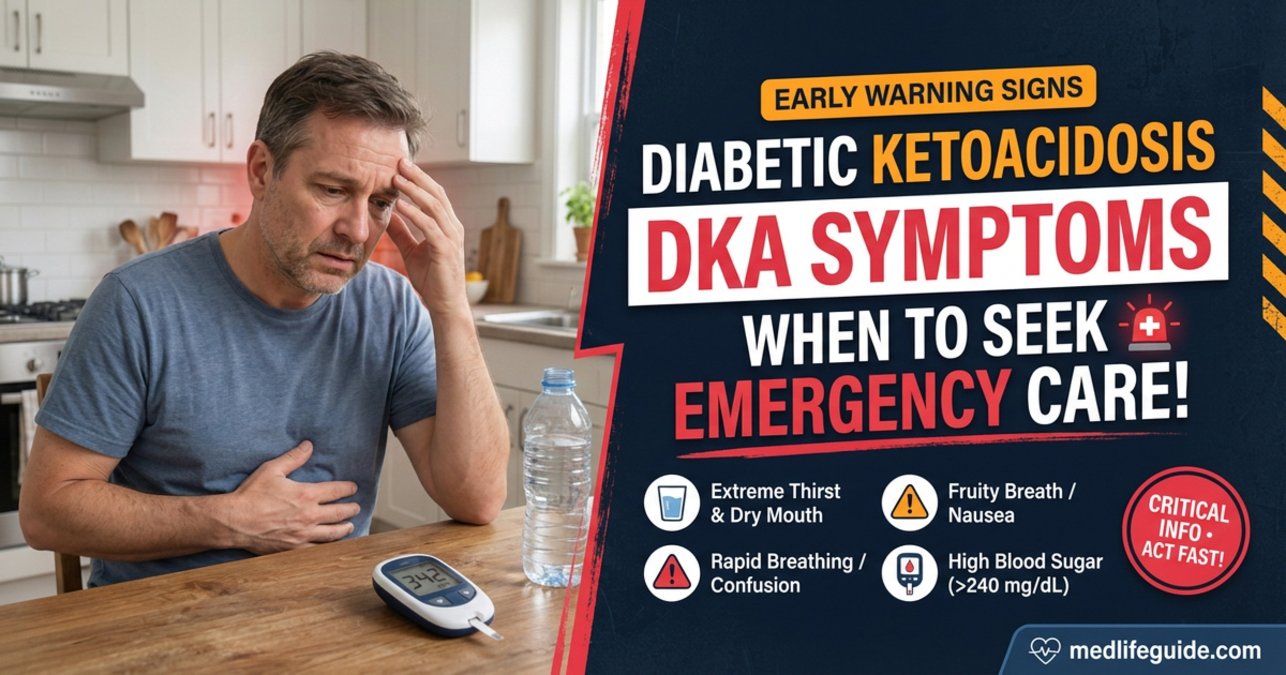
- DKA symptoms often progress in two stages: Early signs include extreme thirst and frequent urination, which can escalate within 24 hours into nausea, vomiting, stomach pain, rapid deep breathing, and confusion.
- Blood sugar alone does not rule out DKA: While blood glucose is typically above $200\text{ mg/dL}$, people taking SGLT2 inhibitors, pregnant patients, or those fasting during illness can develop euglycemic DKA with normal or mildly elevated glucose.
- Ketone levels dictate urgency: According to the American Diabetes Association (ADA), a blood ketone reading of $1.6\text{ mmol/L}$ or higher—or moderate-to-large urine ketones alongside vomiting or trouble breathing—requires immediate emergency medical care.
Early vs. Late Symptoms: How DKA Escalates
Diabetic ketoacidosis develops when the body lacks enough insulin to move glucose from the bloodstream into cells for energy. Without usable insulin, the liver breaks down fat for fuel, releasing acidic molecules called ketones into the blood. While DKA can build over a couple of days, symptoms frequently escalate within 24 hours—and for roughly one in four people with newly diagnosed type 1 diabetes, DKA is the first sign they have the condition.
Clinicians generally observe symptoms unfolding as fluid loss worsens and blood acidity rises:
Stage 1: Early High-Blood-Sugar and Dehydration Signs
- Extreme thirst (polydipsia) and very dry mouth: High blood sugar pulls fluid out of tissues, triggering intense thirst.
- Frequent urination (polyuria): The kidneys attempt to flush excess glucose and ketones through urine, rapidly depleting body water and electrolytes.
- Unexplained fatigue or weakness: Cells cannot access glucose for fuel, causing heavy exhaustion even at rest.
- Flushed, warm, or dry skin: Early fluid depletion reduces moisture in the skin and mucous membranes.
Stage 2: Acidosis and Metabolic Crisis Signs
- Nausea and persistent vomiting: Acid buildup irritates the digestive tract. Inability to keep fluids down accelerates dehydration and makes home management unsafe.
- Abdominal pain: Severe stomach pain is a hallmark gastrointestinal symptom of DKA and can closely mimic appendicitis or pancreatitis, particularly in children and young adults.
- Rapid, deep breathing (Kussmaul respirations): The lungs try to lower blood acidity by blowing off excess carbon dioxide, producing fast, heavy, or labored breaths.
- Fruity-smelling breath: Acetone, a volatile ketone body, escapes through the lungs and gives breath a sweet, nail-polish-remover, or fruity odor.
- Brain fog, confusion, or unusual drowsiness: Caregivers often notice slowed responses, irritability, difficulty concentrating, or lethargy before the patient realizes how sick they are.
Clinical Note on “Stomach Flu” Confusion: Established clinical guidance emphasizes that DKA is frequently mistaken for viral gastroenteritis because both cause nausea, vomiting, and belly pain. However, if vomiting occurs alongside high blood sugar or elevated ketones, treating it as a routine stomach bug—especially by skipping insulin because you cannot eat—can rapidly worsen acidosis.
Can You Have DKA With Normal Blood Sugar? (Euglycemic DKA)
Established Evidence: Yes. While classic DKA presents with blood glucose at or above 200 mg/dL, a recognized subtype called euglycemic diabetic ketoacidosis (euDKA) occurs when dangerous ketoacidosis develops while blood sugar remains below 200 mg/dL.
The U.S. Food and Drug Administration (FDA) and ADA highlight specific situations where normal glucose readings can mask DKA:
- SGLT2 inhibitor medications: Prescription pills such as empagliflozin (Jardiance), dapagliflozin (Farxiga), canagliflozin (Invokana), and ertugliflozin (Steglatro) cause the kidneys to excrete glucose in urine even when insulin levels drop too low.
- Low carbohydrate intake or prolonged fasting: Skipping meals due to nausea, dental work, colonoscopy prep, or strict ketogenic dieting reduces blood glucose without stopping ketone production.
- Pregnancy: Pregnant individuals with type 1, type 2, or gestational diabetes experience higher insulin resistance and can enter DKA faster and at lower glucose thresholds.
- Partial insulin dosing before arrival: Taking a small correction dose of insulin before testing can lower blood sugar without clearing high blood ketones.
Clinical Limitation: Continuous glucose monitors (CGMs) and fingerstick meters only measure glucose—they cannot detect ketones. If you take an SGLT2 inhibitor or feel acutely nauseated and short of breath, you must test for ketones regardless of whether your glucose looks normal.
DKA vs. High Blood Sugar vs. HHS: Practical Decision Table
Patients and caregivers often struggle to tell routine high blood sugar (hyperglycemia) apart from DKA or Hyperosmolar Hyperglycemic State (HHS), another emergency more common in older adults with type 2 diabetes.
| Feature | Uncomplicated High Blood Sugar | Diabetic Ketoacidosis (DKA) | Hyperosmolar Hyperglycemic State (HHS) |
|---|---|---|---|
| Typical Blood Glucose | Above target (often 180–300+ mg/dL) | Usually ≥200 mg/dL (can be <200 mg/dL in euDKA) | Typically very high (≥600 mg/dL) |
| Ketone Levels | Negative or trace (<0.6 mmol/L blood) | Elevated: Blood ≥1.6 mmol/L signals emergency risk (≥3.0 mmol/L diagnostic); urine 2+ or higher | Negative, trace, or mild |
| Onset Speed | Hours to days | Rapid (often within 24 hours) | Gradual (days to weeks) |
| Key Symptoms | Thirst, frequent urination, mild fatigue | Thirst, urination, nausea, vomiting, belly pain, fruity breath, fast deep breathing, confusion | Extreme thirst, profound dehydration, confusion, vision changes, seizures (usually no nausea/abdominal pain) |
| Primary Triggers | Missed bolus, extra carbs, mild stress, low activity | Infection, missed insulin, pump failure, SGLT2 inhibitors, new type 1 diabetes | Severe infection, stroke, heart attack, dehydration in type 2 diabetes |
| Immediate Action | Follow your provider’s correction factor, drink water, recheck in 2–4 hours | Call your diabetes team immediately or go to the ER / call 911 if vomiting, breathing changes, or blood ketones ≥1.6 mmol/L | Go to the ER or call 911 immediately |
(Read also: Type 1 Diabetes Preventions and Treatments)
Blood Ketone Meters vs. Urine Strips: What Guidelines Say About Limitations
Both the ADA and clinical practice guidelines recommend keeping non-expired ketone testing supplies at home, especially if you use insulin or an SGLT2 inhibitor. However, the two testing methods do not measure the exact same molecule:
Blood Ketone Meters (Preferred by Clinical Guidelines): Blood meters measure beta-hydroxybutyrate (β-OHB), the primary ketone responsible for blood acidity during DKA. Because it samples capillary blood directly, it reflects real-time metabolic status.
Urine Ketone Strips (Practical Alternative, With Lag): Urine dipsticks measure acetoacetate, not beta-hydroxybutyrate. Urine tests are affordable and widely available over the counter, but they carry two important limitations:
- Time lag: Urine sitting in the bladder reflects ketone levels from hours earlier rather than what is happening right now.
- Paradoxical readings during recovery: As DKA begins to resolve, beta-hydroxybutyrate converts back into acetoacetate, which can temporarily make urine strips look darker even as blood acidity improves.
Practical Rule: Do not exercise when blood glucose is high and ketones are present. Physical exertion stimulates stress hormones that accelerate fat breakdown and push ketone levels higher.
Red Flags and Emergency Guidance: When to Call 911
DKA is a medical emergency that requires hospital treatment—typically intravenous (IV) fluids, carefully timed IV insulin, and electrolyte replacement (especially potassium)—and cannot be safely treated at home once severe symptoms appear.
Call 911 or go to the nearest emergency room immediately if you or someone you care for has:
- Vomiting or inability to keep water or fluids down
- Blood ketone levels of 1.6 mmol/L or higher, or moderate-to-large urine ketones (2+ or higher) that do not drop after following your sick-day plan
- Blood glucose staying at or above 300 mg/dL despite prescribed correction doses
- Difficulty breathing, shortness of breath, or rapid, deep gasping breaths
- Fruity-smelling breath
- Severe abdominal pain
- Confusion, slurred speech, extreme drowsiness, or difficulty waking up
Note for caregivers of children and teens: In pediatric DKA, new-onset headache, sudden slowing of heart rate, or worsening confusion require urgent emergency evaluation due to the risk of cerebral edema (brain swelling), a rare but serious complication.
(Read also: Diabetes and Chronic Kidney Disease)
Questions to Ask Your Clinician Before an Illness Happens
Because infections (such as urinary tract infections, pneumonia, or flu) and insulin pump interruptions are the most common DKA triggers, clinical guidelines advise establishing a written Sick-Day Management Plan during a routine visit:
- “What exact blood glucose and ketone thresholds mean I should call your office versus go straight to the emergency room?”
- “If I am sick and cannot eat solid food, how should I adjust my basal and bolus insulin doses without stopping insulin completely?”
- “Do any of my medications—such as an SGLT2 inhibitor—require me to temporarily pause them before surgery, fasting, or during an illness?”
- “Should I prescribe a blood ketone meter and test strips so I don’t have to rely only on urine strips?”
- “If I use an insulin pump, what is my backup syringe or pen dosing plan if my infusion site fails?”
Frequently Asked Questions
DKA symptoms often develop rapidly, frequently within 24 hours of an infection, missed insulin dose, or insulin pump malfunction. Early signs like extreme thirst and frequent urination may appear first, followed quickly by nausea, vomiting, stomach pain, and labored breathing.
Yes. Although DKA is most common in people with type 1 diabetes, people with type 2 diabetes can also develop DKA during severe physical stress—such as serious infections, heart attack, surgery, or trauma—or when taking SGLT2 inhibitor medications.
High levels of acidic ketones in the bloodstream irritate the gastrointestinal tract and slow stomach emptying, triggering nausea, persistent vomiting, and sharp abdominal pain. In clinical settings, DKA abdominal pain is strong enough that it can initially look like appendicitis or a surgical emergency.
No—never stop taking basal (background) insulin completely unless explicitly instructed by your healthcare provider. During illness, stress hormones like cortisol and adrenaline raise blood sugar and accelerate fat breakdown even when you are not eating. Stopping insulin removes the only brake on ketone production and can trigger DKA.
Nutritional ketosis (from a low-carbohydrate diet or overnight fasting) produces mild, controlled ketone levels—typically $0.5\text{ to }3.0\text{ mmol/L}$—while insulin remains present to keep blood pH normal. Diabetic ketoacidosis is a dangerous metabolic emergency caused by severe insulin deficiency, where uncontrolled ketone production overwhelms the blood’s buffering system and drops blood pH below $7.3$.