
Medically Reviewed and Compiled by Dr. Adam N. Khan, MD.
Key Takeways
- It is both: Diabetes is rarely caused purely by genetics or purely by the environment. Most forms happen when an environmental trigger activates an underlying genetic risk.
- Type 2 has a stronger genetic link than Type 1: While many people assume Type 1 is mostly inherited, Type 2 diabetes actually runs more strongly in families, though lifestyle choices heavily influence whether it develops.
- You can change your risk: Even if diabetes runs in your family, healthy daily habits—like moving more, eating balanced meals, and managing stress—can delay or prevent Type 2 diabetes.
EMERGENCY WARNING: If you or a loved one experience confusion, fruity-smelling breath, rapid breathing, severe vomiting, extreme thirst, or sudden weakness, seek emergency medical care (call 911 or visit the nearest emergency room) immediately. These can be signs of Diabetic Ketoacidosis (DKA) or Hyperglycemic Hyperosmolar State (HHS), which are life-threatening medical emergencies.
The Big Picture: Genes vs. Environment in Diabetes
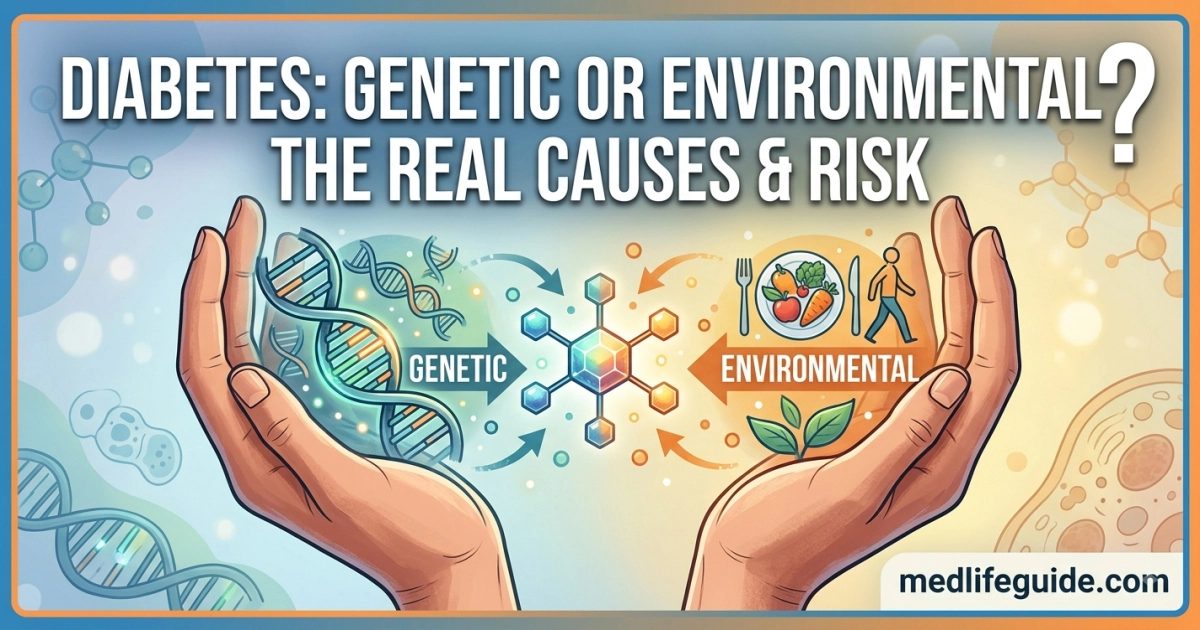
When doctors look at diabetes, they do not view it as a simple “either/or” condition. Instead, diabetes develops through a complex interaction between the code inside your cells (your genetics) and the world around you (your environment).
               +-----------------------------------------+
               |        GENETIC SUSCEPTIBILITY           |
               | (DNA, Family History, HLA Gene Complex) |
               +-------------------- GENERAL REGION -----+
                                    |
                                    v
               +-----------------------------------------+
               |         ENVIRONMENTAL TRIGGERS          |
               | (Viruses, Nutrition, Sleep, Toxins)     |
               +--------------------+--------------------+
                                    |
                                    v
               +-----------------------------------------+
               |            DIABETES ONSET               |
               | (Autoimmunity or Insulin Resistance)    |
               +-----------------------------------------+
To understand how this balance works, it helps to break down the different types of diabetes, as genetics and environment play unique roles in each.
Type 1 Diabetes: Genetic Susceptibility Met by an Environmental Trigger
Type 1 diabetes is an autoimmune condition. This means the body’s defense system accidentally attacks the pancreas cells that make insulin. Insulin is the essential hormone that helps sugar leave your bloodstream and enter your cells for energy.
The Genetic Component of Type 1
Genetics play a clear supporting role in Type 1 diabetes:
- If an identical twin develops Type 1 diabetes, the other twin has roughly a 50% chance of developing it too.
- Children whose parents have Type 1 diabetes carry a higher risk than the general population, primarily linked to specific genetic patterns known as Human Leukocyte Antigen (HLA) complexes (National Institutes of Health).
The Environmental Triggers of Type 1
Since an identical twin only has a 50% chance of developing Type 1 diabetes when their twin has it, genetics cannot tell the full story. Something in the environment must trigger the immune attack:
- Viral Infections: Research cited by the World Health Organization (WHO) points to viruses like enteroviruses, which may confuse the immune system into attacking pancreatic cells.
- Geography and Climate: Type 1 diabetes is far more common in cold northern climates than in warm equatorial regions, which researchers believe is linked to lower Vitamin D levels from sunlight.
- Infant Feeding Patterns: Early exposure to certain dietary components or early disruptions in gut bacteria (microbiome) may influence immune development in genetically susceptible infants.
Type 2 Diabetes: A Strong Inheritance Guided by Daily Surroundings
Type 2 diabetes is the most common form of diabetes, making up about 90% to 95% of all cases worldwide. In Type 2 diabetes, the body still makes insulin, but the cells become resistant to it. Over time, the pancreas cannot keep up with the demand.
The Surprising Genetic Strength of Type 2
Many people assume Type 2 diabetes is caused only by lifestyle, but family history is actually a stronger factor in Type 2 than in Type 1:
- If one parent has Type 2 diabetes, your risk is approximately 40%.
- If both parents have Type 2 diabetes, your lifetime risk rises to nearly 70%.
- Scientists have identified dozens of genetic variations that affect how your body releases insulin, senses sugar, and stores fat.
The Environmental Amplifiers of Type 2
Even with high genetic risk, environmental factors determine whether insulin resistance stays mild or progresses to full Type 2 diabetes:
- Dietary Quality: Diets high in ultra-processed foods, refined sugars, and sweetened beverages increase stress on insulin-producing cells.
- Physical Activity: Muscle tissue is the main consumer of glucose in the body. Sitting for long periods reduces cell sensitivity to insulin, while regular movement helps cells absorb blood sugar without needing extra insulin.
- Sleep and Stress: Chronic sleep loss and high mental stress raise levels of the hormone cortisol. Cortisol makes body tissue more resistant to insulin.
- Built Environment: Living in areas without safe places to walk or without affordable access to fresh foods creates environmental barriers to healthy living (Centers for Disease Control and Prevention).
Comparing Diabetes Types: Genetic vs. Environmental Risk
To see how these forces compare across different forms of diabetes, review the comparison table below:
| Diabetes Type | Genetic Influence | Key Environmental Triggers | Primary Biological Mechanism |
| Type 1 Diabetes | Moderate (HLA gene complex creates susceptibility) | Viral infections, cold climate, low Vitamin D | Autoimmune destruction of pancreatic beta cells |
| Type 2 Diabetes | High (Polygenic; strong family inheritance) | Processed foods, physical inactivity, chronic stress, poor sleep | Cellular insulin resistance and progressive beta cell exhaustion |
| Gestational Diabetes | Moderate to High (Shared genes with Type 2) | Maternal age, high-calorie nutrition, weight history | Pregnancy hormones blocking insulin action |
| MODY (Monogenic) | Very High (Direct mutation in a single gene) | Minimal environmental impact | Specific inherited gene fault disrupting insulin production |
Monogenic Diabetes (MODY) vs. LADA
Beyond Type 1 and Type 2, two lesser-known forms clearly demonstrate the contrast between genetic and environmental causes:
MODY (Maturity-Onset Diabetes of the Young)
MODY is a rare form of diabetes caused by a mutation in a single gene. Unlike Type 2 diabetes, MODY is not linked to body weight or lifestyle choices. If a parent carries the mutated gene, each child has a 50% chance of inheriting it. This makes MODY a purely genetic form of diabetes.
LADA (Latent Autoimmune Diabetes in Adults)
LADA is sometimes called “Type 1.5 diabetes.” It begins in adulthood and shares genetic features with Type 1, but progresses slowly like Type 2. Like Type 1, it requires a combination of genetic risk and environmental immune triggers to develop.
How Environment and Genes Work Together: The Epigenetic Link
To understand how genetics and environment interact, imagine your DNA as a giant library of books. You are born with these specific books, and you cannot change their printed text.
However, your environment acts like a reader highlighting certain sentences and ignoring others. This process is called epigenetics.
    +----------------------------------------------------+
    |              YOUR DNA (The Library)                |
    |          Inherited Code from Parents               |
    +-------------------------+--------------------------+
                              |
                              v
    +----------------------------------------------------+
    |         ENVIRONMENTAL FACTORS (The Reader)         |
    |    Nutrition, Stress, Toxins, Exercise, Sleep      |
    +-------------------------+--------------------------+
                              |
                              v
    +----------------------------------------------------+
    |               EPIGENETIC MARKS                     |
    |       Chemical Switches (On/Off Controls)          |
    +-------------------------+--------------------------+
                              |
                              v
    +----------------------------------------------------+
    |            HEALTH OUTCOME EXPRESSION               |
    |   Normal Glucose Regulation OR Insulin Resistance  |
    +----------------------------------------------------+
Factors like chronic stress, exposure to air pollution, poor diet, and toxic chemicals attach small chemical tags (such as methyl groups) to your DNA. These tags tell your cells whether to read or silence specific metabolic genes. This explains why two people with the exact same genetic risk can experience very different health outcomes based on how they live and work.
How to Protect Yourself: Actionable Prevention Steps
You cannot rewrite your DNA, but you have significant control over your environmental exposures. The American Diabetes Association (ADA) and the Mayo Clinic recommend the following evidence-based strategies:
1. Build an Active Daily Routine
- Aim for 150 minutes per week of moderate activity, such as brisk walking, swimming, or cycling.
- Take active breaks: Standing up and walking for just 2 to 3 minutes every half hour during long periods of sitting improves how your body processes glucose.
2. Focus on Whole, Fiber-Rich Foods
- Fill half your plate with non-starchy vegetables like spinach, broccoli, and peppers.
- Replace refined grains (white bread, white rice) with whole grains (oats, quinoa, brown rice). Fiber slows sugar absorption into the bloodstream, preventing sharp blood sugar spikes.
3. Prioritize Sleep Quality
- Aim for 7 to 9 hours of uninterrupted sleep each night.
- Poor sleep alters hunger hormones (leptin and ghrelin), making high-sugar foods more appealing and reducing insulin sensitivity the next day.
4. Know Your Numbers
- Ask your healthcare provider for an annual Fasting Plasma Glucose test or an HbA1c test if diabetes runs in your family.
- Early detection of prediabetes allows you to make targeted lifestyle changes before permanent damage occurs to insulin-producing cells.
Unique Clinical Takeaways
When patients ask if diabetes is genetic or environmental, standard health articles often give simple answers like “eat better” or “blame your family tree.” However, medical research reveals a much deeper relationship between your DNA and your daily surroundings. Here are three actionable clinical insights:
1. Epigenetic Priming: Prevention Starts Before Birth
Your genes are not set in stone; they have chemical “switches” turned on or off by surroundings. This field of study is called epigenetics. Research from the National Institutes of Health (NIH) shows that a baby’s risk of developing metabolic issues later in life can be shaped inside the womb.
If a pregnant mother has unmanaged high blood sugar, it alters how the baby’s metabolic genes express themselves. Managing maternal blood sugar during pregnancy is one of the single most powerful ways to protect the next generation from metabolic disease.
2. Polygenic Risk Mapping vs. Daily Habits
Many people believe Type 1 diabetes is purely genetic, while Type 2 is purely environmental. In clinical practice, the opposite genetic pattern is often observed. Type 2 diabetes has a stronger total genetic footprint, involving over 100 gene variants.
However, genetic risk for Type 2 is rarely a absolute destiny. Think of your genes as loading a gun, while environmental factors—such as physical activity, sleep quality, and diet—pull the trigger. A person with high genetic risk who maintains an active lifestyle can often avoid developing Type 2 diabetes entirely.
3. The Autoimmune Environmental Window
In Type 1 diabetes, specific genes (such as the HLA-DR3 and HLA-DR4 complex) create a vulnerability in the immune system. But these genes alone rarely cause disease.
Clinical evidence from the Centers for Disease Control and Prevention (CDC) indicates that an environmental “second hit”—such as a seasonal viral infection, low gut microbiome diversity, or severe Vitamin D deficiency—often triggers the immune system to attack insulin-producing beta cells in the pancreas. Identifying and reducing these environmental triggers is a primary focus of modern preventative immunology.
Frequently Asked Questions (FAQs)
Yes, you can develop diabetes without a family history. Type 1 diabetes often occurs without prior family cases due to spontaneous environmental immune triggers, while Type 2 can develop if lifestyle and environmental factors heavily promote insulin resistance.
Type 2 diabetes actually has a stronger total genetic link than Type 1 diabetes. If both parents have Type 2 diabetes, a child has up to a 70% chance of developing it, compared to a much lower hereditary rate for Type 1.
Yes, severe long-term stress can contribute to diabetes. Chronic stress releases hormones like cortisol and adrenaline, which increase blood sugar levels and make your cells more resistant to insulin over time.
Yes, having a family history of Type 2 diabetes does not guarantee you will get it. Clinical trials show that losing 5% to 7% of body weight and engaging in regular exercise reduces the risk of developing Type 2 diabetes by over 50%.
Gestational diabetes is caused by a combination of both factors. Pregnant women inherit genetic tendencies toward insulin resistance, which become apparent when pregnancy hormones create added metabolic stress.
Medical Reviewer Bio
Dr. Adam N. Khan, MD is a board-certified physician specializing in internal medicine and metabolic health education. He has no relevant financial conflicts of interest or commercial affiliations to disclose regarding the content of this article.





1 thought on “Is Diabetes Genetic or Environmental? Understanding Your True Risk”
Comments are closed.