
Why Did My eGFR Drop Suddenly? Causes and What to Do Next
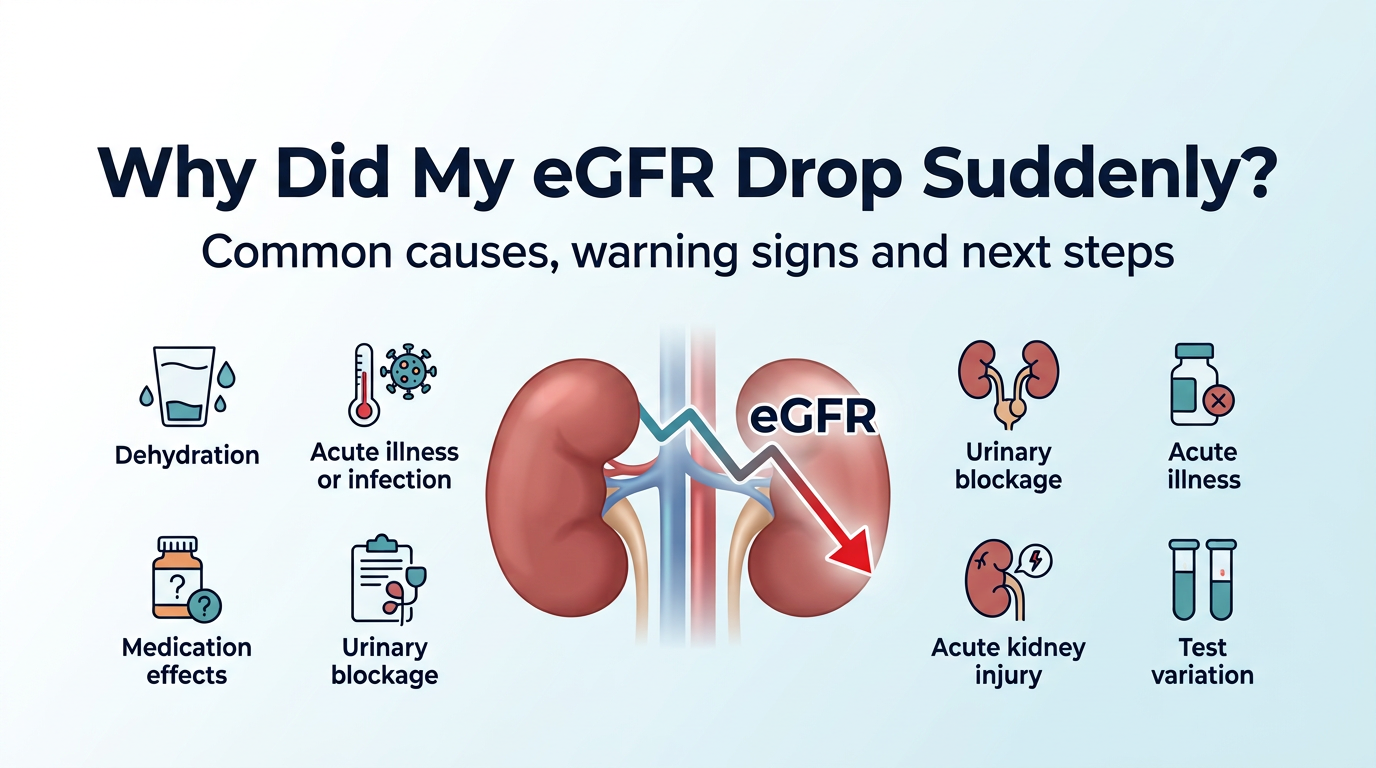
A sudden drop in estimated glomerular filtration rate (eGFR) may happen because of dehydration, acute illness, reduced blood flow to the kidneys, a medication effect, urinary blockage, acute kidney injury, or normal biological and laboratory variation. Because eGFR is calculated mainly from blood creatinine, anything that changes creatinine can change the estimate. One low result does not automatically prove permanent kidney damage—but a large or rapid decline needs timely medical review.
Quick answer: Compare the new result with your usual baseline, not only the laboratory’s “normal” range. Ask when the test should be repeated and whether your creatinine, potassium, urine, blood pressure, medicines, and hydration status also need review.
When a sudden eGFR drop may be urgent
Contact a healthcare professional promptly about a new, unexpected decrease—especially if the eGFR is much lower than your baseline or you already have chronic kidney disease (CKD).
Seek urgent medical care now if the change occurs with:
- Very little or no urine
- Severe shortness of breath
- Rapidly increasing swelling
- Chest pain, fainting, severe weakness, or new confusion
- Persistent vomiting or diarrhea with inability to keep fluids down
- Severe flank or abdominal pain, particularly with fever
- Blood in the urine with clots or difficulty urinating
- Palpitations or marked muscle weakness
- Pregnancy with high blood pressure, severe headache, vision changes, or swelling
These symptoms can occur with acute kidney injury, dangerous electrolyte changes, severe infection, fluid overload, or urinary obstruction. Do not try to diagnose or treat them using an online eGFR chart.
How much eGFR change is significant?
Some movement between tests is expected. Hydration, recent food and exercise, medicines, illness, biological variation, and laboratory differences can all affect creatinine and the calculated eGFR.
For people with CKD, the KDIGO 2024 guideline states that a change in eGFR of more than 20% on a subsequent test exceeds expected variability and warrants evaluation. This is not an automatic diagnosis of rapid kidney failure; it is a signal to investigate the change.
Percentage-change examples
| Previous eGFR | New eGFR | Approximate change | General interpretation |
|---|---|---|---|
| 80 | 74 | 7.5% decrease | May fall within expected variation; context still matters |
| 60 | 48 | 20% decrease | At the guideline threshold; discuss evaluation |
| 50 | 35 | 30% decrease | Substantial decline; prompt clinical review is appropriate |
| 30 | 20 | 33% decrease | Clinically important, especially with symptoms or abnormal potassium |
Calculation: (previous eGFR − new eGFR) ÷ previous eGFR × 100
The time interval matters. A fall over two days raises different concerns from the same numerical change over several years. eGFR is also less reliable when creatinine is changing quickly, so clinicians assess the underlying creatinine values and clinical situation rather than relying on the estimate alone.
Common reasons eGFR drops suddenly
1. Dehydration or reduced circulating blood volume
Vomiting, diarrhea, fever, heavy sweating, poor fluid intake, blood loss, and over-diuresis can reduce blood flow to the kidneys. Creatinine may rise and eGFR may fall as a result.
Kidney function may improve when the underlying problem is corrected, but simply drinking large amounts of water is not always safe. People with heart failure, advanced CKD, liver disease, swelling, or a prescribed fluid restriction may be harmed by excess fluid. Ask a clinician for individualized guidance.
2. Acute illness or infection
Sepsis, severe infection, COVID-19 and other viral illnesses, heart problems, major surgery, and significant inflammation can stress the kidneys. Fever and poor intake may add dehydration, while low blood pressure or inflammation can directly reduce kidney function.
3. Medication effects
Medicines can affect eGFR in different ways:
- NSAID pain relievers, such as ibuprofen and naproxen, can reduce kidney blood flow, particularly during dehydration or in people with CKD, heart failure, or older age.
- Diuretics can contribute to low circulating volume if their effect becomes excessive.
- ACE inhibitors and ARBs change pressure inside the kidney filters. A modest early creatinine rise can occur, but a larger decline requires review.
- SGLT2 inhibitors can cause an initial eGFR dip that is often expected and reversible; these medicines may protect the kidneys over time.
- Some antibiotics, antiviral drugs, chemotherapy agents, contrast-associated clinical situations, and other medicines may contribute to kidney injury in susceptible patients.
Do not stop a prescribed medicine based only on one eGFR result. Stopping a kidney- or heart-protective drug without guidance can cause harm. Contact the prescriber to review the size of the change, blood pressure, fluid status, doses, interactions, and repeat-testing plan.
KDIGO notes that after starting a medicine that affects kidney blood flow, an eGFR reduction of more than 30% on subsequent testing exceeds expected variability and warrants evaluation. That threshold is a reason for review—not an instruction for patients to discontinue treatment themselves.
4. Urinary tract blockage
A blockage can prevent urine from draining and cause kidney function to decline. Possible causes include:
- Kidney or ureter stones
- Enlarged prostate
- Blood clots
- Urinary retention
- Scar tissue or narrowing
- Pelvic or abdominal masses
- Problems affecting the bladder’s nerves
Warning signs may include inability to urinate, lower abdominal pressure, flank pain, blood in the urine, a weak stream, or repeated small urinations. A blockage may sometimes cause few symptoms, particularly in older adults or when only one functioning kidney is affected.
Related reading: Kidney Stone Size and Treatment and Kidney Pain Location.
5. Acute kidney injury
Acute kidney injury (AKI) is a rapid decline in kidney function over hours or days. Causes are commonly grouped into:
- Reduced blood flow to the kidneys: dehydration, bleeding, very low blood pressure, heart failure, or severe infection.
- Direct kidney injury: inflammation, toxins, medication reactions, severe infection, or damage to kidney tubules or filters.
- Blocked urine flow: stones, prostate enlargement, clots, or another obstruction.
AKI can occur in someone with previously normal kidney function or on top of existing CKD. Some people recover close to their prior baseline after the cause is treated; others have incomplete recovery or develop lasting CKD.
Learn more: Acute Kidney Injury: Causes, Symptoms and Prevention and Is Acute Kidney Injury Reversible?.
6. Changes in creatinine that do not reflect the same change in filtration
Most reported adult eGFR values are estimates based on serum creatinine. Creatinine can be affected by factors beyond kidney filtration, including:
- Recent cooked meat intake
- Creatine supplements
- Strenuous exercise or muscle injury
- Very high or very low muscle mass
- Limb amputation
- Frailty or malnutrition
- Certain medicines that alter creatinine handling
- A different laboratory or estimating equation
This does not mean an unexpected low eGFR should be ignored. It means clinicians may repeat the test, compare creatinine directly, or consider cystatin C or measured GFR when greater accuracy would change an important decision.
7. Progression of chronic kidney disease
A decline may represent CKD progression, especially when it persists and is accompanied by albumin in the urine, worsening blood pressure, structural kidney disease, or a consistent downward trend.
CKD is not diagnosed from one isolated result. Chronicity generally requires abnormal kidney structure or function for at least three months. However, treatment and evaluation should not be delayed when a serious acute problem is possible.
Related reading: Chronic Kidney Disease Stages and Can Kidney Disease Be Reversed?.
Can dehydration cause a low eGFR?
Yes. Dehydration can reduce blood flow to the kidneys, raise serum creatinine, and lower the calculated eGFR. This may occur after vomiting, diarrhea, fever, heavy sweating, poor intake, or excessive diuretic effect.
If dehydration is the main cause and no structural injury occurred, the result may improve after the problem is corrected. But not every low eGFR is dehydration, and forcing fluids can be unsafe for people with heart failure, severe swelling, advanced CKD, or fluid restrictions.
Ask the care team:
- Do my symptoms and examination suggest dehydration?
- Should I change fluid intake—and by how much?
- Do any medicines need temporary review during this illness?
- When should creatinine, eGFR, and electrolytes be repeated?
Can eGFR go back up?
It can, depending on why it fell.
An eGFR may rise toward its previous level after treatment of dehydration, infection, urinary obstruction, low blood pressure, or a reversible medication-related problem. An early dip after certain kidney-protective medicines may also stabilize.
A sustained decline caused by chronic scarring is less likely to reverse substantially. Even then, appropriate treatment may slow further loss. The meaningful question is not simply “Can I raise the number?” but:
- Was the decline acute or chronic?
- Is the estimate accurate in this situation?
- Is there a reversible cause?
- What does the trend show?
- What is the urine albumin-to-creatinine ratio (uACR)?
For albumin testing, see uACR Test Results Explained.
What should you do after one unexpectedly low eGFR result?
Step 1: Check the baseline and timeline
Write down:
- Previous creatinine and eGFR values
- Dates of the tests
- The new creatinine and eGFR
- Whether the same laboratory and equation were used
- Any illness, dehydration, procedure, or medication change between tests
A trend across several results is more informative than one number.
Step 2: Contact the ordering clinician
Ask how urgently the result should be reviewed. The answer depends on the size and speed of the decline, your baseline, potassium and other laboratory values, symptoms, and medical history.
Step 3: Review medicines and supplements
Prepare a complete list containing:
- Prescriptions
- Over-the-counter pain and cold medicines
- Diuretics
- Herbal products
- Vitamins
- Protein powders and creatine
- Recent antibiotics or imaging contrast
Do not make medication changes without the prescriber unless emergency services instruct you to do so.
Step 4: Ask about repeat and companion tests
Depending on the situation, a clinician may consider:
- Repeat creatinine and eGFR
- Potassium, sodium, bicarbonate, BUN, and glucose
- uACR or urine protein testing
- Urinalysis and urine microscopy
- Blood pressure and fluid-status assessment
- Bladder scan or kidney ultrasound if obstruction is possible
- Cystatin C when creatinine-based eGFR may be inaccurate
- Additional blood tests for a suspected cause
Step 5: Follow a personalized hydration plan
Normal hydration is helpful for many people, but “drink as much water as possible” is poor universal advice. Follow instructions based on your heart, liver, and kidney status.
Step 6: Arrange follow-up even if the number improves
Recovery from an acute decline does not always mean risk has disappeared. Follow-up can confirm whether function returned to baseline, detect albuminuria, and reduce the chance of another episode.
How soon should eGFR be repeated?
There is no single safe interval for everyone.
- A mild, unexpected change in a person who feels well may be repeated according to the clinician’s plan.
- A large or rapid fall, concerning symptoms, abnormal potassium, very low urine output, or possible AKI may require testing within hours or days.
- To establish CKD rather than an acute change, clinicians review previous records and persistence over at least three months—but they do not wait three months to evaluate a potentially urgent decline.
The clinician who has the complete laboratory panel and medical history should determine the timing.
eGFR levels and CKD categories
| GFR category | eGFR, mL/min/1.73 m² | Description |
|---|---|---|
| G1 | 90 or higher | Normal or high* |
| G2 | 60–89 | Mildly decreased* |
| G3a | 45–59 | Mildly to moderately decreased |
| G3b | 30–44 | Moderately to severely decreased |
| G4 | 15–29 | Severely decreased |
| G5 | Below 15 | Kidney failure range |
*G1 or G2 alone does not establish CKD without another marker of kidney damage, such as persistent albuminuria or a structural abnormality.
A change that crosses a category can feel alarming, but clinicians still verify the result and consider biological variation. Conversely, a substantial decline within the same category can matter even though the stage label did not change.
Questions to ask your healthcare professional
Bring this checklist to the appointment:
- How large is the percentage decline from my usual eGFR?
- Did my creatinine rise enough to suggest possible acute kidney injury?
- Could dehydration, infection, low blood pressure, or urinary blockage explain it?
- Could any prescription, OTC medicine, or supplement be contributing?
- What were my potassium, bicarbonate, BUN, and urine results?
- What is my uACR, and has it changed?
- When should the blood test be repeated?
- Should I follow special fluid instructions?
- Would cystatin C or imaging help clarify the result?
- What symptoms should make me seek urgent care?
- If I have CKD, does this change my monitoring or treatment plan?
Frequently asked questions
No. CKD generally requires evidence of abnormal kidney structure or function persisting for at least three months. A single low result may reflect an acute problem or variation. It still requires appropriate follow-up, particularly when the decline is large or symptoms are present.
Early kidney dysfunction and many cases of AKI cause few symptoms. The result may also be influenced by medication changes, reduced fluid intake, recent meat or creatine, muscle factors, or ordinary variation. Feeling well does not replace follow-up.
The significance depends on the starting value, percentage change, and time interval. A decline from 100 to 90 is 10%, while 40 to 30 is 25%. The second change is proportionally larger and crosses into a more advanced GFR category. Symptoms and other laboratory results also matter.
Correcting genuine dehydration may allow creatinine and eGFR to return toward baseline. Extra water will not reverse chronic kidney scarring and can be dangerous in people who retain fluid. Follow individualized advice rather than trying to manipulate a laboratory number.
Emotional stress alone is not a usual direct cause of a major eGFR decline, but stress may affect blood pressure, blood sugar, sleep, eating, fluid intake, and medication adherence. A significant fall should be evaluated for medical causes rather than attributed to stress.
Yes. SGLT2 inhibitors can cause a modest initial dip as pressure inside the kidney filters changes. This is often expected and may stabilize while the medicine provides long-term kidney and cardiovascular benefit. A larger decline, low blood pressure, dehydration, or symptoms requires prescriber review. Do not stop the medicine on your own.
The bottom line
A sudden eGFR decline may be temporary, reversible, or a sign of acute or progressive kidney disease. The safest response is to compare it with your baseline, assess the percentage and speed of change, review symptoms and medicines, and arrange appropriate repeat testing. In people with CKD, a subsequent eGFR change greater than 20% exceeds expected variability and warrants evaluation. Severe symptoms, very low urine output, or a large rapid decline require urgent care.
Editorial note
This article provides general education and does not diagnose acute kidney injury or chronic kidney disease. eGFR is an estimate and must be interpreted with creatinine, urine tests, symptoms, medicines, and medical history. Never stop a prescribed medicine or change a fluid restriction solely because of online information.
Medical references
- Kidney Disease: Improving Global Outcomes (KDIGO). Executive Summary of the 2024 Clinical Practice Guideline for the Evaluation and Management of Chronic Kidney Disease.
- National Institute of Diabetes and Digestive and Kidney Diseases. Estimate Glomerular Filtration Rate.
- National Kidney Foundation. Can My GFR Get Better?.
- National Kidney Foundation. Acute Kidney Injury.
- National Kidney Foundation. Know Your Kidney Numbers: eGFR and uACR.