eGFR vs Creatinine vs uACR: What Each Kidney Test Means
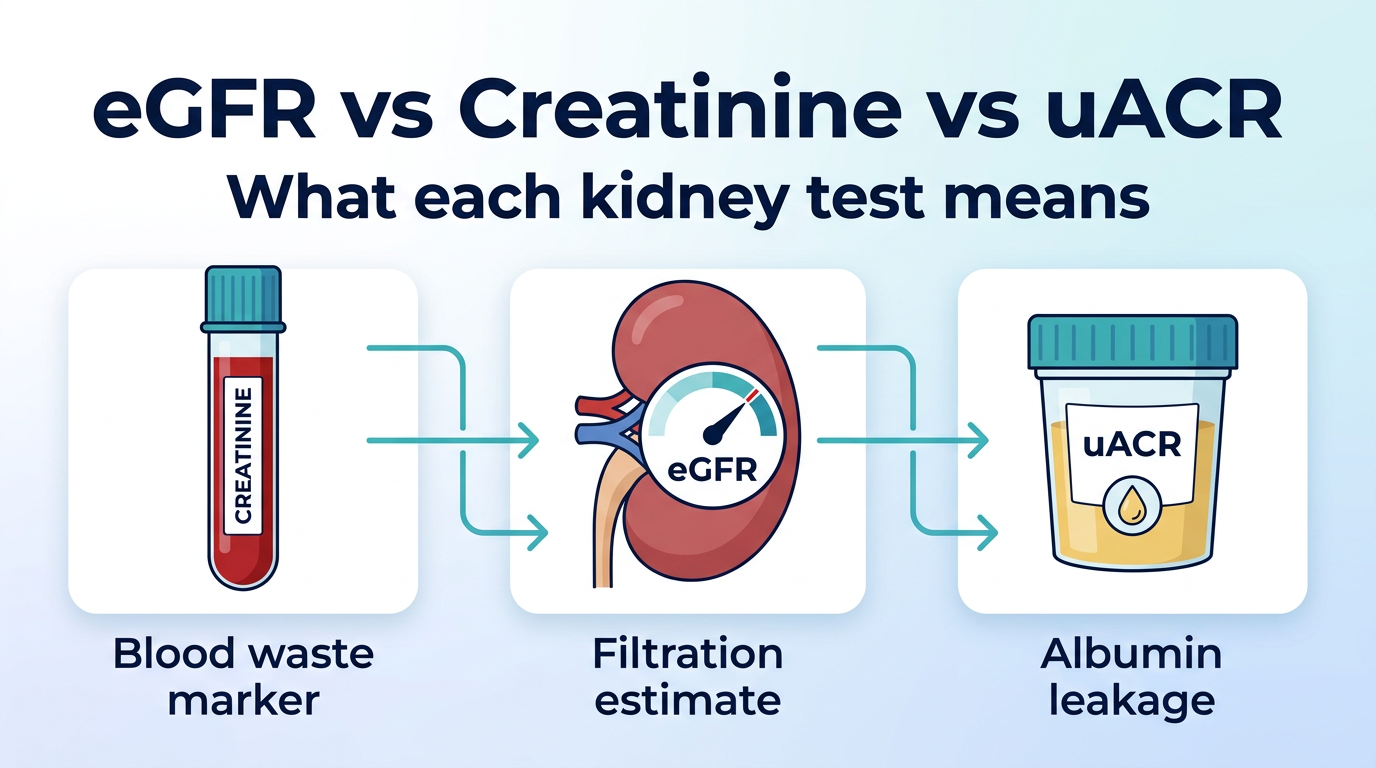
Comparison of serum creatinine, eGFR filtration estimate, and uACR urine albumin test for assessing kidney health.

Creatinine, eGFR and uACR provide different but connected information about kidney health. Serum creatinine is a waste product measured in blood. It is used in an equation to estimate glomerular filtration rate, or eGFR. The uACR is a urine test that checks whether albumin is leaking through the kidney filters. In simple terms, eGFR estimates filtration while … Read more
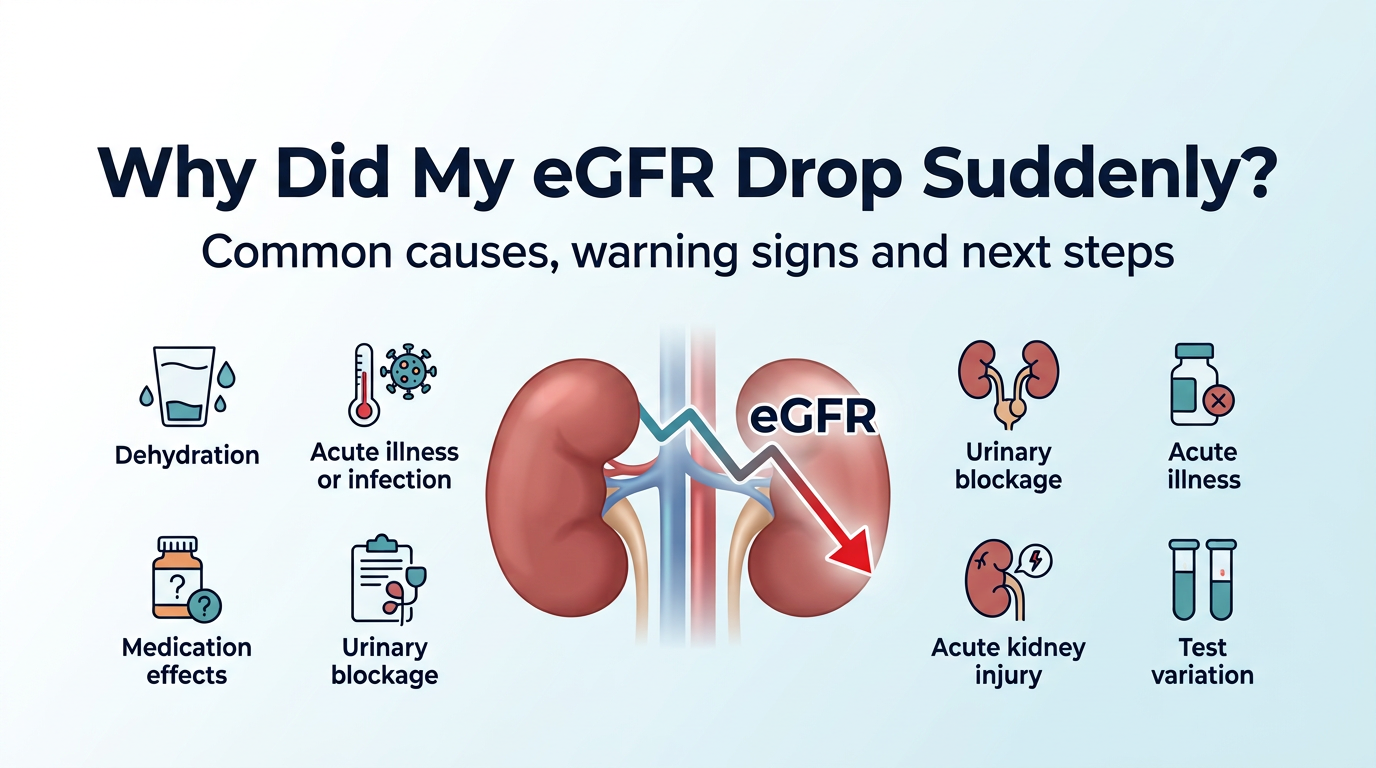
Why Did My eGFR Drop Suddenly? Causes and What to Do Next

Kidney health illustration showing a downward eGFR trend and common causes of a sudden eGFR drop.

Why Did My eGFR Drop Suddenly? Causes and What to Do Next A sudden drop in estimated glomerular filtration rate (eGFR) may happen because of dehydration, acute illness, reduced blood flow to the kidneys, a medication effect, urinary blockage, acute kidney injury, or normal biological and laboratory variation. Because eGFR is calculated mainly from blood creatinine, anything … Read more

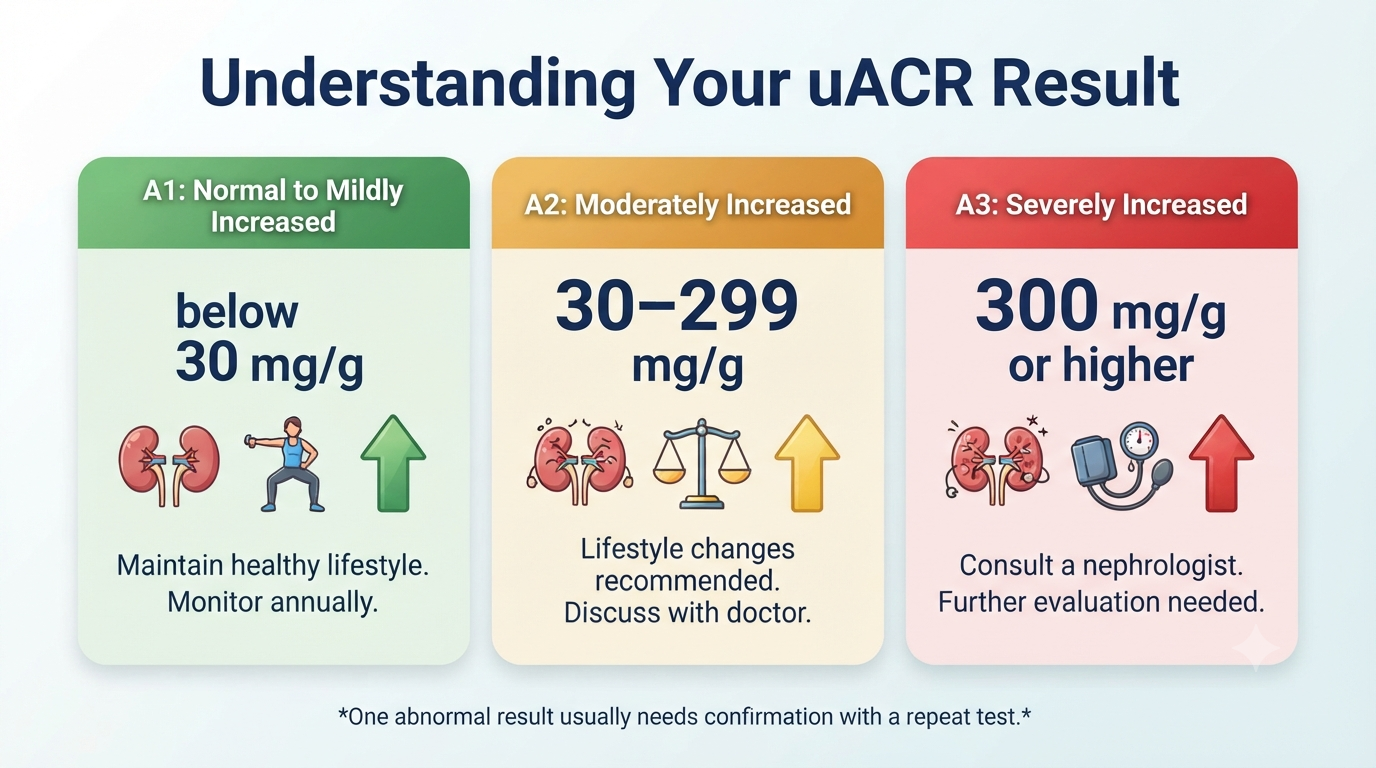
uACR Test Results Explained: What Your Number Means

uACR result chart showing A1 below 30, A2 from 30 to 299, and A3 at 300 mg/g or higher.

A urine albumin-to-creatinine ratio (uACR) checks whether albumin, a blood protein, is leaking into your urine. In adults, a result below 30 mg/g is classified as A1, 30–299 mg/g as A2, and 300 mg/g or higher as A3. A high result can signal kidney damage, but one abnormal test does not by itself diagnose chronic kidney disease. It usually needs … Read more