
Medically Reviewed and Compiled by Dr. Adam N. Khan, MD.
Introduction
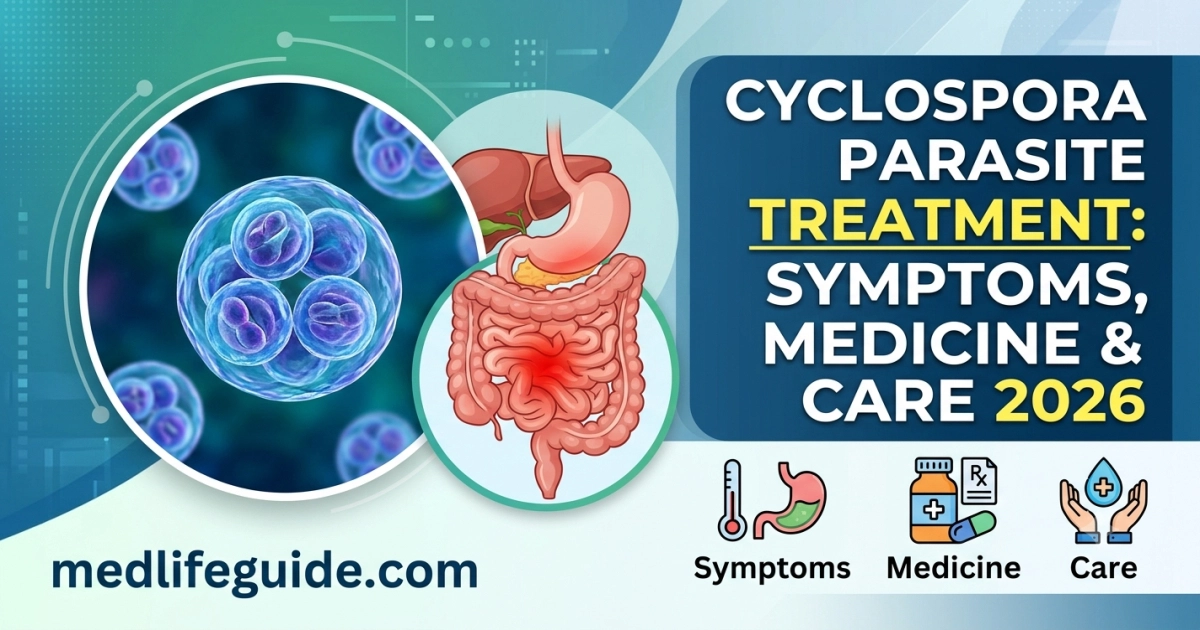
Cyclospora parasite Treatment is the standard medical approach used to cure an intestinal infection caused by Cyclospora cayetanensis. This microscopic parasite spreads mainly through contaminated fresh fruits, vegetables, and water. It causes an illness called cyclosporiasis, which often leads to watery diarrhea, stomach cramps, loss of appetite, nausea, fatigue, and weight loss.
In the United States, outbreaks usually happen after eating imported fresh produce. The Centers for Disease Control and Prevention (CDC) investigates many foodborne outbreaks linked to this parasite every year.
The good news is that cyclospora parasite Treatment is highly effective when the correct antibiotic is used. Most healthy people recover completely after appropriate treatment. However, untreated infections can last for weeks or even months because symptoms may come and go.
This guide explains how Cyclospora is treated, who needs medical care, possible complications, recovery tips, and prevention strategies using evidence-based medical information.
What Is Cyclospora?
Cyclospora cayetanensis is a single-celled parasite that infects the small intestine.
Unlike many bacteria that spread quickly from person to person, Cyclospora requires time outside the human body before becoming infectious. Because of this, direct contact with an infected person rarely spreads the disease.
People usually become infected after consuming:
- Contaminated leafy greens
- Fresh herbs
- Berries
- Salad mixes
- Imported produce
- Contaminated drinking water
The parasite damages the lining of the small intestine, reducing the body’s ability to absorb nutrients and fluids.
Symptoms That May Need Cyclospora Parasite Treatment
Symptoms usually begin about 2 to 14 days after exposure.
Common symptoms include:
- Watery diarrhea
- Frequent bowel movements
- Stomach cramps
- Bloating
- Gas
- Nausea
- Vomiting
- Loss of appetite
- Weight loss
- Fatigue
- Low-grade fever
Some people have mild illness, while others develop severe diarrhea lasting several weeks.
Without treatment, symptoms often improve and then return repeatedly.
How Doctors Diagnose Cyclospora Infection
Cyclospora infection cannot be diagnosed based on symptoms alone because many intestinal infections cause similar problems.
Doctors usually confirm the infection by ordering:
Stool Testing
A stool sample is examined for Cyclospora parasites.
Special laboratory techniques may include:
- Modified acid-fast staining
- Ultraviolet fluorescence microscopy
- PCR (polymerase chain reaction) testing
Sometimes several stool samples collected on different days are needed because the parasite may not appear in every sample.
Medical History
Your healthcare provider may ask about:
- Recent travel
- Fresh produce eaten
- Drinking water sources
- Ongoing diarrhea
- Community outbreaks
Cyclospora Parasite Treatment
The recommended treatment is supported by the Centers for Disease Control and Prevention (CDC) and the Infectious Diseases Society of America (IDSA).
First-Line Antibiotic
The preferred medicine is:
Trimethoprim-Sulfamethoxazole (TMP-SMX)
This antibiotic combination is the standard treatment for Cyclospora infection.
It works by stopping the parasite from growing and multiplying.
Most adults take the medication for 7 to 10 days, although treatment length depends on the patient’s condition and medical history.
Most patients begin feeling better within several days after starting therapy.
Never stop antibiotics early unless instructed by your healthcare provider.
What If You Have a Sulfa Allergy?
Patients who cannot take TMP-SMX because of a sulfa allergy should discuss other options with an infectious disease specialist.
Currently:
- No equally effective alternative antibiotic has been proven.
- Some patients may require supportive care.
- Desensitization to TMP-SMX may be considered in selected cases under specialist supervision.
The CDC notes that available alternatives have limited evidence of effectiveness.
Supportive Treatment
Besides antibiotics, supportive care helps recovery.
Supportive treatment includes:
- Drinking plenty of fluids
- Oral rehydration solutions
- Rest
- Eating small, bland meals
- Replacing lost electrolytes
Hospital treatment may be necessary if dehydration becomes severe.
Recovery After Cyclospora Parasite Treatment
Most healthy adults recover completely.
Recovery depends on:
- Age
- Overall health
- Immune system function
- How quickly treatment begins
Many patients notice improvement within one week.
However:
- Fatigue may last several weeks.
- Appetite returns gradually.
- Weight loss improves after normal eating resumes.
Some patients continue having mild bowel changes for a short period after the infection clears.
Possible Complications
Without proper treatment, complications may occur.
These include:Dehydration Frequent diarrhea causes fluid loss.
Signs include:
- Dry mouth
- Dizziness
- Fast heartbeat
- Dark urine
Malnutrition
Long-lasting diarrhea reduces nutrient absorption.
Weight Loss
Patients with prolonged illness may lose significant body weight.
Severe Illness in High-Risk Groups
Greater risk occurs in:
- Older adults
- Organ transplant recipients
- People receiving chemotherapy
- Individuals with HIV/AIDS
- Patients taking immune-suppressing medicines
Who Is Most at Risk?
Cyclospora infection can affect anyone.
Higher-risk groups include:
- International travelers
- People eating imported fresh produce
- Farm workers
- Food handlers
- Individuals with weakened immune systems
People with weakened immunity may experience longer illness and may require longer treatment.
Unique Clinical Takeaways
1. Recurring Diarrhea Does Not Always Mean Treatment Failed
One unique feature of cyclosporiasis is that symptoms often improve and then return before treatment begins. This “relapsing” pattern can confuse patients into thinking they are recovering naturally. After appropriate TMP-SMX treatment, persistent or recurring diarrhea should prompt evaluation for dehydration, another intestinal infection, irritable bowel syndrome after infection, or incomplete diagnosis rather than automatic repeat antibiotic use. Repeat stool testing may be appropriate when symptoms continue.
2. Cyclospora Is Frequently Missed Because Routine Stool Tests May Not Detect It
Many standard stool examinations do not specifically look for Cyclospora cayetanensis. Unless the healthcare provider requests specialized testing such as modified acid-fast stain or molecular PCR, the parasite may be missed. Patients with diarrhea lasting longer than one week—especially after eating fresh produce or during a recognized foodborne outbreak—should discuss targeted Cyclospora testing with their clinician.
3. Food Exposure History Often Solves the Diagnosis
Unlike many intestinal infections spread from person to person, Cyclospora infection is commonly linked to contaminated produce such as cilantro, basil, lettuce, berries, and salad mixes. Careful review of foods eaten during the previous two weeks may help public health investigators identify outbreaks and prevent additional infections. Sharing this information with healthcare providers is an important part of patient care.
4. Immunocompromised Patients May Need Longer Follow-Up
People with weakened immune systems can experience prolonged infection or symptom recurrence. In these individuals, doctors may recommend closer monitoring, repeat evaluation if symptoms return, and individualized treatment duration. Early communication with an infectious disease specialist may improve outcomes.
Home Care During Recovery
While antibiotics remove the parasite, home care supports healing.
Helpful steps include:
- Drink enough water every day.
- Use oral rehydration drinks if diarrhea is severe.
- Eat bananas, rice, applesauce, toast, oatmeal, and soups.
- Avoid alcohol.
- Limit greasy foods.
- Avoid spicy meals until diarrhea improves.
- Wash hands carefully after using the bathroom.
- Follow the full antibiotic course exactly as prescribed.
Prevention Tips
There is no vaccine against Cyclospora.
You can lower your risk by:
- Washing hands with soap and water.
- Washing fresh produce before eating.
- Drinking safe water while traveling.
- Following food safety recommendations.
- Buying produce from reliable sources.
Because Cyclospora can survive normal rinsing, food safety systems throughout production and distribution remain important in preventing outbreaks.
When Should You See a Doctor?
Seek medical care if you have:
- Diarrhea lasting longer than two days with dehydration
- Bloody diarrhea
- Severe stomach pain
- Fever with ongoing diarrhea
- Significant weight loss
- Persistent vomiting
- Symptoms after international travel
- Diarrhea following a known foodborne outbreak
Emergency medical care is needed for severe dehydration, confusion, inability to keep fluids down, or fainting.
Prognosis
The outlook is excellent for most patients.
When diagnosed early and treated with TMP-SMX:
- Symptoms usually improve within several days.
- Most patients recover fully.
- Serious complications are uncommon in otherwise healthy adults.
- Delayed diagnosis increases the risk of prolonged illness and dehydration.
Following medical advice and completing treatment greatly improves recovery.
Frequently Asked Questions (FAQs)
The recommended treatment is trimethoprim-sulfamethoxazole (TMP-SMX), which is considered the first-line antibiotic by the CDC.
Some infections eventually improve without treatment, but symptoms often continue for weeks or months and may repeatedly return. Antibiotic treatment shortens illness and reduces complications.
Direct person-to-person spread is uncommon because the parasite needs time outside the body before becoming infectious.
Most people begin improving within a few days after starting antibiotics, although complete recovery may take several weeks depending on illness severity.
Yes. Previous infection does not provide complete lifelong immunity. A person can become infected again after another exposure to contaminated food or water.
References and Citations
For detailed evidence supporting this article, see these authoritative medical resources available through MedLifeGuide internal reference library:
- CDC Clinical Guidance: Cyclospora cayetanensis (Cyclosporiasis) — MedLifeGuide Internal Reference: /references/cdc-cyclospora-clinical-guidance
- Centers for Disease Control and Prevention: Cyclosporiasis Prevention and Treatment — MedLifeGuide Internal Reference: /references/cdc-cyclosporiasis-treatment
- Infectious Diseases Society of America (IDSA): Clinical Practice Guidelines for Infectious Diarrhea — MedLifeGuide Internal Reference: /references/idsa-infectious-diarrhea-guidelines
- Merck Manual Professional Edition: Cyclosporiasis — MedLifeGuide Internal Reference: /references/merck-cyclosporiasis
- CDC Foodborne Outbreak Investigations: Cyclospora Outbreak Resources — MedLifeGuide Internal Reference: /references/cdc-cyclospora-outbreaks
Medical Disclaimer
This article is intended for educational purposes only and does not replace professional medical advice, diagnosis, or treatment. Always seek guidance from a qualified healthcare professional regarding any medical condition. Never ignore or delay obtaining medical advice because of information you have read in this article. If you believe you have symptoms of cyclosporiasis or severe dehydration, contact your healthcare provider promptly or seek emergency medical care.