
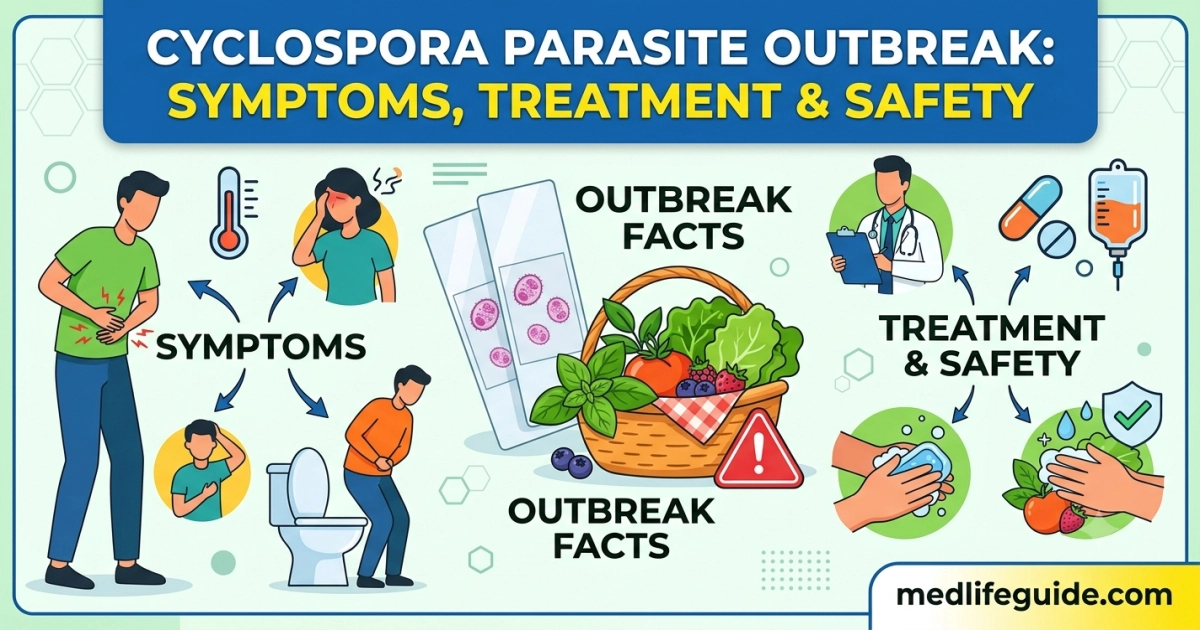
Introduction
A cyclospora parasite outbreak happens when many people become sick after eating or drinking something contaminated with the parasite Cyclospora cayetanensis. This microscopic parasite infects the small intestine and causes an illness called cyclosporiasis. Outbreaks in the United States have often been linked to fresh produce such as cilantro, basil, lettuce, raspberries, and bagged salads.
According to the Centers for Disease Control and Prevention (CDC), hundreds to thousands of cases are reported in the United States during some years, especially in the spring and summer. Most healthy people recover with proper treatment, but the illness can last for weeks without medical care.
Understanding the symptoms, diagnosis, treatment, and prevention of a cyclospora parasite outbreak can help reduce complications and stop the spread of infection.
What Is Cyclospora?
Understanding the Parasite
Cyclospora cayetanensis is a single-celled parasite that infects humans. Unlike many bacteria and viruses, Cyclospora needs time outside the human body before it becomes infectious.
This means the parasite is not usually spread directly from one person to another. Instead, people become infected by consuming contaminated food or water.
Key Facts
- Causes cyclosporiasis
- Infects the small intestine
- Spread mainly through contaminated produce and water
- Common during warmer months
- Treatable with prescription antibiotics
What Is a Cyclospora Parasite Outbreak?
A cyclospora parasite outbreak occurs when multiple people develop cyclosporiasis from the same contaminated food or water source.
The CDC and local health departments investigate outbreaks by:
- Interviewing patients
- Identifying common foods eaten
- Testing food samples when available
- Using laboratory methods to connect cases
- Issuing public health warnings and recalls
Many outbreaks involve imported fresh fruits and vegetables because fresh produce is often eaten raw.
How Does Cyclospora Spread?
Common Sources
People become infected after swallowing mature Cyclospora parasites from contaminated food or water.
Foods linked to outbreaks include:
- Bagged salads
- Romaine lettuce
- Cilantro
- Basil
- Raspberries
- Snow peas
- Fresh herbs
- Fresh vegetables
Contaminated drinking water has also caused outbreaks in some countries.
Person-to-Person Spread
Direct spread is uncommon because the parasite needs several days to weeks outside the body before becoming infectious.
This is different from illnesses like norovirus, which spread quickly between people.
Symptoms of Cyclospora Infection
Symptoms usually begin about 1 week after exposure, although timing varies.
Common symptoms include:
- Frequent watery diarrhea
- Loss of appetite
- Weight loss
- Stomach cramps
- Bloating
- Gas
- Nausea
- Vomiting
- Fatigue
- Low-grade fever
- Muscle aches
Without treatment, symptoms may improve and then return over several weeks.
Severe Symptoms
Some patients develop:
- Severe dehydration
- Significant weight loss
- Long-lasting diarrhea
- Difficulty maintaining nutrition
Medical evaluation is important if symptoms last more than a few days.
Who Is at Higher Risk?
Although anyone can become infected, some groups have a greater risk of complications.
These include:
- Older adults
- Young children
- Pregnant women
- People with weakened immune systems
- Organ transplant recipients
- Cancer patients receiving chemotherapy
- People living with HIV/AIDS
Travelers visiting countries where Cyclospora is more common also have increased risk.
Causes of Cyclospora Parasite Outbreaks
Several factors contribute to outbreaks.
Contaminated Produce
Fresh fruits and vegetables may become contaminated during growing, harvesting, washing, or packaging.
Unsafe Water
Water contaminated with human waste can spread the parasite to crops or drinking water.
Global Food Supply
Because fresh produce is imported from many countries throughout the year, outbreaks may involve foods distributed across multiple states.
Diagnosis
Doctors diagnose cyclosporiasis using stool testing.
Stool Examination
Laboratories use specialized methods because Cyclospora is difficult to detect using routine stool tests.
Tests may include:
- Stool microscopy
- Modified acid-fast staining
- Polymerase chain reaction (PCR) testing
Multiple stool samples may be needed because parasites are not always present in every sample.
Additional Evaluation
Doctors may also assess:
- Hydration status
- Electrolyte levels
- Kidney function in severe illness
Treatment
The recommended treatment is a prescription antibiotic.
Antibiotics
According to the CDC, the preferred treatment is:
Trimethoprim-sulfamethoxazole (TMP-SMX)
This antibiotic shortens illness and reduces symptoms in most patients.
Patients who cannot take sulfa medications should discuss alternatives with their healthcare provider because no equally proven replacement exists.
Hydration
Replacing fluids is essential.
Patients should drink:
- Water
- Oral rehydration solutions
- Clear fluids
Hospital treatment may be necessary for severe dehydration.
Nutrition
Eating small, easy-to-digest meals may improve recovery.
Foods often tolerated include:
- Rice
- Bananas
- Applesauce
- Toast
- Soup
Recovery
Most healthy adults recover completely after appropriate treatment.
Recovery time varies depending on:
- Overall health
- Severity of infection
- Time before treatment
- Hydration status
Some patients experience fatigue for several weeks after diarrhea improves.
Possible Complications
Complications are uncommon but may include:
- Severe dehydration
- Weight loss
- Malnutrition
- Prolonged diarrhea
- Electrolyte imbalance
People with weakened immune systems may have longer illnesses.
Preventing Cyclospora Infection
Reducing exposure is the best prevention.
Food Safety
Wash hands before preparing food.
Rinse fresh fruits and vegetables under running water.
Although washing may reduce dirt, it does not reliably remove Cyclospora, according to the CDC.
Follow food recall announcements.
Avoid eating recalled products.
Safe Travel
Travelers should:
- Drink safe water
- Eat foods prepared safely
- Avoid untreated water
- Follow local food safety advice
Public Health Measures
Health agencies reduce outbreaks by:
- Investigating cases
- Monitoring food supplies
- Tracking outbreaks
- Issuing recalls
- Educating the public
When Should You See a Doctor?
Seek medical care if you have:
- Diarrhea lasting more than three days
- Bloody stools
- Severe dehydration
- High fever
- Persistent vomiting
- Significant weight loss
- Symptoms after eating recalled foods
- Recent travel followed by ongoing diarrhea
Prompt diagnosis improves treatment and helps public health officials identify outbreaks.
Unique Clinical Takeaways
1. Relapsing Diarrhea Is an Important Diagnostic Clue
Unlike many common stomach infections that improve steadily, Cyclospora infection often causes diarrhea that improves for a few days and then returns. This relapsing pattern can delay diagnosis because patients may believe they are recovering. Clinicians should consider Cyclospora in people with recurring watery diarrhea, especially during the U.S. produce season or after eating foods linked to recalls.
2. Routine Stool Tests May Miss Cyclospora
A standard stool culture does not reliably detect Cyclospora cayetanensis. Healthcare providers often need to specifically request Cyclospora testing or a multiplex gastrointestinal PCR panel that includes the parasite. When symptoms strongly suggest cyclosporiasis but the first stool test is negative, repeating stool testing on separate days may improve detection because parasite shedding can vary.
3. Food History Can Be More Valuable Than Travel History
Although cyclosporiasis was once mainly associated with international travel, many modern U.S. outbreaks occur in people who have not traveled. A careful review of foods eaten during the previous two weeks—including bagged salads, herbs, berries, and other fresh produce—can provide a stronger diagnostic clue than travel history alone and may help public health investigators identify outbreak sources more quickly.
4. Immunocompromised Patients May Need Closer Follow-Up
People with weakened immune systems can experience more severe or prolonged illness. Monitoring hydration, nutritional status, weight changes, and response to antibiotic treatment is especially important in these patients, as recovery may take longer than in otherwise healthy adults.
Frequently Asked Questions (FAQs)
Most outbreaks occur when people eat fresh produce or drink water contaminated with Cyclospora cayetanensis. Direct person-to-person spread is uncommon because the parasite must mature outside the human body before becoming infectious.
Without treatment, symptoms can continue for several weeks or may come and go. With appropriate antibiotic treatment, many patients improve within a few days, although complete recovery may take longer.
Rinsing produce under running water is recommended for general food hygiene, but washing alone does not reliably remove Cyclospora. Following food recall notices remains an important preventive measure.
Cyclospora is not usually spread directly from one person to another because the parasite requires time in the environment before it becomes infectious.
You should seek medical care if diarrhea lasts more than a few days, becomes severe, causes dehydration or weight loss, or develops after consuming a recalled food product or following travel.
References and Citations
For additional evidence-based information, read these trusted medical resources available through MedLifeGuide:
- CDC-Based Guide: Cyclospora (Cyclosporiasis): Causes, Symptoms, Diagnosis, Treatment, and Prevention
- FDA Food Safety Guide: Cyclospora and Foodborne Outbreak Investigations
- Mayo Clinic Review: Persistent Infectious Diarrhea and Cyclospora Infection
- Merck Manual Professional Summary: Cyclosporiasis
- IDSA Clinical Guidance: Infectious Diarrhea Evaluation and Management
Medical Disclaimer
This article is intended for educational purposes only and does not replace professional medical advice, diagnosis, or treatment. Always consult a qualified healthcare professional for medical concerns or before starting or changing any treatment. If you experience severe diarrhea, dehydration, persistent symptoms, or other concerning signs, seek prompt medical care.