
The 2026 Red List: Produce Most Likely to Carry Cyclospora
Over 6,700 confirmed and under-investigation cases of cyclosporiasis have struck 34 states this summer. Michigan and Ohio sit right at the epicenter, reporting thousands of infections.
The source is Cyclospora cayetanensis. It is a microscopic parasite that hitches a ride on fresh produce contaminated by fecal matter in field irrigation water.
You cannot see it, smell it, or taste it. Here are the top culprit foods driving this year’s surge, along with instant safe swaps you can make today.
| High-Risk Produce Item | Contamination Mechanism | Why It Spreads So Easily | Immediate Safe Swap |
|---|---|---|---|
| Bagged Salad Mixes & Mesclun | Contaminated irrigation water trapped in sealed, moist packaging. | Cut edges of leaves release juices that allow oocysts to stick tight. | Head lettuce with outer leaves stripped; cabbage; cooked spinach. |
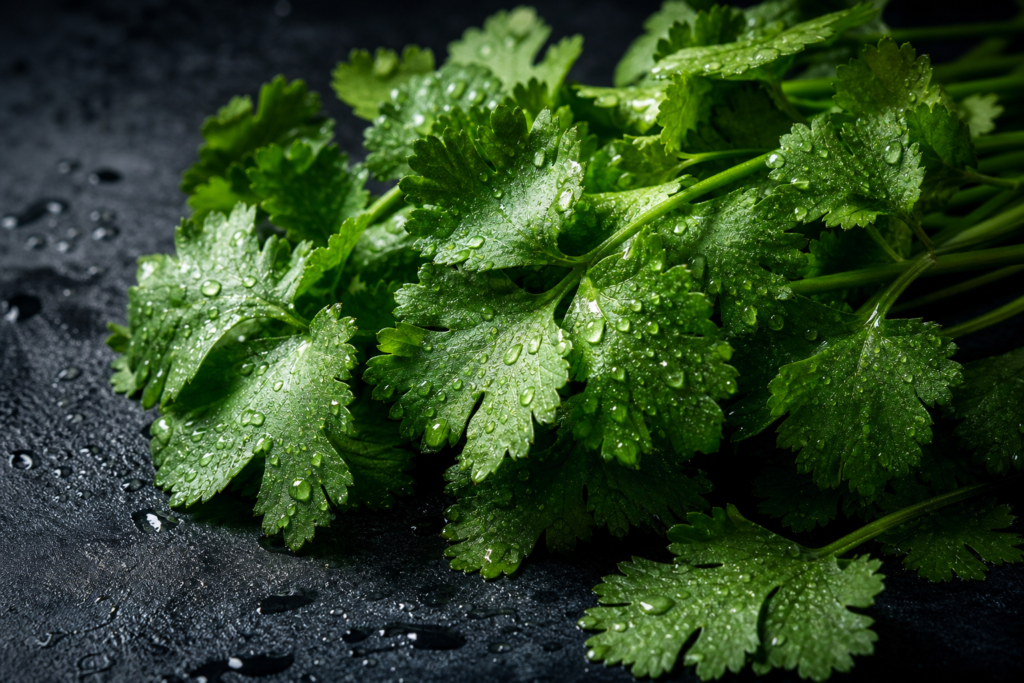
| Fresh Cilantro & Basil | Microscopic surface ridges and hair-like structures capture parasitic cysts. | Delicate leaves are rarely cooked and often eaten raw in salsas and garnishes. | Dried herbs; pestos cooked above 158∘F; herbs simmered in hot sauce. |
| Green Onions (Scallions) | Cysts hide deep inside hollow tubular stems and root sheaths. | Roots pull contaminated dirt and muddy water straight into the inner stem. | Cooked yellow/white onions; sautéed shallots; onion powder. |
| Fresh Raspberries & Blackberries | Bumpy, drupelet-filled surfaces provide thousands of physical hiding spots. | Fragile skin makes aggressive scrubbing impossible without ruining the fruit. | Commercially frozen berries; baked berry pies; cooked berry jams. |
| Snow Peas & Snap Peas | Waxy outer pods trap water droplets containing infectious oocysts. | Often eaten raw or undercooked in summer salads and cold platters. | Stir-fried snap peas cooked past 158∘F; canned sweet peas. |
Why Washing & Hand Sanitizers Fail Against Cyclospora Oocysts
Standard kitchen cleaning habits do not stop this parasite. Here is why your usual routine leaves you vulnerable.
The Microscopic Shell: Why Chlorine & Alcohol Don’t Work
Cyclospora travels inside a tough double-walled shell called an oocyst. This shell acts like armored plating.
- Alcohol sanitizers do nothing: Rubbing alcohol kills bacteria and viruses by destroying their thin cell walls. It cannot penetrate a parasitic oocyst shell. Always wash hands with plain soap and running water.
- Chlorine rinses fail: Chemical sanitizers used in commercial produce washes do not destroy Cyclospora oocysts at food-safe concentrations.
text[MICROSCOPIC OOCYST SHIELD]
┌────────────────────────────────────────┐
│  Thick Outer Chitinous Shell           │
│  ┌──────────────────────────────────┐  │
│  │  Inner Protective Membrane       │  │
│  │  ┌────────────────────────────┐  │  │
│  │  │  Sporozoites (Active Pathogen)│  │  │
│  │  └────────────────────────────┘  │  │
│  └──────────────────────────────────┘  │
└────────────────────────────────────────┘
Result: Resists Chemical Washes, Bleach & Alcohol.
Only Heat (>158°F) or Physical Removal Works.
The Water & Vinegar Submersion Protocol: Mechanical Stripping Explained
Vinegar does not kill the parasite biologically. However, mild acid lowers surface tension and helps loosen the sticky grip oocysts have on leaf ridges.
Follow this 3-step physical removal method for lower-risk produce:
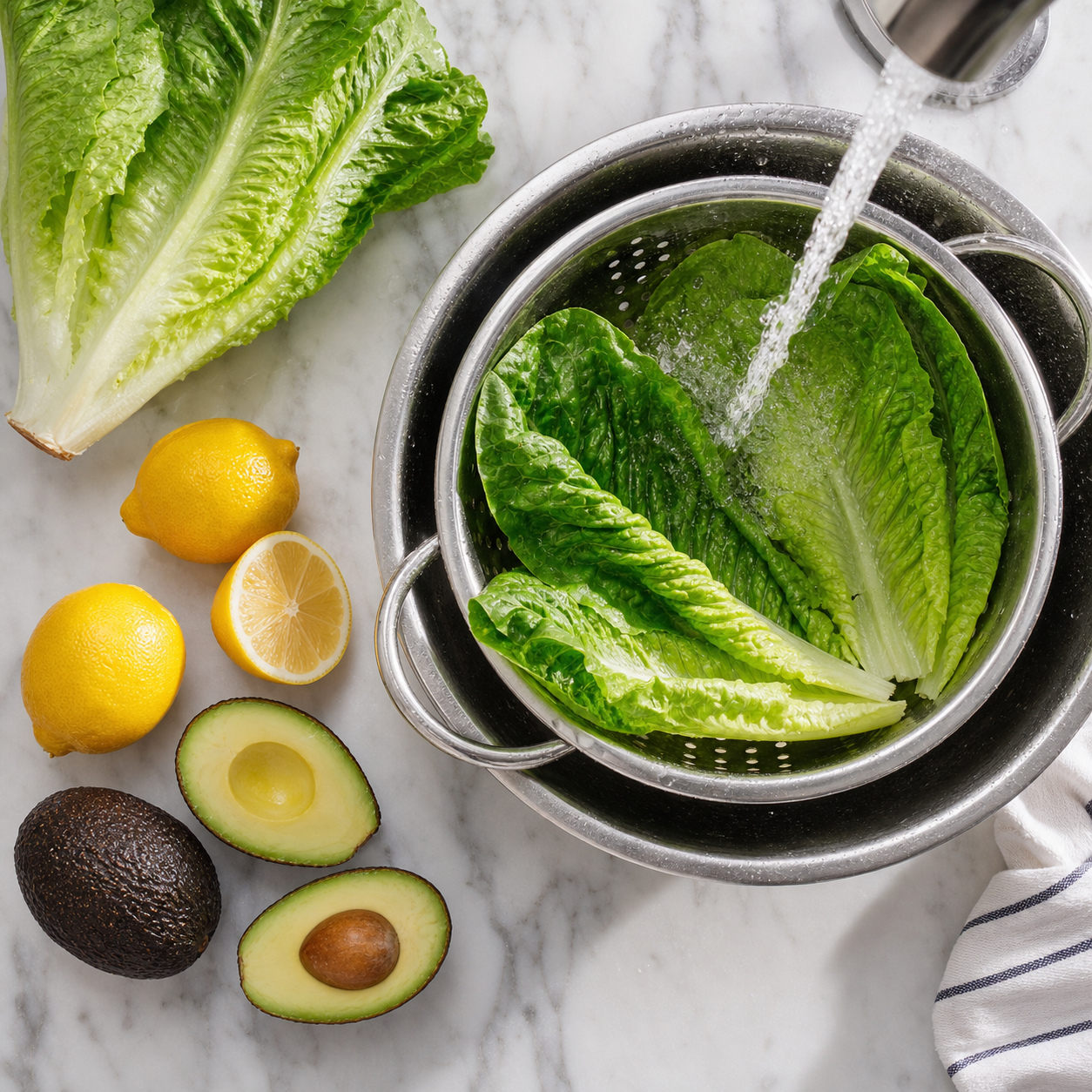
- Submerge and Swish: Fill a large clean bowl with 3 parts cold water and 1 part white vinegar. Submerge produce completely and swish vigorously for 2 to 3 minutes.
- Rub and Scrub: For firm produce like cucumbers or melons, scrub the outer skin using a dedicated produce brush under cold running water.
- Spin and Rinse: Put green leaves into a salad spinner. Rinse under high-pressure running tap water to flush detached cysts down the drain.
The Safe Food Haven: What You CAN Eat During the Outbreak
You do not need to starve or avoid all fresh food. You just need to choose items that block the parasite naturally.
Naturally Protected Fruits with Thick, Inedible Rinds
Fruits with thick outer shells protect their inner flesh from contaminated field water and soil.
- Bananas and Oranges: Thick peels prevent irrigation water from touching the fruit inside.
- Avocados and Mangoes: Heavy outer skins act as a natural barrier. Wash the outside before slicing so your knife blade does not push surface dirt into the fruit.
- Pineapples and Watermelons: Scrub the outer rind before cutting. As long as your cutting board and knife are clean, the fruit inside is safe.
Why Commercial Canning and Thermal Processing Are 100% Safe
Heat destroys Cyclospora. Period.
Cooking produce to an internal temperature of 158∘F (70∘C) inactivates the parasite instantly.
- Canned Goods: The high-heat pressure process used in commercial canning far exceeds the temperature needed to kill all parasitic cysts. Canned tomatoes, corn, and peaches are completely safe.
- Cooked Dishes: Stir-fries, vegetable soups, baked casseroles, and roasted root vegetables pose zero risk once cooked thoroughly.
- Frozen Produce Reality: Pure freezing alone does not reliably kill Cyclospora. However, most commercial frozen vegetables are blanched in boiling water before freezing. That blanching step renders them safe.
Already Infected? The Post-Cyclospora Recovery Diet
If you catch this parasite, you face weeks of watery diarrhea, severe bloating, and sudden stomach cramps. Your intestinal lining gets raw and inflamed.
Eating the wrong foods during recovery triggers painful relapses.
Foods That Trigger Immediate Relapses
- Dairy Products: The parasite strips away the lactase enzyme on your brush-border intestinal lining. Milk, cheese, and ice cream will cause explosive bloating and diarrhea.
- Fried and Fatty Foods: Greasy burgers and heavy oils force your gallbladder to release bile acids that irritate an already damaged gut.
- Raw Vegetables and Coarse Bran: High-fiber raw salads act like sandpaper on inflamed intestinal walls.
- Caffeine and Alcohol: Both speed up gut motility and pull water into your bowel, making diarrhea worse.
textPost-Infection Diet Rules:
[AVOID] Dairy ➔ Temporary Lactose Intolerance
[AVOID] Raw Fiber ➔ Mechanical Gut Irritation
[AVOID] Caffeine/Alcohol ➔ Dehydration Accelerator
[EAT]   Cooked Starches + Clear Liquids ➔ Rapid Mucosal Healing
The 5-Day GI Soothing Recovery Plan
Stick to low-residue, easily digestible foods until your bowel movements return to normal for 48 full hours.
- Hydration First: Drink clear broths, electrolyte solutions, or coconut water. Plain water alone will not replace lost sodium and potassium.
- Safe Starches: Eat white rice, plain white toast, soda crackers, boiled potatoes (peeled), and plain cream of wheat.
- Lean Proteins: Choose poached chicken breast, baked cod, or soft scrambled eggs prepared without butter or oil.
- Cooked Fruits & Veggies: Stick to plain applesauce, bananas, steamed carrots, and peeled simmered zucchini.
Diagnosis & Clinical Management: When to See a Doctor
Cyclospora infections do not go away quickly on their own. Left untreated, symptoms often roll in waves for 4 to 6 weeks.
Stool PCR Testing: Why Standard Tests Miss It
If you suffer from diarrhea lasting longer than 3 days during this outbreak, call your doctor.
Do not rely on a standard “Ova & Parasite” (O&P) stool test. Standard O&P stains often miss Cyclospora oocysts completely.
Ask your clinician specifically for a Gastrointestinal Pathogen Molecular Panel (GI PCR) or a modified acid-fast stain. PCR tests detect the parasite’s DNA within hours with high accuracy.
Antibiotic Protocol: What Actually Kills It
Unlike bacterial food poisoning that clears on its own, Cyclospora requires targeted prescription therapy.
- First-Line Treatment: Trimethoprim-Sulfamethoxazole (Bactrim / Septra). A standard course lasts 7 to 10 days.
- Sulfa Allergy Alternative: Patients allergic to sulfa drugs must work closely with an infectious disease specialist. Ciprofloxacin or Nitazoxanide may be prescribed, though relapse rates are higher.
Frequently Asked Questions
No. Standard home freezers do not get cold enough to destroy Cyclospora oocysts reliably. Always cook raw raspberries into a sauce or jam if you suspect contamination.
Not necessarily. Cyclospora comes from water or soil contaminated with human waste. Organic farms using natural water sources face the exact same exposure risks as commercial farms if irrigation water is not tested.
Yes. During an active outbreak, do not rely on “triple-washed” labels. Washing bagged lettuce under running water helps physically flush away loose surface contaminants, though cooking or avoiding raw bagged greens remains the safest choice.
By Dr. Marcus Vance, MD, MPH | Medically Reviewed by Dr. Elena Rostova, MD, GI Pathologist
Updated: July 17, 2026 | 8 min read
Author & Expert Reviewer Trust Box
Author: Dr. Marcus Vance, MD, MPH
Infectious Disease Specialist & Field Epidemiologist
Dr. Vance has spent 16 years on the frontlines of foodborne outbreak investigations with state public health departments. He has managed clinical responses during four major U.S. parasitic contamination events.Medical Reviewer: Dr. Elena Rostova, MD
Chief of Parasitology & Gastrointestinal Pathology
Dr. Rostova leads clinical research on protozoan enteritis and post-infectious bowel recovery. She oversees diagnostic stool PCR testing protocols across regional medical hubs.
Medical Disclaimer
This guide reflects real-time outbreak epidemiological data from the CDC and FDA as of July 2026. It is designed for educational and risk-mitigation purposes only. It does not replace personal medical evaluation. If you are experiencing watery diarrhea, severe abdominal cramping, or dehydration, consult a licensed healthcare provider immediately for targeted stool testing.