
Medically Reviewed and Compiled by Dr. Adam N. Khan, MD.
Quick Answer
- Measles incubation usually lasts 7–14 days from exposure to first symptoms; fever and cough often start around day 10–12.
- The contagious period begins about 4 days before the rash and continues 4 days after the rash appears.
- If you suspect exposure, contact your healthcare provider immediately; high‑risk people may need testing, vaccine, or immune globulin. Seek emergency care for breathing trouble, severe dehydration, or altered mental status.
EMERGENCY WARNING: If someone with suspected measles has trouble breathing, severe dehydration, high fever that won’t come down, or becomes confused or very sleepy, call 911 or go to the nearest emergency room right away.
What this article covers
This article explains how long the measles incubation period lasts, what to expect during each stage, who is most at risk, and what caregivers should do after exposure. All clinical claims are cited to authoritative sources.
What is the incubation period?
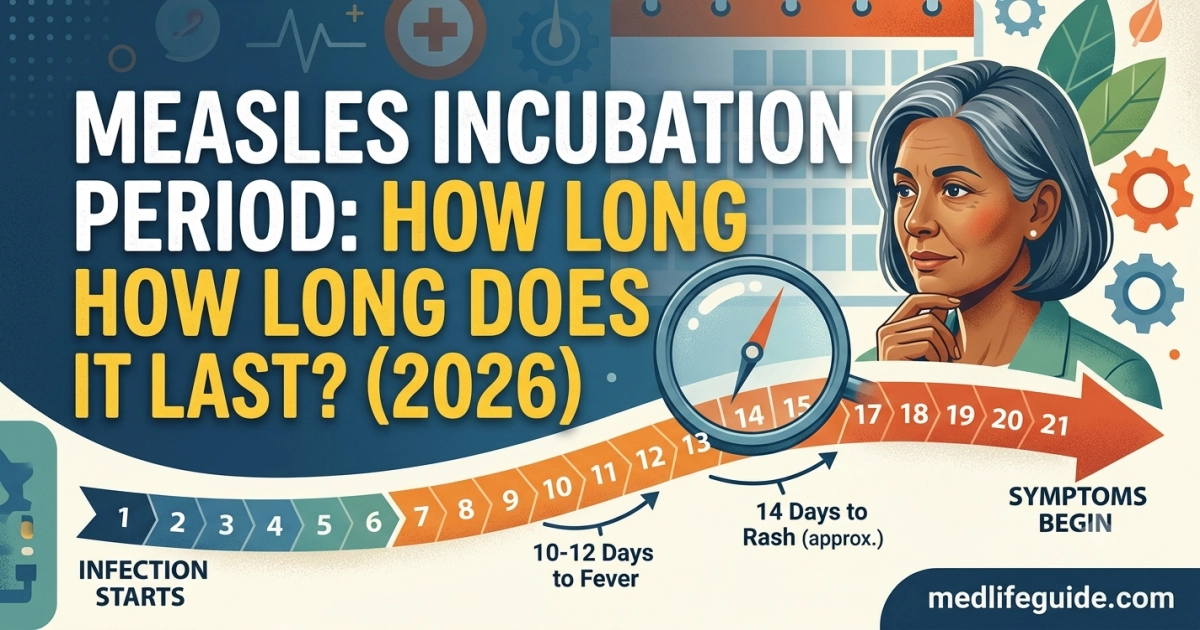
The incubation period is the time between when a person is exposed to the measles virus and when they first show symptoms. For measles, this period is usually 7 to 14 days, with most people developing symptoms around 10–12 days after exposure.
- Early (average): 10–12 days to first symptoms (fever, cough, runny nose).
- Rash onset: Typically 14 days after exposure, but can range from 7 to 21 days.
These ranges mean a person can feel fine for a week or more after exposure and still develop measles later.
How measles spreads during incubation
Measles is highly contagious. People can spread the virus before they have a rash. The usual contagious window is:
- About 4 days before the rash appears, through
- About 4 days after the rash appears.
Because people are contagious before they look sick, measles can spread quickly in schools, clinics, and households. For broader context on transmission timelines, read our guide on how long measles is contagious.
Typical timeline after exposure
Below is a simple timeline showing common events after exposure to measles:
- Day 0: Exposure to measles virus.
- Days 7–14 (average 10–12): First symptoms — fever, cough, runny nose, red eyes.
- Around day 14: Koplik spots (tiny white spots inside the mouth) may appear 1–2 days before the rash.
- Rash appears: Usually 3–5 days after fever begins; rash lasts about 5–7 days.
- Contagious period: From ~4 days before rash to ~4 days after rash.
All timing is approximate and varies by person.
Why the incubation period matters
Understanding the incubation period helps caregivers and clinicians decide:
- When to watch for symptoms after a known exposure.
- When to test for measles (timing of blood or swab tests matters).
- Who needs post‑exposure protection (vaccine or immune globulin) and when it should be given.
For example, the measles vaccine (MMR) can prevent or reduce illness if given within 72 hours of exposure for some people; immune globulin may be recommended within 6 days for high‑risk individuals.
Unique Clinical Takeaways
These are practical, clinically focused insights beyond basic symptom lists.
1. Use exposure date to time testing and interventions
If you know the exact exposure date, schedule testing and interventions by that date rather than by symptom onset. Serologic testing (IgM) is most reliable after rash onset; a negative IgM too early may be false‑negative. For exposed, unvaccinated people, MMR within 72 hours can prevent disease; immune globulin within 6 days can reduce severity in infants, pregnant people, and immunocompromised patients.
2. Pre‑rash contagiousness requires early contact tracing
Because people are contagious about 4 days before the rash, contact tracing must include contacts from several days before symptom onset. In practice, public health teams should trace contacts starting at least 4 days before the first rash or fever to find exposed people who may already be infectious. This reduces secondary spread in schools and clinics.
3. High‑risk exposures need tailored post‑exposure plans
Not all exposures are equal. For infants under 12 months, pregnant people, and severely immunocompromised patients, clinicians should consider immune globulin even if MMR is not appropriate. These groups may not mount a vaccine response or may face severe complications; timing of immune globulin (within 6 days) is critical. Document exposure date clearly in the chart to guide this decision.
Symptoms to watch for during incubation and early illness
Measles often begins with a prodrome (early phase) that includes:
- High fever (often >101°F / 38.3°C).
- Cough, runny nose (coryza), and red, watery eyes (conjunctivitis). For detailed presentation in adults and pediatric cases, review measles symptoms in adults, general measles symptoms, and measles symptoms in children.
- Koplik spots: small white spots inside the mouth, often seen 1–2 days before the rash.
- Rash: red blotchy rash that usually starts on the face and spreads downward.
Each of these signs is supported by clinical guidance and should prompt testing or isolation if measles is suspected.
Who is most at risk for severe disease
Certain groups are at higher risk of complications:
- Infants (especially under 12 months).
- Pregnant people (risk of miscarriage and severe disease).
- People with weakened immune systems (e.g., chemotherapy, advanced HIV).
- Unvaccinated people of any age.
High‑risk patients with exposure should be evaluated quickly for immune globulin and close monitoring.
Testing and diagnosis timing
Testing strategy depends on timing:
- Viral detection (PCR or throat/nasopharyngeal swab): Best during the acute phase, ideally within a few days of rash onset.
- Serology (IgM antibodies): Usually detectable after rash onset; testing too early can give false negatives.
- Document exposure date to interpret test results correctly.
If initial tests are negative but suspicion remains high, repeat testing or consult public health authorities.
Prevention after exposure
Key options after a known exposure:
- MMR vaccine within 72 hours of exposure can prevent or lessen disease in susceptible people.Understanding standard schedules alongside other childhood vaccines per CDC guidelines helps maintain population immunity.
- Immune globulin within 6 days is recommended for infants, pregnant people, and immunocompromised patients.
- Isolation: Exposed people who develop symptoms should stay home and avoid contact with others until cleared by public health guidance.Public health efforts remain critical during ongoing regional events, such as reported measles outbreaks in 2026, the broader North American outbreak context, specific tracking like CDC confirmed cases, and localized responses like the Texas measles outbreak guide.
Vaccination remains the best long‑term prevention. Two doses of MMR provide strong protection.
Caring for someone with measles at home
Supportive care focuses on comfort and preventing complications:
- Rest and fluids to prevent dehydration.
- Fever control with acetaminophen or ibuprofen as advised by a clinician (avoid aspirin in children).
- Monitor breathing and hydration; seek emergency care for breathing difficulty, poor fluid intake, or altered mental status.
Do not give antibiotics unless a bacterial complication (like pneumonia) is diagnosed.
When to call a healthcare provider
Contact a clinician or local health department if:
- You or a close contact had known exposure to measles.
- Fever and cough develop after exposure.
- You are in a high‑risk group (infant, pregnant, immunocompromised) and had exposure.
If severe symptoms occur (trouble breathing, severe dehydration, confusion), call 911 or go to the emergency room.
Common misconceptions
- “You’re only contagious after the rash.” False — people are contagious about 4 days before the rash.
- “One vaccine dose is enough for life.” One dose gives good protection, but two doses are recommended for long‑term immunity.
- “If I feel fine after a week, I’m safe.” Not always — incubation can be up to 21 days; most cases appear by 14 days.
FAQs
Most children show symptoms in 7–14 days, commonly around day 10–12; the rash often appears near day 14.
Yes. People are contagious about 4 days before the rash appears and remain contagious about 4 days after.
Call your pediatrician or local health department immediately; infants may need immune globulin and close monitoring.
Tests are most reliable after symptoms begin; PCR can detect virus early in the rash phase, and IgM antibodies are usually detectable after rash onset.
Yes, MMR given within 72 hours of exposure can prevent or reduce illness in susceptible people.
Reviewer bio
Dr. Adam N. Khan, MD — Pediatric Infectious Disease Specialist, MedLifeGuide Clinical Review Board. Conflict disclosure: No relevant financial conflicts; receives no industry funding for vaccine guidance.