
Medically Reviewed and Compiled by Dr. Adam N. Khan, MD.
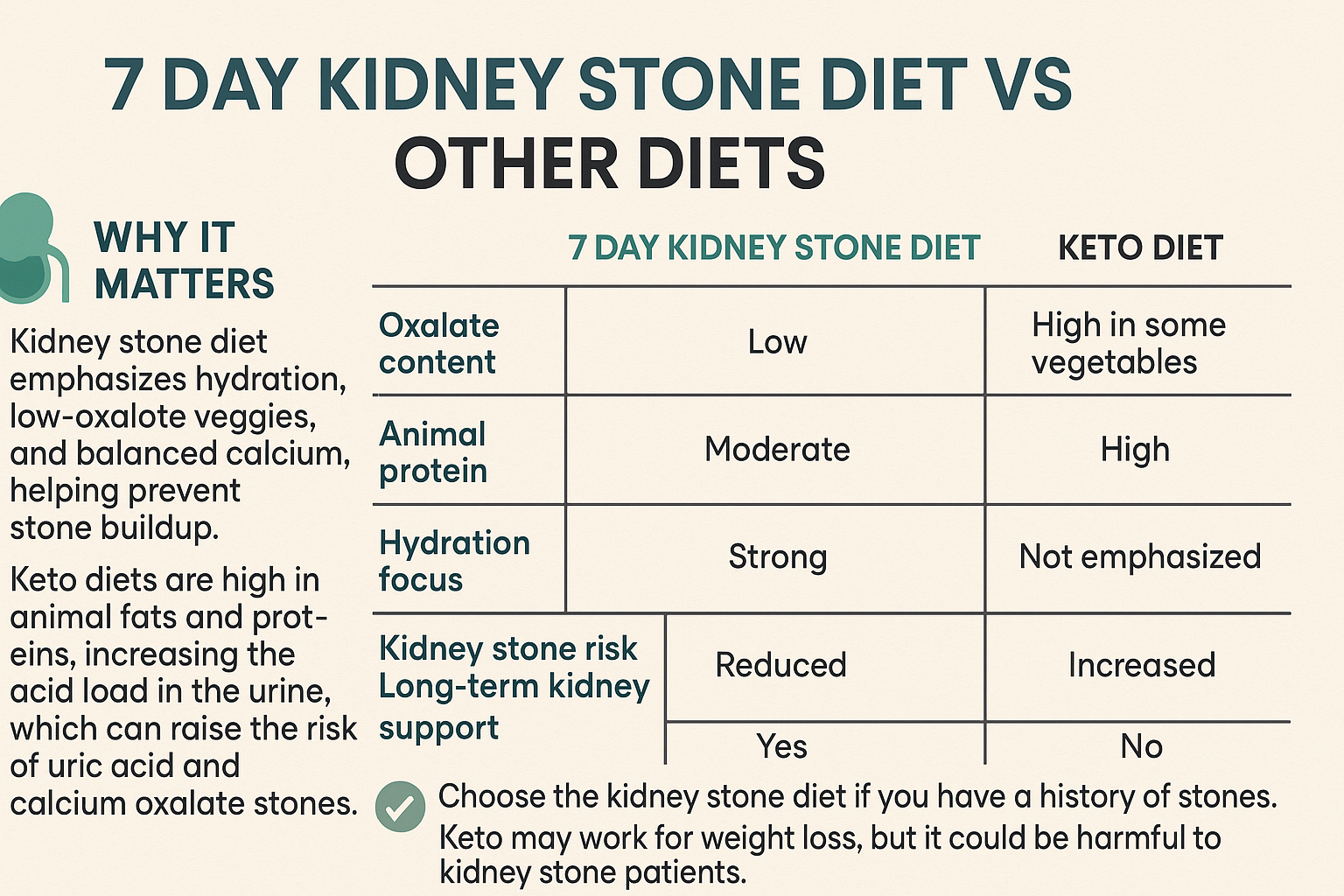
If you want to stop kidney stones, the best plan is a 7-day kidney stone diet chart that focuses on high water intake, low salt, and a balance of calcium and oxalate. While other diets like DASH or Mediterranean are great for heart health, a specific kidney stone diet is better because it directly limits stone-forming minerals like oxalates and purines while ensuring you get enough calcium to block stone growth in your gut.
What is a Kidney Stone Diet?
A kidney stone diet is not just about what you stop eating. It is about balance. Most people think they need to cut out all calcium, but that is actually wrong. If you don’t eat enough calcium, your body might make more stones.
The goal of this diet is to make your urine less “sticky” so crystals can’t turn into rocks. By following a 7-day kidney stone diet chart, you can lower your risk by more than 50%.
Why This Diet Works Better Than Others
There are many famous diets out there, but they don’t all focus on the kidneys.
- DASH Diet: Great for blood pressure, but sometimes includes too many high-oxalate nuts.
- Mediterranean Diet: Good for the heart, but you must be careful with certain leafy greens like spinach.
- Keto Diet: This can be dangerous for stone-formers because it is very high in animal protein, which makes urine acidic.
The 7-Day Kidney Stone Diet Chart
This plan focuses on “Stone-Fighting” foods. It keeps your salt low and your fluids high.
| Day | Breakfast | Lunch | Dinner |
| Day 1 | Oatmeal with blueberries and a glass of milk | Grilled chicken salad (no spinach) with lemon dressing | Baked salmon with white rice and steamed broccoli |
| Day 2 | Greek yogurt with a few sliced strawberries | Turkey sandwich on whole-grain bread with cucumber | Pasta with olive oil, garlic, and zucchini |
| Day 3 | Scrambled eggs with bell peppers and toast | Lentil soup (low salt) with a side of melon | Broiled white fish with a small baked potato (peeled) |
| Day 4 | Apple slices with a little bit of almond butter | Quinoa bowl with roasted carrots and chickpeas | Chicken stir-fry with cabbage and snap peas |
| Day 5 | Cottage cheese with pineapple chunks | Egg salad wrap with lettuce and a side of grapes | Lean pork loin with green beans and couscous |
| Day 6 | Low-sugar cereal with milk and half a banana | Veggie burger (no soy) with a side salad | Ground turkey tacos with peppers and onions |
| Day 7 | Pancakes with fresh blueberries and water | Grilled cheese sandwich and a cup of cauliflower soup | Baked chicken thighs with asparagus and white rice |
Kidney Stone Diet vs. Other Popular Diets
When we look at a 7-day kidney stone diet chart vs other diets, we see big differences in how they treat minerals.
1. The DASH Diet
The DASH diet is used to stop high blood pressure. It tells you to eat lots of fruits, veggies, and low-fat dairy. This is mostly good for stones because of the calcium. However, DASH often suggests eating lots of nuts and beans. If you have “calcium oxalate” stones, you have to be careful which nuts you choose. Almonds are very high in oxalate, but walnuts are lower.
2. The Mediterranean Diet
This diet uses healthy fats like olive oil. It is very good for your overall health. For kidney stones, the Mediterranean diet is helpful because it limits red meat. High red meat intake makes your urine acidic, which leads to uric acid stones. The only “trap” here is that some Mediterranean dishes use a lot of spinach or beets, which are huge oxalate triggers.
3. The Low-Oxalate Diet
Some people try a strict low-oxalate diet. This means cutting out spinach, rhubarb, chocolate, and nuts. While this helps, it’s often too hard to follow forever. The 2026 approach is to pair calcium with oxalate. If you eat a little bit of chocolate but drink a glass of milk with it, the calcium binds to the oxalate in your stomach. This prevents the oxalate from ever reaching your kidneys.
5 Golden Rules for Preventing Stones
If you don’t want to follow a strict chart every day, just remember these five rules:
- Drink Like It’s Your Job: You need enough water to produce 2.5 liters of urine a day. Adding lemon juice is a “cheat code” because lemons have citrate, which stops stones from sticking together.
- Watch the Salt: Salt forces calcium into your urine. The less salt you eat, the less calcium ends up in your kidneys to form stones.
- Eat Your Calcium: Don’t skip milk or cheese. You need about 1,000 to 1,200 mg of calcium daily from food to block oxalates.
- Limit “Beast” Protein: Red meat, organ meats, and shellfish increase uric acid. Try to get more protein from plants or eggs.
- Avoid Vitamin C Pills: High doses of Vitamin C supplements can turn into oxalate in your body. Get your vitamins from fresh fruit instead.
Common Myths About Kidney Stones
Myth: I should stop drinking milk.
Fact: No! Low calcium actually makes your stone risk go up. Calcium in the gut is your friend.
Myth: Only soda causes stones.
Fact: While dark sodas (like colas) are bad because of phosphoric acid, even “healthy” juices like cranberry can be high in oxalates. Water is always king.
Myth: Kidney stones are only about genetics.
Fact: Genetics play a part, but your diet is the “on/off” switch. You can change your future by changing your plate.
How to Start Today
Transitioning to a new diet can feel scary. You don’t have to change everything at once. Start by carrying a water bottle and adding a slice of lemon. Then, look at your salt intake. Most of our salt comes from boxed foods and restaurants, not the salt shaker on the table.
By comparing a 7-day kidney stone diet chart vs other diets, you can see that the kidney-specific path is the most direct way to stay out of the hospital. It focuses on the chemistry of your body to keep you pain-free.
Medlifeguide give information about also kidney diseases, chronic kidney disease (CKD) and also diet plans for kidney health; reach out to acheive these information for your and your family’s health
Medical Disclaimer
All content published on medlifeguide is intended for informational and educational purposes only and does not substitute professional medical advice, diagnosis, or treatment. Always consult a qualified healthcare provider regarding any medical condition, symptoms, or treatment decisions.