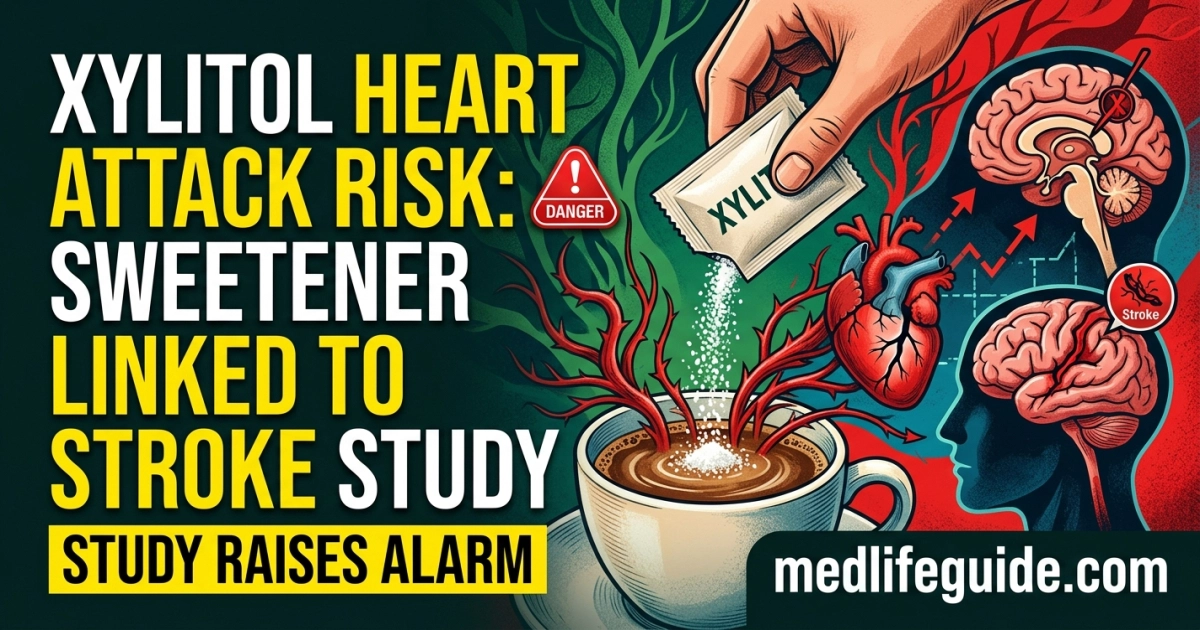
Zero-calorie sugar substitutes have long been marketed as healthy alternatives to refined sugar. Found in everything from sugar-free chewing gum and toothpaste to low-calorie jams, ice creams, and yogurts, xylitol is standard across modern diet pantries.
However, major new clinical research raises critical questions about its long-term cardiovascular safety. The largest observational study of its kind has revealed a strong association between elevated blood levels of xylitol and a higher risk of major cardiovascular events, including heart attacks, strokes, and death.
What Is Xylitol, and Where Is It Found?
Xylitol is a naturally occurring sugar alcohol found in tiny traces in certain fruits and vegetables. However, in processed low-sugar and diabetic-friendly products, manufacturers add industrial xylitol in concentrations up to 1,000 times higher than naturally occurring amounts.
Common products containing high levels of xylitol include:
- Oral Care Products: Chewing gum, mints, and toothpaste.
- Low-Sugar Foods: Jams, jellies, and fruit spreads.
- Diet Dairy & Desserts: Yogurts, ice creams, and low-carb keto treats.
- Baking Mixes: Zero-calorie granulated table sweeteners.
Despite its ubiquity in zero-sugar goods, the long-term impact of consuming high doses of xylitol on heart health has gone largely unscrutinized until now.
Key Findings: How Xylitol Affects Heart Health
Lead author Dr. Marco Witkowski from Charité University Hospital in Berlin led the investigation to determine how circulating levels of xylitol influence cardiovascular outcomes over time.
1. Dose-Dependent Cardiovascular Risk
The study observed a distinct dose-dependent relationship. Participants with the highest blood concentrations of xylitol experienced significantly higher rates of heart attacks and strokes compared to those with lower levels.
2. Increases Blood Platelet Reactivity
Previous research led by Dr. Witkowski demonstrated that elevated xylitol levels enhance the ability of blood platelets to clump together, actively promoting blood clot formation. Blood clots are the primary driver behind acute arterial blockages that trigger strokes and myocardial infarctions.
3. Risk Persists Across Demographics
The link between higher xylitol levels and cardiovascular events held true regardless of baseline characteristics such as age, sex, or preexisting health profiles. Furthermore, statistical analyses confirmed the risk was independent of standard metabolic risk factors, including:
- Body Mass Index (BMI)
- Hypertension (high blood pressure)
- Diabetes
- Elevated lipid levels (cholesterol)
“Artificial sweeteners are consumed by people who think they are healthier than sugar and are generally regarded as safe by regulatory agencies. Our long-term findings… highlight how little we know about the cardiovascular safety of xylitol.”
— Dr. Marco Witkowski, Charité University Hospital
Expert Insights: Correlation vs. Causation
Medical experts emphasize that while these findings are significant, it is vital to interpret them in proper scientific context.
Observational Nature of the Data
Prof. Dan Atar, an expert member of the European Society of Cardiology (ESC) Communication Committee, noted that while artificial sweeteners have enjoyed regulatory approval for years, this study signals a clear need for deeper investigation.
Because this was an observational study, it confirms a strong statistical association between high xylitol levels and heart events, but it cannot definitively prove direct cause-and-effect. Nevertheless, experts agree that the biological mechanism—specifically increased platelet clot formation—warrants urgent follow-up research.
Should You Switch Back to Refined Sugar?
Dietary experts caution against using these findings as a reason to return to high sugar consumption. Dell Stanford, a senior dietitian at the British Heart Foundation, emphasizes that excessive free sugar consumption remains a primary driver of obesity, type 2 diabetes, and heart disease.
Instead of replacing xylitol with refined sugar, health professionals advise reducing overall reliance on hyper-processed foods and artificial additives altogether.
Practical Action Steps for Consumers
If you frequently consume low-sugar or zero-sugar products, consider these practical precautions:
- Read Product Labels Carefully: Look for xylitol in the ingredient list on sugar-free candies, gums, protein bars, and jams.
- Prioritize Whole Foods: Shift toward naturally sweet whole foods like fresh berries and real fruits rather than relying on artificially sweetened packaged goods.
- Practice Moderation: While occasional use of xylitol toothpaste or gum carries minimal systemic exposure, avoid consuming high-dose xylitol-sweetened foods continuously throughout the day.
- Consult Your Physician: If you have preexisting cardiovascular disease or a history of blood clots, discuss artificial sweetener intake with your healthcare provider.
Frequently Asked Questions (FAQ)
Xylitol in toothpaste and mouthwash is generally spat out rather than swallowed in large dietary amounts. The study primarily highlighted concerns regarding systemic blood levels resulting from ingested foods and drinks.
The current study shows a clear association between high blood levels of xylitol and increased heart attack/stroke risks, but further clinical trials are required to establish absolute causality.
Focusing on whole, unprocessed foods and gradually retraining your taste buds to enjoy lower overall sweetness levels is the safest long-term approach for heart health.