
Medically Reviewed and Compiled by Dr. Adam N. Khan, MD.
Quick Summary:
- Silent Disease Progression: Arteriosclerotic cardiovascular disease (ASCVD) builds up quietly over decades. Early signs like mild fatigue, shortness of breath on exertion, or leg cramping are often overlooked or mistaken for normal aging.
- Vessel-Specific Symptoms: Symptoms vary based on which arteries narrow: coronary arteries cause chest pressure (angina), carotid arteries cause neurological warning signs (TIAs), and peripheral leg arteries cause pain during walking (claudication).
- Vulnerable Group Differences: Women, older adults, and people living with diabetes frequently present with “atypical” symptoms—such as unexplained fatigue, heartburn, nausea, or subtle shortness of breath—without classic crushing chest pain.
EMERGENCY WARNING: Arteriosclerotic cardiovascular disease can trigger sudden, life-threatening events like heart attacks or strokes. Call 911 immediately if you or someone near you experiences:
- Crushing chest pain, pressure, squeezing, or fullness in the center of the chest lasting more than a few minutes.
- Pain radiating to the jaw, neck, back, stomach, or one or both arms.
- Sudden shortness of breath with or without chest discomfort.
- Cold sweats, unexplained dizziness, lightheadedness, or nausea.
- Sudden weakness, numbness, or drooping on one side of the face or body.
- Sudden trouble speaking, slurred speech, confusion, or difficulty understanding speech.
1. Medical Overview and Pathophysiology
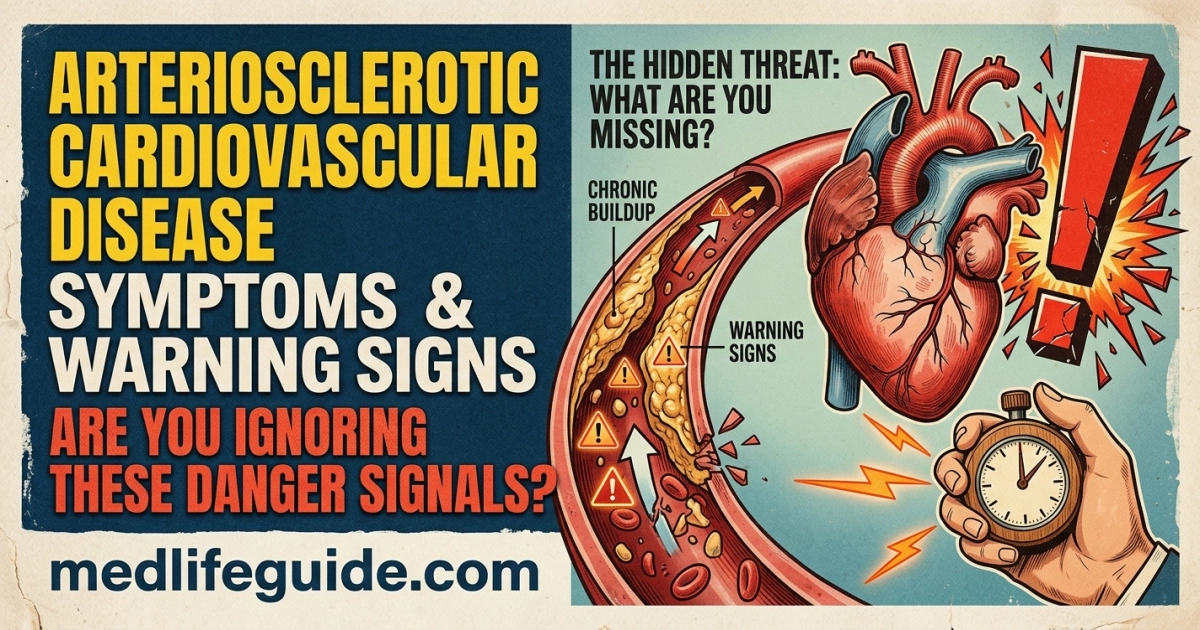
Arteriosclerotic cardiovascular disease (ASCVD) is an umbrella term for conditions caused by the hardening and narrowing of your arteries. Arteries are the high-pressure blood vessels that deliver oxygen-rich blood from your heart to every organ and tissue in your body. In healthy blood vessels, the inner lining (called the endothelium) is smooth, flexible, and elastic, allowing blood to flow freely.
ASCVD develops through a slow, progressive process known as atherosclerosis. It begins when the delicate inner lining of an artery becomes damaged. Common triggers for this initial damage include high blood pressure, elevated low-density lipoprotein (LDL or “bad”) cholesterol, systemic inflammation, chronic high blood sugar from diabetes, and toxins from tobacco smoke.
Once the inner lining is injured, immune cells called monocytes enter the arterial wall to clean up excess LDL cholesterol. These immune cells ingest lipid particles and transform into “foam cells.” Over time, clusters of foam cells, free cholesterol, calcium, and cellular debris accumulate inside the artery wall, forming an atherosclerotic plaque.
[Normal Healthy Artery]
        ↓
(Endothelial Injury: High Blood Pressure, High LDL, Smoking, Diabetes)
        ↓
[Inflammatory Response] → Immune cells ingest LDL → Form "Foam Cells"
        ↓
[Plaque Build-up] → Fatty streaks grow, calcium deposits solidify
        ↓
[Narrowed Artery Lumen] → Reduced blood flow (Ischemia & Chronic Symptoms)
        ↓
[Plaque Rupture & Clot] → Sudden vessel blockage (Heart Attack / Stroke)
As the plaque grows, the body attempts to heal itself by depositing calcium and building a fibrous cap over the fatty core. This causes the artery walls to thicken, stiffen, and lose their elasticity—a state known as arteriosclerosis. As plaque occupies space inside the vessel (the lumen), blood flow becomes restricted.
When tissues downstream do not receive enough oxygen-rich blood during times of stress or physical effort, it causes a state called ischemia. Ischemia is what produces chronic ASCVD symptoms, such as chest tightness or leg pain during exercise.
If a plaque becomes unstable, its fibrous cap can rupture or erode. The body reacts to a ruptured plaque the same way it reacts to a cut on the skin: it forms a blood clot (thrombus). If this clot suddenly blocks blood flow through a narrowed artery, oxygen delivery stops completely. This acute blockage leads to tissue death, resulting in a myocardial infarction (heart attack) when it happens in the coronary arteries, or an ischemic stroke when it occurs in the brain [2].
2. Symptom Breakdown and Diagnostic Comparison Table
Because arteriosclerosis can affect arteries throughout the body, the specific symptoms you feel depend on which blood vessels are narrowed. Doctors group ASCVD into four primary anatomical categories:
- Coronary Artery Disease (CAD): Plaque builds up in the blood vessels supplying the heart muscle. Symptoms include stable or unstable angina (chest tightness), shortness of breath, fatigue, and heart palpitations.
- Cerebrovascular Disease (Carotid Artery Disease): Plaque narrows the arteries in the neck supplying the brain. Mild cases are silent until a Transient Ischemic Attack (TIA or “mini-stroke”) or full ischemic stroke occurs, causing sudden facial drooping, arm weakness, or speech difficulty.
- Peripheral Artery Disease (PAD): Arteries supplying the legs and feet (and occasionally arms) become blocked. The primary symptom is intermittent claudication—cramping leg pain that occurs during walking and resolves with rest.
- Renal Artery Stenosis: Arteries supplying the kidneys narrow, leading to resistant high blood pressure, fluid retention, or declining kidney function.
Diagnostic Comparison: ASCVD vs. Similar Conditions
Because ASCVD symptoms often overlap with gastrointestinal, musculoskeletal, or anxiety-related conditions, systematic clinical evaluation is critical.
| Symptom / Feature | Arteriosclerotic Cardiovascular Disease (ASCVD) | Gastroesophageal Reflux (GERD) | Musculoskeletal Chest Wall Pain (Costochondritis) | Panic Attack / Acute Anxiety |
| Pain Quality | Squeezing, heavy pressure, tightness, or aching; rarely sharp | Burning sensation behind the breastbone; sour taste | Sharp, aching, or tender sensation; directly pinpointable | Tightness, smothering, or rapid fluttering heart rate |
| Primary Trigger | Physical exertion, cold weather, or severe emotional stress | Heavy meals, lying down flat, spicy or acidic foods | Bending, twisting, or pressing directly on the chest wall | Emotional distress, hyperventilation, or sudden onset |
| Duration of Discomfort | Stable angina lasts 2–15 minutes; heart attack pain lasts >20 minutes | Can persist for hours or linger as a continuous mild burn | Lasts for days to weeks; variable with body position | Peaks within 10 minutes; usually resolves within 20–30 minutes |
| Relieving Factors | Rest, stopping exertion, or sublingual nitroglycerin | Antacids, sitting upright, or drinking water | Local heat, gentle stretching, or oral anti-inflammatory medicine | Calming breathing exercises, reassurance, or grounding |
| Associated Signs | Shortness of breath, cold sweats, radiation to jaw/arm | Regurgitation, belching, difficulty swallowing | Localized tenderness when pressing on ribs | Trembling, tingling in hands, fear of losing control |
3. Unique Clinical Takeaways
While basic medical resources list standard symptoms like chest pain, advanced clinical practice highlights several subtle, highly specific patterns that every patient and caregiver should understand.
1. The Subclinical “Erectile Dysfunction and Leg Fatigue” Window
Erectile dysfunction (ED) in men is frequently an early vascular warning sign of systemic arteriosclerosis, appearing 3 to 5 years before a major coronary event. Because the penile arteries are smaller in diameter (1–2 mm) than coronary arteries (3–4 mm) or carotid arteries (5–6 mm), plaque accumulation restricts blood flow in smaller vessels first. Men experiencing new-onset vascular ED, or individuals noting unexplained fatigue in their calf muscles when climbing stairs, should request a comprehensive cardiovascular risk evaluation—including lipid testing and a 10-year ASCVD risk calculation—even if they have zero chest pain.
2. High Baseline Immunity and “Silent” Ischemia in Diabetic Autonomic Neuropathy
Individuals living with longstanding type 2 diabetes frequently experience chronic nerve damage known as diabetic autonomic neuropathy. This nerve impairment blunts the body’s pain pathways, meaning a patient may experience severe myocardial ischemia (lack of blood flow to the heart muscle) without feeling typical chest pressure. Instead, these “silent” ischemic events present as subtle, sudden fatigue, unexpected indigestion, unexplained dips in blood sugar control, or sudden breathlessness during light daily tasks.
3. The Predictive Value of the Coronary Artery Calcium (CAC) Scan and Lipoprotein(a)
Traditional blood tests measure standard cholesterol, but two modern advanced markers offer deeper insight into hidden plaque:
- Coronary Artery Calcium (CAC) Scoring: A low-dose, non-contrast CT scan of the heart that detects calcified plaque inside the coronary arteries. A CAC score above 0 confirms the physical presence of arteriosclerosis, helping guide early statin therapy even when standard blood pressure and cholesterol numbers appear borderline.
- Lipoprotein(a) [Lp(a)] Testing: Lp(a) is an inherited, highly sticky cholesterol particle that accelerates plaque formation and blood clotting regardless of diet or exercise. Guidelines recommend checking Lp(a) at least once in adulthood to identify genetic risk early.
4. Day-by-Day or Stage-by-Stage Illness Progression Timeline
Arteriosclerotic cardiovascular disease is a long-term condition that develops over four distinct physiological stages:
[Stage 1: Silent Initiation] ──> [Stage 2: Endothelial Dysfunction] ──> [Stage 3: Symptomatic Ischemia] ──> [Stage 4: Acute Vascular Event]
 (Microscopic Plaque)             (Fatty Streaks & Stiffening)             (Exertional Angina & PAD)            (Plaque Rupture, Heart Attack, Stroke)
Stage 1: Silent Initiation (Teens to 30s)
- Underlying Pathology: Microscopic LDL particles enter damaged areas of the arterial inner lining. Immune cells absorb these fats, creating early “fatty streaks” inside major arteries.
- Symptomatic Experience: 100% silent. Physical stamina, blood pressure, and daily energy levels remain completely normal.
- Detection: Detected only via early screening of lipid panels, family history, or elevated high-sensitivity C-reactive protein (hs-CRP).
Stage 2: Endothelial Dysfunction & Plaque Growth (Ages 30s to 50s)
- Underlying Pathology: Fatty streaks grow into fibrous atherosclerotic plaques. Calcium builds up within the vessel walls, causing the arteries to stiffen (arteriosclerosis).
- Symptomatic Experience: Usually silent at rest. Patients may notice subtle decreases in physical endurance, taking slightly longer to catch their breath after climbing stairs or lifting heavy objects.
- Detection: Abnormal lipid panels, elevated blood pressure readings (above 130/80 mmHg), or early calcification on a non-contrast Coronary Artery Calcium (CAC) scan.
Stage 3: Symptomatic Ischemia (Ages 50s and Beyond)
- Underlying Pathology: Plaque restricts the inner vessel lumen by 50% to 70% or more. When the body demands more oxygen (during exercise, stress, or digestive work after heavy meals), blood flow cannot keep up.
- Symptomatic Experience: Noticeable, predictable symptoms appear:
- Stable Angina: Chest tightness or pressure that occurs during exercise and resolves within 5–10 minutes of rest [2].
- Intermittent Claudication: Calf or thigh muscle cramping that begins after walking a predictable distance and vanishes after resting flat.
- Exertional Dyspnea: Shortness of breath during tasks that were previously easy.
Stage 4: Acute Vascular Event / Rupture (Any Age with Vulnerable Plaque)
- Underlying Pathology: A fibrous cap over an unstable plaque cracks or ruptures. The body rapidly forms a blood clot over the crack, blocking blood flow within seconds.
- Symptomatic Experience: Emergency red-flag symptoms develop rapidly:
- Heart Attack: Unstable, severe chest pressure at rest, cold sweats, jaw or arm pain, acute breathlessness.
- Stroke / TIA: Sudden facial droop, loss of strength in one arm, or slurred speech.
- Critical Limb Ischemia: Constant, severe leg pain at rest, cold or pale feet, or non-healing skin sores.
5. High-Risk Vulnerabilities and Special Populations
Arteriosclerotic cardiovascular disease does not present identically across all demographic groups. Recognizing unique vulnerabilities ensures timely diagnosis and care.
                  ┌─────────────────────────────────────────┐
                  │   ASCVD ATYPICAL PRESENTATIONS          │
                  └────────────────────┬────────────────────┘
                                       │
         ┌─────────────────────────────┼─────────────────────────────┐
         ▼                             ▼                             ▼
┌──────────────────┐          ┌──────────────────┐          ┌──────────────────┐
│      WOMEN       │          │   OLDER ADULTS   │          │     DIABETES     │
├──────────────────┤          ├──────────────────┤          ├──────────────────┤
│ • Nausea / Acid  │          │ • Sudden Fatigue │          │ • Silent Ischemia│
│ • Neck / Jaw Pain│          │ • Confusion      │          │ • Unexplained    │
│ • Unexplained    │          │ • Dizziness /    │          │   Shortness of   │
│   Fatigue        │          │   Unsteadiness   │          │   Breath         │
└──────────────────┘          └──────────────────┘          └──────────────────┘
Women
Women frequently experience “atypical” ASCVD and heart attack symptoms compared to men. While chest pressure remains the most common sign, women are significantly more likely to present with:
- Unexplained, crushing fatigue lasting days before an event.
- Nausea, vomiting, or sensations mimicking acid reflux or indigestion.
- Sharp, burning, or aching pain radiating into the neck, lower jaw, throat, shoulder blades, or upper abdomen.
- Shortness of breath without distinct chest discomfort.
- Microvascular Disease: Women are also more prone to coronary microvascular disease—arteriosclerosis affecting the tiny branch arteries of the heart that may not show up on standard angiograms but still causes severe ischemia.
Older Adults (Ages 75 and Older)
In elderly patients, classic pain responses are often muted due to age-related changes in nerve sensitivity or co-existing conditions. ASCVD complications may present as:
- Sudden episodes of mental confusion, delirium, or altered mental state.
- Unexplained falls, unsteadiness, or generalized muscle weakness.
- Worsening heart failure signs, such as swelling in both feet, ankles, or legs (peripheral edema) and inability to lie flat in bed without choking or coughing.
Immunocompromised & Chronic Inflammatory Disease Populations
Patients living with autoimmune conditions—such as systemic lupus erythematosus (SLE), rheumatoid arthritis (RA), or psoriasis—or those with chronic viral infections (such as HIV) face a two- to three-fold higher risk of developing accelerated ASCVD. Systemic inflammation damages the inner lining of blood vessels, causing plaque to accumulate faster and become more unstable. In these patients, routine screening should begin at earlier ages.
Familial Hypercholesterolemia (Pediatric & Young Adult Risk)
While ASCVD symptoms usually appear in middle age, genetic conditions like Familial Hypercholesterolemia (FH) cause severely elevated LDL cholesterol levels (>190 mg/dL) from birth [3]. Children and young adults with FH can develop advanced arteriosclerosis early in life, sometimes showing physical signs such as yellowish cholesterol deposits around the eyes (xanthelasma) or thick deposits on the Achilles tendons (tendon xanthomas) long before symptoms like angina occur.
6. Evidence-Based Diagnostic, Testing, and Medical Management Guidelines
Modern cardiovascular medicine emphasizes early identification, precise risk stratification, and targeted medical therapy to prevent plaque progression and rupture.
Comprehensive Diagnostic Workup
- Blood Lipid Panel: Measures total cholesterol, LDL-C, high-density lipoprotein (HDL-C), and triglycerides. Updated professional guidelines emphasize lowering total lifelong exposure to LDL cholesterol.
- Hs-CRP (High-Sensitivity C-Reactive Protein): A blood marker measuring systemic inflammation. Elevated hs-CRP (≥2.0 mg/L) signals higher vascular risk.
- ECG / EKG (Electrocardiogram): Records the electrical activity of the heart to identify signs of past or current heart muscle injury, strain, or abnormal heart rhythms.
- Echocardiogram: An ultrasound of the heart that evaluates how effectively the heart muscle pumps blood and checks valve function.
- Coronary Computed Tomography Angiography (CCTA): A non-invasive imaging test that visualizes the coronary arteries, identifies non-calcified and calcified plaque, and determines the percentage of vessel narrowing.
- Exercise Stress Testing / Nuclear Stress Test: Evaluates how the heart performs under increased physical demand, identifying areas of reduced blood flow during exertion.
- Ankle-Brachial Index (ABI): A quick, non-invasive test comparing blood pressure readings in the ankles to blood pressure in the arms to diagnose Peripheral Artery Disease (PAD).
Medical Management Protocols
┌────────────────────────────────────────────────────────────────────────┐
│                   EVIDENCE-BASED ASCVD MANAGEMENT                      │
├────────────────────────────────────────────────────────────────────────┤
│ 1. LIPID LOWERING: High-intensity Statins ± Ezetimibe ± PCSK9 Inhibitors │
│ 2. BLOOD PRESSURE: Target <130/80 mmHg (ACEi / ARBs / CCBs)             │
│ 3. ANTIPLATELET: Aspirin for secondary prevention / acute events       │
│ 4. METABOLIC: SGLT2 Inhibitors / GLP-1 RAs for Type 2 Diabetes           │
└────────────────────────────────────────────────────────────────────────┘
Professional clinical guidelines from the American College of Cardiology (ACC) and the American Heart Association (AHA) outline several core pillars for managing ASCVD:
- Lipid-Lowering Therapy: Statins are the primary medication used to lower LDL cholesterol, reduce plaque inflammation, and stabilize fibrous caps to prevent rupture. If LDL targets are not met with maximum statin doses, secondary therapies like ezetimibe or PCSK9 inhibitors are added.
- Blood Pressure Control: Maintaining blood pressure below 130/80 mmHg prevents ongoing damage to the arterial inner lining. Common medications include ACE inhibitors, ARBs, calcium channel blockers, and thiazide diuretics.
- Antiplatelet Therapy: Antiplatelet medications like low-dose aspirin or clopidogrel help prevent blood platelets from clumping together and forming dangerous clots over narrowed or disrupted plaques. Note: Low-dose aspirin is recommended primarily for patients with established ASCVD (secondary prevention) or those at high risk as determined by a physician, rather than routine primary prevention for everyone.
- Targeted Metabolic Medications: For individuals with type 2 diabetes and ASCVD, medications like SGLT2 inhibitors and GLP-1 receptor agonists provide significant cardiovascular protection alongside blood sugar control.
7. Home Care, Lifestyle Protocols, and Recovery
Managing arteriosclerotic cardiovascular disease requires long-term commitment to heart-healthy daily habits, medical follow-up, and risk factor modification.
Core Lifestyle Modifications
- Heart-Healthy Dietary Patterns: Adopt a Mediterranean-style or DASH (Dietary Approaches to Stop Hypertension) diet emphasizing whole grains, vegetables, fruits, legumes, nuts, lean poultry, and fatty fish rich in omega-3 fatty acids (like salmon). Minimize trans fats, saturated animal fats, sodium, processed meats, and refined sugars.
- Structured Physical Activity: Aim for at least 150 minutes of moderate-intensity aerobic exercise (such as brisk walking, cycling, or swimming) or 75 minutes of vigorous exercise per week, paired with muscle-strengthening activities two days per week. Always obtain medical clearance before starting a new exercise regimen.
- Complete Tobacco Avoidance: Quitting smoking, chewing tobacco, and vaping is vital. Tobacco smoke accelerates plaque growth, increases blood clotting risks, and damages vessel walls.
- Weight and Stress Management: Maintaining a healthy body mass index (BMI) and engaging in stress-reduction techniques—such as mindfulness, adequate sleep (7–9 hours nightly), and yoga—helps reduce stress hormones that strain the cardiovascular system.
Home Care Safety and Symptom Tracking
If you have been diagnosed with ASCVD, establish a daily monitoring routine:
- Track Blood Pressure & Pulse: Keep a morning and evening log of your home blood pressure readings to share with your healthcare provider.
- Monitor Weight: Report sudden weight gains (such as 2–3 pounds in a single day or 5 pounds in a week), which may indicate fluid retention related to heart strain.
- Symptom Diary: Note any new or changing physical sensations during exercise, including mild breathlessness, leg cramping, or chest discomfort.
- Medication Adherence: Take all prescribed medications consistently at the same times each day. Never stop taking antiplatelet or lipid-lowering medications without consulting your cardiologist.
Frequently Asked Questions (FAQs)
Arteriosclerosis is a broad term referring to the thickening, hardening, and loss of elasticity in any artery wall, whereas atherosclerosis is a specific subtype caused by the buildup of fatty cholesterol plaques inside the artery lining.
While calcified plaque cannot be completely erased, high-intensity medical treatment and healthy lifestyle changes can shrink the fatty core of plaques, stabilize their outer caps, restore blood vessel function, and prevent future heart events.
Cramping leg pain that begins during walking and stops shortly after resting is a classic sign of Peripheral Artery Disease (PAD) caused by arteriosclerosis in the legs. However, leg pain can also stem from nerve compression or joint issues, so a medical evaluation with an Ankle-Brachial Index (ABI) test is recommended.
Women often develop arteriosclerosis in the smaller branch arteries of the heart (coronary microvascular disease) and experience subtle hormonal influences, causing symptoms like severe fatigue, nausea, and jaw or back pain rather than classic chest pressure.
No, current guidelines advise against routine daily aspirin for healthy adults without established heart disease due to the risk of internal bleeding; daily aspirin should only be taken if specifically recommended by your physician.
About the Reviewer
Dr. Adam N. Khan, MD is a board-certified internal medicine physician specializing in preventive cardiovascular care and patient health education. He maintains zero commercial disclosures or financial conflicts of interest with pharmaceutical or medical device manufacturers.
Standard Medical Disclaimer
The content provided on medlifeguide.com is for educational and informational purposes only and is not intended as personal medical advice, diagnosis, or treatment. Always consult a qualified healthcare professional with any questions regarding a medical condition, new symptoms, or changes to your treatment plan. Never disregard or delay seeking professional medical advice because of something you have read on this website.