
Medically Reviewed and Compiled by Dr. Adam N. Khan, MD.
Key Takeaways
- It is a real physical condition: Long COVID brain fog stems from biological issues like neuroinflammation, blood vessel changes, and microglial activation—not laziness or imagined illness.
- Pacing beats push-through: Overexerting yourself triggers severe cognitive set-backs (Post-Exertion Symptom Exacerbation). Pacing mental and physical energy is essential.
- Multi-target treatment works best: Management requires addressing blood pressure/heart rate swings, neuroinflammation, micro-clots, and daily habit adjustments under medical care.
⚠️ EMERGENCY WARNING: Seek immediate medical evaluation or call 911 (or your local emergency number) if you experience sudden numbness, weakness on one side of your face or body, difficulty speaking, severe loss of vision, chest pain, or sudden confusion. These can be signs of a stroke or acute neurological emergency requiring emergency medical intervention.
What Is Long COVID Brain Fog?
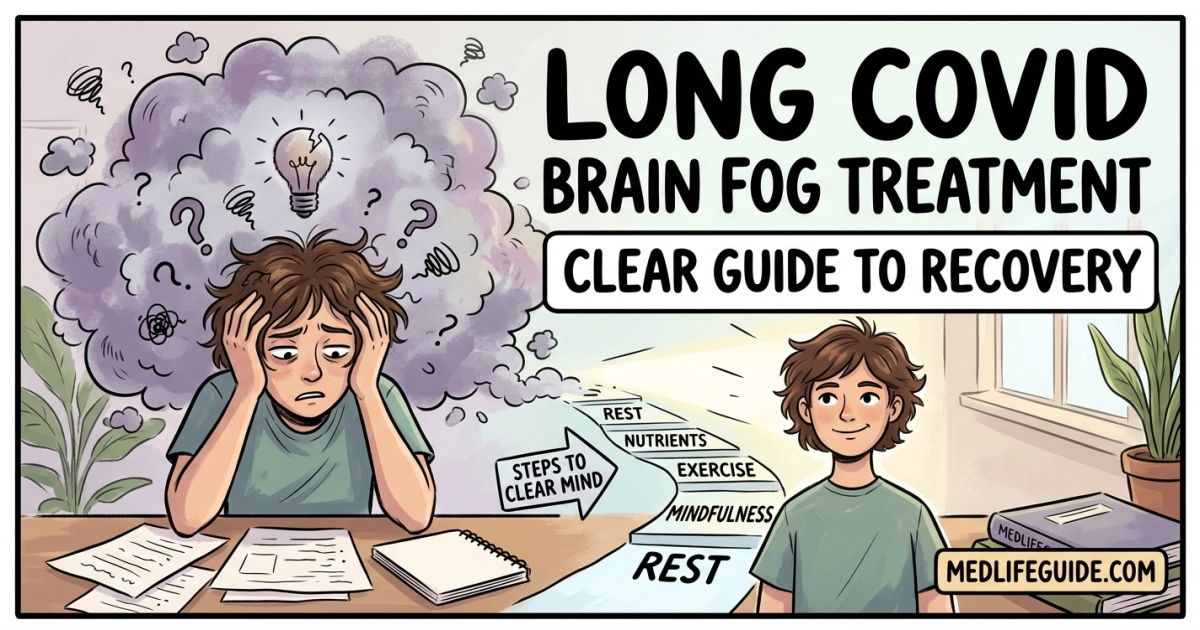
Many people who recover from an initial COVID-19 infection find themselves facing an unexpected struggle: a fuzzy, slow, or disorganized mind. Patients often describe this experience as “brain fog.” However, in clinical settings, healthcare providers refer to it as post-COVID cognitive impairment.
Long COVID brain fog is not simply feeling tired or having an off day. It is a cluster of real, measurable neurological symptoms that affect how your brain processes information, retains memories, and stays focused.
Common Symptoms Experienced by Patients
- Sluggish Thinking: Simple tasks like writing an email or adding up numbers take twice as long.
- Short-Term Memory Loss: Forgetting why you walked into a room or losing track of everyday items like keys or phones.
- Word-Finding Difficulties (Anomia): Searching for basic words mid-sentence or substituting the wrong word repeatedly.
- Executive Dysfunction: Difficulty planning, multitasking, organizing schedules, or prioritizing daily work.
- Mental Fatigue: Feeling completely drained after brief mental focus, such as reading a short article or attending a 15-minute meeting.
What Causes Cognitive Impairment After COVID-19?
To find the right long COVID brain fog treatment, it helps to understand why these symptoms happen. Scientists and clinical researchers at institutions like the National Institutes of Health (NIH) and Mayo Clinic have identified several main drivers:
- Persistent Neuroinflammation: The body’s immune reaction to the virus can cause lingering inflammation in brain tissues, keeping the brain’s immune cells (microglia) in an overactive state.
- Microvascular Dysfunction: Small blood vessels in the brain can become inflamed or develop microscopic blood clots, reducing optimal oxygen flow to delicate nerve tissues.
- Autonomic Nervous System Dysfunction (Dysautonomia): Conditions like Postural Orthostatic Tachycardia Syndrome (POTS) cause abnormal blood pressure and heart rate changes when standing up, leading to reduced blood flow to the brain (cerebral hypoperfusion).
- Viral Persistence: In some individuals, tiny fragments of viral proteins or RNA remain active in body tissue reservoirs, causing ongoing low-grade immune activation.
Unique Clinical Takeaways
While basic online symptom lists advise “getting enough sleep” or “eating healthy,” real-world recovery requires targeted strategies grounded in clinical practice. Here are three original, actionable clinical insights developed from multidisciplinary post-COVID clinical care:
1. Neuro-Vascular Pacing via the “Micro-Break Protocol”
Standard cognitive rehabilitation often focuses on pushing through tasks. However, in Long COVID, pushing through mental strain triggers cognitive “crashes.”
- Clinical Action: Implement micro-break pacing. Every 20 to 25 minutes of mental work must be followed by 3 to 5 minutes of absolute cognitive rest (lying down in a quiet, dark room without screens or audio). Resting before symptoms flare prevents blood-vessel constriction in the brain and maintains baseline processing power throughout the day.
2. Autonomic Posture Modification for Desk Work
Reduced blood flow to the brain (cerebral hypoperfusion) frequently worsens when patients sit upright at a desk for hours. This causes subtle dizziness and severe mental fatigue.
- Clinical Action: Adjust your workspace geometry to support cerebral blood flow. Elevate your feet on a small footstool, use a reclining ergonomic chair, and wear gentle medical-grade compression stockings (15–20 mmHg). Elevating the feet and stabilizing blood pooling in the lower body directly improves blood delivery to the brain during cognitive tasks.
3. Objective Trackers Over “Feeling-Based” Pacing
Patients often rely on how they feel in the moment to judge how much mental work to do. Unfortunately, post-exertional symptom exacerbation (PESE) can take 24 to 48 hours to manifest. Relying solely on immediate mood leads to a cycle of overexertion followed by severe set-backs.
- Clinical Action: Track your daily cognitive load using objective metrics. Keep a structured journal tracking three metrics: screen hours, social interactions, and heart rate variability (if using a wearable device). When your cognitive load score spikes, intentionally schedule a low-demand “recovery day” immediately following, rather than waiting for a crash to occur.
Non-Pharmacological Strategies & Rehabilitation
Recovering clear thinking involves retraining the brain and managing daily energy carefully.
+-------------------------------------------------------------------+
|               LONG COVID COGNITIVE RECOVERY STRATEGY               |
+-------------------------------------------------------------------+
|  1. Cognitive Pacing      |  Rest BEFORE exhaustion sets in.      |
|  2. Environmental Edits   |  Minimize noise, screens, multitask.  |
|  3. Speech Therapy        |  Retrain memory & word retrieval.     |
|  4. Anti-Inflammatory Diet|  Emphasize Mediterranean-style foods. |
+-------------------------------------------------------------------+
Cognitive Rehabilitation and Speech Therapy
Speech-language pathologists and occupational therapists play an crucial role in Long COVID care. They do not just give you memory puzzles; they teach structured coping tools:
- Internal Compensatory Tools: Using visualization, association, and categorization to recall words and lists.
- External Aids: Setting automatic alarms, calendar reminders, and step-by-step checklists to offset executive dysfunction.
- Graded Cognitive Activity: Carefully structuring mental exercises that challenge the brain without pushing it into a crash.
Energy Pacing: Avoiding the “Push-and-Crash” Cycle
Pacing is the single most effective non-drug tool for long COVID brain fog.
- The 3 Ps Strategy:
- Pace: Breakdown large tasks into 10-minute segments.
- Plan: Organize high-energy tasks for the times of day when you feel most refreshed.
- Prioritize: Decide what must be done today and drop or delegate optional demands.
Medical and Emerging Pharmacological Options
Currently, there is no single FDA-approved “cure” specifically created for post-COVID brain fog. However, clinical trials and off-label treatments managed by qualified physicians offer promising avenues for symptom relief.
Note: Always consult your physician before starting or changing any medication or supplement regimen.
Targeted Clinical Approaches
- Low-Dose Naltrexone (LDN): Large-scale trials (including NIH RECOVER studies) are evaluating LDN for its ability to regulate neuroinflammation and microglial activation without significant side effects.
- Anti-Inflammatory Modulators: Clinical investigations are exploring JAK inhibitors (such as baricitinib) and GLP-1 receptor agonists to target underlying immune signaling in neuro-inflammation.
- Autonomic Medications: For patients with overlapping dysautonomia or POTS, medications like beta-blockers, midodrine, or ivabradine help stabilize heart rate and blood pressure, improving blood flow to the brain.
- Cognitive Modulators: In select cases, physicians prescribe wakefulness-promoting agents or gentle stimulants under strict supervision to help support daily concentration.
Lifestyle Interventions for Brain Health
Daily habits directly influence how effectively the brain heals from viral-induced inflammation.
Nutrition and Hydration
- Anti-Inflammatory Nutrition: Following a Mediterranean-style diet rich in leafy greens, berries, olive oil, and omega-3 fatty acids supports brain health and lowers systemic inflammation.
- Electrolytes and Fluid Balance: Extra fluids combined with dietary sodium or electrolyte solutions can help maintain blood volume and prevent brain fog caused by dysautonomia.
Sleep Hygiene and Recovery
Quality sleep is essential because the brain’s glymphatic system clears metabolic waste during deep sleep cycles.
- Maintain a strict sleep-wake schedule.
- Ensure a dark, cool room environment.
- Avoid screen time and bright lights at least one hour before bed.
When to See a Healthcare Specialist
Managing Long COVID requires a collaborative approach with medical experts. You should schedule a consultation with your primary care provider or a specialized post-COVID clinic if:
- Your cognitive symptoms interfere with your ability to work, drive, or manage home safety.
- You experience persistent dizziness, fainting, or rapid heart rates when standing.
- You develop symptoms of mood changes, anxiety, or depression alongside cognitive difficulty.
Your physician can order cognitive assessments, rule out other treatable conditions (such as thyroid imbalance, vitamin B12 deficiency, or sleep apnea), and refer you to specialized occupational, speech, or neurological therapy.
Frequently Asked Questions (FAQs)
For many individuals, symptoms improve gradually over 6 to 18 months with proper pacing and rehabilitation. However, duration varies widely, and early clinical intervention helps support faster recovery.
Standard brain-training apps are often ineffective on their own because they do not address underlying neuroinflammation or blood flow issues. In fact, overusing them without structured pacing can worsen symptoms.
No, long COVID brain fog is not dementia. While both involve cognitive challenges, post-COVID brain fog is primarily caused by inflammation and circulation issues that can improve with time and targeted management.
Keep a daily symptom diary detailing specific difficulties, such as word-finding problems or mental fatigue after routine tasks. Presenting concrete examples helps your provider create an appropriate referral and testing plan.
There is no single blood test or scan that diagnoses brain fog. Doctors use a combination of cognitive assessments, blood panels, and autonomic testing to evaluate your condition and rule out other causes.