
What Does Measles Look Like?
Medically Reviewed and Compiled by Dr. Adam N. Khan, MD.
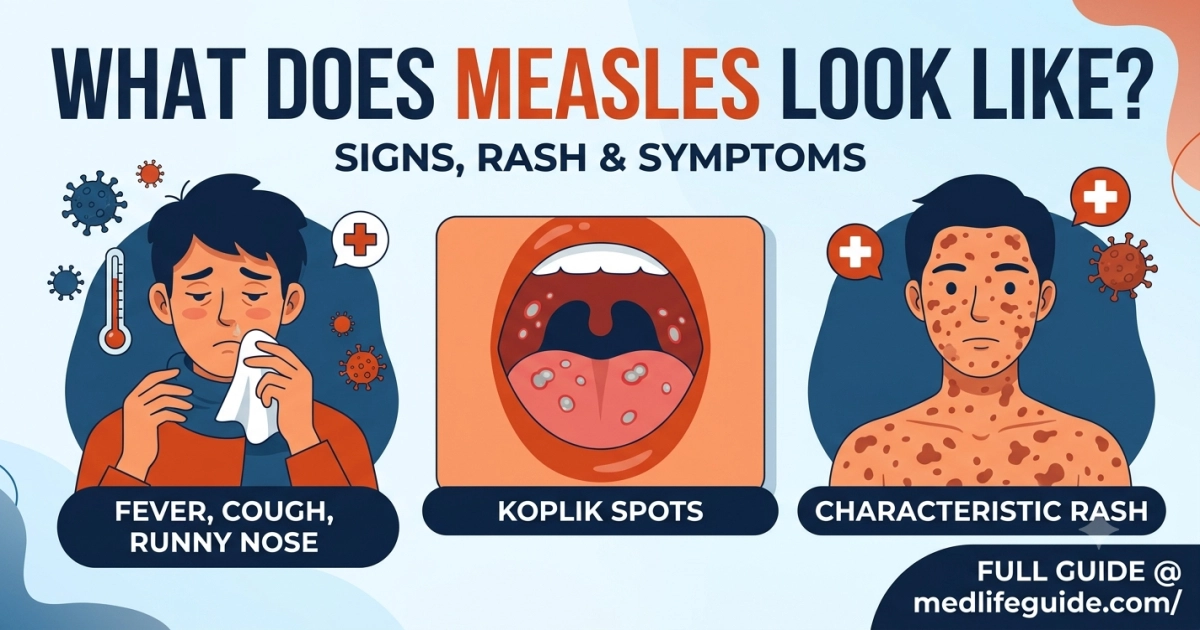
Measles is a highly contagious viral infection that can make people very sick. One of the most common questions parents and patients ask is, “What does measles look like?” The answer is more than just a rash. Measles usually starts with fever, cough, runny nose, and red eyes before the rash appears.
The measles rash has a very specific pattern. It often begins on the face and behind the ears and then spreads down the body. Small white spots inside the mouth, called Koplik spots, may appear before the rash. Knowing what measles looks like can help you recognize the illness early and seek medical care when needed.
According to the Centers for Disease Control and Prevention (CDC), measles remains one of the most contagious diseases in the world. Vaccination is the most effective way to prevent it.
What Is Measles?
Measles is caused by the measles virus. It spreads through the air when an infected person coughs, sneezes, or breathes. The virus can stay in the air or on surfaces for up to two hours.
People who are not vaccinated are at a much higher risk of becoming infected if they are exposed to the virus.
Measles can affect people of all ages, but it is especially dangerous for:
- Infants
- Pregnant women
- Adults over age 20
- People with weakened immune systems
- Unvaccinated individuals
What Does Measles Look Like?
Measles has several stages. The rash is usually the most noticeable symptom, but it is not the first sign of illness.
Early Symptoms of Measles
The first symptoms often include:
- High fever
- Dry cough
- Runny nose
- Red or watery eyes
- Tiredness
- Sore throat
- Loss of appetite
These symptoms usually begin about 7 to 14 days after exposure to the virus.
What Does the Measles Rash Look Like?
The measles rash typically:
- Starts as flat red spots on the face
- Appears near the hairline or behind the ears
- Spreads downward to the neck, chest, arms, and legs
- May develop small raised bumps
- Often joins together as it spreads
- Lasts about five to six days
The rash may look darker or lighter depending on a person’s skin tone.
On lighter skin, it often appears bright red or reddish-brown. On darker skin, it may appear dark red, purple, or brown and can sometimes be harder to notice.
Pictures and Appearance of Measles Rash
Although the rash can vary slightly from person to person, doctors look for certain patterns.
Common features include:
| Symptom | Appearance |
|---|---|
| Facial rash | Begins around hairline and ears |
| Red spots | Flat spots that spread downward |
| Raised bumps | May appear on top of red areas |
| Mouth spots | Small white spots inside cheeks |
| Fever | Usually very high before rash develops |
The rash normally spreads from the head to the feet over several days.
What Are Koplik Spots?
Koplik spots are one of the most important signs of measles.
These spots are:
- Tiny white or bluish-white dots
- Found inside the cheeks
- Surrounded by a red area
- Present one to two days before the rash appears
Doctors often consider Koplik spots highly characteristic of measles.
If you notice these spots along with fever and cough, medical evaluation is recommended.
Timeline of Measles Symptoms
Day 1 to Day 4
You may experience:
- Fever
- Runny nose
- Cough
- Red eyes
- Fatigue
Day 2 to Day 4
You may notice:
- Koplik spots inside the mouth
Day 3 to Day 5
The rash begins:
- Starts on the face
- Moves down the body
Day 5 to Day 7
The rash:
- Reaches the arms and legs
- Begins fading in the same order it appeared
Some people may experience peeling or temporary skin discoloration after the rash fades.
Where Does Measles Rash Usually Start?
The rash usually starts:
- At the hairline.
- Around the ears.
- On the face.
- Spreads to the neck.
- Moves to the chest and back.
- Reaches the arms and legs.
This downward spread is one of the reasons doctors can distinguish measles from many other viral rashes.
Is Measles Always a Rash?
No. The early symptoms happen before the rash appears.
A person with measles may feel sick for several days before any skin changes occur.
You should not wait for a rash to develop if symptoms include:
- High fever
- Cough
- Red eyes
- Runny nose
- Recent exposure to measles
People are contagious before the rash appears.
Conditions That Can Look Like Measles
Several illnesses may look similar to measles.
Rubella
Rubella may cause:
- Pink rash
- Mild fever
- Swollen lymph nodes
Rubella is usually milder than measles.
Roseola
Roseola commonly affects young children and causes:
- High fever
- Rash after fever improves
Scarlet Fever
Scarlet fever often causes:
- Sandpaper-like rash
- Sore throat
- Strawberry tongue
Allergic Skin Reactions
Some allergic rashes may resemble measles but do not follow the same pattern.
Viral Infections
Other viral infections can cause:
- Fever
- Rash
- Body aches
A healthcare professional may use symptoms, vaccination history, and laboratory testing to confirm measles.
Unique Clinical Takeaways
Understanding what does measles look like involves more than recognizing a red rash. These clinical insights can help patients and caregivers identify important warning signs.
1. The Rash Is Often Not the First Warning Sign
Many people assume measles starts with a rash. In reality, patients are usually sick before the rash develops.
The combination of:
- High fever
- Red eyes
- Persistent cough
- Runny nose
can appear several days before the rash.
This means an infected person may spread measles without realizing it. Early recognition is especially important during outbreaks or after international travel.
2. Skin Tone Can Affect How Measles Appears
Measles may not look the same on every person.
Clinical experience and medical guidance show that rashes can appear differently depending on skin pigmentation.
On darker skin tones, the rash may appear:
- Purple
- Brown
- Dark red
- Less noticeable than on lighter skin
Patients and caregivers should also watch for:
- Fever
- Facial swelling
- Eye redness
- Changes inside the mouth
Healthcare providers should assess the entire symptom pattern rather than relying only on rash color.
3. The Direction of Rash Spread Matters
The way the rash spreads provides an important clue.
Measles typically:
- Starts at the head
- Moves downward
- Covers most of the body over several days
Many viral rashes do not follow this pattern.
If a rash begins on the legs or suddenly appears over the entire body, another diagnosis may be more likely.
Doctors use the timing and progression of symptoms when considering measles versus other illnesses.
4. Adults May Experience More Severe Disease
Measles is often considered a childhood illness, but adults can become seriously ill.
Adults are more likely to experience complications such as:
- Pneumonia
- Severe dehydration
- Hospitalization
- Liver inflammation in some cases
Unvaccinated adults should seek medical advice if they have symptoms after possible exposure.
5. Measles Can Cause Serious Complications
Measles is not simply a skin rash.
Possible complications include:
- Ear infections
- Pneumonia
- Diarrhea
- Brain swelling (encephalitis)
- Pregnancy complications
- Rare but fatal neurological disease called subacute sclerosing panencephalitis (SSPE)
Children younger than five years and adults older than twenty years have higher risks of complications.
When Should You See a Doctor?
Seek medical care immediately if:
- Fever is very high.
- Breathing becomes difficult.
- The rash spreads rapidly with severe illness.
- Your child becomes unusually sleepy.
- Seizures occur.
- You have been exposed to someone with measles.
Call ahead before visiting a healthcare facility. Measles spreads easily, and healthcare staff may need to take precautions.
How Is Measles Diagnosed?
Doctors may diagnose measles using:
- Physical examination
- Symptom history
- Vaccination history
- Blood tests
- Throat or nasal swab testing
Laboratory confirmation is recommended in suspected cases.
How Is Measles Treated?
There is no specific antiviral treatment for measles in most patients.
Treatment focuses on:
- Rest
- Fluids
- Fever control
- Nutritional support
- Vitamin A supplementation when medically appropriate
- Treating complications if they occur
Hospital care may be needed for severe illness.
Can Measles Be Prevented?
Yes. Vaccination is highly effective.
The MMR vaccine protects against:
- Measles
- Mumps
- Rubella
According to the CDC, two doses of the MMR vaccine provide excellent protection against measles.
Other preventive steps include:
- Staying away from infected individuals
- Following public health recommendations during outbreaks
- Seeking medical advice after exposure
Five Real FAQs About Measles
1. What does measles look like when it first starts?
Measles usually begins with fever, cough, red eyes, and a runny nose before the rash appears. The rash often starts on the face near the hairline.
2. Are measles bumps or flat spots?
Measles typically causes flat red spots that may develop small raised bumps as the rash spreads.
3. How long does the measles rash last?
The rash usually lasts about five to six days before fading.
4. Can measles appear differently on dark skin?
Yes. Measles may appear darker or less visible on darker skin tones, making other symptoms important for diagnosis.
5. Is measles dangerous in adults?
Yes. Adults can develop serious complications, including pneumonia and hospitalization.
References and Citations
For additional medically reviewed information, readers may refer to the following authoritative sources available in the MedLifeGuide medical reference library:
- Centers for Disease Control and Prevention (CDC) – Measles (Rubeola)
- World Health Organization (WHO) – Measles Fact Sheet
- Mayo Clinic – Measles Symptoms and Causes
- Cleveland Clinic – Measles Overview
- Merck Manual Professional Edition – Measles
- American Academy of Pediatrics – Red Book: Measles Clinical Guidance
Internal Medical Reference Links:
- MedLifeGuide Medical Library → Measles Symptoms
- MedLifeGuide Medical Library → MMR Vaccine Information
- MedLifeGuide Medical Library → Viral Rash Identification Guide
- MedLifeGuide Medical Library → Childhood Infectious Diseases
- MedLifeGuide Medical Library → Measles Complications and Treatment
Medical Disclaimer
This article is for educational purposes only and is not a substitute for professional medical advice, diagnosis, or treatment. Always consult a qualified healthcare professional regarding any medical concerns or symptoms. If you suspect measles or have been exposed to someone with measles, seek medical guidance promptly.
1 thought on “What Does Measles Look Like? Easy Guide to Symptoms”
Comments are closed.