Medically Reviewed and Compiled by Dr. Adam N. Khan, MD.
Measles is one of the most contagious viral diseases in the world. It spreads very easily from person to person, especially in places where people are close together. Even though measles can be prevented with vaccination, outbreaks still happen when vaccination rates drop.
Understanding how measles spreads is important for protecting yourself, your family, and your community. This guide explains measles transmission, symptoms, prevention methods, and important clinical insights using evidence-based medical information.
What Is Measles?
Measles is a viral infection caused by the measles virus. It affects the respiratory system before spreading throughout the body. The disease can cause fever, cough, runny nose, red eyes, and a characteristic rash.
According to the U.S. Centers for Disease Control and Prevention (CDC), measles can lead to serious complications, including:
- Pneumonia
- Ear infections
- Severe diarrhea
- Brain swelling (encephalitis)
- Pregnancy complications
- Death in rare cases
Measles remains a major public health concern because it spreads more easily than many other infectious diseases.
How Is Measles Spread?
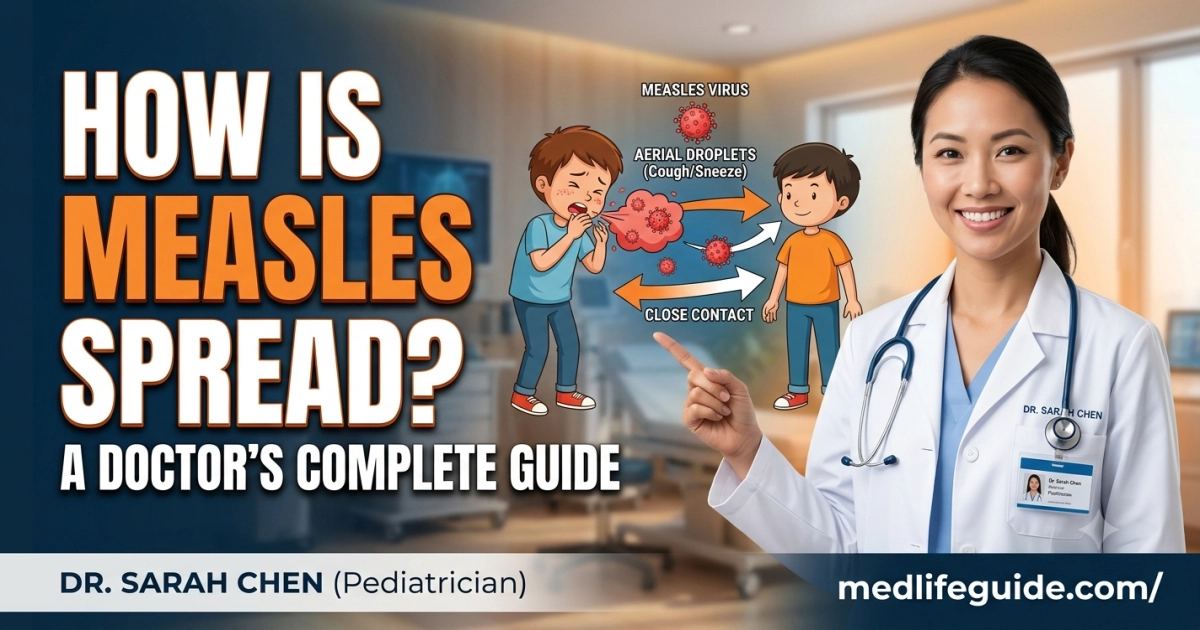
Measles spreads through the air when an infected person:
- Coughs
- Sneezes
- Talks
- Breathes
Tiny droplets containing the virus are released into the air. Other people can breathe in these particles and become infected.
The measles virus is extremely contagious. Health experts estimate that up to 9 out of 10 susceptible people who are exposed to measles will become infected if they are not immune.
Airborne Transmission
Measles is primarily spread through airborne transmission. The virus can remain in the air and on surfaces for up to two hours after an infected person leaves an area.
This means that you do not need direct physical contact with an infected person to catch measles. Simply entering a room where someone with measles was present can be enough for transmission.
Examples include:
- Schools
- Daycare centers
- Airports
- Hospitals
- Shopping centers
- Public transportation
Person-to-Person Spread
Measles can also spread when infected respiratory droplets come into contact with:
- The nose
- The mouth
- The eyes
Close household contact significantly increases the risk of infection.
When Can Measles Spread?
A person with measles can spread the virus:
- About four days before the rash appears.
- Up to four days after the rash develops.
Many people spread measles before they realize they are sick. This is one reason why outbreaks can occur quickly.
People may experience early symptoms such as:
- Fever
- Cough
- Runny nose
- Red, watery eyes
At this stage, they are already contagious.
Who Is Most at Risk?
Certain groups have a higher risk of becoming infected or developing severe complications.
These include:
- Unvaccinated children
- Infants younger than 12 months
- Pregnant women
- Adults without immunity
- Individuals with weakened immune systems
- International travelers
- Healthcare workers exposed to infected patients
The CDC recommends ensuring vaccination before international travel because measles remains common in some parts of the world.
Symptoms of Measles
Symptoms usually develop 7 to 14 days after exposure.
Early Symptoms
The first symptoms may include:
- High fever
- Cough
- Runny nose
- Red eyes
- Fatigue
- Loss of appetite
Koplik Spots
Small white spots may develop inside the mouth before the rash appears. These are known as Koplik spots and are considered a classic sign of measles.
Skin Rash
The measles rash usually:
- Starts on the face.
- Spreads down the body.
- Appears as flat red spots.
- May merge together in some areas.
The rash typically lasts several days before fading.
How Long Does Measles Last?
Most uncomplicated cases last approximately:
| Stage | Duration |
|---|---|
| Incubation period | 7–14 days |
| Early symptoms | 2–4 days |
| Rash phase | About 5–6 days |
| Recovery period | 1–2 weeks |
Some patients may take longer to fully recover, especially if complications occur.
Can Measles Spread Without Symptoms?
No. People generally become contagious shortly before symptoms develop.
However, they can spread the virus before the rash appears. Because early symptoms resemble a common cold, infected individuals may unknowingly expose others.
This is one reason healthcare professionals take suspected measles cases seriously.
Unique Clinical Takeaways
1. Measles Is More Contagious Than Many Common Viral Illnesses
Many respiratory infections require close physical contact for transmission. Measles does not.
Medical studies show measles has one of the highest reproduction rates among infectious diseases. In practical terms, one infected person can spread measles to many susceptible individuals in crowded environments.
Patients often underestimate airborne spread and assume masks or avoiding handshakes alone provide complete protection. Vaccination remains the most effective preventive measure.
Clinical takeaway:
- Avoid exposure if measles is suspected.
- Seek medical advice immediately.
- Verify vaccination status before travel or outbreak situations.
2. Early Symptoms Can Mimic Other Childhood Illnesses
Measles can initially resemble:
- Influenza
- Common cold
- COVID-19
- Adenovirus infections
- Scarlet fever
- Rubella
Healthcare providers consider:
- Travel history
- Vaccination history
- Exposure to confirmed cases
- Presence of Koplik spots
- Rash progression
A detailed clinical history plays an important role in diagnosing measles early.
Clinical takeaway:
Parents should not rely solely on the appearance of the rash when determining whether a child may have measles.
3. Certain Patients Face Higher Risks of Severe Complications
People at greater risk include:
- Children under five years old
- Adults over 20 years old
- Pregnant individuals
- Immunocompromised patients
- Malnourished children
Complications may include:
- Pneumonia
- Encephalitis
- Hospitalization
- Pregnancy-related complications
- Severe dehydration
Vitamin A supplementation is recommended by healthcare professionals in specific pediatric cases because it has been shown to reduce severe complications in children with measles.
Clinical takeaway:
Patients with weakened immune systems should seek prompt medical evaluation if exposed to measles.
How Is Measles Diagnosed?
Healthcare providers diagnose measles using:
- Physical examination
- Medical history
- Laboratory testing
- Blood tests
- Respiratory specimen testing
Testing may be recommended during suspected outbreaks or after international travel.
Early diagnosis helps prevent further transmission.
How Can You Prevent Measles?
The most effective way to prevent measles is vaccination.
MMR Vaccine
The MMR vaccine protects against:
- Measles
- Mumps
- Rubella
The CDC reports that two doses of the MMR vaccine are highly effective at preventing measles infection.
Additional Prevention Tips
- Stay up to date with vaccinations.
- Avoid contact with infected individuals.
- Follow public health recommendations during outbreaks.
- Practice respiratory hygiene.
- Inform healthcare providers before arriving if measles is suspected.
What Should You Do After Exposure?
If you have been exposed to measles:
- Contact your healthcare provider immediately.
- Avoid public places.
- Confirm your vaccination status.
- Follow quarantine or isolation recommendations if advised.
- Monitor for symptoms for up to 21 days.
Some individuals may qualify for post-exposure preventive treatment depending on their age, immune status, and timing of exposure.
Possible Complications of Measles
Complications may include:
- Ear infections
- Severe diarrhea
- Pneumonia
- Encephalitis
- Hospitalization
- Pregnancy complications
- Rare neurological disorders such as subacute sclerosing panencephalitis (SSPE)
Young children and immunocompromised individuals are more likely to experience severe complications.
When Should You See a Doctor?
Seek medical attention if you or your child experiences:
- High fever
- Rash following fever
- Difficulty breathing
- Severe fatigue
- Signs of dehydration
- Known exposure to measles
Always call ahead before visiting a healthcare facility if measles is suspected. This helps reduce the risk of exposing others.
Frequently Asked Questions (FAQs)
Measles spreads through airborne respiratory droplets when an infected person coughs, sneezes, talks, or breathes. It is one of the most contagious viral infections known.
Yes. The virus can remain in the air and on surfaces for up to two hours, allowing infection even without direct physical contact.
People can spread measles from about four days before the rash appears until four days after the rash develops.
The MMR vaccine is highly effective, but no vaccine offers 100% protection. Vaccinated individuals have a significantly lower risk of infection and severe disease.
Yes. Adults can develop serious complications, including pneumonia and encephalitis, especially if they are unvaccinated.
References and Citations
The medical information in this article is based on authoritative sources, including:
- Centers for Disease Control and Prevention (CDC) – Measles (Rubeola) Information
Internal Link: /references/cdc-measles - World Health Organization (WHO) – Measles Fact Sheets
Internal Link: /references/who-measles - Mayo Clinic – Measles Symptoms and Causes
Internal Link: /references/mayo-clinic-measles - American Academy of Pediatrics (AAP) – Measles Clinical Guidance
Internal Link: /references/aap-measles - Merck Manual Professional Edition – Measles Overview
Internal Link: /references/merck-manual-measles
Medical Disclaimer
This article is intended for educational purposes only and does not replace professional medical advice, diagnosis, or treatment. Always consult a qualified healthcare provider regarding medical concerns or symptoms. If you suspect measles exposure or infection, seek prompt medical evaluation and follow public health recommendations.
- Navigating Influenza Season 2026-2027: Actionable Medical Insights
- Understanding American COVID Symptoms: Full Patient & Caregiver Guide
- Understanding the XFG American COVID Variant: Symptoms, Transmission, and Care

- Cold vs Flu: How to Spot the Difference and Recover
- Flublok vs Fluzone: Which Flu Vaccine Is Right for You?