
Medically Reviewed and Compiled by Dr. Adam N. Khan, MD.
Key Takeaways:
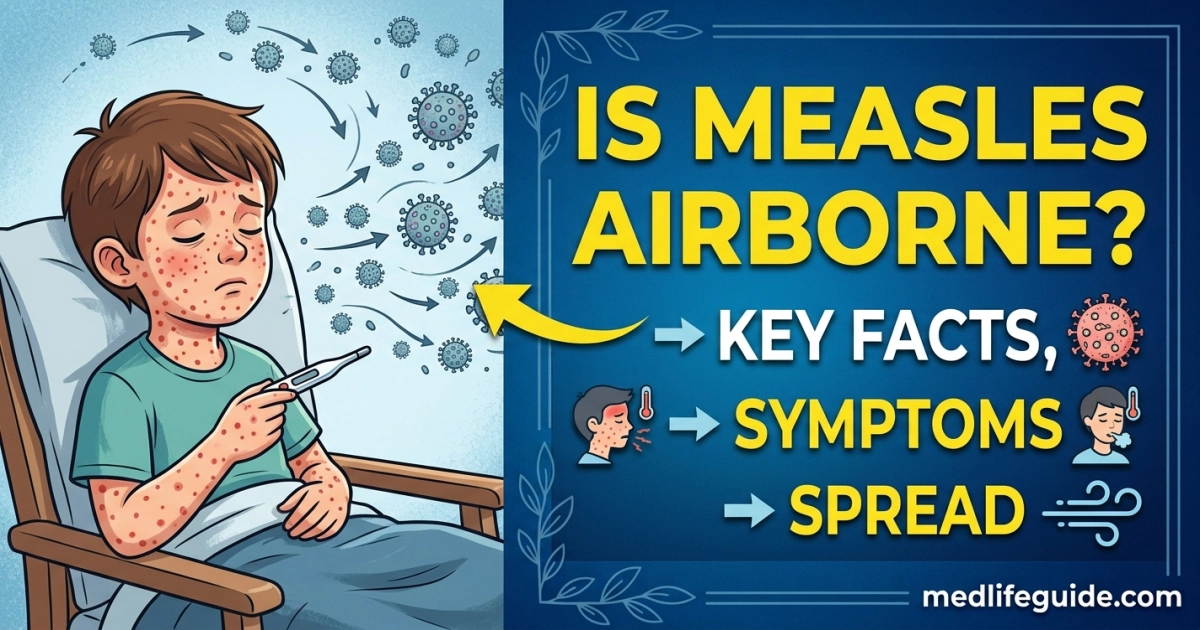
- Highly Airborne: Measles is one of the most infectious airborne viruses known. It spreads through tiny respiratory droplets when an infected person coughs, sneezes, or talks.
- Lingers in the Air: The virus can remain active and infectious in the air or on surfaces for up to two hours after an infected person leaves a room.
- Vaccination is Key: The MMR vaccine provides strong, long-lasting protection against measles infection and serious complications.
EMERGENCY WARNING: If you or a loved one experience high fever, severe shortness of breath, sudden confusion, chest pain, or a widespread rash accompanied by high lethargy, seek immediate emergency medical care or call 911. Call your doctor’s office or emergency room before arriving so staff can take airborne isolation precautions to protect other patients.
Understanding How Measles Spreads Through the Air
When people ask, “is measles airborne?”, the answer from medical consensus and public health agencies like the World Health Organization (WHO) and the U.S. Centers for Disease Control and Prevention (CDC) is a definitive yes. Measles is classified as an airborne disease because it spreads through microscopic droplet nuclei suspended in the air.
When an infected individual breathes, coughs, sneezes, or speaks, they release tiny fluid droplets carrying the measles virus. Because these particles are extremely light, they do not immediately drop to the ground. Instead, they linger in indoor air currents, allowing anyone who breathes that air to inhale the virus.
The 2-Hour Airspace Threat
One of the most dangerous traits of the measles virus is its persistence in enclosed spaces. According to the CDC, the virus can remain infectious in stagnant air or on surrounding surfaces for up to two hours after an infected person has exited the room. This means you do not need to be in direct physical contact with an infected person to catch the virus; simply entering a grocery store aisle, waiting room, or classroom where an infected person was present can lead to exposure.
Contagiousness and Attack Rate
Measles is extraordinarily contagious. Health experts estimate that up to 90% of non-immune individuals who are exposed to a person with measles will contract the virus. Furthermore, infected individuals can transmit the virus to others for 4 days before the characteristic measles rash appears and for 4 days after the rash emerges. Because early symptoms mirror a standard winter viral illness, many people unknowingly spread the virus to family members and community members before realizing they have measles.
Unique Clinical Takeaways
To help patients, parents, and caregivers navigate airborne transmission and measles protection, consider these three actionable clinical insights:
- Airborne Isolation Trumps Surface Cleaning Alone: While sanitizing high-touch surfaces is good hygiene practice, surface disinfectants alone cannot prevent measles transmission in crowded spaces. Because the primary route of exposure is inhaling suspended aerosol particles, opening windows, using high-efficiency particulate air (HEPA) filtration units, and wearing well-fitted respirators (such as N95s) in high-risk exposure areas are significantly more effective primary defense tactics.
- Recognizing the “Three Cs” Before the Rash: Clinical diagnosis often hinges on identifying early non-specific respiratory symptoms known as the “Three Cs”—Cough, Coryza (runny nose), and Conjunctivitis (red, watery eyes)—accompanied by high fever. Spotting these signs early, along with Koplik spots (tiny blue-white spots inside the mouth), allows caregivers to isolate the patient early during the most contagious phase, well before the skin rash appears.
- Post-Exposure Prophylaxis Window: If an unvaccinated or immunocompromised person is exposed to airborne measles, immediate medical intervention can still prevent or lessen the infection. Administering the MMR vaccine within 72 hours of exposure, or immune globulin (IG) therapy within 6 days of exposure, can provide crucial antibodies that halt viral replication.
Recognizing Early Signs and Disease Progression
Measles symptoms typically develop 7 to 14 days after exposure to airborne viral particles. Understanding the timeline helps caregivers take swift action:
Initial Stage (Prodromal Phase)
The first phase lasts about 4 to 7 days and is characterized by:
- High fever (often spiking above 104°F / 40°C)
- Persistent, dry cough
- Coryza (heavy runny nose and nasal congestion)
- Conjunctivitis (inflamed, red, light-sensitive eyes)
- Koplik spots (small white or bluish-white spots on the inner cheek lining)
Rash Phase
Roughly 3 to 5 days after the initial symptoms start, a blotchy red rash breaks out. It typically starts on the face and upper neck, slowly spreading downward over the trunk, arms, hands, legs, and feet. As the rash spreads, fever may spike again before gradually subsiding over 4 to 8 days.
Complications Associated with Measles Infection
While some view measles as a routine childhood illness, medical research underscores severe potential complications, especially in children under age 5 and adults over 30:
- Ear Infections & Hearing Loss: Bacterial ear infections occur in about 1 out of every 10 children with measles and can lead to permanent hearing damage.
- Severe Respiratory Complications: Pneumonia is the most common cause of death from measles in young children.
- Encephalitis: Approximately 1 in 1,000 children develops swelling of the brain (encephalitis), which can lead to convulsions, deafness, or intellectual disability.
- Immune Amnesia: A unique biological effect of measles is its ability to erase immune memory cells. The virus attacks the body’s lymphocytes, leaving children vulnerable to other dangerous bacterial and viral infections for months or years after recovery.
Effective Prevention and Protection Protocols
Protecting your household against airborne measles requires a multi-layered approach centered on immunologic defense and indoor safety.
1. Vaccination (MMR Vaccine)
The Measles, Mumps, and Rubella (MMR) vaccine remains the single most effective intervention against airborne transmission. Two doses of the MMR vaccine are approximately 97% effective at preventing measles, while one dose is about 93% effective.
- First Dose: Typically administered between 12 and 15 months of age.
- Second Dose: Administered between 4 and 6 years of age.
2. Improving Indoor Ventilation
Because measles droplets float in indoor air, optimizing airflow lowers viral density. Use HEPA air filters, increase mechanical ventilation exchange rates in schools and medical settings, and keep windows open when safe to encourage fresh air circulation.
3. Strategic Isolation and Masking
If a household member is suspected of having measles, isolate them in a separate room away from non-immune family members. Caregivers entering the room should wear tight-fitting N95 or KN95 respirators to block fine aerosolized particles.
Frequently Asked Questions (FAQs)
Measles is primarily spread through the air via fine respiratory droplets that remain suspended when an infected person coughs or sneezes. While touching contaminated surfaces can transfer the virus, airborne inhalation is the main driver of transmission.
The measles virus can remain active and infectious in indoor air or on nearby surfaces for up to two hours after an infected person leaves the space.
While rare, breakthrough infections can occur. However, two doses of the MMR vaccine provide 97% protection, and vaccinated individuals who do catch measles typically experience much milder symptoms and far lower risk of severe complications.
Call your doctor or clinic immediately to verify vaccination status and check eligibility for post-exposure prophylaxis (MMR vaccine within 72 hours or immune globulin within 6 days). Always phone ahead before visiting a healthcare facility so staff can prepare an isolated area.
Yes, adults who were never vaccinated or who never had measles in childhood are at high risk if exposed. Adults also face a higher likelihood of severe complications, such as pneumonia and encephalitis, compared to older children.
Reviewer Information
Reviewed by Dr. Adam N. Khan, MD.
Dr. Khan is a board-certified clinical specialist with over 15 years of experience in infectious disease consultation and patient health education. He maintains active clinical affiliations with regional medical centers and reports no financial conflicts of interest or industry sponsorship related to this content.