
Medically Reviewed and Compiled by Dr. Adam N. Khan, MD.
Quick Answer
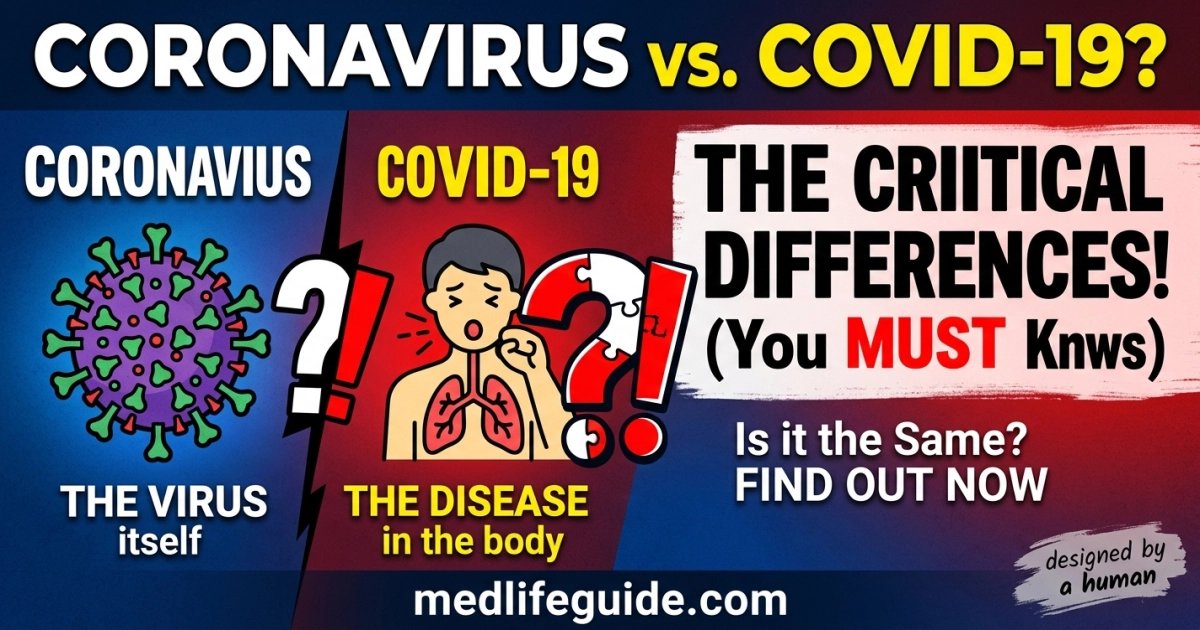
- Virus vs. Disease: “Coronavirus” refers to a large family of viruses, whereas “COVID-19” is the specific clinical disease caused by one specific coronavirus strain called SARS-CoV-2.
- Broad Category: Other human coronaviruses cause everyday common colds, as well as severe historic illnesses like SARS and MERS.
- Clinical Impact: Understanding the difference helps patients navigate symptoms, testing protocols, isolation guidelines, and targeted antiviral medical treatments effectively.
EMERGENCY WARNING: If you or someone in your care develops severe breathing trouble, persistent chest pain or pressure, new mental confusion, inability to wake or stay awake, or a pale, gray, or blue discoloration on the lips, skin, or nail beds, seek immediate emergency medical evaluation by calling 911 or going to the nearest emergency room.
1. Medical Overview and Pathophysiology
To answer the common question—is coronavirus the same as covid 19?—it helps to understand how medical experts classify infectious diseases. In short: no, they are not strictly the same, though they are directly related. “Coronavirus” is the broad term for an entire family of viruses, while “COVID-19” is the specific name of the illness caused by a single member of that family.
           +-----------------------------------------+
           |       CORONAVIRIDAE VIRUS FAMILY        |
           |   (Named for crown-like surface spikes)  |
           +--------------------+--------------------+
                                |
        +-----------------------+-----------------------+
        |                                               |
+-------v-----------------------+             +---------v---------------------+
|   COMMON HUMAN CORONAVIRUSES  |             |      NOVEL BETACORONAVIRUSES  |
|  (229E, NL63, OC43, HKU1)     |             |    (Severe Outbreak Strains) |
|  -> Causes mild upper-respir- |             +----+-------------------+------+
|     atory common colds       |                  |                   |
+-------------------------------+         +-------v-------+   +-------v-------+
                                          |  SARS-CoV-1   |   |   SARS-CoV-2  |
                                          | (Causes SARS) |   | (Causes COVID)|
                                          +---------------+   +---------------+
Clarifying the Terminology: Virus vs. Disease
In medical science, doctors maintain a clear distinction between an infectious agent (the pathogen) and the resulting health condition (the disease). Think of the distinction like HIV and AIDS: HIV is the human immunodeficiency virus, whereas AIDS is the clinical illness that can result from that viral infection.
Similarly, SARS-CoV-2 (Severe Acute Respiratory Syndrome Coronavirus 2) is the physical virus particle. COVID-19 stands for COronaVIrus Disease 2019, which is the clinical diagnosis given when SARS-CoV-2 causes symptoms or health complications in the human body.
What Are Coronaviruses?
Coronaviruses belong to the Coronaviridae family. The name “corona” comes from the Latin word for “crown,” because under an electron microscope, these spherical viral particles feature prominent spike proteins sticking out from their surface, resembling a royal crown or the solar corona.
Coronaviruses are zoonotic, meaning they exist in various animal populations (such as bats, birds, and small mammals) and occasionally jump to humans—a process known as a spillover event. There are seven known coronaviruses that infect human beings:
- Common Mild Strains: Four strains—229E, NL63, OC43, and HKU1—circulate globally every year and account for roughly 15% to 30% of standard common cold cases in adults and children.
- Severe Strains: Three strains have triggered severe acute respiratory outbreaks over the past two decades:
- SARS-CoV-1: Identified in 2003 as the cause of Severe Acute Respiratory Syndrome (SARS).
- MERS-CoV: Identified in 2012 as the cause of Middle East Respiratory Syndrome (MERS).
- SARS-CoV-2: Identified late in 2019 as the cause of COVID-19.
How SARS-CoV-2 Invades Human Body Tissues
The mechanism by which SARS-CoV-2 infects cells explains why COVID-19 affects far more than just the lungs. The virus uses its outer spike protein to bind to a specific enzyme receptor located on human cell surfaces called Angiotensin-Converting Enzyme 2 (ACE2).
ACE2 receptors are not only found in the mucosal lining of the nose, throat, and lungs, but are also widely distributed across the lining of blood vessels (vascular endothelium), heart muscle tissue, kidneys, intestines, and central nervous system tissues. Once attached to ACE2 receptors, the virus enters the host cell, hijacks its internal genetic machinery, and reproduces thousands of new viral particles. This triggers local cell damage and prompts a systemic inflammatory response from the human immune system.
2. Symptom Breakdown and Diagnostic Comparison Table
Because multiple respiratory viruses circulate simultaneously, distinguishing COVID-19 from common colds, influenza (flu), and environmental allergies can be challenging based on symptoms alone.
| Symptom / Clinical Feature | COVID-19 (SARS-CoV-2) | Common Cold (Endemic Coronaviruses / Rhinoviruses) | Influenza (Seasonal Flu) | Seasonal Allergies (Allergic Rhinitis) |
| Sore / Scratchy Throat | Very Common (Early Sign) | Very Common | Common | Rare (Mild Tickle) |
| Nasal Congestion / Runny Nose | Very Common | Very Common | Common | Very Common |
| Profound Fatigue | Very Common | Mild | Severe & Sudden | Rare |
| Headache | Common | Rare | Common & Severe | Occasional (Sinus Pressure) |
| Cough | Common (Dry or Productive) | Mild to Moderate | Dry, Harsh, & Sudden | Rare (Tickle in Throat) |
| Body / Muscle Aches | Common | Rare | Severe & Sudden | None |
| Fever or Chills | Low-grade to High (100–102°F) | Rare | High Fever (101–104°F) | None |
| Loss of Taste or Smell | Occasional (Less common in newer sublineages) | Rare (Only from severe nasal blockage) | Rare | Rare |
| Gastrointestinal Issues | Occasional (Nausea, Diarrhea) | Rare | Occasional (More in children) | None |
| Itchy, Watery Eyes | Rare | Rare | Rare | Very Common |
| Average Incubation Period | 2 to 4 Days | 1 to 3 Days | 1 to 4 Days | Immediate upon Exposure |
Detailed Symptom Dynamics
- Upper Airway Dominance: Modern Omicron sublineages replicate predominantly in the upper respiratory tract. This causes prominent throat inflammation, nasal congestion, and mild hoarseness as primary early symptoms, differing from early pandemic strains that targeted deep lung tissue immediately.
- Systemic Inflammation: Fatigue, diffuse body aches, and headaches occur when immune cells release messenger proteins called cytokines into the bloodstream to fight off the virus.
- Gastrointestinal Symptoms: Because ACE2 receptors are highly dense throughout the digestive tract, some patients experience loose stools, abdominal cramping, or loss of appetite prior to or alongside respiratory issues.
3. Unique Clinical Takeaways
Clinicians at top academic medical centers emphasize several vital clinical nuances that standard symptom lists frequently omit:
- The Delayed Antigen Threshold Effect: High levels of pre-existing immunity (from past vaccination or previous infection) allow the human immune system to recognize SARS-CoV-2 very quickly. This rapid immune reaction often triggers noticeable symptoms—like a sore throat or fever—on Day 1 of illness, even while the viral load in the nasal passages remains too low for rapid antigen home tests to detect. As a result, testing negative on Day 1 does not rule out COVID-19; repeat testing 48 hours later is essential for diagnostic accuracy.
- Atypical Presentations in Frail and Elderly Adults: In older adults (aged 65 and over) and immunocompromised patients, classical symptoms like fever or cough may be entirely absent. Instead, acute SARS-CoV-2 infection frequently presents as sudden functional decline, unexpected lethargy, unexplained falls, loss of appetite, or acute delirium (confusion). Caregivers should treat any sudden drop in baseline physical or cognitive function as a potential viral presentation.
- Endothelial Dysfunctions and Microvascular Risk: Unlike ordinary cold-causing coronaviruses that remain strictly confined to epithelial surface cells in the nose and throat, SARS-CoV-2 can infect the inner lining of blood vessels (the endothelium). This can cause systemic vascular inflammation (endotheliopathy), increasing the risk of microvascular clotting, transient blood pressure spikes, and organ stress during acute infection—even in cases with mild respiratory symptoms.
4. Day-by-Day Illness Progression Timeline
Understanding the typical trajectory of COVID-19 helps patients and caregivers anticipate changes in health status and time diagnostic testing appropriately.
+-----------------------------------------------------------------------------------+
|                            TYPICAL ILLNESS TRAJECTORY                             |
+-----------------------------------------------------------------------------------+
| DAYS 1-3 : Onset Phase    -> Scratchy throat, fatigue, low fever, nasal congestion. |
| DAYS 4-7 : Peak & Pivot   -> Fever resolves OR lower-airway tightness emerges.    |
| DAYS 8-14: Recovery Phase -> Gradual resolution; lingering dry cough/fatigue.      |
+-----------------------------------------------------------------------------------+
Days 1 to 3: Early Onset Phase
- Symptom Manifestation: Symptoms typically begin with a distinct throat tickle or sharp pain, followed rapidly by nasal congestion, sneezing, fatigue, and mild body aches.
- Testing Guidance: Rapid antigen tests may yield a weak line or a false-negative result during this window due to low viral shedding in the nostrils. Symptomatic individuals should isolate and re-test in 48 hours.
Days 4 to 7: Peak and Pivot Phase
- Peak Symptom Expression: Fatigue and congestion typically peak during this window. In uncomplicated cases, fevers begin to resolve naturally without fever-reducing medications.
- The Clinical Pivot: For a small percentage of vulnerable individuals, Days 5 through 8 represent a critical transition point where secondary systemic inflammation or lower-respiratory tightness can develop. Any emerging shortness of breath during this period requires prompt medical review.
Days 8 to 14: Resolution Phase
- Recovery: In the majority of mild-to-moderate cases, upper respiratory symptoms resolve substantially by Day 8 or 10.
- Lingering Effects: Mild post-viral fatigue and an occasional dry cough may persist for two to three weeks as the respiratory mucosa heals and the immune system returns to baseline.
5. High-Risk Vulnerabilities and Special Populations
While many individuals recover smoothly from COVID-19, SARS-CoV-2 infection poses heightened risks for specific populations.
                +-----------------------------------------------+
                | HIGH-RISK & VULNERABLE PATIENT GROUPS         |
                +-----------------------+-----------------------+
                                        |
        +-------------------------------+-------------------------------+
        |                               |                               |
+-------v-------+               +-------v-------+               +-------v-------+
| OLDER ADULTS  |               |  PEDIATRICS   |               | IMMUNOCOMP-   |
|  (AGED 65+)   |               |  (MIS-C Risk) |               |  ROMISED      |
+---------------+               +---------------+               +---------------+
| * Blunted fever response      | * Generally mild cases        | * Prolonged viral shedding
| * Risks of confusion/falls    | * Monitor for persistent fever| * Impaired antibody creation
| * Higher hospitalization rate | * Rare post-viral inflammation| * Eligibility for early antivirals
+-------------------------------+-------------------------------+-------------------------------+
Older Adults (Aged 65 and Older)
Age remains a significant risk factor for severe outcomes from COVID-19 due to immunosenescence—the natural, age-related weakening of the immune system. Older individuals are at higher risk for viral pneumonia, secondary bacterial infections, and aggravation of underlying chronic heart, lung, or kidney conditions.
Pediatric Patients and MIS-C
Children generally experience milder COVID-19 infections than adults, often displaying cold-like symptoms or remaining completely asymptomatic. However, caregivers must monitor pediatric patients for Multisystem Inflammatory Syndrome in Children (MIS-C). This rare but serious post-viral condition occurs 2 to 6 weeks after infection and causes severe inflammation across the heart, lungs, kidneys, brain, skin, or gastrointestinal organs. Signs include persistent high fever, bloodshot eyes, rash, severe stomach pain, and extreme lethargy.
Immunocompromised Individuals
People living with weakened immune systems—such as organ transplant recipients, cancer patients undergoing active chemotherapy, or individuals taking immunosuppressive medications for autoimmune diseases—face unique challenges:
- They may experience prolonged periods of active viral replication lasting weeks or months.
- Their bodies may generate a weaker antibody response following infection or vaccination.
- They benefit significantly from early evaluation for outpatient oral antiviral therapies upon testing positive.
6. Evidence-Based Diagnostic, Testing, and Medical Management Guidelines
Proper management of COVID-19 relies on accurate diagnostic timing and evidence-based therapeutic interventions.
Diagnostic Testing Protocols
- Rapid Antigen Tests (RATs): Convenient home tests that detect specific viral surface proteins. They are highly accurate when positive, but false negatives can occur early in illness. A serial testing strategy (testing on Day 1 and re-testing on Day 3) is recommended to confirm negative results.
- Polymerase Chain Reaction (PCR) Tests: Highly sensitive laboratory tests that amplify viral genetic material (RNA). PCR tests can detect tiny quantities of SARS-CoV-2 days before rapid antigen tests show positive results.
Medical Management and Antiviral Therapies
For individuals with mild-to-moderate COVID-19 who are at high risk for progression to severe disease, medical guidelines recommend specific prescription outpatient interventions:
- Oral Antiviral Medications: Medications like ritonavir-boosted nirmatrelvir work by inhibiting key viral enzymes required for SARS-CoV-2 replication. To be effective, these oral antivirals must be started within the first 5 days of symptom onset.
- Intravenous Antiviral Options: For patients unable to take oral regimens or who are hospitalized with severe disease, intravenous antivirals like remdesivir may be prescribed to reduce viral load and hospital length of stay.
- Symptomatic Relief: Over-the-counter fever reducers and analgesics (such as acetaminophen or ibuprofen) help relieve headache, body aches, and throat pain under a physician’s guidance.
Note: Antibiotics are ineffective against viral infections like SARS-CoV-2 and should only be used if a qualified physician diagnoses a secondary bacterial complication.
7. Home Care, Isolation Protocols, and Recovery
Managing COVID-19 at home focuses on supporting the body’s natural immune recovery while protecting family and community members from viral transmission.
Home Care Practices
- Hydration: Drink plenty of fluids—such as water, clear broths, and electrolyte solutions—to replace fluids lost through fever or respiratory secretions.
- Rest: Prioritize physical rest and adequate sleep to support immune function and reduce physical strain.
- Humidification and Nasal Rinses: Using a clean cool-mist humidifier or saline nasal sprays can help soothe inflamed nasal passages and clear mucus congestion.
Isolation and Infection Prevention Protocols
To minimize indoor transmission to housemates and high-risk individuals:
- Stay Home: Remain at home and isolated from non-infected household members until you have been fever-free for at least 24 hours without using fever-reducing medications, and your overall symptoms are improving.
- Masking: Wear a well-fitted, high-filtration mask (such as an N95 or KN95) when you must be around others in shared indoor spaces for an additional 5 days after leaving isolation.
- Ventilation and Hygiene: Open windows or use portable HEPA air filters to increase airflow, wash hands frequently with soap and water for 20 seconds, and regularly disinfect high-touch surfaces like doorknobs and light switches.
Frequently Asked Questions (FAQs)
No, common cold coronaviruses (strains 229E, NL63, OC43, HKU1) cause mild upper respiratory infections, whereas COVID-19 is caused specifically by the SARS-CoV-2 coronavirus strain.
No, home COVID-19 antigen tests are designed specifically to detect SARS-CoV-2 proteins and will not return a positive result for standard cold-causing coronaviruses.
Most individuals with mild COVID-19 are most contagious during the first 5 days of symptoms, though wearing a mask around others for up to 10 days provides added protection.
Not necessarily; viral antigen levels may be too low on Day 1 to trigger a positive result, making a follow-up test 48 hours later necessary to confirm.
No, antibiotics only kill bacteria and have no effect against viral infections like SARS-CoV-2 or common cold coronaviruses.
About the Reviewer
Dr. Adam N. Khan, MD is a board-certified internal medicine physician dedicated to medical communication, patient advocacy, and clinical accuracy. He maintains zero commercial conflicts of interest and accepts no funding or disclosures from pharmaceutical or diagnostic manufacturers.
Standard Medical Disclaimer
The content provided on medlifeguide.com is for educational and informational purposes only and is not a substitute for professional medical advice, diagnosis, or treatment. Always consult your doctor or a qualified healthcare professional with any questions regarding a medical condition. Never disregard professional medical advice or delay seeking care because of information read on this website.