
Medically Reviewed and Compiled by Dr. Adam N. Khan, MD.
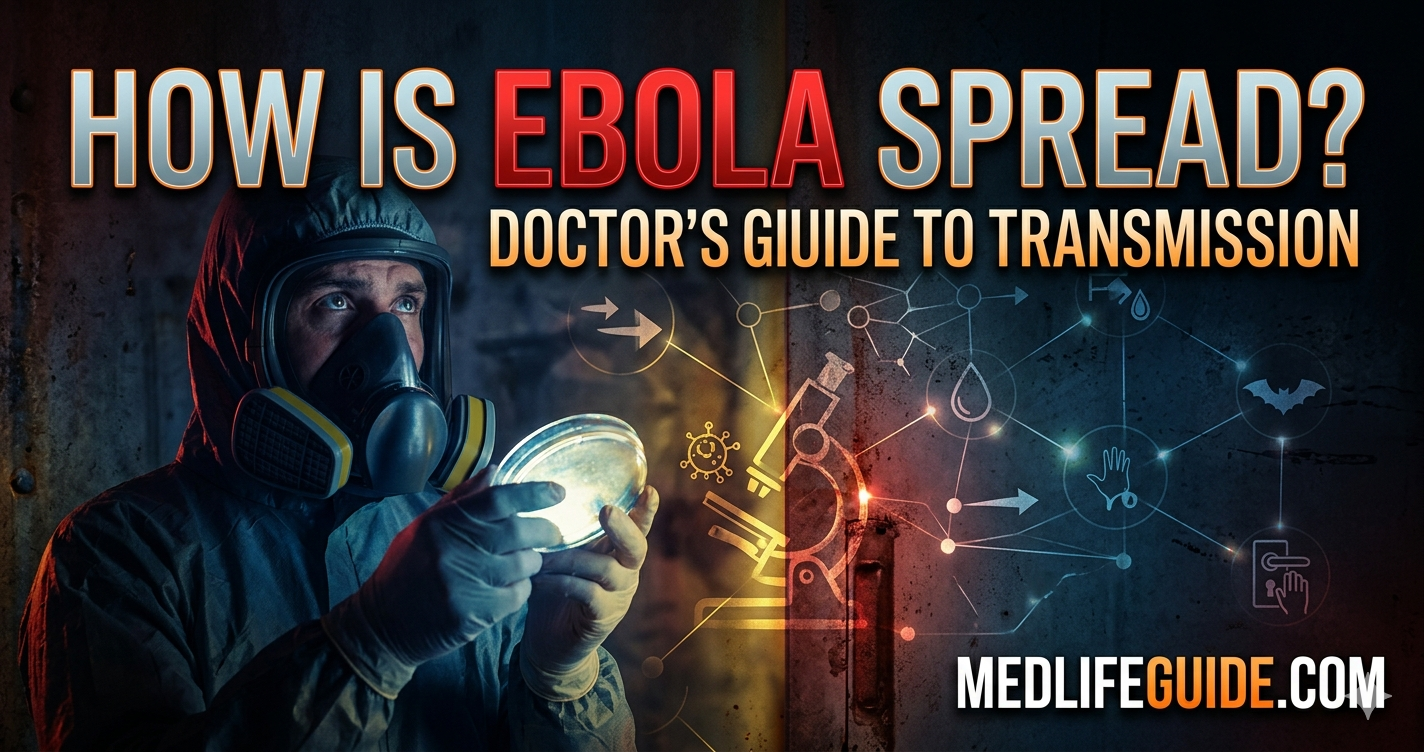
Ebola virus disease is a rare but highly severe condition that captures global attention due to its complex nature and high mortality rates (Kadanali, 2016). When an outbreak occurs, understanding how the virus moves from person to person is the most powerful tool health professionals use to protect communities and save lives.
To clear up common misconceptions, Ebola does not spread like the common cold, flu, or COVID-19. It is not an airborne pathogen. Instead, it relies on direct physical contact, making public education and specialized medical protocol essential for containment.
The Primary Route: Direct Contact with Bodily Fluids
The absolute cornerstone of Ebola transmission is direct contact. In medical terms, “direct contact” means that the virus must physically touch a person’s broken skin or open mucous membranes to cause an infection. Mucous membranes are the soft, moist tissues that line areas of your body, including your eyes, nose, mouth, and internal tracts.
The virus travels inside specific bodily fluids produced by an infected person who is actively showing symptoms. These fluids are divided into two clinical categories:
“Dry” vs. “Wet” Phase Fluids
Early in the illness, a patient experiences what doctors call the “dry phase,” which includes symptoms like fever, severe headaches, muscle aches, and extreme fatigue (CDC, 2026b). During this time, the virus is present in the blood and can be found in saliva, sweat, and urine.
As the illness advances into the “wet phase,” the patient becomes significantly sicker, experiencing heavy vomiting, severe diarrhea, and occasionally unexplained external or internal bleeding (CDC, 2026b). The fluids produced during this phase—vomit, feces, and blood—contain exceptionally high concentrations of the virus. This makes the wet phase the period of maximum infectivity, posing the greatest threat to anyone providing care without specialized protection.
Secondary Routes: Contaminated Surfaces and Objects
While the virus cannot float through the air, it can survive on solid surfaces for a limited time if it is protected within a droplet of organic material, like dried blood or fluids.
- Medical Equipment and Needles: If a needle, syringe, or clinical tool is used on an Ebola patient and is not properly sterilized, it can carry microscopic traces of infectious blood. Anyone accidentally poked by that needle can contract the virus.
- Bedding and Clothing: The linens, blankets, and clothing used by an infected individual quickly become saturated with sweat, vomit, or feces. Handling these materials with bare hands or rubbing them against open skin provides a direct pathway for transmission (CDC, 2026b).
Animal-to-Human Transmission: The Spillover Event
Before the virus ever spreads between humans, it must cross over from the wild. This initial introduction into the human population is called a “spillover event.”
[Wild Reservoir: Fruit Bats] ---> [Intermediate Host: Primates/Antelopes] ---> [Human Spillover Event]
Scientists have identified fruit bats belonging to the Pteropodidae family as the natural reservoir host for the Ebola virus (Kadanali, 2016). This means bats can carry and maintain the virus in nature without getting visibly sick.
A human can contract the virus directly from contact with bat droppings or saliva (such as in caves or mines), or by handling and consuming infected “bushmeat”—the meat of wild forest animals like nonhuman primates (monkeys, chimpanzees) and forest antelopes that contracted the virus from bats (CDC, 2026b). Once the first human is infected through this animal contact, they can then pass the virus to other humans.
Unique Clinical Takeaways
To truly manage or evaluate an Ebola threat, medical professionals look far beyond basic symptom lists. The following three perspectives illustrate why Ebola tracking requires strict, specialized protocols:
1. The Asymptomatic Isolation Buffer
One of the most vital rules of Ebola epidemiology is that a person is not contagious until they show symptoms (CDC, 2026b). The incubation period—the window of time between initially catching the virus and actually feeling sick—ranges from 2 to 21 days (CDC, 2026b).
If an individual is exposed in an active outbreak zone but remains completely asymptomatic, they can travel internationally without spreading the virus to fellow passengers (CDC, 2026a). However, because modern aviation can transport an asymptomatic traveler across the globe within 24 to 48 hours, health systems must enforce strict 21-day symptom-monitoring windows for anyone returning from high-risk areas to catch the very first sign of fever before public exposure occurs (CDC, 2026a).
2. Viral Persistence in Immune-Privileged Sites
Even after a patient completely recovers from the acute “wet” phase of Ebola and the virus is entirely cleared from their bloodstream, the pathogen can hide out in what doctors call “immune-privileged sites.” These are areas of the body—such as the interior of the eyes, the central nervous system, and the testes—where the body’s normal immune response is less active to prevent vital tissue damage.
The virus can persist in semen for many months after clinical recovery. Because of this, medical guidelines require male survivors to undergo regular semen testing and practice strict barrier protection during intercourse until laboratory confirmation proves the virus is permanently gone (CDC, 2026b).
3. Cultural and Post-Mortem Transmission Dynamics
Unlike many traditional pathogens that lose their threat when a host dies, the Ebola virus remains highly active and concentrated in a deceased body. In fact, a body that has succumbed to the virus is at its peak level of contagiousness because the viral load throughout the skin and fluids is incredibly high.
Traditional funeral rituals that involve washing, touching, or kissing the deceased create a massive vector for rapid community spread (CDC, 2026b). Overcoming an outbreak requires sensitive community engagement to implement safe, dignified, and completely isolated burial practices managed exclusively by trained teams wearing full Personal Protective Equipment (PPE) (WHO, 2025).
Prevention and Clinical Containment
Controlling the spread of Ebola relies entirely on breaking the chain of contact. In a hospital environment, this means implementing zero-tolerance infection prevention protocols:
- Rigorous Personal Protective Equipment (PPE): Healthcare workers must wear specialized fluid-resistant suits, double gloves, full face shields, and respiratory protection to ensure absolutely no skin or mucous membrane is exposed to fluid droplets (WHO, 2025).
- The Triage Ring Approach: Medical centers implement immediate isolation for anyone presenting with matching symptoms and an active exposure or travel history (CDC, 2026b). Patients are kept in strictly isolated rooms, and diagnostic blood tests are processed under maximum biosafety conditions (CDC, 2026b).
- Environmental Disinfection: Because the virus can remain viable in waste, all patient excreta, feces, and soiled linen must be treated as strict biohazards and managed with chemical neutralizers or autoclaves (WHO, 2021).
Standard Medical Disclaimer
The information provided in this article is for educational and informational purposes only and should not be construed as medical advice. Always seek the advice of a qualified physician or healthcare provider with any questions you may have regarding a medical condition, travel risks, or potential exposure to infectious diseases.