
Medically Reviewed and Compiled by Dr. Adam N. Khan, MD.
Gum disease is a hidden infection that affects nearly half of all adults in the United States over the age of 30 (Zhu, 2025). Many people do not realize their gums are sick until their teeth begin to feel loose. Understanding gum disease treatment is essential for protecting your smile and safeguarding your overall health.
When your gums are healthy, they look pink, feel firm, and hold your teeth securely in place. When bacteria build up along your gumline, it triggers an immune-inflammatory response where your body tries to fight off the germ invasion (Gautam, 2022). If left untreated, this constant battle can destroy the bone supporting your teeth, leading to major dental and systemic health problems (Ju et al., 2022).
What is Gum Disease?
To understand how treatments work, it helps to understand what gum disease actually is. Dentists divide gum disease into two main stages: gingivitis and periodontitis (Islam, 2022).
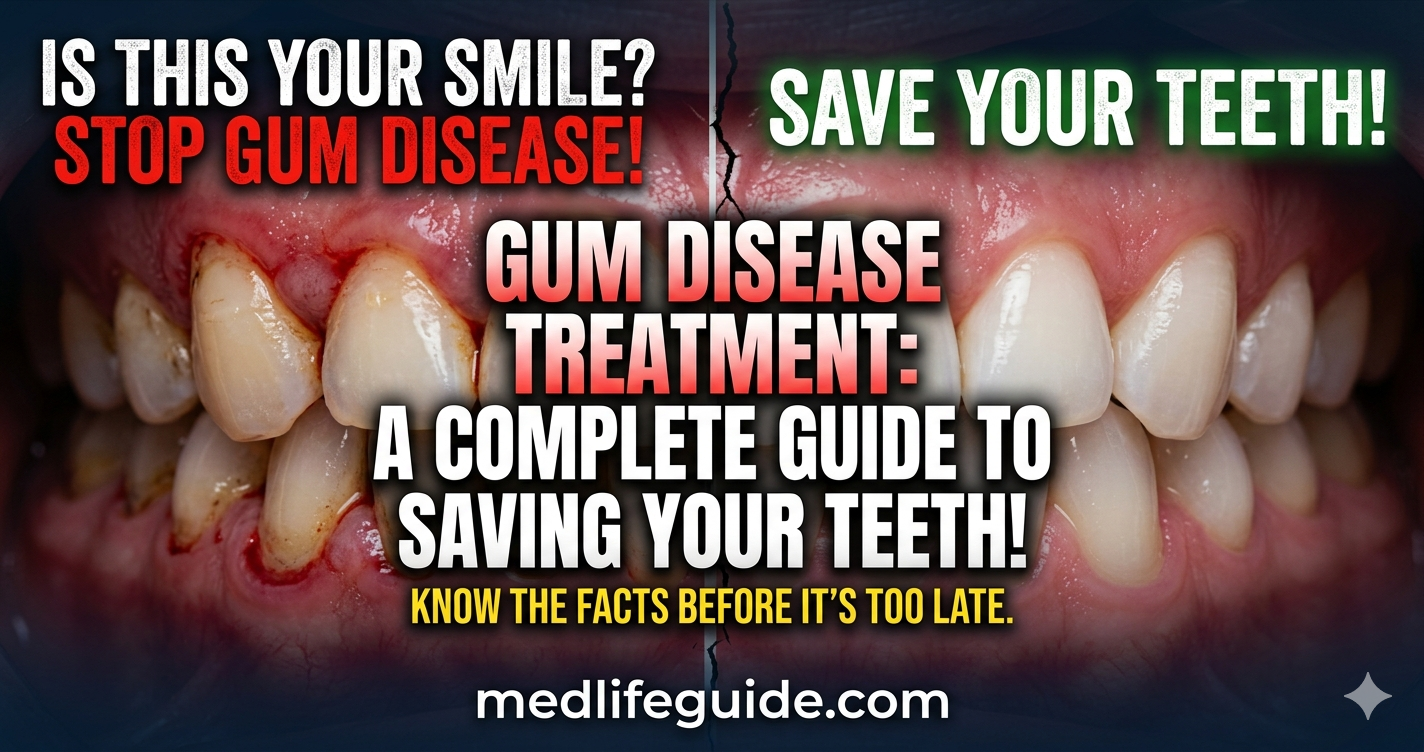
[ Healthy Gums ] ➔ [ Gingivitis ] ➔ [ Periodontitis ] ➔ [ Advanced Bone Loss ]
   (Firm, Pink)       (Bleeding)       (Deep Pockets)       (Loose Teeth)
Gingivitis: The Reversible Stage
Gingivitis is the earliest form of gum disease. It is caused by dental plaque, which is a sticky, invisible film of bacteria that forms on your teeth every day (Islam, 2022). When plaque is not brushed away, the bacteria release toxins that make your gums red, swollen, and prone to bleeding during brushing or flossing. Gingivitis is fully reversible because it only affects the surface layers of your gum tissue, without destroying any underlying bone (Islam, 2022).
Periodontitis: The Irreversible Stage
If you do not treat gingivitis, it can progress into periodontitis. Over time, uncleaned plaque hardens into a chalky substance called calculus or tartar (Islam, 2022). Tartar acts like a shield for bacteria, making it impossible to clean off with a regular toothbrush.
As the bacteria live deeper under the gumline, your immune system fights harder, causing a chronic inflammatory reaction (Islam, 2022). This process breaks down the periodontal ligament and the alveolar bone that anchor your teeth (Islam, 2022). Once this bone is lost, it cannot easily grow back.
Unique Clinical Takeaways
While most people know that gum disease causes bleeding and bad breath, clinical data reveals complex perspectives that change how doctors approach gum disease treatment.
1. The Bidirectional Diabetes Connection
Gum disease and diabetes have a true bidirectional relationship, meaning they actively worsen each other (Simpson, 2022; Țica, 2025). High blood sugar levels create an ideal environment for harmful oral bacteria to multiply, accelerating tissue destruction (Țica, 2025).
Conversely, the severe inflammation in your gums allows bacteria and their inflammatory byproducts to slip into your blood vessels, which increases insulin resistance and makes it harder to manage your blood sugar levels (Țica, 2025). Clinical trials show that receiving professional non-surgical gum disease treatment can lower HbA1c levels by an absolute average of 0.30% to 0.50% over a year, providing a measurable systemic health benefit equivalent to adding an extra medication (Simpson, 2022).
2. Residual Cardiovascular Inflammatory Risk
A major clinical factor in heart health is the systemic dissemination of oral bacteria into the bloodstream (Bida, 2025). Even gentle actions like chewing food can push bacterial endotoxins from infected gums into your vascular system (Gautam, 2022). These pathogens can travel to your heart, invade atherosclerotic plaques, and promote vascular inflammation and plaque instability (Gautam, 2022).
While managing cholesterol and blood pressure is critical, chronic untreated periodontitis leaves behind a low-grade residual inflammatory risk that can continue to drive the progression of heart disease (Tran, 2025).
3. The Masking Effect of Smoking
Smoking tobacco drastically alters how gum disease presents itself in a clinical examination. Tobacco smoke constricts the tiny blood vessels in your mouth, which suppresses the bleeding response that normally warns you of an infection (Ju et al., 2022).
As a result, a smoker might have severe, advanced bone destruction occurring beneath the surface while their gums look surprisingly uninflamed. Smokers experience more than three times the incidence rate of periodontitis compared to non-smokers, making routine diagnostic checkups utilizing a calibrated measuring probe and dental x-rays vital for this high-risk group (Ju et al., 2022; Islam, 2022).
Non-Surgical Gum Disease Treatment Options
For mild to moderate cases of periodontitis, non-surgical therapies are the first line of defense. These treatments focus on removing the bacterial biofilm and smooth root surfaces so the gums can heal and reattach to the teeth.
Scaling and Root Planing (Deep Cleaning)
This is the foundational non-surgical periodontal treatment (Simpson, 2022). Unlike a standard dental cleaning that only polishes the teeth above the gumline, scaling and root planing goes deep into the periodontal pockets.
- Scaling: The dental professional uses special hand instruments or ultrasonic scalers to scrape away the hardened tartar and bacterial plaque from the tooth surfaces and beneath the gumline (Simpson, 2022).
- Root Planing: The provider carefully smooths out the rough surfaces of the tooth roots. Smooth roots make it much harder for bacteria to find a hiding spot and attach themselves in the future.
Antimicrobial and Antibiotic Therapies
To complement a deep cleaning, your provider may use targeted medications to lower bacterial counts:
- Antiseptic Mouthrinses: Prescription-strength rinses, such as those containing chlorhexidine, help control bacteria after treatment.
- Local Topical Antibiotics: The dentist can place tiny, slow-release antibiotic gels or spheres directly into the deep spaces between your teeth and gums to wipe out remaining bacteria over several days.
- Systemic Antibiotics: Oral antibiotic pills are sometimes prescribed for aggressive or rapidly progressing forms of the infection to help the body’s immune response eliminate deep-seated pathogens.
Surgical Gum Disease Treatment Options
When periodontal pockets are too deep to be thoroughly cleaned with non-surgical methods, or when extensive bone loss has occurred, surgical intervention becomes necessary (Simpson, 2022).
Flap Surgery (Pocket Reduction Surgery)
During this procedure, a periodontist makes tiny incisions to gently lift a section of the gum tissue back. This creates a “flap” that allows direct visual access to the tooth roots and underlying bone. The surgeon can then remove deep tartar deposits that were impossible to reach otherwise. After cleaning, the gum tissue is sutured securely back in place so it fits snugly around the tooth, reducing pocket depths and making it easier to clean at home.
Bone and Tissue Grafts
If chronic inflammation has destroyed the bone surrounding a tooth root, a bone graft can help rebuild that foundation. The surgeon places natural or synthetic bone fragments into the area of bone loss, often applying specialized growth proteins to encourage your body to naturally regenerate its own bone and tissue structures. Similarly, if your gums have receded significantly, soft tissue grafts can protect vulnerable root surfaces by transferring healthy tissue from another part of your mouth.
Home Care: Supporting Your Dental Treatment
Professional treatment can clean your teeth, but daily home care is what keeps the infection from coming back. Think of your oral hygiene routine as a daily reset for your mouth.
- Brush Twice a Day: Use a soft-bristled toothbrush or an electric toothbrush. Clean at a 45-degree angle toward your gumline to gently disrupt the bacterial plaque that gathers there.
- Floss Daily: Brushing leaves behind plaque between your teeth. Cleaning between them daily removes hidden bacteria and reduces interdental inflammation.
- Schedule Regular Checkups: If you have a history of periodontitis, standard six-month cleanings are usually not frequent enough. Most clinical guidelines recommend periodontal maintenance appointments every three to four months to track pocket depths and stop early bacterial buildups before they damage the bone.
Medical Disclaimer: The material provided in this article is strictly for informational and educational purposes. It does not constitute formal medical or dental advice, diagnosis, or treatment. Always consult a qualified dentist, periodontist, or physician regarding any oral health concerns or systemic conditions.