
Medically Reviewed and Compiled by Dr. Adam N. Khan, MD.
Hantavirus Pulmonary Syndrome (HPS) is a rare but very serious lung disease. It is caused by viruses carried by certain types of rodents, like mice and rats. Because this illness can be life-threatening, it is important to know exactly how it spreads. This guide explains how people catch the virus, the signs to look for, and how to keep your home safe.
How Is Hantavirus Transmitted to Humans?
The primary way hantavirus spreads is through contact with infected rodents or their waste. Unlike many other viruses, it does not spread from one person to another. Instead, it is a “zoonotic” disease, meaning it jumps from animals to humans.
Airborne Transmission (Aerosolization)
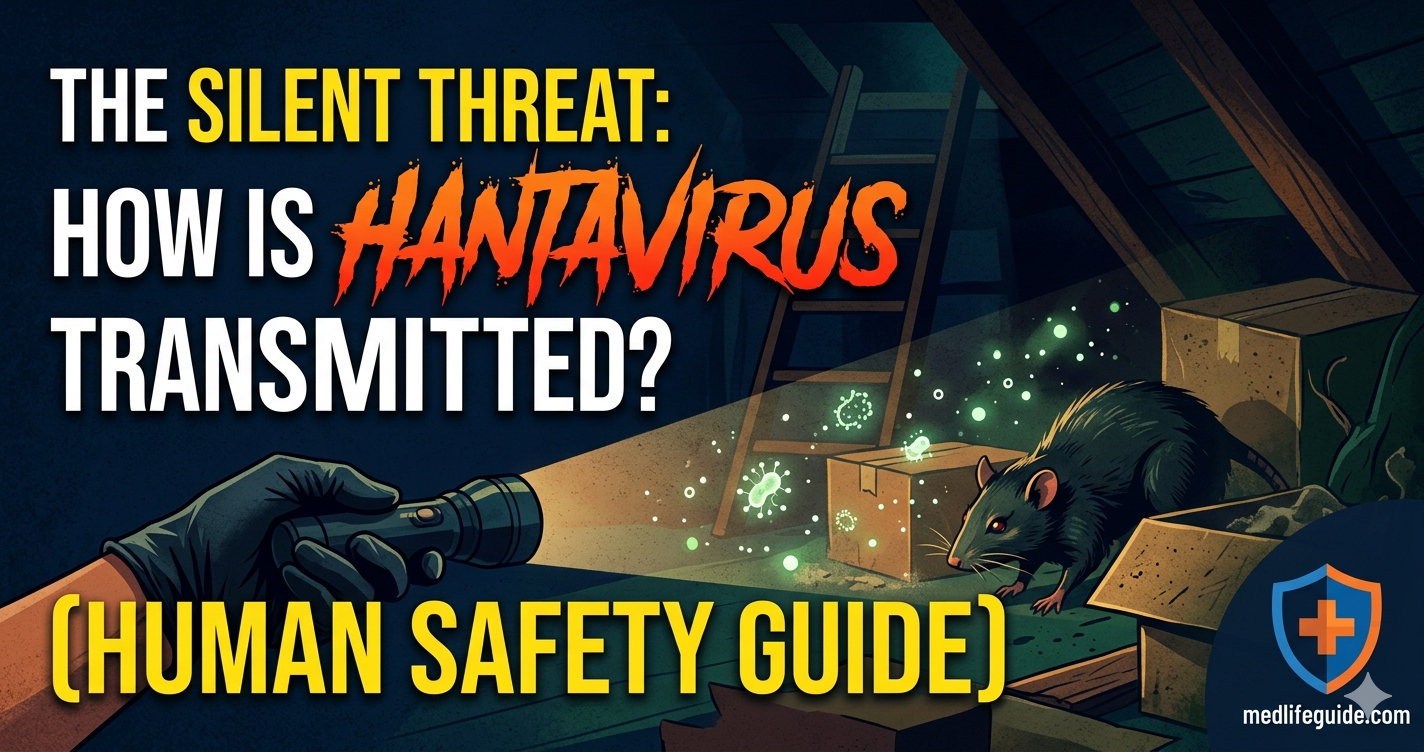
This is the most common way people get sick. When rodent urine, droppings, or nesting materials are stirred up—such as when you sweep a garage or vacuum a dusty attic—tiny droplets of the virus enter the air. This process is called aerosolization. When you breathe in that contaminated dust, the virus travels deep into your lungs.
Direct Contact
You can also catch the virus by touching rodent waste or nesting materials and then touching your nose, mouth, or eyes. The virus enters the body through the mucous membranes.
Rodent Bites
While it happens less often, a bite from an infected mouse or rat can transmit the virus directly into your bloodstream.
Contaminated Food
In rare cases, eating food that has been touched or urinated on by an infected rodent can lead to an infection.
Which Animals Carry the Virus?
Not every mouse in your backyard carries hantavirus. In the United States, specific rodents are the main “reservoirs” for the virus:
- Deer Mouse: The most common carrier in the Western and Central U.S.
- White-footed Mouse: Found mainly in the Northeastern and North Central U.S.
- Rice Rat: Found in the Southeastern U.S.
- Cotton Rat: Also found in the Southeastern U.S.
Unique Clinical Takeaways
Beyond the basic list of symptoms, there are complex factors that doctors and homeowners should understand to better manage the risk of hantavirus.
1. The “Clean Sweep” Risk Factor
Many infections occur not during long-term exposure, but during a single “deep clean” event. When people open up seasonal cabins, sheds, or storage units that have been closed for months, they often encounter a high concentration of dried rodent waste. The act of dry sweeping or vacuuming creates a high-density “viral cloud.” This is why experts recommend “wet cleaning”—using bleach and water to soak the area before cleaning—to prevent the virus from becoming airborne.
2. Differential Diagnosis and the “Flu-Like” Trap
In the early stages, hantavirus is almost impossible to tell apart from the common flu or a bad cold. However, a key clinical takeaway is the lack of “upper respiratory” symptoms. Unlike the flu or COVID-19, hantavirus usually does not cause a runny nose, sore throat, or a wet cough in the first few days. If a patient has muscle aches and a fever but no “head cold” symptoms—and has recently been near rodents—doctors must look closer for HPS.
3. The Rapid Progression Window
Hantavirus has a unique timeline. After the first few days of fever and aches, there is a sudden and “precipitous” drop in oxygen levels. This usually happens between days 4 and 10 of the illness. This window is critical; a patient can go from feeling “under the weather” to requiring a ventilator in just a few hours. Recognizing this rapid shift is the difference between life and death.
Symptoms of Hantavirus Pulmonary Syndrome (HPS)
Knowing the symptoms is vital because there is no specific cure or vaccine for hantavirus. Early medical care in an Intensive Care Unit (ICU) is the best way to survive.
Early Symptoms (1–5 Days)
- Fever and Chills: A sudden high temperature.
- Muscle Aches: Especially in the large muscle groups like the thighs, hips, and back.
- Fatigue: Feeling extremely tired for no clear reason.
- Digestive Issues: Some people experience nausea, vomiting, or stomach pain.
Late Symptoms (4–10 Days)
As the virus attacks the lungs, they begin to fill with fluid. This leads to:
- Shortness of Breath: Feeling like you cannot get enough air.
- Tightness in the Chest: A feeling of heavy pressure on the lungs.
- Coughing: A dry cough that gets worse quickly.
Where Is the Risk Highest?
Hantavirus can be found anywhere rodents live, but certain environments are more dangerous than others:
- Rural Areas: Farms, barns, and outbuildings are common spots for deer mice.
- Construction Sites: Working in crawl spaces or tearing down old walls can stir up dust.
- Campgrounds: Sleeping on the ground or in dusty cabins can increase exposure.
- Home Storage: Attics, basements, and garages where boxes are stored for long periods.
Prevention: How to Stay Safe
The best way to prevent hantavirus is to “Seal Up, Trap Up, and Clean Up.”
Seal Up
Check your home for any holes. A mouse can fit through a hole the size of a pencil eraser. Use steel wool or caulk to seal gaps around pipes, doors, and windows.
Trap Up
Use snap traps to catch rodents inside your home. Avoid using glue boards or live traps, as these can cause the rodent to urinate more, increasing the viral risk.
Clean Up (The Safe Way)
Never sweep or vacuum rodent droppings. Follow these steps:
- Ventilate: Open doors and windows for at least 30 minutes before cleaning.
- Disinfect: Spray droppings and nesting areas with a mixture of 1 part bleach to 9 parts water. Let it soak for 5 minutes.
- Wipe: Use paper towels to pick up the waste and throw them in a sealed plastic bag.
- Mop: Clean the entire floor with the disinfectant solution.
When to See a Doctor
If you have been around rodents or cleaned a dusty area and then develop a fever, deep muscle aches, or trouble breathing, seek medical help immediately. Tell the doctor exactly where you were and that you might have been exposed to rodents. Because the disease moves fast, every hour counts.