
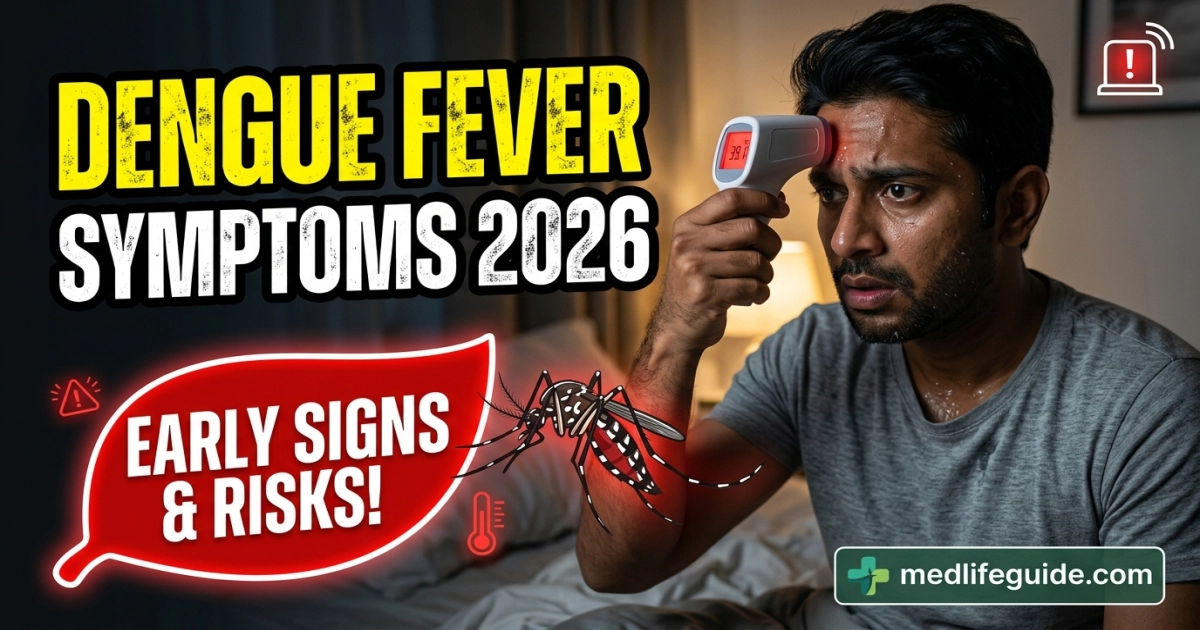
Medically Reviewed and Compiled by: Dr. Adam N. Khan, MD
Quick Summary
- Key Early Symptoms: Dengue fever begins abruptly with high fever (up to 104°F/40°C), severe retro-orbital (behind-the-eye) pain, debilitating muscle/joint aches (“breakbone fever”), and a characteristic maculopapular rash.
- The Critical Phase Window: The most dangerous stage occurs between Days 3 and 7, right as the fever drops. Watch closely for severe abdominal pain, persistent vomiting, mucosal bleeding, and plasma leakage signs.
- Avoid NSAIDs Completely: Acetaminophen (paracetamol) is the only recommended over-the-counter pain/fever reliever; ibuprofen, aspirin, and naproxen must be strictly avoided due to severe hemorrhage risks.
EMERGENCY WARNING
If you or someone in your care develops severe abdominal pain or tenderness, persistent vomiting (at least 3 times in 24 hours), bleeding from the gums or nose, blood in vomit or stool, extreme fatigue, restlessness, or difficulty breathing as the fever subsides, seek immediate emergency medical care (call 911 or go to the nearest emergency room). Severe dengue can progress rapidly to circulatory shock, massive bleeding, and multi-organ failure within hours.
1. Medical Overview and Pathophysiology
Dengue fever is a viral infection transmitted to humans primarily through the bite of infected female Aedes mosquitoes, predominantly Aedes aegypti and Aedes albopictus. These mosquitoes thrive in tropical, subtropical, and increasingly temperate regions, biting mainly during daytime hours (with peak feeding activity occurring in early morning and late afternoon before dusk).
Aedes aegypti mosquito, the primary vector for dengue virus. Source: Smith Collection/Gado / Getty Images
The disease is caused by the dengue virus (DENV), a single-stranded RNA virus belonging to the Flaviviridae family. There are four distinct, antigenically related viral serotypes: DENV-1, DENV-2, DENV-3, and DENV-4. Recovery from infection by one serotype provides lifelong immunity against that specific serotype. However, cross-immunity to the remaining three serotypes is only temporary and partial. Subsequent secondary infection with a different DENV serotype significantly increases the risk of developing severe dengue—formerly known as dengue hemorrhagic fever (DHF) or dengue shock syndrome (DSS)—due to an immunopathological phenomenon known as antibody-dependent enhancement (ADE).
In ADE, non-neutralizing antibodies generated during a previous primary dengue infection bind to the newly invading viral serotype during a secondary infection. Rather than neutralizing the new virus, these bound antibodies act as a “trojan horse,” binding to Fc receptors on host immune cells such as monocytes and macrophages. This enhances viral entry, replicative efficiency, and overall viral load.
The resulting massive immune activation causes a hyperinflammatory storm characterized by elevated levels of pro-inflammatory cytokines, including tumor necrosis factor-alpha (TNF-α), interleukin-6 (IL-6), and interleukin-10 (IL-10). This cytokine surge targets vascular endothelial cells, causing endothelial barrier dysfunction and transient microvascular permeability. As systemic capillaries leak plasma into surrounding interstitial spaces, intravascular blood volume drops sharply, leading to hemoconcentration, fluid accumulation in body cavities (ascites and pleural effusion), severe thrombocytopenia (low platelet count), coagulation abnormalities, and potential vascular collapse or shock.
2. Symptom Breakdown and Diagnostic Comparison Table
Recognizing dengue fever requires identifying its classical symptom cluster and distinguishing it from other vector-borne viral illnesses and common infections that share overlapping clinical features, such as malaria, chikungunya, Zika virus, influenza, and typhoid fever.
Classic Dengue Symptoms
- Sudden High Fever: Temperature abruptly spikes to 104°F (40°C), often taking a saddleback pattern (dipping temporarily on Day 3–4 before rising again).
- Retro-Orbital Pain: A distinct, aching pain behind the eyes that intensifies with eye movement.
- Severe Musculoskeletal Pain: Intense bone, joint, and muscle aching—historically termed “breakbone fever”—that makes physical movement painful.
- Dengue Exanthem (Rash): A flush or maculopapular rash appearing initially on the trunk and spreading outward, often described as “islands of white in a sea of red.”
- Hematologic & Gastrointestinal Signs: Mild mucosal bleeding (nosebleeds or bleeding gums), petechiae (tiny purple/red skin spots), mild nausea, vomiting, and loss of appetite.
Clinical features and symptom breakdown of dengue fever. Source: ttsz / Getty Images
Comparative Diagnostic Matrix
| Clinical Feature | Dengue Fever | Chikungunya | Zika Virus | Malaria | Influenza |
|---|---|---|---|---|---|
| Fever Onset | Abrupt, High (104°F) | Abrupt, High | Low-grade / Mild | Periodic / Cyclical | Sudden, High |
| Joint Pain | Moderate to Severe | Extremely Severe & Prolonged | Mild to Moderate | Mild / General Aches | Moderate / General Aches |
| Retro-Orbital Pain | Highly Characteristic | Rare / Mild | Common (Mild) | Absent | Absent |
| Rash Appearance | Flushing; Maculopapular | Maculopapular | Pruritic (Itchy) Maculopapular | Rare | Absent |
| Bleeding Signs | Common (Petechiae, Gums) | Rare | Very Rare | Rare | Absent |
| Thrombocytopenia | Marked / Severe | Mild | Mild / Absent | Moderate | Absent |
| Shock Risk | High in Secondary Infection | Extremely Low | None | High (Severe Falciparum) | None |
3. Unique Clinical Takeaways
- The “Defervescence Paradox” (False Recovery Trap): The vast majority of viral illnesses show reduced clinical risk when a patient’s fever drops. In dengue fever, however, the exact opposite is true. The transition from the febrile phase to the afebrility stage—known as defervescence (typically occurring between Days 3 and 7)—marks the beginning of the Critical Phase. It is precisely during this 24- to 48-hour window after the fever subsides that vascular leakage peaks, risking sudden cardiovascular collapse, plasma loss, and internal hemorrhage. Caregivers must remain most vigilant after the fever leaves.
- Capillary Refill and Tourniquet Test as Early Microvascular Indicators: In resource-limited or early outpatient settings, microvascular fragility can be evaluated before routine laboratory results return. The tourniquet test—conducted by inflating a blood pressure cuff to a midpoint between systolic and diastolic pressure for 5 minutes—is considered positive if 20 or more petechiae per square inch develop. Paired with delayed capillary refill time (greater than 2 seconds when pressing on the nail bed), these signs indicate early capillary permeability and microvascular stress before frank hypotension occurs.
- Atypical Neuro-Cardiovascular Manifestations in Vulnerable Groups: While dengue is classically viewed as an acute febrile rash illness, circulating viral strains and immune responses can cause primary organ involvement without classic systemic signs. In elderly individuals or infants, dengue may present with neurological manifestations such as encephalopathy, viral encephalitis, or acute transverse myelitis. Carditis, presenting as unexplained sinus bradycardia or transient heart block on electrocardiogram (ECG), can also occur independently of severe plasma leakage.
4. Illness Progression Timeline
Dengue illness classically progresses through three distinct, sequential clinical phases: the Febrile Phase, the Critical Phase, and the Recovery Phase.
Plaintext
  FEBRIBEL PHASE (Days 1-3)        CRITICAL PHASE (Days 3-7)        RECOVERY PHASE (Days 7-10)
┌───────────────────────────┐    ┌───────────────────────────┐    ┌───────────────────────────┐
│ • Sudden High Fever       │    │ • Fever drops (Defervesc) │    │ • Fluid reabsorption      │
│ • Retro-orbital Pain      │ ──>│ • Vascular leakage peak   │ ──>│ • Hemodynamics stabilize  │
│ • "Breakbone" Joint Pain  │    │ • Risk of Plasma Leak/Shock│   │ • Convalescent Rash       │
│ • Flushing & Early Rash   │    │ • Severe Abdominal Pain   │    │ • Appetite returns        │
└───────────────────────────┘    └───────────────────────────┘    └───────────────────────────┘
Phase 1: Febrile Phase (Days 1 to 3)
- Clinical Characteristics: Illness begins abruptly with high fever (often reaching 104°F/40°C), accompanied by facial flushing, diffuse body aches, severe retro-orbital pain, and headaches.
- Laboratory Findings: Progressive drop in total white blood cell count (leukopenia) is typically the earliest laboratory indicator.
- Monitoring Priority: Focus on oral rehydration and fever control with acetaminophen. Avoid dehydration from fever and vomiting.
Phase 2: Critical Phase (Days 3 to 7)
- Clinical Characteristics: Begins at defervescence (temperature drops below 100.4°F/38°C). Systemic plasma leakage occurs due to endothelial hyperpermeability. Fluids leak into pleural and peritoneal cavities, causing pleural effusion and ascites.
- Warning Signs of Severe Dengue: Severe, continuous right upper quadrant abdominal pain; persistent vomiting; fluid accumulation; mucosal bleeding (epistaxis, hematemesis, melena); lethargy or restlessness; liver enlargement (>2 cm); and a rapid drop in platelet count accompanied by a rising hematocrit level.
- Monitoring Priority: Frequent hematocrit and platelet checks, alongside strict monitoring of urine output and hemodynamic vitals.
Phase 3: Recovery Phase (Days 7 to 10)
- Clinical Characteristics: Plasma leakage ceases, and extravasated fluids are gradually reabsorbed into the intravascular space.
- Clinical Signs: Hemodynamic stability returns, appetite improves, gastrointestinal symptoms resolve, and bradycardia (slow heart rate) may temporarily develop. A classic secondary rash—known as the “convalescent rash of Herman” (characterized by confluent red areas with pale, uninflamed islands)—often appears alongside generalized mild itching.
- Monitoring Priority: Guard against fluid overload if intravenous fluids were administered during the critical phase.
5. High-Risk Vulnerabilities and Special Populations
Certain patient groups face elevated risks of severe dengue complications, rapid hemodynamic deterioration, or atypical clinical presentations.
Plaintext
┌─────────────────────────────────────────────────────────────────────────┐
│                      HIGH-RISK VULNERABLE GROUPS                        │
├──────────────────────────┬──────────────────────────┬───────────────────┤
│    PEDIATRIC PATIENTS    │     ELDERLY POPULATION   │  PREGNANT WOMEN   │
│ • Higher plasma leakage  │ • Blunted fever response │ • Risk of hemorrhage│
│ • Rapid dehydration      │ • Underlying comorbidities│ • Preterm birth   │
│ • Difficulty communicating│ • Cognitive altered states│ • Vertical transmission│
└──────────────────────────┴──────────────────────────┴───────────────────┘
Infants and Young Children
Pediatric patients have smaller baseline intravascular fluid volumes and a higher natural capillary permeability compared to adults. As a result, children infected with dengue can transition from stable states to intravascular shock rapidly during the critical phase. Young infants may not articulate symptoms like retro-orbital pain or headache; instead, caregivers should monitor for high fever, unexplained irritability, poor feeding, lethargy, and cold, clammy extremities.
Older Adults (Aged 65 and Older)
Elderly individuals often present with atypical or muted symptoms, such as low-grade fevers instead of high temperature spikes. Underlying age-related cardiovascular conditions, chronic kidney disease, or diabetes complicate fluid management during the critical phase. Older adults are also at higher risk for secondary bacterial infections, prolonged convalescent fatigue, and acute decompensation of pre-existing medical conditions.
Pregnant Women
Dengue infection during pregnancy carries risks of severe maternal hemorrhage, particularly during labor and delivery. Maternal plasma leakage can impair placental perfusion, increasing the incidence of fetal distress, premature delivery, low birth weight, and stillbirth. Vertical transmission of DENV from mother to newborn can occur if infection is present near the time of delivery, potentially leading to neonatal fever, thrombocytopenia, hepatomegaly, and sepsis-like presentations.
Immunocompromised Individuals & Chronic Comorbidities
Patients with underlying chronic conditions—including sickle cell disease, asthma, hypertension, diabetes mellitus, coronary artery disease, or immunosuppressive therapy—face significantly higher rates of severe disease and severe hemorrhage. Close clinical monitoring is indicated for these groups from the onset of fever.
6. Evidence-Based Diagnostic, Testing, and Medical Management Guidelines
Early and accurate diagnosis of dengue fever guides clinical monitoring and prevents inappropriate medical interventions.
Plaintext
                 DIAGNOSTIC TESTING TIMELINE ACCORDING TO ONSET
─────────────────────────────────────────────────────────────────────────────
Days 1 – 5 of Symptoms:               Day 5+ of Symptoms:
┌───────────────────────────────┐     ┌───────────────────────────────┐
│ • Direct Viral Detection      │     │ • Indirect Serology           │
│ • Dengue NS1 Antigen ELISA    │ OR  │ • Anti-Dengue IgM Antibodies  │
│ • RT-PCR (Serotype-Specific)  │ ──> │ • Anti-Dengue IgG Antibodies  │
└───────────────────────────────┘     └───────────────────────────────┘
─────────────────────────────────────────────────────────────────────────────
Laboratory Diagnostic Methods
- Dengue NS1 Antigen Test: Detects the non-structural protein 1 secreted by DENV-infected cells. Highest sensitivity occurs during Days 1 through 5 of symptoms. A positive NS1 result confirms active infection.
- Reverse Transcription-Polymerase Chain Reaction (RT-PCR): Considered the gold standard for laboratory confirmation during the acute febrile phase (Days 1 to 5). RT-PCR identifies viral RNA and determines the specific infecting serotype (DENV-1, 2, 3, or 4).
- Serological Testing (IgM and IgG Antibodies):
- IgM ELISA: Detects anti-dengue IgM antibodies, which become detectable around Day 4 to 5 of illness, peaking during early convalescence. A positive IgM test indicates recent infection.
- IgG ELISA: IgG antibodies develop later in primary infection but rise rapidly to high titers during early days of a secondary infection. A high IgG titer during acute fever strongly indicates a secondary dengue infection, placing the patient at elevated risk for ADE and severe disease.
Routine Laboratory Monitoring
- Complete Blood Count (CBC): Must be checked regularly throughout the illness.
- Hematocrit (HCT): A rising hematocrit level (≥20% increase above baseline) indicates intravascular fluid loss from plasma leakage and serves as an early sign of impending shock.
- Platelet Count: Platelets drop rapidly during the critical phase, often falling below 100,000 cells/mm³.
- Liver Function Tests (LFTs): Elevated AST and ALT enzymes reflect hepatic tissue stress or liver enlargement.
Clinical Management Framework
There are currently no specific direct-acting antiviral medications approved to cure dengue fever. Treatment remains supportive and relies on careful hemodynamic and fluid management.
- Non-Severe Dengue (Group A): Managed as outpatient care. Patients must maintain high oral hydration (using oral rehydration solutions, soup, fruit juice, or coconut water) and rest.
- Non-Severe Dengue with Warning Signs (Group B): Requires hospital admission for intravenous (IV) fluid therapy. Isotonic crystalloid solutions (such as 0.9% Normal Saline or Lactated Ringer’s) are administered at controlled rates to maintain organ perfusion while avoiding fluid overload.
- Severe Dengue (Group C): Requires intensive care unit (ICU) admission, continuous invasive hemodynamic monitoring, judicious IV crystalloid/colloid administration, and emergency blood transfusions if severe hemorrhage occurs.
7. Home Care, Isolation/Protection Protocols, and Recovery
Safe home care requires clear boundaries on medication usage, continuous oral rehydration, and vector control to prevent further transmission.
OTC Medication Warnings
- APPROVED: Acetaminophen (Paracetamol): Used for fever reduction and pain relief. Dosing must strictly follow package or physician instructions (maximum 4,000 mg per 24 hours in adults; pediatric dosing weight-based) to prevent liver toxicity.
- STRICTLY PROHIBITED: NSAIDs & Aspirin: Never take ibuprofen, naproxen, aspirin, or sodium salicylate. These nonsteroidal anti-inflammatory drugs inhibit platelet function and increase the risk of severe gastrointestinal bleeding and gastritis in patients with dengue-induced thrombocytopenia.
Comprehensive Home Care Steps
- Oral Fluid Therapy: Encourage regular intake of oral fluids containing electrolytes. Plain water alone is insufficient to replace lost fluids and electrolytes; rehydration solutions, broths, and diluted natural juices are preferred.
- Temperature Control: Use lukewarm sponge baths to manage fever comfortably without triggering shivering.
- Rest: Strictly limit physical exertion during the febrile and critical phases to conserve metabolic energy and avoid traumatic injury while platelet counts are low.
Mosquito Vector Interventions & Community Protection
Because an infected person carries high viral levels in their bloodstream during the first 5 to 7 days of illness, local mosquitoes can bite them, become infected, and spread the virus to family members and neighbors.
- Mosquito Nets & Screens: The infected individual should sleep under an insecticide-treated mosquito net during the febrile phase and stay in screened, air-conditioned rooms.
- Environmental Vector Control: Inspect outdoor and indoor living spaces daily to empty, cover, or throw out any open containers holding standing water (such as buckets, flowerpot saucers, discarded tires, or pet dishes) where Aedes mosquitoes lay eggs.
- Repellents & Clothing: Household contacts should wear long-sleeved shirts and long pants treated with permethrin and apply EPA-registered insect repellents containing DEET, Picaridin, or Oil of Lemon Eucalyptus (OLE).
Long-Term Recovery and Post-Dengue Fatigue
Full recovery from dengue fever takes several weeks. Many patients experience a prolonged post-viral syndrome characterized by persistent fatigue, muscle weakness, mild hair thinning (telogen effluvium), and transient mood disturbances. Patients should return to exercise and full workloads gradually under medical guidance.
Frequently Asked Questions (FAQs)
The earliest warning signs include severe abdominal pain, persistent vomiting, bleeding gums or nose, rapid breathing, and feeling unusually tired or restless as your fever drops.
No, you should never take ibuprofen, aspirin, or naproxen if dengue is suspected, because these medications increase your risk of dangerous internal bleeding.
The day the fever subsides marks the start of the critical phase, during which blood vessels can leak plasma into surrounding tissues, risking sudden circulatory shock.
While acute symptoms usually resolve in 7 to 10 days, full recovery from lingering fatigue and muscle weakness can take several weeks.
Yes, because there are four different viral serotypes of dengue, you can be infected up to four times in your lifetime.
About the Reviewer
Dr. Adam N. Khan, MD is a board-certified internal medicine physician dedicated to patient education and evidence-based clinical guidance. He has no commercial conflicts of interest or financial disclosures related to dengue diagnostic tools, vaccines, or pharmaceutical products.