
Medically Reviewed and Compiled by Dr. Adam N. Khan, MD.
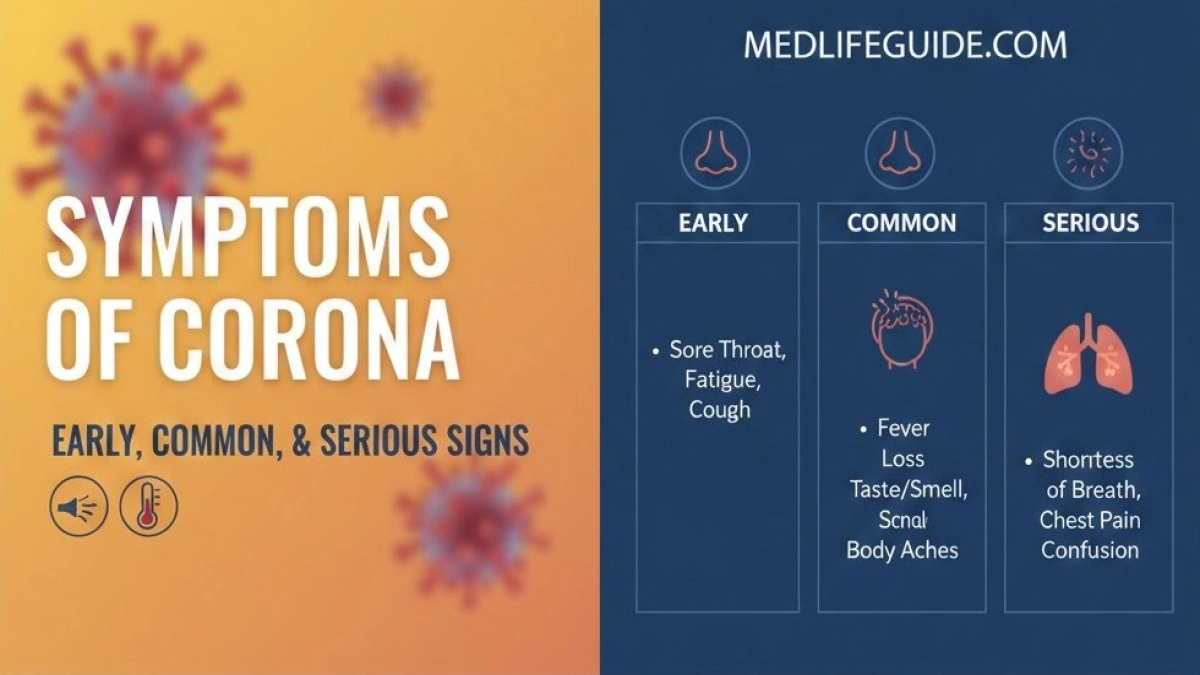
Coronavirus disease, often called corona or COVID-19, is not just a single set of symptoms that looks the same for everyone. Some people feel like they have a mild cold. Others develop serious lung problems or long-term health issues. Understanding the symptoms of corona helps you act early, protect others, and know when medical care is needed.
Let’s break it down clearly and honestly, without fear or confusion.
What Is Corona (COVID-19)?
Corona, medically known as COVID-19, is caused by the SARS-CoV-2 virus. It spreads mainly through respiratory droplets and close contact. Once the virus enters the body, it can affect multiple systems, not just the lungs.
Symptoms can appear anywhere from 2 to 14 days after exposure. Some people never develop symptoms at all but can still spread the virus.
Common Symptoms of Corona
Most people with COVID-19 experience mild to moderate symptoms. These are the signs doctors see most often.
Fever and Chills
- Fever is one of the earliest and most common symptoms.
- It may start low-grade and rise over time.
- Chills or shaking can occur even without a high fever.
Cough
- Usually dry, persistent, and irritating.
- Can worsen at night or with talking.
- Unlike allergies, it does not improve with antihistamines.
Fatigue and Weakness
- Deep, unusual tiredness.
- Often described as feeling “drained” or heavy.
- Can last for weeks, even after other symptoms fade.
Body Aches and Muscle Pain
- Common in the back, legs, and joints.
- May feel similar to flu-related aches.
Respiratory Symptoms to Watch Closely
COVID-19 primarily targets the respiratory system. These symptoms deserve extra attention.
Shortness of Breath
- Feeling unable to take a full breath.
- Can worsen with minimal activity.
- A warning sign of lung involvement.
Chest Tightness or Pain
- Pressure or discomfort in the chest.
- May indicate pneumonia or inflammation.
Sore Throat and Nasal Congestion
- Scratchy or painful throat.
- Runny or blocked nose, especially in early stages.
Loss of Taste and Smell
One of the more unique symptoms of corona is a sudden loss of taste (ageusia) or smell (anosmia).
- Can occur without nasal congestion.
- Often appears early.
- May take weeks or months to fully recover.
This symptom helped doctors distinguish COVID-19 from colds and flu early in the pandemic.
Gastrointestinal Symptoms of Corona
Not all COVID-19 symptoms involve breathing.
Diarrhea
- Loose or frequent stools.
- Can appear before respiratory symptoms.
Nausea and Vomiting
- More common in children and younger adults.
- May lead to dehydration if ignored.
Abdominal Pain
- Mild to moderate discomfort.
- Often overlooked as a virus-related symptom.
Neurological and Mental Symptoms
COVID-19 can affect the brain and nervous system.
Headache
- Persistent or pressure-like.
- May not respond to usual pain relievers.
Dizziness and Confusion
- Feeling lightheaded.
- Trouble focusing or thinking clearly.
Brain Fog
- Slower thinking and memory issues.
- Common during recovery and long COVID.
Skin and Eye Symptoms
Less common, but still important.
Skin Rashes
- Red patches, hives, or purple toes.
- More frequent in younger patients.
Red or Watery Eyes
- Conjunctivitis-like symptoms.
- Usually mild but noticeable.
Severe Symptoms That Need Urgent Care
Some symptoms signal a medical emergency.
Trouble Breathing
- Rapid breathing or gasping.
- Bluish lips or face.
Persistent Chest Pain
- Ongoing pressure or pain.
- Especially dangerous in older adults.
Confusion or Inability to Wake
- Sudden mental changes.
- Indicates low oxygen or severe infection.
High Fever That Will Not Break
- Especially above 103°F (39.4°C).
- Requires medical evaluation.
If these appear, seek emergency care immediately.
Symptoms of Corona in Children
Children often have milder symptoms, but not always.
- Low-grade fever
- Cough or runny nose
- Fatigue
- Stomach upset
Rarely, children may develop a serious condition called MIS-C, which causes inflammation of multiple organs.
Symptoms of Corona in Older Adults
Older adults and people with chronic illnesses face higher risks.
- Symptoms may be subtle.
- Fever may be absent.
- Sudden weakness, falls, or confusion may be early signs.
Delayed diagnosis is common in this group, which increases risk.
Long COVID: When Symptoms Don’t Go Away
Some people continue to feel unwell weeks or months after infection.
Common Long COVID Symptoms
- Extreme fatigue
- Shortness of breath
- Brain fog
- Heart palpitations
- Sleep problems
Long COVID can affect even those who had mild initial illness.
Unique Clinical Takeaways
This section goes beyond basic lists and focuses on real-world clinical insight.
1. Symptoms Often Change Order and Pattern
COVID-19 does not follow a fixed script. Some patients start with stomach issues, others with fatigue or headache. Waiting for classic symptoms like fever and cough can delay diagnosis. Clinically, early testing should be considered when any unexplained viral symptoms appear during community spread.
2. Mild Symptoms Can Still Mean Serious Risk
Patients with “mild” early symptoms sometimes develop complications days later. This is especially true for people with obesity, diabetes, heart disease, or kidney disease. Close symptom tracking during days 5 to 10 is critical, as this is when inflammation may spike.
3. Differentiating Corona From Flu or Allergies Matters
Allergies rarely cause fever or body aches. Flu often comes on suddenly with high fever and muscle pain. COVID-19 may start slowly and involve loss of taste or smell. Clinicians use this symptom pattern, along with testing, to guide isolation and treatment decisions.
When to Get Tested
Testing is recommended if:
- You develop any symptoms of corona.
- You were exposed to a confirmed case.
- Symptoms worsen after day five.
- You belong to a high-risk group.
Early testing protects family, coworkers, and vulnerable people.
How Vaccination Affects Symptoms
Vaccinated individuals can still get COVID-19, but symptoms are often:
- Milder
- Shorter in duration
- Less likely to require hospitalization
Vaccination also lowers the risk of long COVID.
How to Monitor Symptoms at Home
Simple steps make a big difference:
- Check temperature daily.
- Monitor breathing and oxygen if possible.
- Stay hydrated.
- Rest, even if symptoms seem mild.
If symptoms worsen, contact a healthcare provider.