
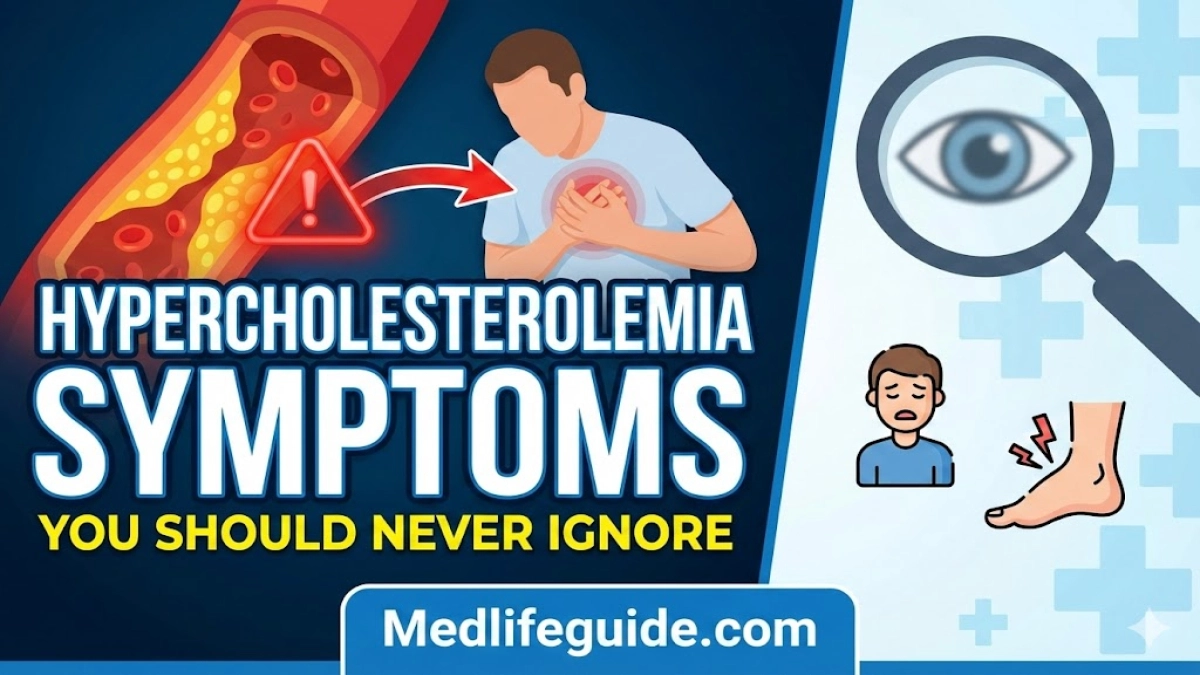
Here’s the thing about hypercholesterolemia. Most people have it long before they ever feel it. That’s what makes it dangerous.
Hypercholesterolemia means high levels of cholesterol in the blood, especially LDL cholesterol, often called “bad” cholesterol. Over time, excess cholesterol builds up in blood vessels, quietly increasing the risk o
Here’s the thing about hypercholesterolemia. Most people have it long before they ever feel it. That’s what makes it dangerous.
Hypercholesterolemia means high levels of cholesterol in the blood, especially LDL cholesterol, often called “bad” cholesterol. Over time, excess cholesterol builds up in blood vessels, quietly increasing the risk of heart attack, stroke, and peripheral artery disease.
People often search for hypercholesterolemia symptoms expecting clear warning signs. The truth is more subtle. In many cases, symptoms show up only after serious damage has already started.
Let’s break this down in a way that actually helps you understand what’s going on inside your body, what signs to watch for, and why early detection matters.
What Is Hypercholesterolemia?
Hypercholesterolemia is a medical condition where total cholesterol or LDL cholesterol levels are higher than normal.
Cholesterol itself isn’t bad. Your body needs it to build cells, hormones, and vitamin D. Problems start when cholesterol levels rise beyond what your body can safely manage.
Types of Cholesterol That Matter
- LDL (Low-Density Lipoprotein): Builds plaque in arteries
- HDL (High-Density Lipoprotein): Helps remove excess cholesterol
- Triglycerides: Another blood fat that raises heart risk when elevated
When LDL stays high for years, arteries slowly narrow and harden. This process is called atherosclerosis.
Why Hypercholesterolemia Often Has No Early Symptoms
One of the biggest misconceptions is that high cholesterol causes obvious physical symptoms early on.
It doesn’t.
Hypercholesterolemia is often called a “silent condition” because cholesterol buildup happens without pain, fever, or discomfort. Blood vessels can lose flexibility and narrow long before you notice anything is wrong.
This is why routine blood testing is critical, even if you feel fine.
Common Hypercholesterolemia Symptoms (When They Appear)
Symptoms usually appear only after cholesterol-related damage has affected blood flow.
Chest Pain or Pressure
Reduced blood flow to the heart can cause angina. This may feel like tightness, squeezing, or heaviness in the chest, especially during exertion or stress.
Shortness of Breath
Narrowed coronary arteries limit oxygen delivery, making even simple activities feel exhausting.
Fatigue Without a Clear Cause
When tissues don’t get enough oxygen-rich blood, fatigue becomes noticeable and persistent.
Pain or Cramping in the Legs
This can signal peripheral artery disease. Poor circulation in the legs often causes pain while walking that improves with rest.
Numbness or Coldness in Hands and Feet
Restricted blood flow to extremities can cause temperature changes or tingling sensations.
Visible Physical Signs Linked to High Cholesterol
Some signs can appear on the skin or eyes, especially in long-standing or genetic cases.
Xanthomas
These are yellowish fatty deposits that appear on tendons, elbows, knees, or hands. They are more common in familial hypercholesterolemia.
Xanthelasma
Soft, yellow patches around the eyelids. While not dangerous by themselves, they are strong clues of cholesterol imbalance.
Corneal Arcus
A pale gray or white ring around the cornea. In younger adults, this can signal elevated cholesterol levels.
Hypercholesterolemia Symptoms in Men vs Women
Symptoms can show up differently depending on sex.
In Men
- Earlier onset of heart disease
- Chest pain during physical activity
- Erectile dysfunction linked to vascular damage
In Women
- More subtle early symptoms
- Shortness of breath or fatigue instead of chest pain
- Higher risk after menopause due to hormonal changes
These differences often delay diagnosis in women, increasing long-term risk.
Hypercholesterolemia Symptoms in Children and Young Adults
High cholesterol isn’t just an adult problem.
Children with familial hypercholesterolemia may develop cholesterol buildup early in life. Symptoms are rare but can include xanthomas or early signs of cardiovascular disease.
Routine screening is critical for children with a family history of early heart disease.
Unique Clinical Takeaways
This section goes beyond the basic symptom list and focuses on real-world clinical insights that often get missed.
1. Symptoms Often Reflect Organ Damage, Not Cholesterol Itself
What this really means is that by the time you feel symptoms, cholesterol has already caused structural damage. Chest pain or leg pain isn’t caused by cholesterol floating in the blood. It’s caused by narrowed arteries that took years to develop.
Actionable insight: Waiting for symptoms is not a prevention strategy. Blood testing is.
2. Fatigue Is One of the Most Underestimated Warning Signs
Patients often dismiss chronic fatigue as stress, aging, or poor sleep. In clinical practice, unexplained fatigue can be an early clue of reduced cardiac output due to vascular narrowing.
Actionable insight: Fatigue plus risk factors like diabetes, smoking, or family history should trigger cholesterol screening.
3. Skin and Eye Findings Are Diagnostic Clues, Not Cosmetic Issues
Xanthelasma and corneal arcus are often treated as cosmetic concerns. Clinically, they can indicate long-standing lipid imbalance and increased cardiovascular risk.
Actionable insight: Visible cholesterol signs should prompt a full lipid profile and cardiovascular risk assessment.
4. Normal Weight Does Not Mean Normal Cholesterol
Many patients assume high cholesterol only affects people with obesity. Genetics, diet composition, and metabolic factors play a huge role.
Actionable insight: Thin patients with poor lipid profiles still face serious cardiovascular risk.
Risk Factors That Increase Symptom Severity
Certain factors accelerate cholesterol-related damage.
- Family history of early heart disease
- Smoking or vaping
- Diabetes or insulin resistance
- High blood pressure
- Sedentary lifestyle
- Diet high in saturated and trans fats
The more risk factors you have, the earlier symptoms tend to appear.
How Hypercholesterolemia Is Diagnosed
Symptoms alone are not enough.
Diagnosis requires a fasting lipid panel, which measures:
- Total cholesterol
- LDL cholesterol
- HDL cholesterol
- Triglycerides
Doctors may also calculate overall cardiovascular risk using age, blood pressure, and medical history.
When to See a Doctor
You should seek medical evaluation if you have:
- Chest discomfort or shortness of breath
- Family history of early heart disease
- Visible cholesterol deposits
- Persistent fatigue without explanation
Early treatment can dramatically reduce long-term complications.
Managing Hypercholesterolemia Before Symptoms Appear
Treatment focuses on reducing LDL cholesterol and overall risk.
Lifestyle Changes
- Diet rich in fiber, vegetables, and healthy fats
- Regular physical activity
- Weight management
- Smoking cessation
Medications
- Statins
- Ezetimibe
- PCSK9 inhibitors in high-risk cases
Treatment decisions depend on individual risk, not just cholesterol numbers.
Long-Term Outlook
When detected early, hypercholesterolemia is highly manageable. The danger lies in ignoring it until symptoms appear.
Heart attacks and strokes are often the first “symptom” for many patients. Prevention changes that story.