
Medically reviewed by Dr. Adam N. Khan, MD · Last updated October 5, 2026 · 9-minute read
A quick note before you read: This is general health information, not personal medical advice, and it cannot diagnose you. If you or someone near you has trouble breathing, persistent chest pain, new confusion, bluish lips, or can’t stay awake, skip the article and get emergency care now. [1][5]
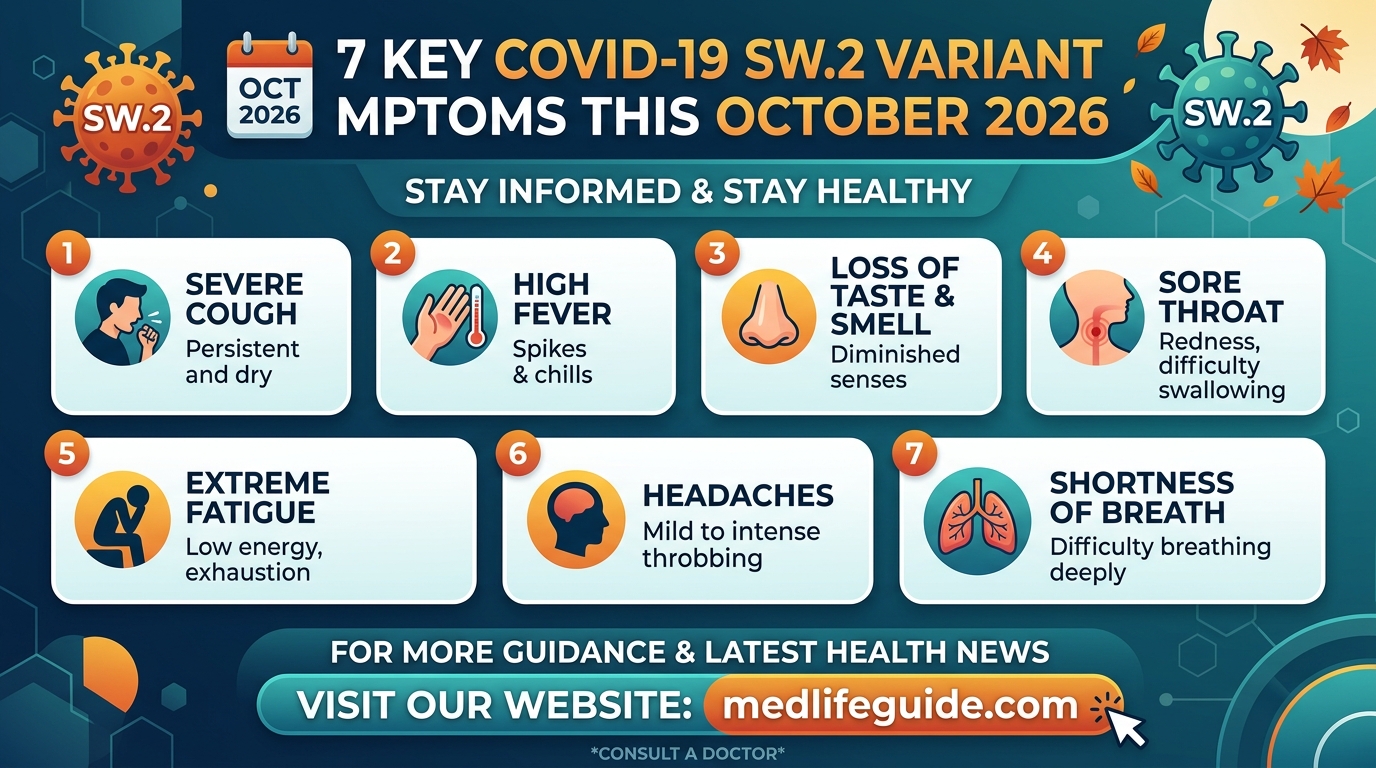
Quick answer: SW.2 is the most common COVID-19 variant in the United States this October, causing roughly one in five infections. [1][2] The seven symptoms doctors report most with it are a sore throat, fatigue, fever or chills, body aches, congestion, a runny nose, and a dry cough. [1] Symptoms usually appear two to five days after exposure, and for most healthy people the illness feels like a bad cold that peaks around days three to five. [1] If you’re 65 or older, pregnant, immunocompromised, or living with a chronic condition, test early and call a clinician the day symptoms start antiviral treatment works best within the first several days. [1][12]
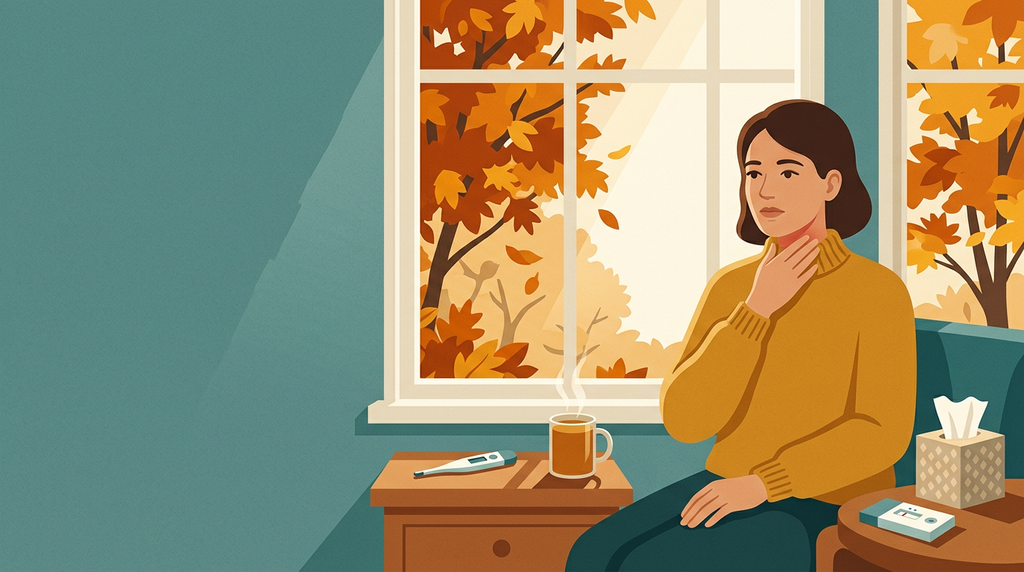
Nobody plans their week around a scratchy throat. But this October, that scratchy throat is worth ten minutes of attention not because SW.2 is a frightening new threat, but because it’s the quiet one. It spreads precisely because it feels ordinary. “Many people will describe it as a bad cold,” public health expert Dr. Tyler Evans told Parade. “And that is exactly why it spreads.” [1]
Here’s what the current evidence and reporting actually show about SW.2 what it is, how it feels day by day, who it hits hardest, and what to do tonight if you or someone in your house starts feeling off.
What Is the SW.2 Variant, and Why Does It Matter This October?
SW.2 is an Omicron subvariant a descendant of the XFG lineage, the strain family nicknamed “Stratus” that has circulated since early 2025. [7] It is not a dramatically different virus. Infectious disease doctors are clear that there has been “no major shift in the latest variants” compared with the past two seasons. [1] What makes SW.2 matter right now is its reach:
- It’s the leading variant in the U.S. about 21% of cases in the CDC’s latest nowcast estimates, ahead of XFG.1.1 (16%) and RW.1.1 (9%). Because far fewer positive samples are being sequenced than in earlier years, these estimates carry more uncertainty than they used to. [1][2]
- No single strain dominates. Unlike Delta or the original Omicron, today’s mix is crowded SW.2 leads a pack rather than ruling alone. [1]
- The wave is real but, so far, moderate. The CDC reported COVID-19 activity elevated and rising nationally as of September 18, while hospitalizations remained low. [1] Test positivity ran about 5% in the week ending September 12 roughly half the level of the same week last year. [6]
- The UK is seeing the same family climb. More than half of sequenced English cases are XFG-related lineages; hospital test positivity rose from 5.9% to 7.0% in the week ending September 20, weekly hospitalized COVID cases reached about 1,364 (+28.6% week over week), and UKHSA describes activity as increasing but still low, with flu rising in parallel. [7][8][9]
- Wastewater tracking continues. The CDC moved its wastewater testing contract to Verily on September 28, which temporarily pauses data from about 200 sampling sites a small hiccup in an otherwise useful local-risk tool. [3]
| Variant | Share of U.S. cases (late-Sept 2026 nowcast) | Family | Practical takeaway |
|---|---|---|---|
| SW.2 | ~21% | Omicron / XFG (“Stratus”) descendant | The strain most likely behind your infection this month — but see below |
| XFG.1.1 | ~16% | Omicron / XFG (Stratus) | Symptoms indistinguishable from SW.2 |
| RW.1.1 | ~9% | Omicron / XFJ recombinant family | Same story: familiar symptom complex |
| Other lineages | ~54% | Mixed | Several co-circulating strains, none dominant |
Estimates from CDC nowcast data reported by Parade and Nebraska Medicine. [1][2]
Two practical notes before the symptoms. First: your COVID test will not tell you which variant you have. Home and laboratory tests detect the virus itself, not the strain — variant identification happens through public-health genomic sequencing. [2] Second, if you want to gauge local risk before anyone gets sick, your area’s wastewater level on the CDC dashboard is currently the most reliable public signal. [3]
For a deeper background on the lineages in circulation — including the separate BA.3.2 (“Cicada”) variant that appeared in 2026 — see our guide to the newest COVID strain of 2026 and our COVID Variant BA.3.2 explainer.
The 7 Symptoms Doctors See Most With SW.2 — and How Each One Feels
The symptom picture for SW.2 is “the same symptom complex that has characterized COVID for some time,” Dr. William Schaffner, professor of preventive medicine and infectious diseases at Vanderbilt University Medical Center, told Parade. [1] Today’s COVID is primarily an upper-respiratory illness — the nose and throat take the hit, and the loss of taste and smell that defined 2020 has become uncommon. [1]
Here is the seven-symptom list doctors are reporting this season, with the detail the top-ranking articles skip:
| # | Symptom | How it typically feels | When it usually shows up | What typically helps |
|---|---|---|---|---|
| 1 | Sore throat | Scratchy to painful swallowing; this season’s version appears milder than the “razor blade” throat of 2025, but it’s still often the first clue | Days 1–2, often the opening symptom | Warm liquids, cold treats, lozenges; OTC pain relievers per label [5] |
| 2 | Fatigue | Unusual sluggishness — the most underestimated symptom; it can outlast everything else | Starts early, peaks days 3–5, may linger 1–2 weeks | Genuine rest; don’t rush back to exercise |
| 3 | Fever or chills | Often moderate in healthy adults; chills can alternate with sweats | Days 2–4 | Fluids, acetaminophen or ibuprofen per label [5] |
| 4 | Body aches | Flu-like muscle soreness without the workout excuse | Days 2–5 | Rest, hydration, OTC pain relief per label [5] |
| 5 | Congestion | Stuffy nose, sinus pressure, facial fullness | Days 3–5, often after the throat phase | Steam, hydration, saline rinse |
| 6 | Runny nose | Can alternate with congestion — or arrive alongside it | Days 3–6 | Tissues, fluids; watch infants’ breathing |
| 7 | Dry cough | Irritating, unproductive, often worse at night; usually the last symptom to leave | Days 4 onward, can linger 1–2 weeks | Honey (never for infants under 1), warm liquids; see a clinician if it worsens |
Less common but still possible: headache, nausea or diarrhea, and hoarseness — a raspy voice has been specifically linked to the Stratus-family variants circulating in both the U.S. and UK this season. [4][8][9] Loss of taste or smell can still happen, but people who wait for it before testing “will miss most cases.” [1]
If you followed the 2026 coronavirus symptom guides earlier this year, none of this should surprise you — and that’s the point. The threat model hasn’t changed; the calendar has.
One honest caveat: this list overlaps almost completely with flu, RSV, and cold-season viruses. Symptoms alone have never been a reliable way to diagnose COVID, which is exactly why testing still matters. [1]
A Day-by-Day SW.2 Timeline: What to Expect and When to Test
SW.2’s incubation period runs about three to four days after exposure, with symptoms possible anywhere from roughly two to five days out — a day or two faster than the five-to-six-day pattern common in 2020. [1] Canada’s public health agency describes a similar window, typically two to four days. [5]
Based on what physicians are describing for current Omicron strains, a typical course looks like this (individual experiences vary, and high-risk people can follow a steeper path): [1][5]
| Phase | What typically happens | What to do |
|---|---|---|
| Days 1–2 | Scratchy throat, tiredness, low-grade fever possible. Viral load in the nose may still be too low for a home test to detect | Symptomatic? Test now. Exposed but fine? Don’t test on day zero — you’ll likely get a false negative [1] |
| Days 3–5 | Peak: congestion, body aches, fever or chills, dry cough begins. Home tests usually turn positive by now; you’re likely most contagious | Rest, fluids, isolate from household members where practical; high-risk? Call a clinician today about antivirals [1][17] |
| Days 6–10 | Fever fades in uncomplicated cases; congestion and cough taper; fatigue may linger | Resume activity only as symptoms improve; take extra care around high-risk people for several more days [6] |
| Weeks 2–3 | A dry cough and tiredness can hang on | If you’re not improving by day 10 — or you improve then suddenly worsen — contact a clinician [1] |
Testing rules of thumb for October 2026:
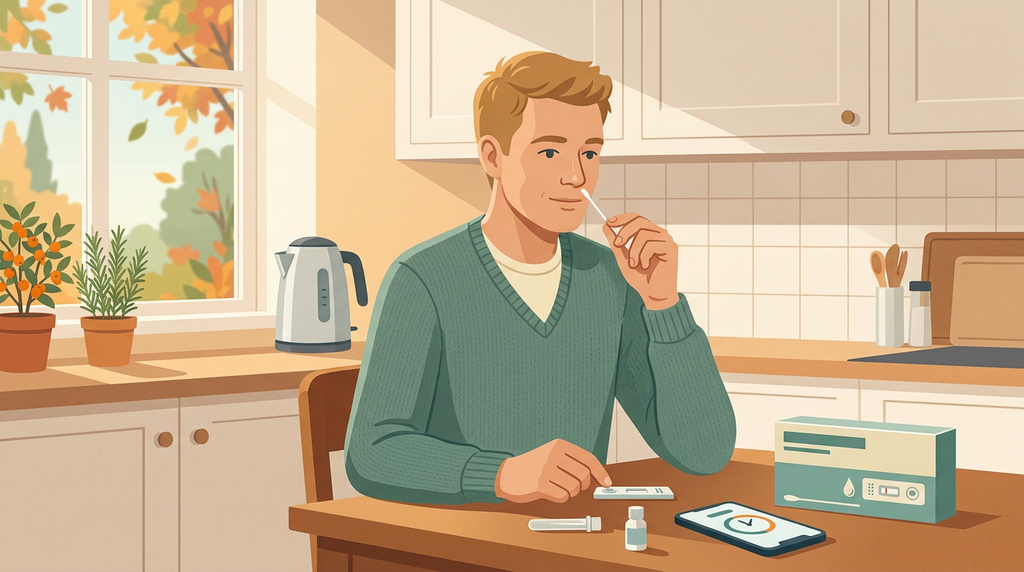
- Symptoms now → test now. Don’t wait for a “classic” symptom like taste loss. [1]
- Exposed, no symptoms → wait three to five days after the exposure before testing, then test. [1]
- Negative but still sick → retest about 48 hours later. Early infections often carry too little virus for a single antigen test to catch. The CDC’s standing advice is to repeat the test after 48 hours to be confident. [1][6]
- Positive → trust it. False positives are relatively rare; false negatives early on are the real issue. [1]
And yes — home tests still work on SW.2. The mutations that define new variants sit mostly on the spike protein, while home tests target the nucleocapsid, a much more stable inner structure. [1]
What It Actually Feels Like: This Season’s Patient Reports
Symptom tables describe the average case. Real infections are messier. The following are individual, unverified anecdotes from public Reddit threads — included not as medical data but to show the honest range of what people are reporting this year.
In a January 2026 thread in r/COVID19positive, one poster described a six-day descent: a scratchy throat after travel, then “body aches, chills, nausea, and an unfathomable burning throat” — “like I am inhaling fire every time I try and swallow.” Another poster in the same thread lost their voice entirely: “For days I could not make a sound.” Yet a third described the opposite end of the spectrum: “It was like a bad head cold but not nearly as bad as I remember it last time… sore throat only two days. Very low grade fever.” [18]
In a July 2026 thread — which included commenters in London, where the same variant family is climbing — the opening move was similar: “dry burning back of nose/throat, headache and some fatigue,” followed a day later by a low-grade fever and “horrible fatigue.” A few commenters in that thread reported heart palpitations, a symptom clinicians have long noted can follow viral infections and that warrants a call to a doctor if you notice it. [19] And in a September 2025 thread, one user’s entire illness was a day-one migraine and body aches followed by near-normalcy by day three — a reminder that vaccinated or previously infected people often breeze through what floors their neighbors. [20]
The pattern in these accounts matches what physicians describe: throat first, congestion and aches after, fatigue last to leave, and a severity that depends heavily on your age, immunity, and underlying conditions. [1] One person’s two-day head cold is another person’s week in bed.
SW.2 vs. Flu vs. RSV vs. Allergies: Your October Cheat Sheet
October is a crowded month for sore throats. Here’s the honest comparison:
| Feature | SW.2 / COVID | Flu (Influenza A/B) | RSV | Seasonal allergies |
|---|---|---|---|---|
| Onset | Often gradual — builds over 1–2 days [1] | Sudden — “hit by a truck” [1] | Gradual | Constant while exposed |
| Fever | Common, often moderate [1] | Very common, often high | Sometimes, usually milder | Rare — allergies don’t cause fever [1] |
| Sore throat | Common, often early [1] | Common | Sometimes | Scratchy rather than painful |
| Cough | Dry, lingering [1] | Dry, hacking | Wet-sounding, especially in kids | Rare or mild |
| Fatigue | Common, can linger [1] | Intense but improves faster | Mild to moderate | Mild (“allergy fatigue”) |
| Eyes | Occasionally affected | Rarely | Rarely | Itchy, watery — the allergy signature [1] |
| GI symptoms | Possible (nausea, diarrhea) [4] | Possible, more common in kids | Occasional in infants | No |
| Hoarseness | Reported with Stratus-family strains [9] | Possible | Possible | Rare |
The rule of thumb emergency physicians offer this time of year: allergies don’t cause fever and usually bring itchy eyes; flu hits harder and faster; COVID builds more gradually. But — and this is the part most lists bury — “none of these are reliable enough to self-diagnose by symptoms alone, which is exactly why testing matters.” [1]
Combination home tests that check for COVID and flu in one swab exist and are worth keeping on hand precisely because this table can’t tell you which column you’re in. [1][15] For the full differential, our side-by-side COVID vs. flu vs. RSV vs. cold symptom chart goes deeper, and our Type A flu guide covers the flu side of October.
Who Should Take SW.2 Symptoms Most Seriously
For most healthy, vaccinated or previously infected people, SW.2 is a rough week, not a crisis. But the same infection “can become more severe, requiring hospitalization in persons who are older, have chronic medical conditions, are immunocompromised or who are pregnant,” Dr. Schaffner notes. [1] Dr. David Wohl of UNC put the stakes in plain terms: “In mid-January 2026, one out of every 125 people who died in the US died from COVID-19. It’s not gone or always mild.” [1]
Take extra care — and contact a clinician early — if any of these apply to you or the person you’re worried about:
- Age 65 or older
- Chronic lung disease (asthma, COPD), heart disease, or kidney disease — if kidney disease is on your list, our guide to early warning signs of kidney disease is worth a read, since chronic kidney disease raises COVID risk
- Diabetes or obesity
- A weakened immune system (transplant, chemotherapy, immunosuppressive medication)
- Pregnancy
- Living in a care home or in close contact with someone in any of these groups
Children usually have milder illness with current variants, and often recover quickly — though, as with adults, testing is the only way to know what they have, and a rare inflammatory complication (MIS-C) can follow infection in children weeks later. [5]

🚨 Go to emergency care now — don’t wait, don’t finish reading — for:
- Trouble breathing or severe shortness of breath
- Persistent chest pain or pressure
- New confusion, or difficulty waking or staying awake
- Pale, gray, or blue-tinted skin, lips, or nail beds
- In practical terms: a fever that won’t come down, or symptoms that keep worsening after several days, also warrant urgent care — especially for the high-risk groups above [1][4][5]
Tested Positive? Your Action Plan for October 2026
1. Test smart — and know what tests cost this year. The federal free-at-home-test mailing program is suspended, so plan on buying: pharmacy two-packs typically run about $10–20, and combo COVID/flu kits are widely stocked. [14][15] If you’re on Original Medicare, over-the-counter tests aren’t covered — but a clinician-ordered laboratory test is covered at no cost. [15]
2. Recover at home if symptoms are mild. Rest, fluids, and over-the-counter fever or ache relief (like acetaminophen or ibuprofen, per the label) are the standard approach. Don’t give over-the-counter cough and flu medicines to children under 6 unless a clinician advises it. [5]
3. Protect the people around you. Current U.S. guidance is symptom-based: stay home while you’re sick, and return to normal activity once your symptoms are improving and you’ve been fever-free for 24 hours without fever-reducing medication. For the several days after you return, take added precautions around high-risk people — masking, distance, better ventilation. [5][6]
4. If you’re high-risk, call a clinician the day you test positive. Antiviral treatment (such as Paxlovid) is aimed at people with risk factors for progression and works best started early in the illness. [1][17] A telehealth visit or urgent care can sort this out the same day — you don’t need to talk yourself out of “it’s probably nothing”; that’s the clinician’s job to assess.
5. Exposed but not sick yet? There’s now a pill for that. In June 2026, the FDA approved XOCOVA (ensitrelvir) — the first oral medication for post-exposure prophylaxis: taking it after a household exposure to help prevent symptomatic COVID. In the phase 3 SCORPIO-PEP trial of 2,387 household contacts ages 12 and up, it cut the risk of developing symptomatic COVID by 67% through day 10, with side-effect rates close to placebo. The five-day course must start within 72 hours of the sick household member’s first symptoms, so the window is short — call a clinician or telehealth service quickly if someone in your home tests positive. [12][13]
The 2026–27 Vaccine Season: What Actually Changed
If you read that “vaccination remains your best protection” and assumed nothing new — here’s what most symptom articles aren’t telling you.
On August 28, 2026, the FDA approved four updated COVID-19 vaccines for the 2026–27 season, all adapted to the XFG variant — the family SW.2 belongs to — from Moderna, Pfizer-BioNTech, and Novavax/Sanofi. [10] Eligibility is narrower than in past seasons: everyone 65 and older, and people 6 months to 64 years with at least one underlying condition that raises their risk of severe COVID. [10]
Unlike previous autumns, there’s no formal national CDC recommendation framing this season’s rollout. California’s health department, for example, encourages the shot for people 65+, those who are pregnant or postpartum, ages 9–64 with risk factors, close contacts of high-risk people, and healthcare workers — while anyone else who wants to reduce their risk can still get it where supply allows. [11] What hasn’t changed is the biology: staying up to date lowers the risk of severe illness and hospitalization, and vaccination remains one of the best tools we have, especially ahead of the winter respiratory season. [1][4]

If you’re eligible, October is a sensible window to book through a pharmacy or clinic — before winter mixing peaks — and if you’ve had COVID recently, a clinician can help you time the dose sensibly. [10][11]
Long COVID and Reinfection: The Risk Most October Lists Skip
Two things are true at once, and most articles only tell you one of them.
First: reinfection is now the norm, not the exception. Immunity from past infections and vaccinations fades, and the virus keeps evolving — Canada’s public health agency notes that previously infected or vaccinated people can be reinfected, and that staying current on vaccination helps protect against severe illness when reinfection happens. [5]
Second: long COVID remains a real possibility even after a mild case, with research ongoing into causes, diagnosis, and treatment. [5][21] Some people who’ve recovered report symptoms lasting weeks to months, and if that’s you, that’s a conversation for your clinician — not something to push through.
What about antivirals as long-COVID prevention? The evidence is genuinely mixed, and it’s worth being honest about that. The strongest, clearest benefit of antivirals like Paxlovid is reducing hospitalization and death in high-risk patients during the acute illness. [17] For preventing long COVID specifically, a 2026 analysis of more than 19,000 patient records found no overall reduction in risk — though non-hospitalized adults aged 65 to 75 did see about a 17% lower risk. [16] Treat antivirals as what the evidence says they are: an acute-illness tool, not an insurance policy against every downstream effect.
Frequently Asked Questions
No evidence suggests SW.2 causes more severe disease than other recent Omicron strains — doctors describe a familiar symptom complex, and hospitalizations remain low even as cases rise. [1][2] The danger hasn’t vanished, though: the same infection still sends older, chronically ill, immunocompromised, and pregnant people to the hospital, so risk is personal, not universal.
Yes. Home antigen tests target the nucleocapsid protein, which mutates slowly, while most variant-defining changes sit on the spike protein. [1] The bigger issue is timing: testing on day one after exposure often reads negative even in infected people, so wait three to five days after an exposure, and retest about 48 hours after any negative result if symptoms persist.
Most people feel substantially better within a week, with the worst of it around days three to five. A dry cough and lingering fatigue commonly persist one to two weeks beyond that. If you’re not improving by around day 10 or you get better and then suddenly worse contact a clinician.
You’re generally most contagious early in the illness, while symptoms are at their worst. Current U.S. guidance: stay home while sick, and return to normal activity once symptoms are improving and you’ve been fever-free for 24 hours without medication then take extra care around high-risk people for several days.
Yes, people in eligible groups (65+, or 6 months–64 with at least one risk-raising condition) can get the updated XFG-adapted shot, including after a recent infection. Because a recent infection temporarily boosts immunity, some clinicians suggest spacing the dose after recovery; timing is a personal decision best made with your clinician.
Your realistic next step
If you woke up with a scratchy throat this morning: test today, and if you’re in a high-risk group, call your clinician the same day — antivirals and the new post-exposure pill both work on a clock measured in days, not weeks. [1][12] If everyone in the house is healthy, spend ten minutes this week on the boring stuff that pays off later: put a two-pack of home tests (or a combo COVID/flu kit) in the medicine cabinet [14][15], check your area’s wastewater level on the CDC dashboard [3], and if you’re eligible, book the updated shot before the winter wave — not during it. [10][11]
Sources
- Parade — “These Are the 7 Most Common Symptoms of the COVID-19 SW.2 Variant Doctors Are Seeing Right Now” (originally published Oct. 1, 2026; syndicated to Yahoo Health). Expert sources: Tyler B. Evans, MD; William Schaffner, MD (Vanderbilt); Suraj Saggar, DO (Holy Name); Niaz Farhat, MD; David Wohl, MD (UNC). https://parade.com/health/covid-symptoms-october-2026 (Yahoo Health version: https://health.yahoo.com/conditions/infectious/coronavirus/articles/7-key-symptoms-covid-19-162500120.html)
- Nebraska Medicine — “What COVID-19 variants are going around in September 2026?” (Sept. 2026; CDC nowcast data: SW.2 ~21%, XFG.1.1 ~16%, RW.1.1 ~9%; tests do not identify variants). https://www.nebraskamed.com/COVID/what-covid-19-variants-are-going-around
- CDC — “National Wastewater Data for Respiratory Viruses” (updated Oct. 2, 2026; Verily contract award Sept. 28, 2026, ~200-site data gap). https://www.cdc.gov/wastewater/respiratory-viruses/national.html
- CDC — “COVID-19 Symptoms” (official symptom list). https://www.cdc.gov/covid/signs-symptoms/index.html
- Public Health Agency of Canada — “COVID-19 (coronavirus disease): Symptoms and treatment” (symptom list incl. GI symptoms; severe symptoms and when to call 911; reinfection; children; home care and OTC guidance). https://www.canada.ca/en/public-health/services/diseases/coronavirus-disease-covid-19.html
- TODAY.com — “Is There a Summer COVID Surge? With Cases Rising in Most States, Watch for These Symptoms” (Sept. 22, 2026; CDC positivity data ~5% week ending Sept. 12 vs ~11% last year; current CDC return-to-activity and 48-hour retest guidance). https://www.today.com/health/coronavirus/summer-covid-surge-symptoms-guidelines-2026-covid-vaccine-test-rcna592549
- The Mirror — “Brits issued urgent Covid warning as England sees surge of ‘American’ variant as number in hospital rises” (Oct. 5, 2026; UKHSA data: ~1,364 weekly hospitalized cases, +28.6%; XFG = LF.7 × LP.8.1.2 recombinant, first identified Jan. 2025). https://www.mirror.co.uk/news/uk-news/american-covid-strain-symptoms-2026-37735278
- BreezyScroll — “Covid Cases Rise in Britain as XFG Variant Spreads Across Country” (Oct. 5, 2026; UKHSA: hospital positivity 5.9%→7.0% week ending Sept. 20; XFG sublineages >50% of sequenced cases; activity “increasing but still low”). https://www.breezyscroll.com/health/covid-cases-rise-in-britain-as-xfg-variant-spreads-across-country
- Pharmacy Business — “‘American Covid’ strain increase hospital admissions in England” (Oct. 4, 2026; XFG/Stratus linked to hoarseness and fatigue; autumn booster call). https://www.pharmacy.biz/american-covid-strain-increase-hospital-admissions-in-england/
- MedPage Today — “FDA Approves Four Updated COVID Shots Targeting XFG Variant” (Aug. 28, 2026; eligibility 65+ and 6 months–64 with ≥1 underlying condition; VRBPAC 8–0 vote May 2026). https://www.medpagetoday.com/infectiousdisease/covid19vaccine/122809
- KQED — “A New COVID Vaccine Is Here (Without Much Fanfare). When Should You Get It?” (Sept. 10, 2026; no formal CDC recommendation this season; CDPH higher-risk groups incl. pregnancy/postpartum and close contacts). https://www.kqed.org/news/12098931/where-can-i-find-new-updated-2026-27-covid-vaccine-near-me-moderna-pfizer-cvs-walgreens-safeway-vaccinations-health-insurance-cost
- Consultant360 — “Ensitrelvir (Xocova) Receives FDA Approval for COVID-19 Post-Exposure Prophylaxis” (June 2026; ages 12+; SCORPIO-PEP n=2,387; 67% risk reduction through day 10; adverse events 15.1% vs 15.5% placebo; Shionogi press release June 1, 2026). https://www.consultant360.com/fda-alerts/ensitrelvir-xocova-receives-fda-approval-covid-19-post-exposure-prophylaxis
- Epocrates — “FDA adds Xocova to COVID-19 prevention toolkit” (June 3, 2026; dosing 375 mg day 1, then 125 mg days 2–5; >99% of trial participants had prior vaccination, infection, or both). https://www.epocrates.com/online/article/fda-adds-xocova-to-covid-19-prevention-toolkit
- AARP — “Government Suspends Free At-Home COVID Testing Program” (Mar. 2025; program suspended; ~$20 two-packs at retail). https://www.aarp.org/health/conditions-treatments/covid-testing-program.html
- National Council on Aging (NCOA) — “COVID Testing and Medicare: What to Know in 2026” (Jan. 2026; Medicare covers clinician-ordered lab tests but not OTC tests; pharmacy tests $10–20). https://www.ncoa.org/article/a-guide-to-covid-19-testing-for-seniors/
- Nature Communications Medicine — “Paxlovid shows organ-specific and age-specific impacts on risk of developing post-acute sequelae of COVID-19” (Mar. 24, 2026; >19,000 records; no overall PASC reduction; ~16.8% risk reduction in non-hospitalized adults 65–75). https://www.nature.com/articles/s43856-026-01535-4
- CDC — “COVID-19 Treatment” (antivirals for people at risk of severe disease; early initiation). https://www.cdc.gov/covid/treatment/index.html
- Reddit r/COVID19positive — “New Covid Strain is Brutal” (Jan. 2026 thread; individual, unverified patient anecdotes quoted with attribution). https://www.reddit.com/r/COVID19positive/comments/1qgutfe/new_covid_strain_is_brutal/
- Reddit r/COVID19positive — “Got covid for third time July 2026” (July 2026 thread incl. UK commenters; individual, unverified anecdotes). https://www.reddit.com/r/COVID19positive/comments/1usd270/got_covid_for_third_time_july_2026/
- Reddit r/COVID19positive — “Anyone else with a mild infection?” (Sept. 2025 thread; individual, unverified anecdotes). https://www.reddit.com/r/COVID19positive/comments/1nax8ev/anyone_else_with_a_mild_infection/
- CDC — “Long COVID Basics” (who is at risk; prevention). https://www.cdc.gov/long-covid/about/index.html
- CDC — “COVID-19 Testing” (self-test guidance). https://www.cdc.gov/covid/testing/index.html
Source integrity note: All links above were located and verified during research on October 5, 2026. Reddit threads are cited as labeled anecdotes, not clinical evidence. No citations were invented; any future claims added by editors must be sourced before publication.