
Published: May 14, 2026
By MedLifeGuide.com – Reliable Health Information You Can Trust
The recent hantavirus cluster on the expedition cruise ship MV Hondius has raised questions about the Andes virus (Andes hantavirus or ANDV). While the outbreak resulted in serious illnesses and tragic deaths, international health authorities including the WHO, ECDC, and CDC continue to stress that the risk to the general public and travelers remains low.
What Is Andes Hantavirus?
Hantaviruses are RNA viruses carried by rodents worldwide. They cause two main types of disease:
- Hantavirus Pulmonary Syndrome (HPS) — primarily in the Americas (severe lung involvement).
- Hemorrhagic Fever with Renal Syndrome (HFRS) — more common in Asia and Europe (kidney-focused).
Andes virus is a specific New World hantavirus endemic to parts of Argentina, Chile, and neighboring South American countries. It is notable as the only hantavirus with documented limited person-to-person transmission, though this typically requires close, prolonged contact (e.g., household or caregiving settings).
How Did the MV Hondius Outbreak Happen?
The Dutch-flagged MV Hondius departed Ushuaia, Argentina, in early April 2026 for a 33-day Antarctic and South Atlantic expedition with approximately 147 passengers and crew from over 20 countries.
- Initial exposure likely occurred through contact with infected rodents (or their droppings) during excursions in endemic areas of South America.
- Limited secondary human-to-human transmission appears to have occurred onboard due to the confined environment.
- As of mid-May 2026: Around 8–11 cases (confirmed + probable), with 3 deaths reported. No new cases since recent updates. The ship reached Tenerife, Spain, on May 10, and passengers have been repatriated with monitoring.
Transmission of Andes Hantavirus
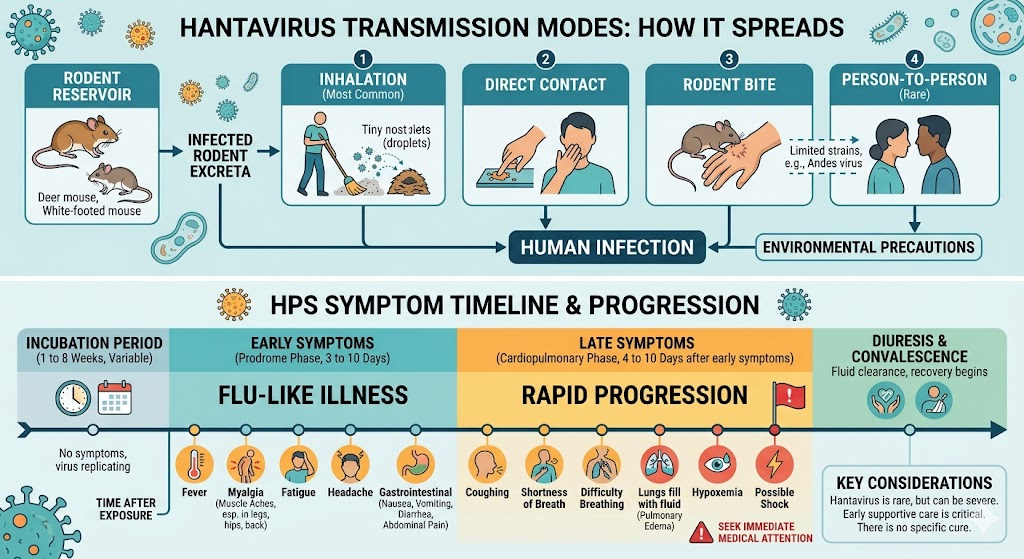
- Primary route (most common): Inhalation of aerosolized virus from rodent urine, droppings, or saliva. Cleaning enclosed spaces without protection is a high-risk activity.
- Person-to-person (rare, Andes-specific): Close prolonged contact. Not spread through casual contact, air travel, or general public settings.
- No evidence of sustained community transmission from this outbreak.
Unlike respiratory viruses such as flu or COVID-19, hantavirus does not spread easily in everyday environments.
Symptoms of Hantavirus Pulmonary Syndrome
Incubation period: Usually 1–8 weeks after exposure.
Phase 1 (Early, flu-like – 3–5 days):
- High fever
- Severe fatigue
- Muscle aches (myalgia), especially in large muscles
- Headache
- Chills and dizziness
- Gastrointestinal symptoms (nausea, vomiting, diarrhea, abdominal pain)
Phase 2 (Cardiopulmonary – can progress rapidly):
- Shortness of breath
- Persistent cough
- Fluid buildup in the lungs (pulmonary edema)
- Low blood pressure and shock in severe cases
Early hospitalization improves outcomes. Supportive care (oxygen, mechanical ventilation, fluids) is the mainstay of treatment — there is no specific antiviral approved for routine use.
Why the Risk Remains Low
- The outbreak is linked to a specific, contained event on one ship.
- All known cases trace back to the MV Hondius passengers/crew.
- Health agencies have implemented contact tracing, monitoring, and isolation where needed.
- No reports of wider community spread as of May 14, 2026.
Travelers to South America should still take standard rodent-avoidance precautions, but there is no reason for general travel restrictions or panic.
Prevention Tips
- Avoid contact with rodents and their habitats, especially in rural or storage areas.
- Seal homes and food storage properly.
- Wear masks, gloves, and use disinfectants when cleaning potentially contaminated areas.
- Practice good hand hygiene.
- Seek prompt medical care if you develop symptoms after potential exposure in endemic areas.
Key Takeaways
The Andes hantavirus outbreak on the MV Hondius is a serious but contained incident that highlights risks in remote travel and the unique characteristics of this virus strain. Thanks to rapid international coordination, the situation has been managed effectively, with ongoing monitoring to ensure no further spread.
For the latest official updates, refer to WHO, CDC, or ECDC websites.
This article is for informational purposes only and does not replace professional medical advice. Consult your healthcare provider with any health concerns.