
Written by Lori Bumbaco, MS, RDN, CSO, LDN, Oncology Dietitian
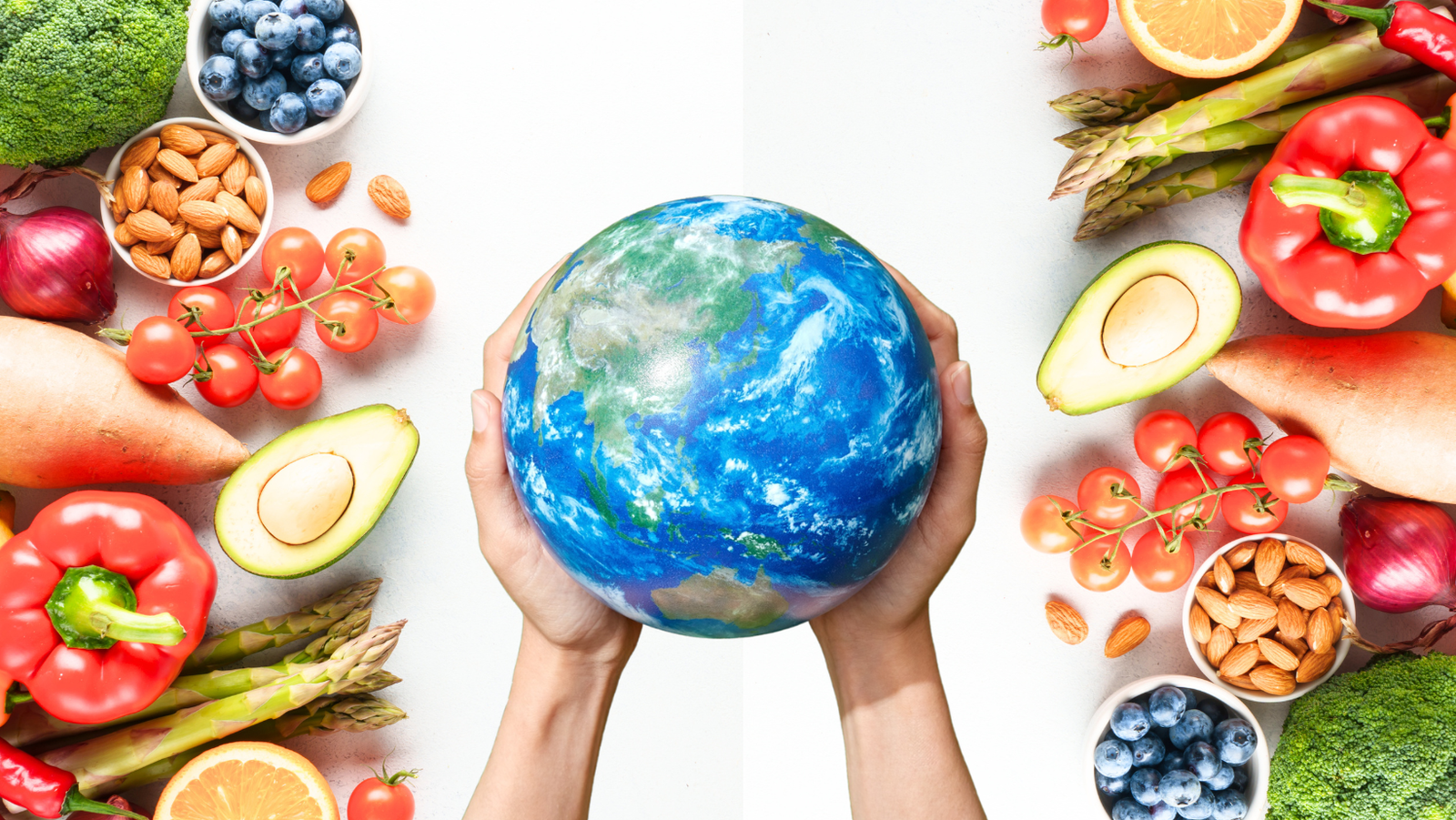
Did you know that there is a science-based dietary pattern designed to promote human health and protect the planet, linking what we eat with how we care for life on Earth? The “diet” is not strict, but rather a pattern rich in plant foods, including whole grains, fruits, vegetables, nuts and legumes, while only small amounts of fish, dairy and meat are recommended. If this way of eating sounds familiar, it may be because oncology dietitians often recommend eating the same way to protect against cancer.
The Planetary Health Diet is based on research suggesting that this way of eating would reduce the environmental impacts and nutritional deficiencies of most diets. Most of us believe that the food we eat is a personal choice. However, our food choices are a public issue with global consequences. The food we eat affects agricultural land use, greenhouse gas emissions, water availability and quality, labor systems, and public health. Mass food production contributes to environmental degradation and worsens inequality.
We can reduce the collective impact of our current eating patterns, which will not only be sustainable for our health but also for the planet. Our opportunity begins in the kitchen by cooking simple recipes rich in plant foods at home. It turns out that we don’t need to look far, because our ancestors enjoyed many delicious foods that fit perfectly into the Planetary Health Diet.
Traditional plant-based dietary patterns from the Mediterranean to Asia, Africa and Latin America illustrate how cultural heritage can inspire delicious solutions for personal and planetary health. Each of these diet patterns has several themes in common. Each of them emphasizes eating most plant foods at all meals, allowing flexibility depending on your preferences. Consider using a plate to visualize how most meals will contain fruits, vegetables, whole grains, plant proteins, and small amounts of meat and dairy.
At the same time, two other components serve to connect us with the health of our planet and reconnect us with our relationship with food.
First, it’s important to use meal planning to minimize food waste.. Nearly 1/3 of all the food we produce is wasted, significantly contributing to the release of methane. An example of meal planning includes using what is currently available to guide you in creating a new meal before it goes to waste. Another example is intentionally preparing a meal that will be used for another meal the next day.
Secondly, it is important to focus on local and seasonal foods. Doing this helps reduce the energy used in transporting food and contributes to the development of a resilient local food system. Shopping at the farmers market, joining a CSA, and turning to the seasons to guide the best options are all examples of how to choose local foods.
If you are looking for inspiration, EAT-Lancet leads pioneering work on planetary health diet. Click here to visit their website for tasty recipes. Some delicious options include a falafel wrap with hummus, cactus and quinoa salad, meatballs with seasonal vegetables, and lentil parantha.
The Planetary Health Diet offers a highly adaptable framework that can be tailored to suit individual needs, cultural preferences, and regional availabilities. Taking this approach brings us closer to the principles that lead to a healthier planet and a healthier you, too.
Thank You For Visiting Our Website https://medlifeguide.com/ We Value Your Feedback!