
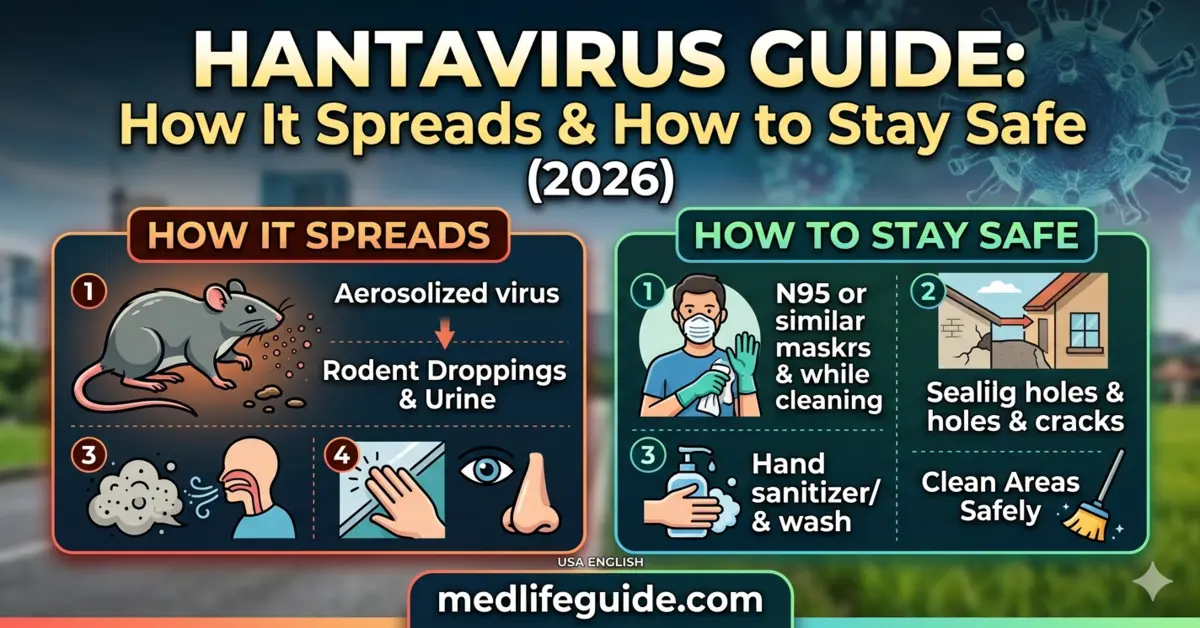
Hantavirus is a serious respiratory disease transmitted to humans primarily through contact with infected rodents (specifically their urine, droppings, or saliva). It spreads through aerosolization, which happens when dust containing dried rodent waste is stirred up and inhaled.
While rare, it can lead to Hantavirus Cardiopulmonary Syndrome (HCPS), a life-threatening condition. Prevention involves sealing your home, using professional-grade disinfectants, and wearing specific PPE during cleanup.
My Wake-Up Call with the “Deer Mouse Virus”
A few years back, I volunteered to help an old friend clear out a hunting cabin that had been shuttered for three winters in the rural Southwest. We walked in, saw a layer of dust and a few scattered droppings on the kitchen counters, and I almost grabbed a broom to sweep it up.
That mistake could have cost me my life.
My friend, a retired park ranger, grabbed my arm and pulled me back. “Never sweep or vacuum dry droppings,” he warned. He explained that we were standing in the prime habitat of the deer mouse virus, officially known as the Sin Nombre virus. That day was a masterclass in zoonotic diseases—illnesses that jump from animals to humans—and it changed how I look at home maintenance forever.
Since then, I’ve spent years consulting with property managers on rodent-borne diseases. I’ve seen what works and, more importantly, I’ve seen the dangerous shortcuts people take. If you’re worried about hantavirus aerosol transmission, you aren’t being paranoid—you’re being smart.
What is Hantavirus? (The Science Made Simple)
Hantaviruses are a family of viruses. In the Americas, they primarily cause Hantavirus Cardiopulmonary Syndrome (HCPS). In Europe and Asia, they often manifest as Hemorrhagic Fever with Renal Syndrome (HFRS). These are types of viral hemorrhagic fevers, though the “New World” version we deal with in the U.S. focuses its attack on the lungs rather than the kidneys.
The virus doesn’t make the rodents sick. They carry it for life, shedding it in their waste. When that waste dries out, the virus remains viable for several days. If you stir up that dust, you breathe in microscopic particles. That is the core of how this virus operates.
How It Spreads: The Danger of the “Invisible Mist”
Most people think you have to be bitten by a mouse to get sick. While a bite can transmit the virus, it is incredibly rare. The real danger is aerosolization.
Imagine you’re cleaning your garage. You see some “black rice” looking droppings and grab the shop vac. This is the worst thing you can do. A standard vacuum acts like a leaf blower for pathogens, blasting the virus into the air you breathe.
Common Transmission Routes:
- Inhalation: Breathing in dust stirred up while sweeping or vacuuming.
- Direct Contact: Touching droppings or urine and then touching your nose or mouth.
- Ingestion: Eating food contaminated by rodent waste.
Professional Troubleshooting: Lessons from the Field
In my years of helping people secure their homes, I’ve noticed a pattern. People focus on “killing the mice” but forget the “cleaning the legacy.” Even if the mouse is gone, the risk remains in the dust.
My “Hands-on Failure” Lesson:
Early on, I recommended a high-end consumer vacuum to a client, thinking the filter was enough. I was wrong. Unless you use the best vacuum for hantavirus dust removal—which must be a certified HEPA-filtered vacuum—you are just recirculating the risk. Standard filters allow microscopic viral particles to pass right through.
My Pro Checklist for Cleanup:
- Ventilate first: Open windows and doors for 30 minutes before you even start.
- The “Wet Down” Rule: Never touch dry droppings. Use a 10% bleach solution or the best disinfectant for hantavirus cleanup (look for EPA-registered products labeled for “hantavirus” or “emerging pathogens”).
- Soak, don’t spray: Use a low-pressure spray to saturate the area. High-pressure sprayers can actually kick up the dust you’re trying to settle.
The Gear: Protecting Yourself Properly
You cannot rely on a simple cloth mask. If you are entering a space with a heavy infestation, like a crawlspace or an attic, you need a NIOSH-approved N100 or P100 respirator. This is the best mask for hantavirus protection because it filters out 99.9% of airborne particles.
Additionally, don’t just use any kitchen gloves. I recommend heavy-duty nitrile or latex. The best gloves for cleaning rodent droppings are those that are disposable and long enough to cover your wrists, ensuring no skin contact with the “mist” of the disinfectant.
Prevention: Keeping the Rodents Out
The most “human” advice I can give you is this: Stop the problem before it starts. Mice can fit through a hole the size of a dime.
I’ve tested dozens of “natural” remedies. While peppermint oil smells great, it’s not a permanent solution. The best rodent repellent for hantavirus prevention is a combination of physical exclusion (steel wool and caulking) and professional-grade baiting/trapping if needed.
Air Quality Management
If you live in an area prone to deer mice, consider your indoor air. While a mask is for cleaning, the best air purifier for hantavirus particles is one equipped with a medical-grade HEPA H13 or H14 filter. These units can help capture any stray particles that might become airborne during daily activities, though they should never replace proper cleaning protocols.
Recognizing the Symptoms
If you have been in a “mouse-heavy” environment and start feeling sick, time is of the essence. HCPS starts like the flu:
- Fever and muscle aches (especially in the thighs, hips, and back).
- Fatigue and dizziness.
- Chills.
The “Red Alert” Moment: About 4 to 10 days after the initial symptoms, the “respiratory phase” begins. This involves coughing and severe shortness of breath. If you feel like a “tight band is around your chest,” go to the ER immediately and tell them, “I have had recent exposure to rodents.” This piece of information is vital for doctors.
Summary of Best Practices for Safe Cleanup
| Task | Recommendation | Why? |
| Initial Contact | Best way to clean rodent urine safely is by soaking in 10% bleach for 5 mins. | Kills the virus on contact before it can move. |
| Waste Removal | Use a paper towel to pick up waste, then double-bag it. | Prevents accidental leaks in the trash. |
| Floors | Mop with disinfectant; do not sweep. | Sweeping creates dangerous aerosols. |
| Personal Safety | Wear a P100 respirator and gloves. | Prevents inhalation and skin absorption. |
Final Thoughts: Respect, Not Fear
Hantavirus is scary, but it is manageable. I’ve cleaned out barns that were “mouse mansions” and stayed perfectly healthy by following these protocols. It’s all about respecting the rodent droppings health risks and using the right tools for the job.
If you want to dive deeper into the latest outbreaks or regional risks, the best online resource for hantavirus info is the CDC’s official Hantavirus page.
Stay safe, stay clean, and remember: Soak, don’t sweep.
Frequently Asked Questions (FAQs)
In North America, no. Hantavirus aerosol transmission occurs only from rodent to human. However, a specific strain in South America (Andes virus) has shown limited person-to-person spread.
Generally, the virus remains active for about 2 to 3 days at room temperature. However, it can last longer in cold, dark environments. To be safe, always treat any rodent waste as if it is “hot” (active).
The deer mouse is the primary carrier of the Sin Nombre virus in the western and central US. Other carriers include the white-footed mouse, the rice rat, and the cotton rat.
Currently, there is no FDA-approved vaccine for hantavirus in the United States. Treatment focuses on supportive care in an ICU (Intensive Care Unit).
Don’t just pick it up. Use the “Wet Down” method. Spray the mouse and the surrounding area with a bleach solution or disinfectant, wait 5 minutes, then use gloves to put it in a plastic bag.
Research More on Google: