
Medically Reviewed and Compiled by Dr. Adam N. Khan, MD.
Anxiety is one of the most common mental health conditions in the world, yet many people misunderstand what it really is. Some think it is just stress. Others believe it is something a person can simply push through with willpower. The truth is different. Anxiety is a real medical condition roote
Medically Reviewed and Compiled by Dr. Adam N. Khan, MD.
Anxiety is one of the most common mental health conditions in the world, yet many people misunderstand what it really is. Some think it is just stress. Others believe it is something a person can simply push through with willpower. The truth is different. Anxiety is a real medical condition rooted in brain biology, past experiences, body chemistry, and everyday triggers. When it becomes intense or constant, it can take over both emotional and physical health.
This guide breaks down what anxiety is, how it works inside the body, how it feels, and how doctors diagnose and treat it. You will also find clinical insights that go beyond the basic symptom list. These insights come from real patient patterns, diagnostic challenges, and risk factors doctors often see in practice.
What Anxiety Really Means
Here is the thing. Anxiety is not just worry. It is the body’s alarm system turned up too loud or switched on too often. Everyone feels anxiety sometimes. It helps you stay alert when something matters. But when anxiety becomes stronger than the moment calls for, or it shows up when nothing is wrong, it becomes a disorder.
Doctors describe anxiety as a condition where a person’s fight or flight system reacts even when there is no real danger. This causes physical and emotional symptoms that interfere with daily life. Anxiety can show up as fear, restlessness, dread, or a constant sense that something bad is about to happen. It also brings physical reactions like a racing heart, sweating, stomach problems, trouble sleeping, and muscle tension.
Anxiety disorders are medical conditions. They are not personality traits. They are not weakness. They are not something a person chooses. They come from a mix of genetics, brain chemicals, trauma history, health issues, and life stress.
How Anxiety Works Inside the Body
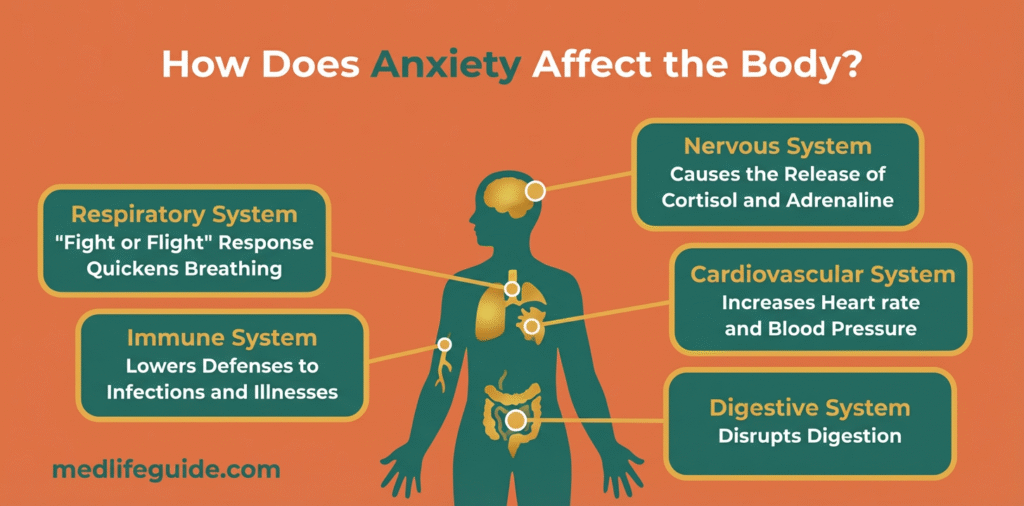
To understand anxiety, it helps to know what happens inside the brain and nervous system. Anxiety activates the same alarm system the body uses during real threats. This system includes key parts of the brain.
The Amygdala
The amygdala acts like a smoke detector. When it senses danger, it sends signals that create fear and physical stress responses. In anxiety disorders, the amygdala becomes too sensitive. It reacts even when it should stay calm.
The Prefrontal Cortex
This area of the brain helps you think, plan, and stay logical. During anxiety, the amygdala overwhelms it. This makes it harder to reason, think clearly, or calm down.
Stress Hormones
Anxiety triggers stress chemicals like cortisol and adrenaline. These chemicals increase heart rate, blood pressure, breathing speed, and muscle tension. This is useful in real emergencies. But when these chemicals stay high for too long, the body becomes exhausted.
The Autonomic Nervous System
This system controls automatic body functions. Anxiety pushes it into overdrive. This can cause stomach problems, headaches, dizziness, chest pressure, or tingling.
Common Types of Anxiety Disorders
There are several kinds of anxiety disorders. Each one has its own pattern.
Generalized Anxiety Disorder (GAD)
A person with GAD feels worry most days for at least six months. The worry covers many areas like health, finances, family, school, or work. They feel on edge, tired, tense, and have trouble sleeping.
Panic Disorder
People with panic disorder get sudden waves of intense fear called panic attacks. These attacks happen without warning. They may bring chest pain, choking feelings, sweating, shaking, or the feeling of losing control.
Social Anxiety Disorder
This type makes social situations feel scary. People may fear embarrassment or judgment. Speaking, eating around others, or meeting new people can feel overwhelming.
Specific Phobias
A phobia is an intense fear of something specific. It could be heights, needles, blood, flying, or animals. The fear feels extreme compared to the real danger.
Agoraphobia
This condition makes a person afraid of places where escape might be hard. Crowds, public transport, open spaces, or being far from home may feel unsafe.
Separation Anxiety Disorder
This is common in children but can affect adults too. A person feels extreme fear when away from loved ones.
Anxiety Caused by Medical Conditions
Some health conditions cause anxiety. Thyroid problems, heart issues, hormone shifts, chronic illness, pain, and vitamin deficiencies can all trigger anxiety symptoms.
Symptoms of Anxiety
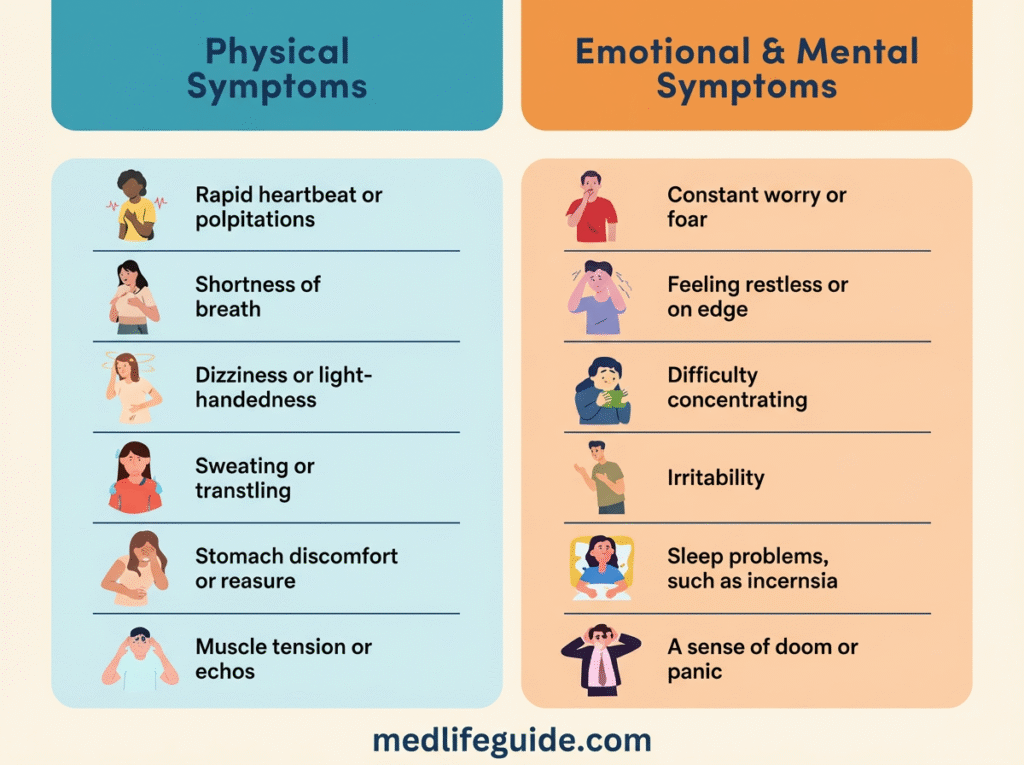
Anxiety shows up in both the mind and the body.
Emotional Symptoms
- Feeling nervous or restless
- Sense of terror or doom
- Trouble focusing
- Feeling overwhelmed
- Always expecting the worst
- Irritability
Physical Symptoms
- Rapid heartbeat
- Chest tightness or pain
- Shortness of breath
- Stomach pain or diarrhea
- Sweating
- Shaking
- Dizziness
- Trouble sleeping
- Tingling in hands or feet
- Muscle tightness
These symptoms are real. They come from the nervous system, not the imagination.
What Causes Anxiety?
There is not one single cause. Anxiety usually comes from a combination of factors.
Genetics
If anxiety runs in a family, the chance of developing it is higher.
Brain Chemistry
Imbalances in serotonin, norepinephrine, and gamma-aminobutyric acid (GABA) play a role.
Trauma
Events like accidents, abuse, or major loss change how the brain responds to stress.
Chronic Stress
Long term pressure from work, money, family, or school keeps stress chemicals high.
Personality
People who are sensitive or perfection-focused may be more likely to develop anxiety.
Medical Conditions
Thyroid disease, heart rhythm issues, chronic pain, anemia, and hormone shifts can all trigger anxiety.
Medications or Substances
Caffeine, alcohol withdrawal, nicotine, stimulants, and some prescription drugs can make anxiety worse.
How Doctors Diagnose Anxiety
Doctors use a full evaluation before diagnosing anxiety. They look at:
Medical History
Doctors ask about symptoms, daily stress, past trauma, and family history.
Physical Exam
This helps rule out medical issues like thyroid disease, anemia, or hormonal conditions.
Lab Tests
Sometimes doctors check thyroid function, vitamin levels, heart tests, or hormone panels.
Psychological Evaluation
Doctors or therapists use structured interviews or questionnaires to measure symptoms.
To diagnose an anxiety disorder, symptoms must last long enough and affect daily life. Doctors follow guidelines from the DSM-5, a manual used by mental health professionals.
How Anxiety Affects Daily Life
Anxiety reaches into many parts of life. A person may struggle at work, feel distracted at school, or pull away from relationships. Anxiety can also make it hard to sleep, enjoy hobbies, or make decisions. The brain stays stuck in high alert mode. This drains energy and confidence.
Physical symptoms often cause fear of serious illness. Many people visit the emergency room thinking they are having a heart attack when they are actually having a panic attack. Others avoid social settings because they fear embarrassment.
Over time, this avoidance makes anxiety stronger.
Treatment Options for Anxiety
The good news is that anxiety disorders are highly treatable. Many people recover with the right plan.
Cognitive Behavioral Therapy (CBT)
CBT teaches people how to challenge anxious thoughts and retrain their reactions. It is one of the most effective treatments.
Exposure Therapy
This treatment helps people face what they fear in a safe and controlled way. It reduces avoidance and builds confidence.
Medication
Doctors may prescribe medications that help balance brain chemicals. These can include:
- SSRIs
- SNRIs
- Benzodiazepines (short term only)
- Beta blockers for physical symptoms
Lifestyle Changes
- Regular sleep
- Exercise
- Limiting caffeine
- Relaxation techniques
- Healthy nutrition
These support the treatment plan.
Mindfulness and Relaxation Techniques
Deep breathing, grounding exercises, meditation, and journaling help calm the nervous system.
Support Groups
Talking with others who understand can reduce feelings of isolation.
Unique Clinical Takeaways
This section covers deeper insights that often come up in real clinical settings. These insights help explain why anxiety sometimes gets missed or misunderstood.
1. Anxiety Often Masks Itself as Physical Illness
Many patients first go to a cardiologist, neurologist, or gastrointestinal specialist before a mental health doctor. Anxiety can mimic:
- Heart problems
- Asthma
- Stomach disease
- Neurological issues
- Thyroid symptoms
This can lead to months of testing. A key sign is that symptoms come in waves or appear suddenly without a clear trigger. Understanding this pattern helps speed up the right diagnosis.
2. The Brain Learns Anxiety Through Repetition
When a person avoids something because it causes anxiety, the brain learns that the situation is dangerous. This creates a cycle. Each time the person avoids, the fear grows stronger. Breaking this cycle is one of the first goals in treatment. This is why exposure therapy works so well.
3. Some Medical Conditions Make Anxiety Worse but Are Often Overlooked
Many patients with anxiety also have underlying medical factors that make symptoms stronger. These include:
- Iron deficiency
- Vitamin B12 deficiency
- Hormonal shifts
- Sleep apnea
- Blood sugar swings
- Chronic inflammation
When these issues go untreated, anxiety does not improve even with therapy or medication. A full medical exam often reveals hidden contributors.
How to Manage Anxiety Day to Day
You cannot control every trigger, but you can build habits that calm the nervous system.
Keep a Simple Routine
The brain likes patterns. Regular sleep, meals, and movement lower stress signals.
Practice Slow Breathing
Slow breathing signals the brain to calm down. It lowers heart rate and muscle tension.
Set Boundaries
Learn to say no when you feel overloaded. Protecting energy reduces anxiety spikes.
Limit Caffeine
Too much caffeine makes the heart race and raises stress hormones.
Write Down Thoughts
Putting thoughts on paper helps organize emotions and reduce brain overload.
Take Breaks
Short breaks through the day help reset the mind.
Stay Connected
Talking to someone you trust makes anxiety feel lighter.
When to See a Doctor
You should reach out for help when:
- Anxiety interferes with school, work, or relationships
- Physical symptoms make you fear something is wrong
- You avoid things you once enjoyed
- You cannot sleep because of worry
- You feel panic attacks
- Anxiety lasts for months
Early support prevents symptoms from getting worse.
Anxiety is your body’s alarm system turning on when you feel worried, stressed, or scared. When it becomes too strong or happens too often, it becomes a medical condition.
No. Stress comes from an outside problem, like deadlines or money issues. Anxiety can happen even when nothing is wrong. Stress usually ends when the problem ends. Anxiety can stay for months.
It can. Panic attacks often cause chest pressure, shortness of breath, and dizziness. If you are unsure, always get medical help. Doctors can check if it is anxiety or something else.
Sometimes mild anxiety fades on its own. Long-term or severe anxiety usually needs treatment like therapy, lifestyle changes, or medication.
Final Thoughts
Anxiety is real and common. It affects how the mind thinks and how the body feels. The good news is that help works. With the right plan, most people get better. If you or someone you care about struggles with anxiety, you are not alone. You can start with small steps like talking to a doctor, learning simple breathing techniques, or reaching out to someone you trust. Every step forward builds strength.
References and Citations
(Internal linking only as requested)
- American Psychological Association. “Anxiety Disorders.”
- National Institute of Mental Health. “Anxiety Disorders Overview.”
- Mayo Clinic. “Generalized Anxiety Disorder.”
- Harvard Health Publishing. “Understanding the Stress Response.”
- The Lancet Psychiatry. “Anxiety Disorders: Clinical Insights and Global Impact.”
Medical Disclaimer
This article is for educational purposes only. It does not replace medical advice, diagnosis, or treatment. Always talk to a qualified healthcare professional about any health concerns.