
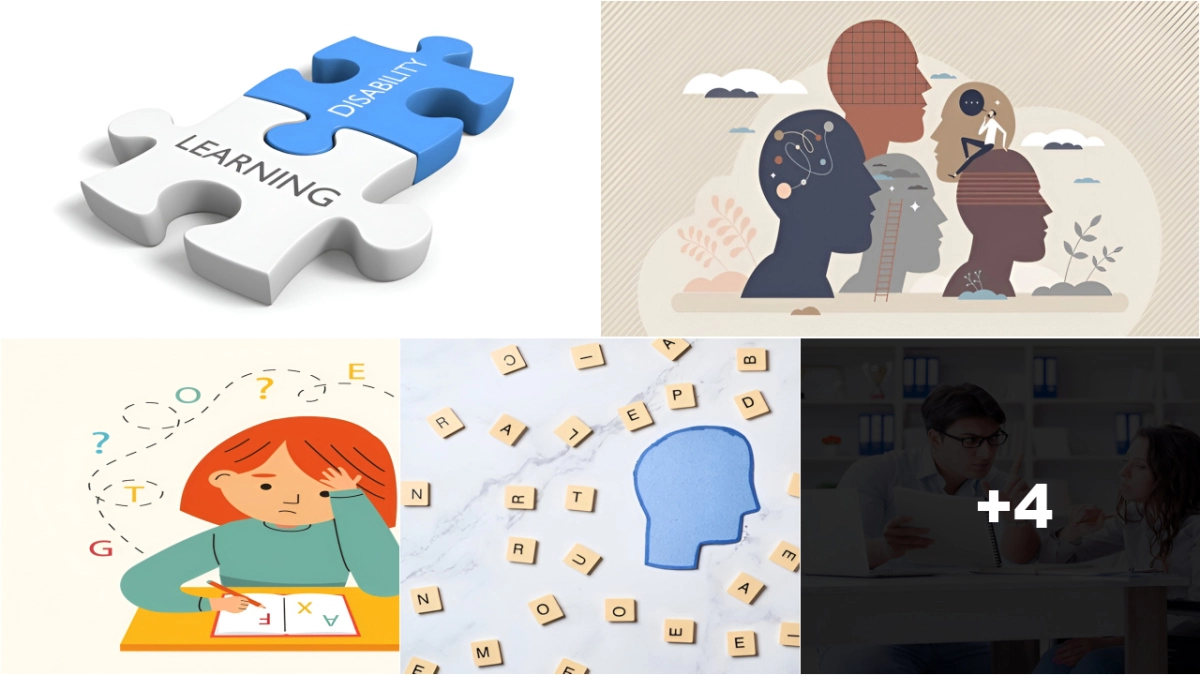
Learning disabilities (LD) affect millions of people worldwide, shaping how they process, retain, and communicate information. Unlike intellectual disabilities, LD does not reflect intelligence—rather, it highlights differences in how the brain processes information.
This article explores:
- What learning disabilities are (and what they’re not)
- Common types and their signs
- Causes and risk factors
- Diagnosis and support strategies
- How to advocate for individuals with LD
Whether you’re a parent, educator, or someone navigating LD yourself, this guide offers actionable insights backed by research and real-world expertise.
What Are Learning Disabilities?
Example: A student who reads well out loud but struggles to understand what they just read.
A learning disability is a neurological condition that impacts reading, writing, math, reasoning, or organizational skills. Key facts:
- Not tied to IQ – Many with LD have average or above-average intelligence.
- Lifelong but manageable – Early intervention helps individuals adapt successfully.
- Different from developmental delays – LD persists despite adequate instruction.
Common Misconceptions
Example: A child labeled lazy even though they spend twice as long on homework.
- “People with LD are lazy.” → Reality: They often work harder to compensate.
- “Only children have LD.” → Reality: Many adults remain undiagnosed.
Types of Learning Disabilities
1. Dyslexia (Reading Disability)
Example: A student who switches letters like “b” and “d” while reading simple words.
- Signs: Difficulty decoding words, slow reading, trouble spelling.
- Support: Multisensory reading programs (e.g., Orton-Gillingham).
2. Dysgraphia (Writing Disability)
Example: A child who knows what they want to say but can’t get the words onto paper clearly.
- Signs: Poor handwriting, difficulty organizing thoughts on paper.
- Support: Speech-to-text tools, graphic organizers.
3. Dyscalculia (Math Disability)
Example: A student who forgets basic math steps even after repeated practice.
- Signs: Struggles with number sense, memorizing math facts.
- Support: Hands-on math manipulatives, visual aids.
4. Auditory/Visual Processing Disorders
Example: A child who hears instructions but cannot process them fast enough to respond.
- Signs: Trouble interpreting sounds or images (e.g., mixing up “b” and “d”).
Causes & Risk Factors
Example: A parent with LD noticing similar struggles in their child.
While the exact causes are unclear, research points to:
- Genetics – Family history increases likelihood.
- Brain Structure – Differences in neural pathways.
- Prenatal Factors – Exposure to toxins, premature birth.
Diagnosis & Intervention
Early Signs in Children
Example: A preschooler who cannot remember simple rhyming words during play.
- Delayed speech
- Difficulty rhyming
- Poor coordination
Professional Assessment
Example: A psychologist running reading and memory tests to find specific learning gaps.
A psychoeducational evaluation by a specialist identifies strengths/weaknesses.
Support Strategies
Example: A student using text-to-speech to keep up with classroom reading.
- Individualized Education Plans (IEPs) – Tailored school accommodations.
- Assistive Technology – Text-to-speech apps, audiobooks.
- Behavioral Therapy – Builds coping mechanisms.
Empowering Individuals with LD
Example: A college student requesting extra test time to match their processing speed.
- For Parents: Advocate for IEPs, celebrate small wins.
- For Educators: Use Universal Design for Learning (UDL).
- For Adults: Seek workplace accommodations under the ADA.
Key Takeaways
- LD is neurological, not intellectual.
- Early diagnosis + support = Better outcomes.
- Technology and advocacy bridge learning gaps.
Final Thoughts
Learning disabilities aren’t barriers—they’re differences that require understanding and adaptation. With the right tools, individuals with LD thrive in academics, careers, and life.