
Medically Reviewed and Compiled by Dr. Adam N. Khan, MD.
Quick Summary:
- Unscreened Hospital Discharges: Early pandemic hospital discharges occurred without universal viral testing, causing rapid spread in residential care facilities.
- Severe Physical & Mental Toll: Strict visiting bans led to rapid cognitive and physical decline, highlighting the need to protect family visits.
- Actionable Care Strategies: Modern long-term care requires ventilation upgrades, individualized isolation protocols, and designated family caregivers during outbreaks.
EMERGENCY WARNING: If a care home resident experiences severe trouble breathing, persistent chest pain or pressure, new confusion, or bluish lips or skin, seek emergency medical services (call 911 in the USA or 999 in the UK) immediately. Do not wait for routine staff rounds.
Overview of the UK COVID Inquiry Care Sector Findings
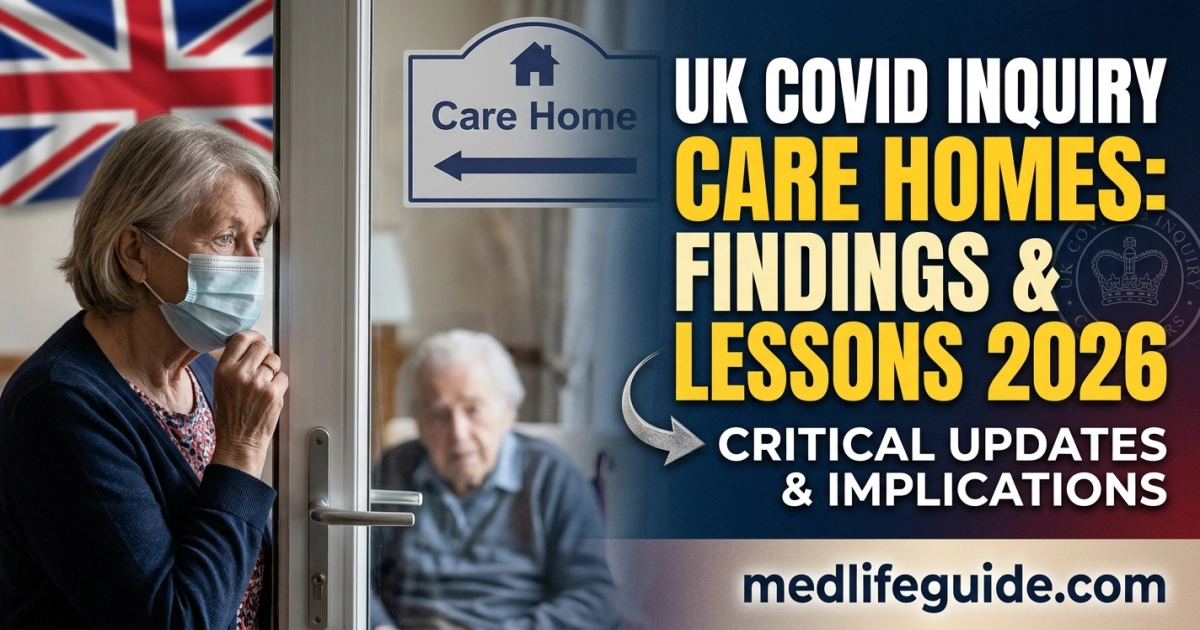
The official Module 6 investigation by the UK COVID-19 Inquiry examined how long-term care facilities handled the viral outbreak. Between March 2020 and July 2022, over 43,000 care home residents in the UK died from coronavirus infections. The investigation showed that government agencies failed to protect vulnerable senior citizens during the early stages of the pandemic.
The findings show that care homes were left unprepared and vulnerable. Official guidelines issued in early 2020 advised staff to maintain a distance of two meters from residents. This advice was impractical because daily assistance with bathing, dressing, and feeding requires physical contact. Furthermore, severe shortages of personal protective equipment (PPE) forced care staff to work without adequate facial masks or fluid-resistant gowns.
Understanding these systemic issues helps families and healthcare workers advocate for safer environment for older adults.
Key Findings: Hospital Discharges, PPE, and Isolation Guidelines
Hospital Discharges Without Screening
In March 2020, hospitals rapidly cleared beds to prepare for incoming emergency patients. Thousands of elderly patients were transferred directly into care homes without viral diagnostic tests. Because asymptomatic transmission was not recognized in official guidance, infected individuals were introduced into shared living quarters without mandatory quarantine periods. This practice caused viral clusters across residential care homes.
PPE Shortages and Guidelines
The investigation highlighted severe logistical disruptions in medical supply chains. Long-term care facilities lacked central access to medical-grade protective equipment. Staff members often had to use improvised garments or re-use disposable masks. The absence of standardized infection prevention and control (IPC) protocols exposed both care givers and vulnerable residents to high infection risks.
Psychological Impact of Isolation
To prevent disease spread, care facilities implemented strict visitation bans. Relatives were prevented from visiting residents for months. The report noted that total isolation caused severe emotional distress, deep loneliness, and rapid cognitive decline—especially among individuals living with Alzheimer’s disease or dementia.
Unique Clinical Takeaways
The findings from the UK inquiry provide valuable clinical lessons for managing respiratory viruses in long-term care settings.
┌─────────────────────────────────────────────────────────────────┐
│                     ESSENTIAL CARE PROTOCOLS                    │
├─────────────────────────────────────────────────────────────────┤
│ 1. Continuous Environmental Ventilation Monitoring               │
│ 2. Layered Isolation Protocols to Prevent Deconditioning        │
│ 3. Designated Essential Visitor Integration                     │
└─────────────────────────────────────────────────────────────────┘
1. Continuous Environmental Airflow Management
Relying solely on physical distance or basic surface cleaning does not eliminate airborne respiratory viruses. Long-term care facilities should install continuous carbon dioxide (CO2) monitors and high-efficiency particulate air (HEPA) filtration units in shared common areas. Maintaining CO2 levels below 800 parts per million (ppm) helps ensure fresh air exchange, lowering the concentration of infectious viral particles in indoor environments.
2. Layered Isolation Protocols
Complete confinement in a small bedroom often leads to rapid physical weakness, bedsores, and depression in older adults. Modern infection control uses a tiered isolation system. Instead of total isolation, facilities can group residents by exposure level. This allows residents to move safely within designated zones while preserving physical mobility and social interaction.
3. Designated Essential Visitor Integration
Family caregivers provide vital assistance with eating, emotional grounding, and personal hygiene. To maintain resident health during outbreaks, care homes should establish “Essential Caregiver” programs. These programs train one designated family member per resident in proper PPE use, hand hygiene, and rapid testing. This allows essential support visits to continue safely even during active facility quarantines.
Practical Lessons for Caregivers and Families
Families with loved ones in long-term care facilities can use the following checklist to evaluate infection control standards:
- Inquire About Ventilation Standards: Ask the administration if common dining and recreation rooms use active HEPA air purifiers or monitored mechanical ventilation systems.
- Review Discharge Screening Protocols: Ensure the facility requires negative viral tests and clinical evaluations before accepting admissions or returning residents from hospital stays.
- Establish an Essential Caregiver Plan: Work with the facility to register as an essential caregiver so you can maintain modified visitation access during potential health emergencies.
- Monitor Mental and Cognitive Health: Look out for early signs of depression, memory loss, or unresponsiveness during periods of restricted activity.
- Verify Staff Support Measures: Ask if paid sick leave policies allow staff to stay home when showing respiratory symptoms, preventing workplace transmission.
Summary of Structural Recommendations
The Inquiry report outlined several key recommendations to rebuild national care systems:
| Focus Area | Inquiry Recommendation | Intended Outcome |
| Hospital Transfers | Mandatory diagnostic testing and isolation protocols prior to transfer. | Prevents asymptomatic introduction of viruses into care facilities. |
| Visiting Access | Clear statutory guidelines balancing infection control with human rights. | Protects residents from severe isolation and physical decline. |
| Workforce Support | Guaranteed statutory sick pay for social care staff needing isolation. | Reduces pressure on staff to work while symptomatic. |
| End-of-Life Care | Mandatory specialized palliative care training for all residential staff. | Ensures dignified and compassionate end-of-life support during crises. |
References and Citations
- UK COVID-19 Inquiry: Module 6 Care Sector Report
- British Medical Journal: Analysis of COVID-19 Inquiry Care Home Findings
- World Health Organization: Infection Prevention and Control in Long-Term Care Facilities
- National Institutes of Health: Preventing Respiratory Viral Transmission in Senior Care
- Mayo Clinic: COVID-19 Management and Palliative Care Guidelines
Frequently Asked Questions (FAQs)
Unscreened transfers of hospital patients into care homes without viral testing or mandatory isolation protocols led to widespread outbreaks.
Yes, strict visitation bans led to rapid physical and cognitive decline, heightened distress, and loss of life quality—particularly for individuals with dementia.
An Essential Caregiver is a designated family member trained in protective equipment protocols, allowing them to visit and support a resident during facility outbreaks.
Early guidance recommended maintaining a two-meter distance, which was unworkable for essential personal care like bathing and dressing.
Recommendations require diagnostic viral testing, pre-admission screening, and structured isolation protocols before admitting residents from hospitals.
Reviewer Information & Medical Disclaimer
Reviewer Bio: Dr. Adam N. Khan, M.D., earned his medical degree from King Edward Medical University and completed his Internal Medicine residency at Mayo Hospital. He is an active PMDC-licensed physician dedicated to global health literacy, translating complex peer-reviewed research into accurate, safe, and actionable health guidance for MEDLIFEGUIDE readers.
Conflict of Interest Disclosure: Dr. Adam N. Khan reports no financial, commercial, or professional conflicts of interest with healthcare products or organizations mentioned in this article.
Medical Disclaimer: This article is for educational and informational purposes only and does not constitute formal medical advice, diagnosis, or treatment. Always consult a qualified healthcare provider or physician with any questions regarding medical conditions or health decisions. Never disregard professional medical advice or delay seeking it because of content read on this website.