
Medically Reviewed and Compiled by Dr. Adam N. Khan, MD.
Prostate cancer is one of the most common cancers in men. Many people ask one important question: Is prostate cancer curable?
The short answer: Yes, many cases of prostate cancer are curable — especially when found early.
However, the answer depends on the stage, grade, spread, and overall health of the patient. Some cases can be cured completely. Others can be controlled for many years.
This guide explains everything in clear, simple language.
What Is Prostate Cancer?
The prostate is a small gland below the bladder in men. It helps make semen.
Prostate cancer happens when cells in the prostate grow out of control. Most prostate cancers grow slowly. Some grow faster and spread to other parts of the body.
According to the American Cancer Society, prostate cancer is one of the leading cancers in men in the United States.
Is Prostate Cancer Curable?
Early-Stage Prostate Cancer
If prostate cancer is found early — when it is only inside the prostate — it is often curable.
Doctors may use:
- Surgery to remove the prostate
- Radiation therapy
- In some cases, active surveillance (watchful waiting)
The National Cancer Institute reports that localized prostate cancer has a very high 5-year survival rate — close to 100%.
This means most men diagnosed early live at least five years, and many are cured.
Locally Advanced Prostate Cancer
If cancer has spread just outside the prostate but not far away, treatment can still aim for cure.
Doctors may combine:
- Radiation therapy
- Hormone therapy
- Surgery in select cases
Some men in this group can still achieve long-term remission.
Metastatic Prostate Cancer
If cancer spreads to bones or other organs, it is usually not considered curable. You can learn more about how prostate cancer can spread to bones and whether prostate cancer is deadly.
However:
- It can often be treated
- Many men live for years with treatment
- New therapies are improving outcomes
The Centers for Disease Control and Prevention notes that survival depends heavily on how far the cancer has spread.
Survival Rates Explained
Survival rates help answer the question “Is prostate cancer curable?”
According to data published by the Surveillance, Epidemiology, and End Results Program (SEER):
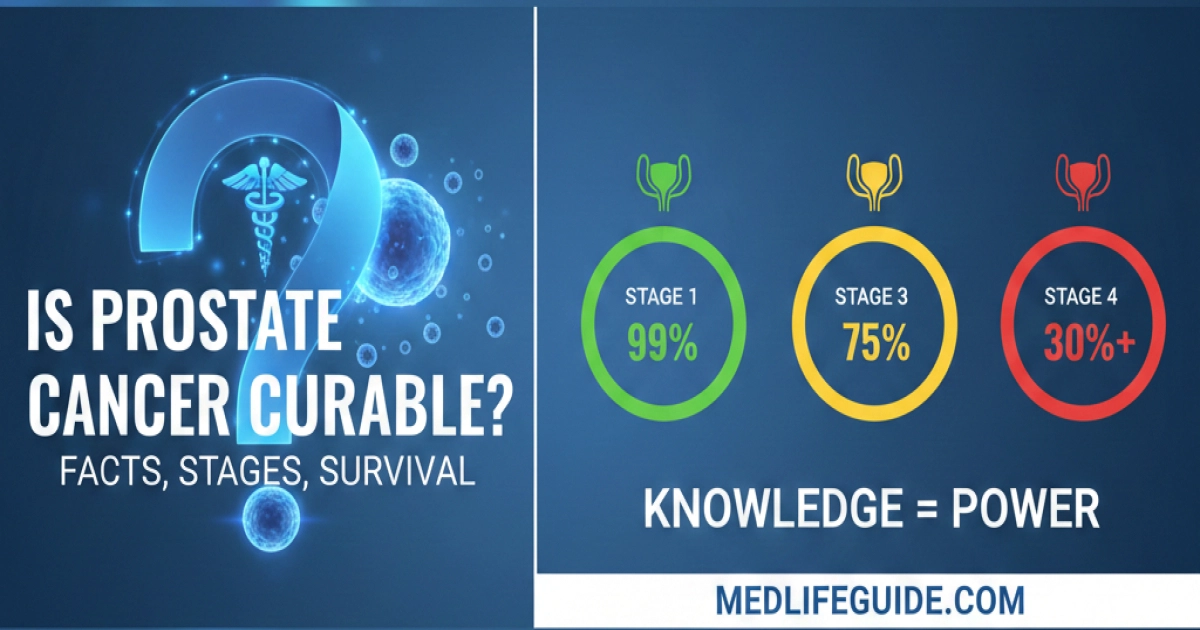
- Localized cancer: Nearly 100% 5-year survival
- Regional spread: Nearly 100% 5-year survival
- Distant spread: Around 30% 5-year survival
These numbers show early detection greatly improves chances of cure.
What Makes Prostate Cancer Curable?
Several factors influence curability.
1. Stage at Diagnosis
Earlier stages have much higher cure rates.
2. Gleason Score
The Gleason score measures how aggressive the cancer looks under a microscope.
Lower scores (6 or 7) often grow slowly.
Higher scores (8–10) are more aggressive.
3. PSA Level
PSA (Prostate-Specific Antigen) is a blood test. High PSA can mean more advanced disease.
4. Patient Age and Health
Younger, healthier men often tolerate treatment better.
Treatment Options That Can Lead to Cure
Surgery (Radical Prostatectomy)
The prostate gland is removed.
If cancer is only inside the gland, surgery can cure it.
The Mayo Clinic confirms surgery is a standard curative option for localized prostate cancer.
Radiation Therapy
High-energy beams destroy cancer cells.
It can be:
- External beam radiation
- Brachytherapy (internal radiation)
Radiation may cure early-stage cancer.
Active Surveillance
Some prostate cancers grow very slowly.
Instead of immediate treatment, doctors monitor:
- PSA levels
- Repeat biopsies
- Imaging tests
This approach avoids side effects if cancer remains stable.
Hormone Therapy
Prostate cancer depends on male hormones (androgens) like testosterone.
Hormone therapy lowers these hormones to slow cancer growth.
It usually controls cancer rather than cures it.
Chemotherapy and Newer Treatments
For advanced cancer:
- Chemotherapy
- Immunotherapy
- Targeted therapy
These treatments improve survival but usually do not cure metastatic disease. You can read about prostate cancer drug abiraterone guide for more information on advanced treatment options.
Can Prostate Cancer Come Back After Treatment?
Yes.
Even after surgery or radiation, cancer may return. This is called recurrence.
Recurrence may be:
- Local (in the prostate area)
- Distant (in bones or organs)
Doctors monitor PSA levels to detect recurrence early.
Unique Clinical Takeaways
1. Patient-Experience Factors That Influence Outcomes
Men who delay evaluation due to fear or embarrassment often present at later stages. Early PSA testing and timely biopsy significantly improve curative chances. Data from major U.S. cancer registries show that stage at diagnosis is the strongest predictor of long-term survival.
Actionable insight:
Men over 50 (or over 45 with family history) should discuss PSA testing with a doctor.
Early screening improves curability.
2. Differential Diagnosis Matters
Not all elevated PSA levels mean cancer.
Conditions such as:
- Benign prostatic hyperplasia (BPH)
- Prostatitis (infection)
- Recent urinary procedures
can raise PSA levels.
Proper evaluation avoids overtreatment. According to guidelines supported by leading institutions like the Johns Hopkins Medicine, careful assessment prevents unnecessary surgery in low-risk cases.
Actionable insight:
Confirm diagnosis with biopsy before deciding on treatment.
Seek second opinions for borderline cases.
3. Risk Factor Stratification Improves Curability Decisions
Doctors classify prostate cancer into:
- Low risk
- Intermediate risk
- High risk
Low-risk patients often do very well with surveillance.
High-risk patients benefit from aggressive early treatment.
Research from the National Comprehensive Cancer Network shows risk-based treatment planning improves survival and reduces unnecessary harm.
Actionable insight:
Ask your doctor about your exact risk category.
Treatment should match risk level.
4. Biological Behavior Varies Widely
Prostate cancer is not one single disease. Some tumors grow so slowly they never cause harm. Others spread quickly.
Genomic testing can help predict behavior in certain cases.
This precision approach increases chances of cure while avoiding overtreatment.
Is Early Detection Always Recommended?
Screening is debated.
The U.S. Preventive Services Task Force recommends individualized decision-making for PSA testing in men ages 55–69.
Screening reduces death from prostate cancer but may lead to overdiagnosis.
Shared decision-making is essential.
Signs and Symptoms
Early prostate cancer often has no symptoms.
Later symptoms may include:
- Trouble urinating
- Weak urine flow
- Blood in urine
- Bone pain (advanced stage)
Symptoms usually appear after the disease has progressed. Learn more about can prostate cancer cause fatigue and can prostate cancer cause anemia.
Can Lifestyle Changes Cure Prostate Cancer?
There is no scientific evidence that diet or supplements alone cure prostate cancer.
Healthy habits may support treatment:
- Balanced diet
- Regular exercise
- Avoid smoking
These improve overall health but are not standalone cures.
Long-Term Outlook
For localized prostate cancer:
- Cure rates are very high
- Many men live normal lifespans
For advanced cancer:
- Treatments continue to improve
- Many men live 5–10+ years with modern therapy
Prognosis depends on stage and response to treatment.
Final Answer: Is Prostate Cancer Curable?
Yes — prostate cancer is often curable when detected early.
- Localized cancer: Frequently curable
- Regional spread: Often still treatable with curative intent
- Distant spread: Usually controllable, but not curable
Early detection, correct risk classification, and personalized treatment are the keys to cure.
For more information about prostate cancer, visit the main prostate cancer guide.
Medical Disclaimer:
This article is for educational purposes only. It does not replace professional medical advice, diagnosis, or treatment. Always consult a licensed healthcare provider for personal medical decisions.





1 thought on “Is Prostate Cancer Curable? A Simple Guide to Success Rates”
Comments are closed.