
Medically Reviewed and Compiled by Dr. Adam N. Khan, MD.
Influenza A is not just a bad cold. It hits fast, feels intense, and can disrupt your life for days or even weeks. One of the most common questions patients ask is simple but important: how long does influenza A last?
Here’s the clear answer up front. For most healthy adults, Influenza A last
Medically Reviewed and Compiled by Dr. Adam N. Khan, MD.
Influenza A is not just a bad cold. It hits fast, feels intense, and can disrupt your life for days or even weeks. One of the most common questions patients ask is simple but important: how long does influenza A last?
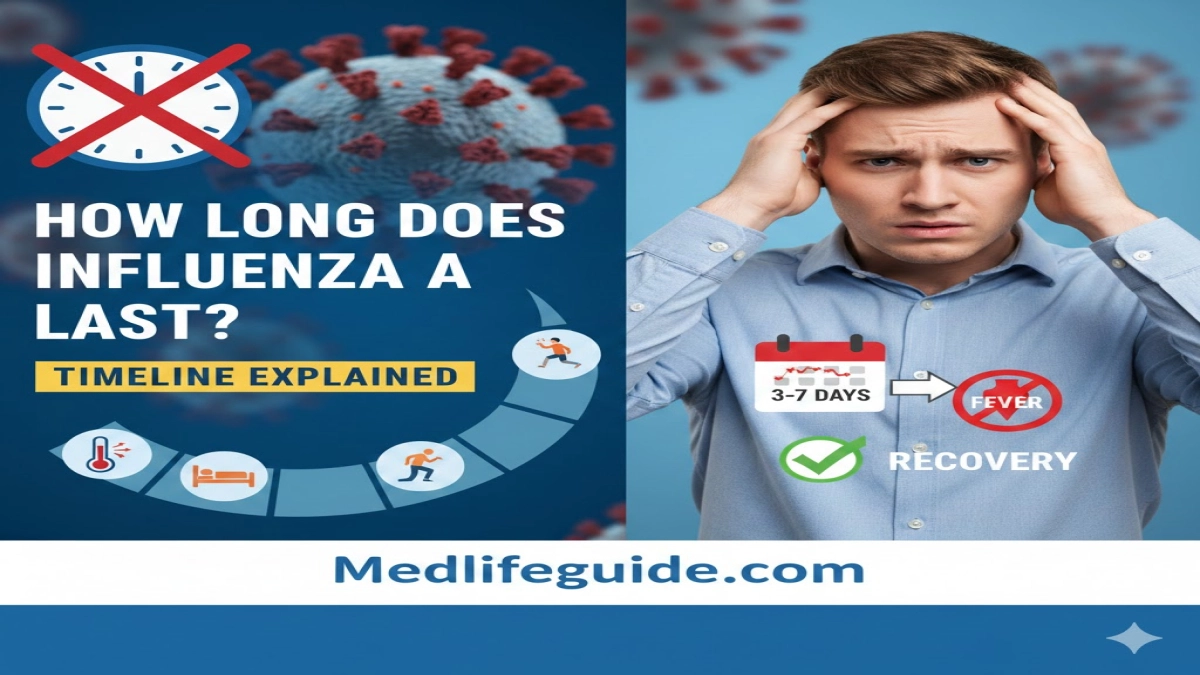
Here’s the clear answer up front. For most healthy adults, Influenza A lasts 5 to 7 days, with the worst symptoms showing up in the first 3 days. Fatigue and cough can linger 1 to 2 weeks, sometimes longer. In children, older adults, and people with chronic conditions, recovery often takes more time.
Let’s break this down in a way that actually helps you understand what’s happening in your body, what’s normal, and when to worry.
What Is Influenza A?
Influenza A is a contagious viral respiratory illness caused by the Influenza A virus. It spreads through droplets when someone coughs, sneezes, talks, or touches contaminated surfaces.
Unlike the common cold, Influenza A:
- Starts suddenly
- Causes high fever and body aches
- Often leads to extreme fatigue
It is also the strain responsible for most flu outbreaks and pandemics.
How Long Does Influenza A Last Overall?
For most people, the full course of Influenza A follows a predictable timeline.
Typical Duration at a Glance
- Incubation period: 1 to 4 days
- Acute illness phase: 3 to 5 days
- Recovery phase: 5 to 14 days
- Lingering cough or fatigue: Up to 3 weeks in some cases

What this really means is that you may feel “over the flu” but still not fully back to normal for a while.
Influenza A Timeline: Day-by-Day Breakdown
Incubation Period (Days 1–4 After Exposure)
You feel fine, but the virus is multiplying inside your body. You are not contagious yet during the early part of this phase.
Early Symptom Onset (Day 1)
Symptoms begin suddenly. Many patients describe it as being “hit by a truck.”
Common early signs:
- Fever and chills
- Headache
- Muscle aches
- Sudden fatigue
This is often when people realize it is not a cold.
Peak Illness Phase (Days 2–4)
This is the hardest part.
Symptoms are usually strongest here:
- High fever (often 101–104°F)
- Severe body aches
- Dry cough
- Sore throat
- Shortness of breath
- Extreme exhaustion
Most people are bedridden during this phase.
Improvement Phase (Days 5–7)
Fever usually breaks. Body aches ease. Appetite slowly returns.
However:
- Cough may worsen temporarily
- Fatigue is still significant
You may feel better one moment and wiped out the next. That’s normal.
Recovery Phase (Days 8–14)
Most major symptoms are gone.
Lingering issues may include:
- Dry cough
- Low energy
- Brain fog
Pushing yourself too fast during this phase often delays full recovery.
How Long Is Influenza A Contagious?
People with Influenza A are typically contagious:
- 1 day before symptoms appear
- Up to 5 to 7 days after symptoms begin
Children and people with weakened immune systems can remain contagious longer.
You should stay home until:
- Fever-free for 24 hours without medication
- Energy levels begin to stabilize
How Long Does Influenza A Last in Different Groups?
In Healthy Adults
- Total illness: 5 to 7 days
- Full recovery: 1 to 2 weeks
In Children
- Fever may last longer
- Cough can persist 2 to 3 weeks
- Higher risk of ear infections
In Older Adults
- Slower recovery
- Higher risk of pneumonia
- Fatigue may last several weeks
In People With Chronic Conditions
- Symptoms are often more severe
- Risk of complications is higher
- Recovery can take 2 to 4 weeks
Does Treatment Change How Long Influenza A Lasts?
Antiviral Medications
When started within 48 hours of symptom onset, antivirals like oseltamivir can:
- Shorten illness by about 1 day
- Reduce severity
- Lower complication risk
They do not cure the flu instantly, but they can make a real difference in high-risk patients.
Supportive Care
Rest, fluids, and fever control do not shorten the virus duration, but they support recovery and prevent complications.
Unique Clinical Takeaways
This section goes beyond the usual symptom lists and focuses on real-world clinical insights that matter.
1. Post-Flu Fatigue Is a Biological Issue, Not Weakness
Many patients feel frustrated when fatigue lasts weeks after Influenza A. This happens because the immune system remains activated even after the virus clears. Overexertion during recovery can worsen inflammation and delay healing.
Actionable advice:
- Resume activity gradually
- Prioritize sleep over productivity
- Avoid intense workouts for at least 10 days
2. Influenza A Can Mimic or Trigger Other Conditions
Influenza A symptoms can overlap with pneumonia, COVID-19, RSV, and asthma flares. In some patients, the flu triggers secondary bacterial infections that appear after initial improvement.
Red flags:
- Fever returns after breaking
- Chest pain or worsening cough
- Green or bloody sputum
These signs require medical evaluation.
3. Risk Factors Affect Duration More Than Age Alone
Age matters, but risk factors matter more.
Patients with:
- Diabetes
- Heart disease
- Obesity
- Chronic lung disease
often experience longer and more complicated illness, even if they are under 65.
Preventive takeaway:
Annual flu vaccination significantly reduces illness duration and severity, even when infection still occurs.
When Should You See a Doctor?
Seek medical care if:
- Fever lasts more than 5 days
- Breathing becomes difficult
- Confusion or chest pain develops
- Symptoms improve, then worsen
Emergency care is needed for severe shortness of breath, bluish lips, or sudden dizziness.
Can Influenza A Turn Into Pneumonia?
Yes. Influenza A is a leading cause of viral pneumonia and can also lead to secondary bacterial pneumonia.
Risk is higher in:
- Older adults
- Smokers
- People with weakened immunity
This is one reason lingering or worsening symptoms should never be ignored.
How to Recover Faster From Influenza A
You cannot rush recovery, but you can support it.
- Drink fluids consistently
- Rest more than you think you need
- Use fever reducers as directed
- Avoid alcohol during illness
- Follow isolation guidance
Returning to work too soon often extends recovery time.
How to Prevent Influenza A in the Future
- Annual flu vaccination
- Frequent hand washing
- Mask use during outbreaks
- Avoid close contact with sick individuals
Vaccinated individuals who still get Influenza A typically recover faster.