
Medically Reviewed and Compiled by Dr. Adam N. Khan, MD.
Understanding how long H3N2 flu lasts helps people plan care, reduce spread, and know when something is not normal. H3N2 is a strain of Influenza A that often causes more intense symptoms, especially in older adults and young children. The illness usually follows a predictable course, but recover
Medically Reviewed and Compiled by Dr. Adam N. Khan, MD.
Understanding how long H3N2 flu lasts helps people plan care, reduce spread, and know when something is not normal. H3N2 is a strain of Influenza A that often causes more intense symptoms, especially in older adults and young children. The illness usually follows a predictable course, but recovery time can vary based on age, health status, and how quickly treatment starts.
Let’s break it down in a clear, practical way.
What Is H3N2 Flu?
H3N2 is a subtype of Influenza A. It spreads through respiratory droplets when someone coughs, sneezes, or talks. Compared with some other flu strains, H3N2 has been linked to higher hospitalization rates, especially during severe flu seasons.
It changes often through mutation. That is one reason flu symptoms and recovery can feel different from year to year.
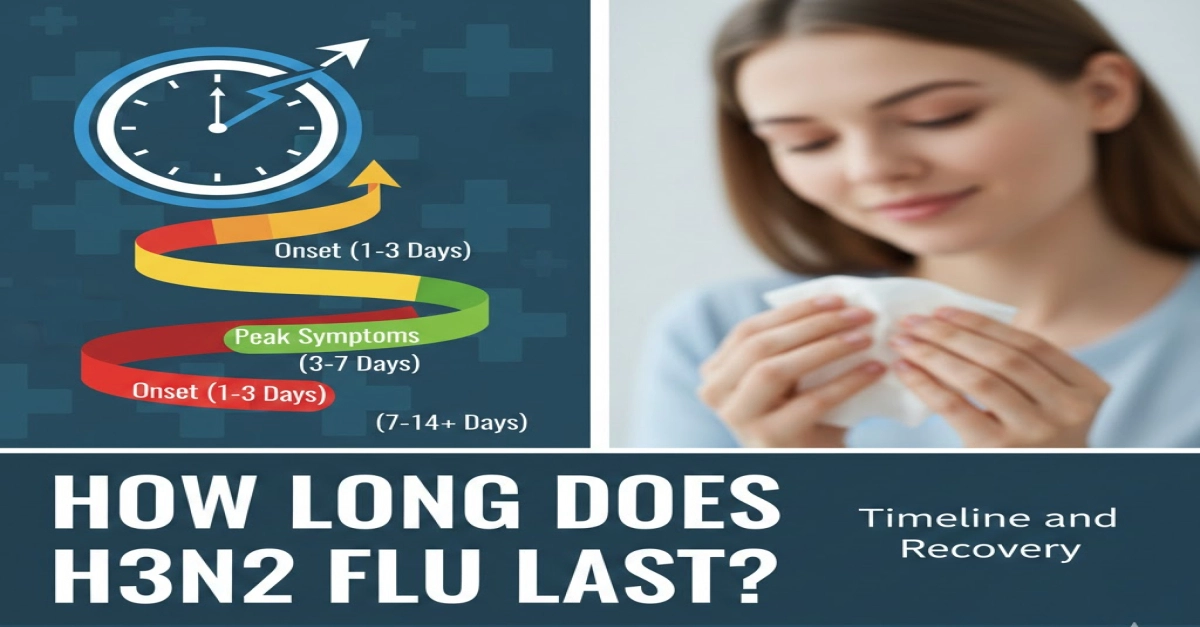
How Long Does H3N2 Flu Last? The Typical Timeline
Incubation Period (1 to 4 Days)
This is the time between exposure and the first symptoms.
- Most people develop symptoms within 2 days
- You can spread the virus before you feel sick
- No symptoms yet, but the virus is active in the body
Early Symptom Phase (Days 1 to 3)
Symptoms usually come on fast and hard.
Common signs include:
- Sudden high fever
- Chills and body aches
- Severe fatigue
- Headache
- Dry cough
- Sore throat
This is often the worst part of the illness.
Peak Illness Phase (Days 3 to 5)
This is when H3N2 flu symptoms are strongest.
- Fever often stays above 100.4°F
- Muscle pain and weakness continue
- Appetite is low
- Sleep is poor
- Cough may worsen
Most people feel unable to work or attend school during this phase.
Recovery Phase (Days 5 to 10)
Symptoms start to ease, but energy does not return right away.
- Fever resolves
- Body aches improve
- Cough becomes looser
- Fatigue lingers
Many people still feel tired for another week or two.
Post-Viral Fatigue (Up to 2–3 Weeks)
Even after the virus is gone, the body needs time to recover.
- Low energy
- Brain fog
- Mild cough
- Shortness of breath with exertion
This phase is common and usually improves with rest.
Average Duration at a Glance
- Total illness: 7 to 10 days
- Severe symptoms: 3 to 5 days
- Full recovery: Up to 2 to 3 weeks
Some people recover faster. Others take longer, especially those with underlying conditions.
How Long Is H3N2 Flu Contagious?
People with H3N2 flu are usually contagious:
- 1 day before symptoms start
- Up to 5 to 7 days after symptoms begin
Children and immunocompromised individuals may spread the virus longer.
You should stay home until:
- Fever is gone for 24 hours
- Symptoms are clearly improving
Does Treatment Shorten How Long H3N2 Flu Last?
Antiviral Medications
Antivirals like oseltamivir work best if started within 48 hours.
Benefits include:
- Shortening illness by about 1 to 2 days
- Lower risk of complications
- Reduced symptom severity
They are especially important for high-risk patients.
Supportive Care
These steps do not cure the flu but help recovery:
- Fluids to prevent dehydration
- Rest to support immune response
- Fever reducers for comfort
- Humid air for cough relief
How Long Does H3N2 Flu Last in Different Groups?
In Healthy Adults
- Symptoms usually resolve in 7 to 10 days
- Fatigue may last another week
In Children
- Fever may last longer
- Higher risk of dehydration
- Recovery can take up to 2 weeks
In Older Adults
- Symptoms may be less obvious but more dangerous
- Recovery often takes longer
- Higher risk of pneumonia
In People With Chronic Conditions
Asthma, diabetes, heart disease, and kidney disease can extend recovery time.
- Illness may last 2 to 3 weeks
- Complications are more likely
Unique Clinical Takeaways
1. Symptom Severity Does Not Always Match Risk
Some high-risk patients, especially older adults, may not develop high fever. Instead, they present with confusion, weakness, or appetite loss. These subtle signs can delay care and increase complications.
What this means: If symptoms feel “off” rather than severe, seek medical advice early.
2. Post-Flu Cough Is Often Misdiagnosed
After H3N2 flu, cough can last weeks. This is often due to airway inflammation, not infection. Many patients receive unnecessary antibiotics during this phase.
What this means: A lingering cough without fever or worsening symptoms is usually part of recovery.
3. Flu Can Unmask Hidden Health Problems
H3N2 flu places stress on the heart and lungs. Some patients first discover heart rhythm issues, asthma, or blood sugar problems during recovery.
What this means: Ongoing shortness of breath, chest pain, or weakness needs evaluation, even after flu symptoms fade.
4. Delayed Recovery Is Common in Poor Sleep and Nutrition
People who return to work too early or eat poorly often report longer fatigue. Immune recovery needs calories, protein, and sleep.
What this means: Rest is treatment, not a luxury.
When to See a Doctor
Seek medical care if any of the following occur:
- Fever lasting more than 5 days
- Trouble breathing
- Chest pain
- Confusion or extreme drowsiness
- Persistent vomiting
- Symptoms that improve, then worsen again
These may signal complications like pneumonia or secondary infections.
How to Shorten Recovery Time Safely
- Start antivirals early if prescribed
- Drink fluids consistently
- Sleep more than usual
- Avoid intense activity for at least a week
- Eat balanced meals with protein
- Do not rush back to work
How H3N2 Flu Compares to Other Flu Strains
| Feature | H3N2 | H1N1 |
|---|---|---|
| Symptom severity | Often higher | Moderate |
| Affected groups | Elderly, children | Younger adults |
| Average recovery | 7–10 days | 5–7 days |
| Hospitalization risk | Higher | Lower |
Can You Get H3N2 Flu More Than Once?
Yes. Immunity fades, and the virus mutates.
Annual flu vaccination reduces:
- Severity
- Duration
- Complications
Even partial immunity helps recovery.
Prevention Still Matters
- Annual flu shot
- Hand hygiene
- Masking during outbreaks
- Avoiding close contact when sick
Prevention reduces how often you ask how long H3N2 flu lasts.
Medical Disclaimer
All content published on medlifeguide is intended for informational and educational purposes only and does not substitute professional medical advice, diagnosis, or treatment. Always consult a qualified healthcare provider regarding any medical condition, symptoms, or treatment decisions.