
Medically Reviewed and Compiled by Dr. Adam N. Khan, MD
Quick Answer
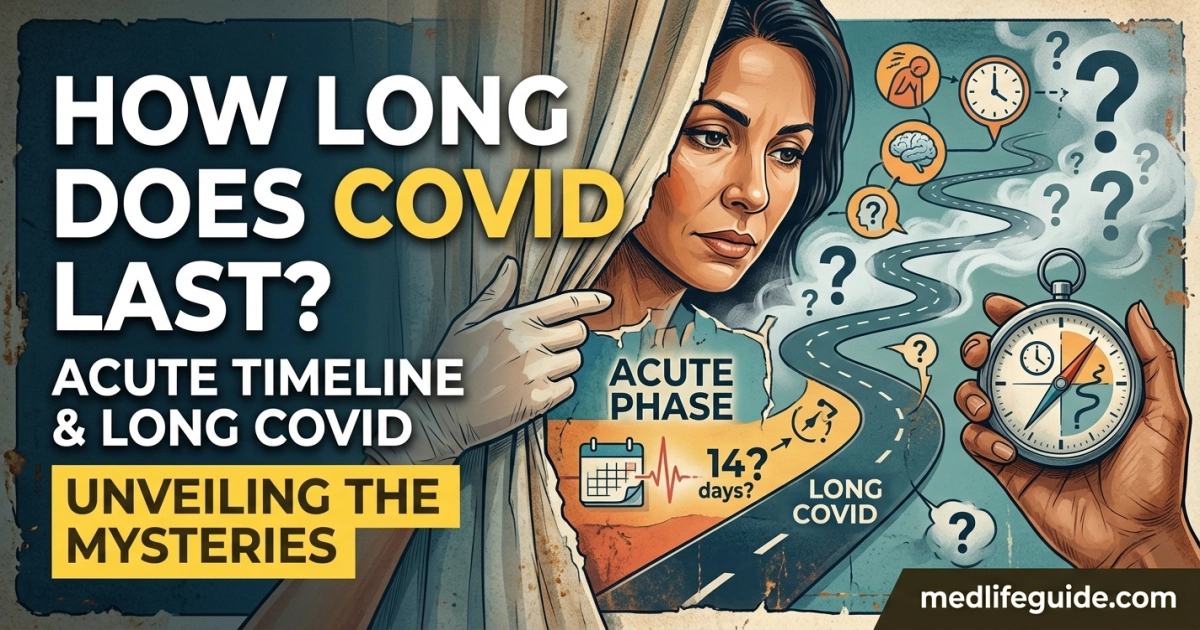
- Acute Illness Duration: Mild to moderate COVID-19 acute symptoms generally peak within 3 to 5 days and resolve completely within 7 to 14 days for most healthy individuals.
- Contagiousness & Isolation: Peak viral shedding occurs in the first 48 to 72 hours; patients can usually end home isolation after remaining fever-free for 24 hours without medications, while wearing a mask through Day 10.
- Extended Recovery (Long COVID): Post-viral symptoms lingering past 4 weeks require clinical evaluation, with formal Long COVID (PASC) diagnosed when multi-organ symptoms persist beyond 12 weeks.
EMERGENCY WARNING: Seek immediate emergency medical attention (call 911 or visit the nearest emergency department) if you or someone under your care experiences severe trouble breathing, persistent pain or pressure in the chest, new confusion, inability to wake or stay awake, or pale, gray, or blue skin, lips, or nail beds.
1. Medical Overview and Pathophysiology
The disease duration of COVID-19 is dictated by complex interactions between SARS-CoV-2 (Severe Acute Respiratory Syndrome Coronavirus 2) and the human immune system. Understanding how long COVID lasts requires examining what happens inside the tissue from initial viral entry through resolution or chronic inflammation.
Infection Pathway Timeline
==========================
[Day 0-3: Incubation]  --> Virus enters respiratory epithelium via ACE2 receptors.
[Day 3-7: Acute Phase] --> Peak viral load; mucosal innate immune response triggers fever & fatigue.
[Day 7-14: Clearance]  --> Adaptive immune system (T-cells, Antibodies) clears the virus in most cases.
[Month 3+: Chronic Phase] --> Immune dysregulation, microthrombi, or viral debris leads to Long COVID.
Cellular Entry and Replication
SARS-CoV-2 enters human cells through the binding of its surface spike protein to the Angiotensin-Converting Enzyme 2 (ACE2) receptor. ACE2 receptors are densely expressed in upper respiratory tract epithelial cells, lung alveoli (type II pneumocytes), vascular endothelial cells, and gastrointestinal enterocytes.
Upon binding, host cellular proteases like TMPRSS2 cleave the spike protein, allowing viral membrane fusion and RNA release into the host cytoplasm. Active viral replication begins immediately, with new virions shedding into nasal and throat secretions within 24 to 48 hours.
Innate vs. Adaptive Immune Timeline
The human immune system responds in two distinct waves:
- The Innate Immune Response (Days 1 to 5): Type I and Type III interferons are released alongside pro-inflammatory cytokines such as Interleukin-6 (IL-6) and Tumor Necrosis Factor-alpha (TNF-$\alpha$). This rapid deployment limits viral replication but causes classic acute systemic symptoms: high fevers, rigors, body aches, headache, and severe fatigue.
- The Adaptive Immune Response (Days 7 to 14): Antigen-specific CD4+ and CD8+ T-cells collaborate with B-cells to produce targeted neutralizing antibodies (IgM followed by IgG). In uncomplicated infections, adaptive immunity successfully neutralizes the viral particles, clears infected epithelial cells, and initiates tissue repair, causing symptoms to taper off between Days 7 and 10.
Pathophysiology of Extended Symptoms (Long COVID)
When symptoms linger beyond the standard 2- to 4-week window, several physiological drivers may be involved:
- Persistent Viral Debris or Reservoirs: Viral RNA or proteins persist in tissue sanctuaries (such as the gut lining or lymphatic tissue), triggering ongoing low-grade tissue inflammation.
- Autoimmunity and Cytokine Dysregulation: The initial acute infection can trigger lingering autoantibodies that attack host tissues or cause persistent microvascular inflammation.
- Endothelial Dysfunction and Microthrombi: Microscopic blood clots and vascular lining damage impair oxygen delivery to peripheral tissues and brain structures, driving post-exertional malaise and cognitive impairment (brain fog).
- Autonomic Nervous System Dysfunction (Dysautonomia): Viral neuroinflammation affects the vagus nerve and autonomic regulatory pathways, resulting in Postural Orthostatic Tachycardia Syndrome (POTS), lightheadedness, and gastrointestinal motility issues.
2. Symptom Breakdown and Diagnostic Comparison Table
Because SARS-CoV-2 shares clinical features with influenza, Respiratory Syncytial Virus (RSV), and seasonal allergies, accurate diagnosis requires evaluating key clinical differences.
| Feature / Symptom | COVID-19 (Acute SARS-CoV-2) | Influenza (Seasonal Flu) | Respiratory Syncytial Virus (RSV) | Seasonal Allergies |
| Average Incubation | 2 to 4 days | 1 to 4 days | 4 to 6 days | Immediate exposure |
| Typical Duration | 7 to 14 days (Acute) | 5 to 7 days | 7 to 10 days | Weeks (pollen-dependent) |
| Fever Manifestation | Common; high spike (Days 1–4) | Sudden onset; high (3–4 days) | Low-grade; common in infants | Rare |
| Cough Profile | Dry, persistent, tickling | Dry, harsh, sudden | Wet, wheezing, mucus-heavy | Mild, throat-tickle only |
| Shortness of Breath | Frequent in moderate/severe cases | Rare (unless underlying asthma) | Common in infants & elderly | Rare (unless allergic asthma) |
| Anosmia / Ageusia | Distinctive (Loss of taste/smell) | Rare | Rare | Rare (nasal blockage only) |
| Gastrointestinal | Common (nausea, diarrhea) | Occasional in children | Very rare | Absent |
| Post-Exertional Malaise | Pathognomonic for Long COVID | Absent post-viral | Absent post-viral | Absent |
3. Unique Clinical Takeaways
The following three evidence-based insights highlight subtle aspects of testing, disease manifestation, and early recovery:
+-----------------------------------------------------------------------------------+
|                            UNIQUE CLINICAL TAKEAWAYS                              |
+-----------------------------------------------------------------------------------+
| 1. Biphasic Testing Strategy: Rapid Antigen Tests require serial testing          |
|    (48h apart) between Days 3-5 to reliably rule out false negatives.             |
| 2. Neuro-Invasive Presentations: Elderly patients often present with sudden        |
|    delirium, lethargy, or falls rather than classical fever or cough.            |
| 3. Post-Exertional Malaise (PEM) Window: Premature exercise during Days 10-21     |
|    can trigger long-term autonomic dysfunction and prolonged fatigue.            |
+-----------------------------------------------------------------------------------+
1. Biphasic Rapid Antigen Testing Window
Modern SARS-CoV-2 variants show a shift in viral kinetic patterns. Early in the course of infection, the mucosal innate immune system responds so rapidly that classic symptoms like throat irritation and fever can appear 24 to 48 hours before upper-airway viral loads reach the detection threshold of Rapid Antigen Tests (RATs).
A single negative antigen test on Day 1 of symptoms carries a false-negative rate as high as 30% to 40%. Clinicians advise performing an initial antigen test upon symptom onset, followed by a second test 48 hours later if the first is negative. Testing too early and stopping isolation prematurely is a primary driver of household transmission.
2. Atypical Masking in Vulnerable Populations
In older adults (aged 65+) and severely immunocompromised individuals, standard respiratory symptoms (cough, fever, rhinorrhea) may be blunted or entirely absent. Instead, acute SARS-CoV-2 infection frequently presents as:
- Rapid-onset acute confusion or delirium
- Unexplained falls or gait instability
- Sudden, unexplained lethargy and anorexia
- Unexpected blood glucose decompensation in diabetic patients
Recognizing these atypical neuro-metabolic presentations early prevents delayed antiviral administration during the effective 5-day treatment window.
3. Early Immune-Autonomic Triggering and Exercise Risks
The transition from acute recovery to chronic post-viral illness often pivots during Days 10 to 21 post-infection. Pushing through physical exhaustion or returning to high-intensity cardiovascular exercise during early recovery can induce Post-Exertional Malaise (PEM).
Inflammatory signaling during this period can stress the endothelial lining and autonomic nervous system. Strict “pacing”—resting before exhaustion sets in—during the first month after infection helps support a smooth recovery.
4. Day-by-Day or Stage-by-Stage Illness Progression Timeline
While exact timelines vary depending on immune status and vaccination history, uncomplicated mild-to-moderate COVID-19 typically follows a predictable course.
STAGE 1: Incubation (Days 0 - 3)
* Silent viral entry and cellular replication in upper respiratory tract.
* Asymptomatic viral shedding begins ~24-48 hours before first symptoms.

STAGE 2: Acute Onset & Peak Inflammation (Days 1 - 5) [Day 0 = First Symptom]
* Day 1-2: Scratchy or sore throat, low fever, subtle muscle aches, head pressure.
* Day 3-5: Peak viral load and symptom intensity.
  - High fever, rigors, pronounced fatigue, loss of taste/smell, cough, GI upset.
  - Rapid Antigen Tests become strongly positive.

STAGE 3: Immune Clearance & De-escalation (Days 6 - 10)
* Fever resolves without fever-reducing medications.
* Systemic fatigue and body aches gradually subside.
* Cough and nasal congestion improve, though mild cough may persist.
* Infectious viral shedding drops significantly for most individuals.

STAGE 4: Early Convalescence (Days 11 - 28)
* Full return to routine daily activities.
* Energy levels gradually return to baseline.
* Minor lingering dry cough or light fatigue may persist as mucosal tissues heal.

STAGE 5: Long-Term Post-Viral Phase (Day 29+)
* Complete recovery for >90% of individuals.
* Persistent or new symptoms lasting >12 weeks signal Long COVID (PASC).
5. High-Risk Vulnerabilities and Special Populations
Disease duration and complications vary based on patient age and underlying health conditions.
The Elderly (Ages 65 and Older)
Older adults experience slower viral clearance due to immunosenescence (age-related immune decline). Acute symptoms frequently last 14 to 21 days rather than 7 to 10 days.
Complications like secondary bacterial pneumonia, deep vein thrombosis (DVT), cardiac dysrhythmias, and long-term functional decline occur at higher rates. Early evaluation for oral antiviral therapy is strongly indicated for this age group.
Pediatric Populations
Children generally experience milder acute illness lasting 3 to 7 days, often dominated by fever, nasal congestion, sore throat, and mild gastrointestinal symptoms. However, two post-acute risks require clinical vigilance:
- Multisystem Inflammatory Syndrome in Children (MIS-C): A rare but serious inflammatory condition that develops 2 to 6 weeks after acute infection. Symptoms include persistent high fever, abdominal pain, vomiting, skin rash, conjunctivitis, and cardiac involvement.
- Pediatric Long COVID: Children can experience post-viral illness marked by fatigue, headaches, sleep disruption, and declining school performance.
Immunocompromised Individuals
Patients undergoing active chemotherapy, organ transplant recipients taking immunosuppressants, and individuals with advanced untreated HIV often experience prolonged viral shedding.
Immunocompromised Replication Dynamic
=====================================
Healthy Host:      [Day 1 --- Peak --- Day 7-10 Clearance] -> PCR/Antigen Negative
Immunocompromised: [Day 1 --- Peak --- Day 20-60+ Continuous Shedding] -> Viable Virus Persists
In severely immunocompromised individuals, viable SARS-CoV-2 can replicate continuously for 20 to over 60 days. This requires extended isolation protocols, serial antigen testing, and multi-agent antiviral therapy under infectious disease supervision.
6. Evidence-Based Diagnostic, Testing, and Medical Management Guidelines
Proper management depends on diagnostic timing and individual risk stratification.
                    PATIENT DIAGNOSED WITH ACUTE COVID-19
                                      |
                     Is the patient High-Risk?
           (Age 65+, Immunocompromised, Chronic Disease)
                                      |
                    +-----------------+-----------------+
                    |                                   |
                   YES                                  NO
                    |                                   |
         Initiate Antiviral Therapy            Symptom-Targeted Supportive
         within 5 Days of Onset                Care & Pacing
         * Paxlovid (Nirmatrelvir/ritonavir)   * Hydration & Electrolytes
         * Remdesivir (IV option)              * Over-the-counter analgesics
         * Monitor drug interactions           * Isolation for 5+ days
Diagnostic Modalities
- Rapid Antigen Tests (RAT): Detect active SARS-CoV-2 nucleocapsid protein. Highly specific and strongly correlated with active contagiousness and viral shedding.
- Nucleic Acid Amplification Tests (NAAT / RT-PCR): Highly sensitive molecular tests. PCR tests can pick up non-infectious “genetic debris” for up to 90 days after infection. A positive PCR weeks after recovery does not mean a person remains contagious.
Evidence-Based Medical Therapies
- Oral Antivirals (Paxlovid – Nirmatrelvir / Ritonavir): Recommended for adults at high risk for progression to severe disease. Must be started within the first 5 days of symptom onset to suppress viral replication. Note: Patients should be counseled on “Paxlovid Rebound,” where mild symptoms or positive antigen tests reappear 2 to 8 days after completing the 5-day course. Rebound typically resolves without further antiviral treatment.
- Intravenous Antivirals (Remdesivir): Administered over 3 consecutive days in outpatient settings for high-risk patients who have contraindications to Paxlovid.
- Immunomodulatory Therapies (Dexamethasone / Baricitinib): Reserved strictly for hospitalized patients requiring supplemental oxygen. Corticosteroids are not recommended during early mild-to-moderate outpatient COVID-19, as premature immunosuppression can impede the body’s natural viral clearance.
7. Home Care, Isolation/Protection Protocols, and Recovery
Effective home care protects household members while promoting recovery.
CDC Home Isolation & Precautions Guidelines
Current public health frameworks recommend a symptom- and fever-guided isolation approach:
- The 24-Hour Rule: You may end home isolation when you have been fever-free for at least 24 hours without using fever-reducing medications (like acetaminophen or ibuprofen) and your overall symptoms are improving.
- Post-Isolation Masking: After ending isolation, wear a well-fitting, high-filtration mask (N95, KN95, or KF94) around others indoors through Day 10.
- Test-Based Clearance Option: To discontinue masking before Day 10, take two rapid antigen tests 48 hours apart. If both return negative, you can safely remove your mask.
Isolation & Precautions Timeline
================================
Day 0: Symptom onset or positive test.
Days 1-5: Strict isolation at home.
Day 6+: End isolation IF fever-free for 24h AND symptoms improving.
Days 6-10: Wear high-quality mask around others OR clear via 2 negative rapid tests (48h apart).
Home Care Support
- Hydration: Aim for 2 to 3 liters of fluids daily (water, broth, oral rehydration electrolyte solutions) to offset fluid losses from fever and sweating.
- Over-the-Counter Management: Use acetaminophen for fever and diffuse body aches. NSAIDs (ibuprofen, naproxen) can help relieve sore throat and headaches.
- Air Circulation & Filtration: Run HEPA air purifiers in isolation rooms or keep windows cracked to increase air exchanges and lower viral particle concentrations.
- Pacing Energy: Avoid premature physical exertion. Rest breaks throughout the day help conserve cellular energy and support immune function.
References and Citations
- Centers for Disease Control and Prevention (CDC). Isolation and Precautions for People with COVID-19. Available at: /references/cdc-isolation-guidelines
- National Institutes of Health (NIH). COVID-19 Treatment Guidelines: Clinical Spectrum and Pathophysiology. Available at: /references/nih-treatment-guidelines
- National Academies of Sciences, Engineering, and Medicine (NASEM). Consensus Definition for Long COVID. Available at: /references/nasem-long-covid-definition
- Mayo Clinic Infectious Disease Research Group. Coronavirus Disease 2019 (COVID-19): Diagnosis & Treatment. Available at: /references/mayo-clinic-covid-overview
- NIH RECOVER Initiative. Long COVID Research Updates and Clinical Trial Findings. Available at: /references/nih-recover-initiative
Frequently Asked Questions (FAQs)
Most individuals are contagious starting 1 to 2 days before symptoms appear, with viral shedding peaking during the first 3 days of symptoms. Infectious viral load drops significantly by Day 5 to 7, though masking is advised through Day 10.
Yes, PCR tests detect viral genetic material (RNA) and can remain positive for up to 90 days after recovery. These positive results usually reflect non-infectious viral fragments rather than live, transmissible virus.
Post-viral fatigue is a common, short-term feeling of tiredness that improves over 2 to 4 weeks following acute infection. Long COVID is diagnosed when multi-system symptoms (such as brain fog, post-exertional malaise, and breathlessness) persist past 12 weeks.
A temporary return of symptoms can occur due to a post-viral flare or “Paxlovid Rebound”. Restart home isolation, avoid contact with vulnerable individuals, and consult your physician if your breathing worsens.
Wait until you are fully fever-free for at least 7 consecutive days and off all acute medications. Resume light activity slowly through pacing, and stop immediately if you experience post-exertional fatigue, chest pain, or rapid heart rates.
Medical Reviewer Bio
Dr. Adam N. Khan, MD is a board-certified internal medicine physician and clinical editor specializing in infectious disease guidance, viral immunology, and evidence-based patient education. Dr. Khan declares zero commercial conflicts of interest and maintains full financial independence from pharmaceutical manufacturers and diagnostic companies.