
Medically Reviewed and Compiled by Dr. [Adam N. Khan], MD.
Breathing problems can affect daily life, sleep, and overall health. Two of the most common long-term breathing diseases are COPD and asthma. They share similar symptoms, but they are different conditions. Knowing the difference helps patients get the right diagnosis and treatment.
Both diseases affect the airways and make it harder to move air in and out of the lungs. However, their causes, progression, and treatment approaches differ in important ways.
What Is COPD?
COPD stands for Chronic Obstructive Pulmonary Disease. It is a long-term lung disease that causes airflow blockage and breathing problems.
Key facts about COPD
According to the Centers for Disease Control and Prevention:
- COPD includes emphysema and chronic bronchitis
- It causes permanent lung damage
- Symptoms usually worsen over time
- Smoking is the main cause
What happens in COPD?
COPD damages the airways and air sacs. This leads to:
- Narrow airways
- Less oxygen entering the blood
- Air trapped in the lungs
This damage is usually permanent.
What Is Asthma?
Asthma is a chronic disease that causes airway inflammation and narrowing. Unlike COPD, asthma airway blockage is usually reversible with treatment.
According to the National Institutes of Health:
- Asthma causes airway swelling and muscle tightening
- Symptoms can come and go
- Many patients have normal breathing between attacks
Asthma often starts in childhood, but adults can develop it too.
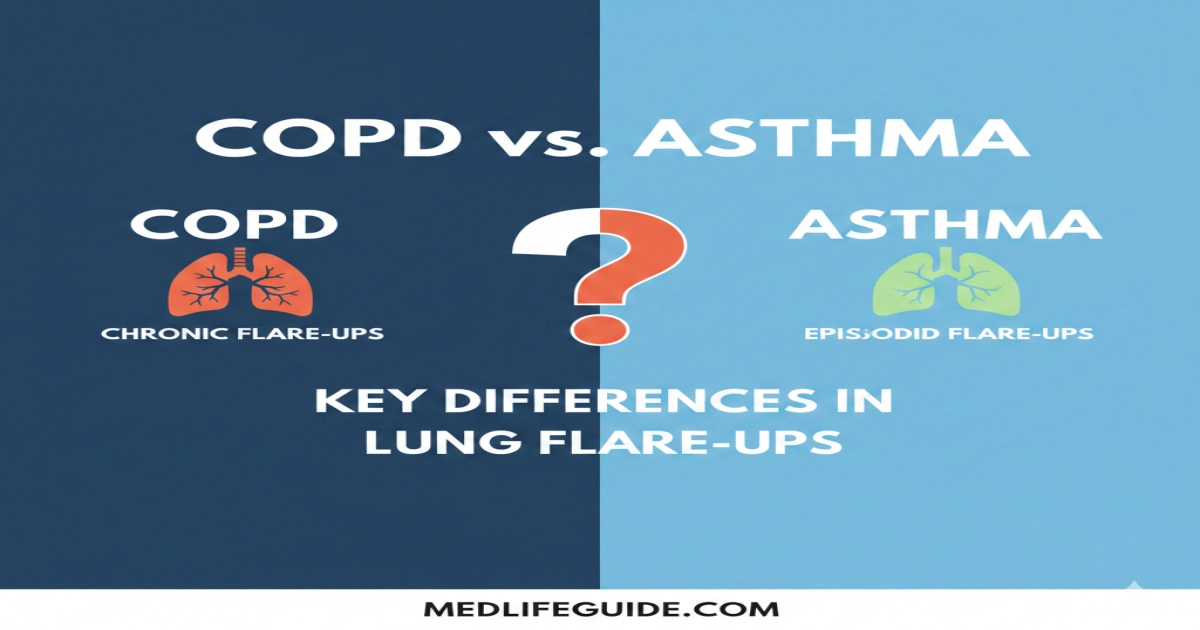
COPD vs. Asthma: Core Differences Overview
| Feature | COPD | Asthma |
|---|---|---|
| Cause | Smoking, pollution | Allergies, genetics |
| Onset age | Usually over age 40 | Often childhood |
| Airway damage | Permanent | Usually reversible |
| Symptom pattern | Constant, slowly worse | Episodes or attacks |
| Treatment response | Limited reversal | Good reversal |
These differences help doctors diagnose correctly.
Symptoms of COPD vs. Asthma
Both conditions affect breathing, but symptom patterns differ.
Common COPD symptoms
According to the American Lung Association:
- Chronic cough
- Mucus production
- Shortness of breath
- Wheezing
- Chest tightness
- Fatigue
Symptoms are usually constant and worsen gradually.
Common asthma symptoms
Asthma symptoms often appear in episodes:
- Wheezing
- Shortness of breath
- Chest tightness
- Nighttime coughing
- Symptoms triggered by allergens or exercise
Symptoms may completely disappear between attacks.
Causes and Risk Factors
Understanding causes helps explain why these diseases differ.
Causes of COPD
The most common causes include:
- Cigarette smoking
- Secondhand smoke
- Air pollution
- Chemical exposure
- Occupational dust
The World Health Organization confirms smoking is the leading cause globally.
Rare genetic causes include alpha-1 antitrypsin deficiency.
Causes of asthma
Asthma has different triggers:
- Allergies
- Family history
- Environmental exposure
- Respiratory infections
- Air pollution
Asthma is strongly linked to immune system reactions.
How Doctors Diagnose COPD vs. Asthma
Diagnosis requires medical testing.
Spirometry test (main diagnostic test)
Spirometry measures airflow and lung function.
According to the Global Initiative for Chronic Obstructive Lung Disease:
- COPD shows permanent airflow limitation
- Asthma shows reversible airflow limitation
Doctors test breathing before and after bronchodilator medication.
Improvement after medication suggests asthma.
Little improvement suggests COPD.
Additional diagnostic tests
Doctors may also use:
- Chest X-ray
- CT scan
- Oxygen level test
- Allergy testing
- Blood tests
These tests help confirm diagnosis.
Disease Progression: COPD vs. Asthma
Disease progression differs significantly.
COPD progression
COPD is progressive. This means:
- Lung damage worsens over time
- Symptoms become more severe
- Breathing becomes harder
Early diagnosis slows progression.
Asthma progression
Asthma is variable:
- Symptoms may improve with treatment
- Many patients live normal lives
- Lung damage is often preventable
Proper management improves outcomes.
Treatment Differences: COPD vs. Asthma
Treatment goals differ for each disease.
COPD treatment
COPD treatment focuses on symptom control and slowing damage.
Common treatments include:
- Bronchodilators
- Inhaled steroids
- Oxygen therapy
- Pulmonary rehabilitation
- Smoking cessation
According to the Mayo Clinic, quitting smoking is the most effective step.
Asthma treatment
Asthma treatment focuses on preventing attacks.
Common treatments include:
- Inhaled corticosteroids
- Rescue inhalers
- Allergy medications
- Avoiding triggers
Asthma can often be controlled effectively.
Unique Clinical Takeaways
This section highlights deeper clinical insights important for accurate diagnosis and management.
1. Reversibility Testing Is the Most Important Diagnostic Divider
One of the most reliable clinical differences is airflow reversibility.
In asthma:
- Airways open significantly after bronchodilator use
- Lung function improves clearly
In COPD:
- Improvement is minimal or absent
This test confirms asthma when airflow improves significantly after medication.
This is a key diagnostic standard supported by both GOLD and GINA clinical guidelines.
2. Smoking History Strongly Points Toward COPD
Smoking history is a major clinical indicator.
Patients with COPD almost always have:
- Long smoking history
- Chronic cough
- Progressive symptoms
Asthma patients often have:
- Allergy history
- Family history of asthma
- Symptoms triggered by allergens
This difference helps doctors distinguish between conditions.
3. Symptom Timing Pattern Helps Identify Asthma
Asthma symptoms often show clear timing patterns:
- Worse at night
- Worse during exercise
- Triggered by cold air
- Triggered by allergens
COPD symptoms are more constant.
Constant symptoms suggest structural lung damage.
Variable symptoms suggest airway inflammation.
4. Age of Symptom Onset Provides Critical Diagnostic Clues
Age plays an important role.
Asthma:
- Often starts in childhood or early adulthood
COPD:
- Usually begins after age 40
Early onset strongly favors asthma diagnosis.
Late onset with smoking history suggests COPD.
5. Blood Eosinophil Levels Help Guide Treatment
Eosinophils are immune cells involved in inflammation.
High eosinophil levels suggest:
- Asthma
- Steroid-responsive airway inflammation
COPD patients with elevated eosinophils may benefit more from inhaled steroids.
This helps doctors personalize treatment.
COPD-Asthma Overlap Syndrome (ACO)
Some patients have features of both diseases.
This condition is called Asthma-COPD Overlap (ACO).
Features include:
- Persistent airflow limitation
- Asthma-like inflammation
- Smoking history
ACO patients may need combined treatment approaches.
Diagnosis requires careful evaluation.
Which Condition Is More Dangerous?
Both diseases can be serious.
COPD risks:
- Progressive lung damage
- Higher risk of respiratory failure
- Increased mortality risk
Asthma risks:
- Severe asthma attacks
- Emergency breathing crises
Both conditions require medical care.
Prevention Strategies
Prevention approaches differ.
COPD prevention
Most effective prevention methods include:
- Avoid smoking
- Avoid air pollution
- Use protective equipment at work
Smoking prevention is the most effective strategy.
Asthma prevention
Asthma prevention focuses on trigger control:
- Avoid allergens
- Reduce dust exposure
- Manage respiratory infections
Early treatment improves outcomes.
Living with COPD vs. Asthma
Patients can live full lives with proper treatment.
Key management strategies include:
- Regular doctor visits
- Correct inhaler use
- Avoiding triggers
- Medication adherence
- Monitoring symptoms
Early diagnosis improves quality of life.
When to See a Doctor
Medical evaluation is necessary if symptoms include:
- Chronic cough
- Frequent wheezing
- Shortness of breath
- Breathing difficulty
Early treatment prevents complications.
Long-Term Outlook and Prognosis
Prognosis varies.
Asthma:
- Often manageable
- Many patients achieve good control
COPD:
- Progressive disease
- Early treatment slows progression
Smoking cessation significantly improves outcomes.
Key Summary: COPD vs. Asthma
Main differences include:
- COPD causes permanent lung damage
- Asthma airway blockage is usually reversible
- COPD develops slowly
- Asthma symptoms are episodic
- Smoking causes COPD
- Allergies commonly cause asthma
Accurate diagnosis ensures correct treatment.
Medical Disclaimer
This article is for educational purposes only and does not replace professional medical advice, diagnosis, or treatment. Always consult a licensed physician or qualified healthcare provider regarding any medical condition or symptoms. Never ignore professional medical advice or delay seeking care based on information presented here.