
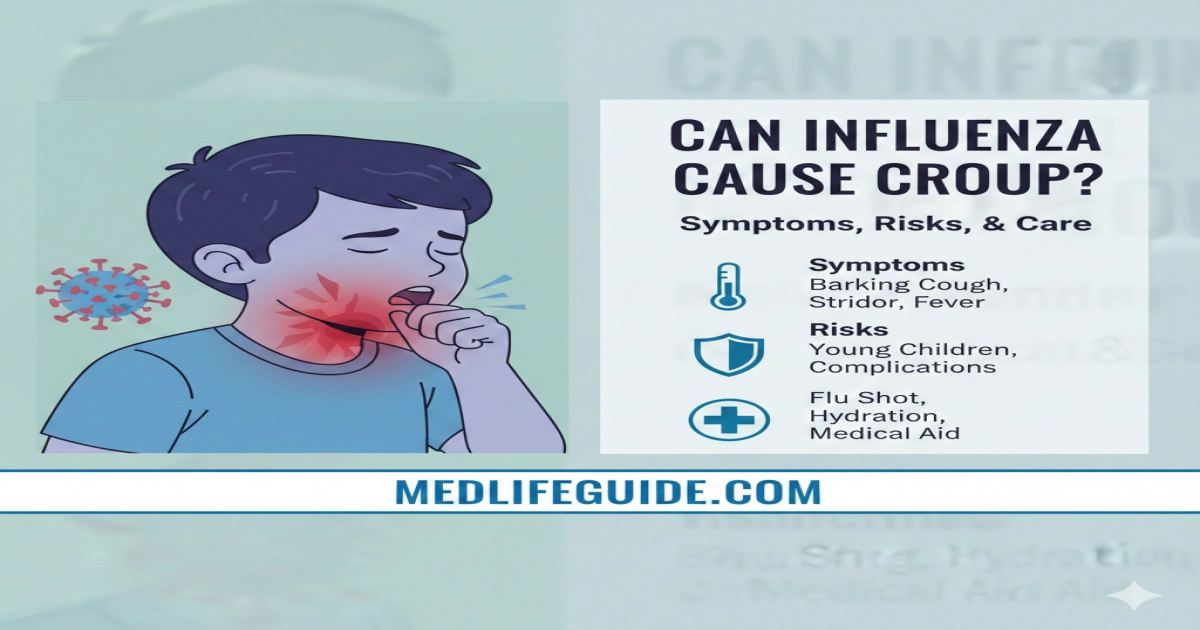
Yes. Influenza can cause croup, especially in children. While parainfluenza viruses are the most common cause, influenza A and B are well-documented causes of croup and may lead to more severe symptoms than classic viral croup.
What Is Croup?
Croup is a viral respiratory illness marked by inflammation of the upper airway, mainly the larynx (voice box) and trachea (windpipe). This swelling narrows the airway and leads to the classic symptoms:
- Barking, seal-like cough
- Hoarse voice
- Noisy breathing (stridor), especially when inhaling
- Symptoms that worsen at night
Croup primarily affects children between 6 months and 3 years but can occur outside this range.
What Is Influenza?
Influenza (the flu) is a contagious viral infection of the respiratory tract caused by influenza A or B viruses. It typically causes:
- Sudden fever
- Body aches
- Fatigue
- Headache
- Cough and sore throat
Unlike the common cold, influenza often causes more intense and systemic symptoms.
Related Topic: Influenza symptoms 2026
Can Influenza Cause Croup?
Yes. Influenza can directly cause croup. Although parainfluenza viruses are responsible for most cases, influenza viruses are a recognized and clinically important cause.
Key points:
- Influenza-related croup is less common but often more severe
- It can cause significant airway swelling
- Hospitalization rates are higher compared to typical viral croup
Medical literature confirms that influenza-associated croup may progress rapidly and requires close monitoring.
How Influenza Triggers Croup
Influenza viruses infect the respiratory lining and trigger a strong inflammatory response. In young children, the upper airway is already narrow. Even mild swelling can lead to:
- Airflow obstruction
- Stridor
- Breathing difficulty
Influenza tends to cause deeper and more aggressive inflammation than parainfluenza viruses, increasing the risk of severe airway narrowing.
Influenza Croup vs Typical Viral Croup
Key Differences
| Feature | Typical Croup | Influenza-Related Croup |
|---|---|---|
| Common virus | Parainfluenza | Influenza A or B |
| Fever | Mild or none | High fever common |
| Severity | Usually mild | Often moderate to severe |
| Hospitalization | Less common | More common |
| Response to treatment | Good | Sometimes slower |
Symptoms of Influenza-Related Croup
Children with influenza-related croup may show a combination of flu and croup symptoms:
- High fever (often above 102°F)
- Barking cough
- Loud inspiratory stridor
- Hoarseness
- Rapid or labored breathing
- Lethargy or poor feeding in infants
Symptoms may escalate faster than classic croup.
Unique Clinical Takeaways
1. Influenza Croup Has a Higher Risk of Rapid Airway Compromise
Influenza causes more intense mucosal inflammation than parainfluenza. This increases the risk of sudden airway obstruction, especially overnight. Parents often report rapid worsening after an initially mild cough.
2. Influenza-Associated Croup Can Mimic Bacterial Tracheitis
Severe cases may resemble bacterial tracheitis due to:
- High fever
- Toxic appearance
- Poor response to standard croup therapy
This overlap makes early differentiation critical in emergency settings.
3. Vaccination Status Is a Key Risk Modifier
Unvaccinated children are significantly more likely to develop severe influenza-related croup. Influenza vaccination reduces:
- Severity of airway inflammation
- Risk of hospitalization
- Need for advanced airway support
This protective effect is consistently reported in pediatric respiratory studies.
Who Is at Higher Risk?
Children at increased risk include:
- Ages 6 months to 3 years
- Unvaccinated against influenza
- History of recurrent croup
- Premature birth
- Underlying airway abnormalities
- Asthma or chronic lung disease
Adults rarely develop croup, but influenza-related laryngotracheitis has been documented in immunocompromised adults.
Diagnosis
Diagnosis is mainly clinical, based on:
- Barking cough
- Stridor
- Flu-like symptoms
Additional tests may include:
- Rapid influenza testing
- Pulse oximetry
- Neck or chest imaging (only if diagnosis is unclear or severe disease suspected)
Routine X-rays are not required in typical cases.
Treatment of Influenza-Related Croup
Standard Croup Treatment
- Single-dose oral or intramuscular corticosteroids (e.g., dexamethasone)
- Nebulized epinephrine for moderate to severe stridor
- Humidified air (supportive benefit)
Influenza-Specific Treatment
- Antiviral therapy (e.g., oseltamivir) when diagnosed early
- Antivirals are especially important in high-risk children
Hospital Care
Hospitalization may be required for:
- Persistent stridor at rest
- Oxygen desaturation
- Poor oral intake
- Severe fatigue or altered mental status
Home Care and Monitoring
For mild cases managed at home:
- Keep the child calm
- Encourage fluids
- Monitor breathing during sleep
- Seek care if stridor occurs at rest or worsens
Cold air exposure may provide temporary relief but does not replace medical treatment.
When to Seek Emergency Care
Immediate medical attention is needed if:
- Breathing becomes labored or noisy at rest
- Lips or face turn blue
- Child becomes lethargic or unresponsive
- Stridor does not improve with treatment
Influenza-related croup can deteriorate quickly.
Prevention
- Annual influenza vaccination for all eligible children
- Hand hygiene and respiratory etiquette
- Avoid close contact with sick individuals during flu season
Vaccination remains the most effective preventive measure.
Prognosis
Most children recover fully within 3 to 7 days. Influenza-related croup may have:
- Longer symptom duration
- Higher chance of recurrence during the same illness
With timely treatment, outcomes are generally excellent.