
Medically Reviewed and Compiled by Dr. [Adam N. Khan], MD.
Quick Historical Overview
The Great Depression was a severe, worldwide economic downturn that began in 1929 and lasted through the late 1930s, with recovery largely occurring during the early 1940s in most industrialized countries. It was triggered by a combination of financial instability
Medically Reviewed and Compiled by Dr. [Adam N. Khan], MD.
Quick Historical Overview
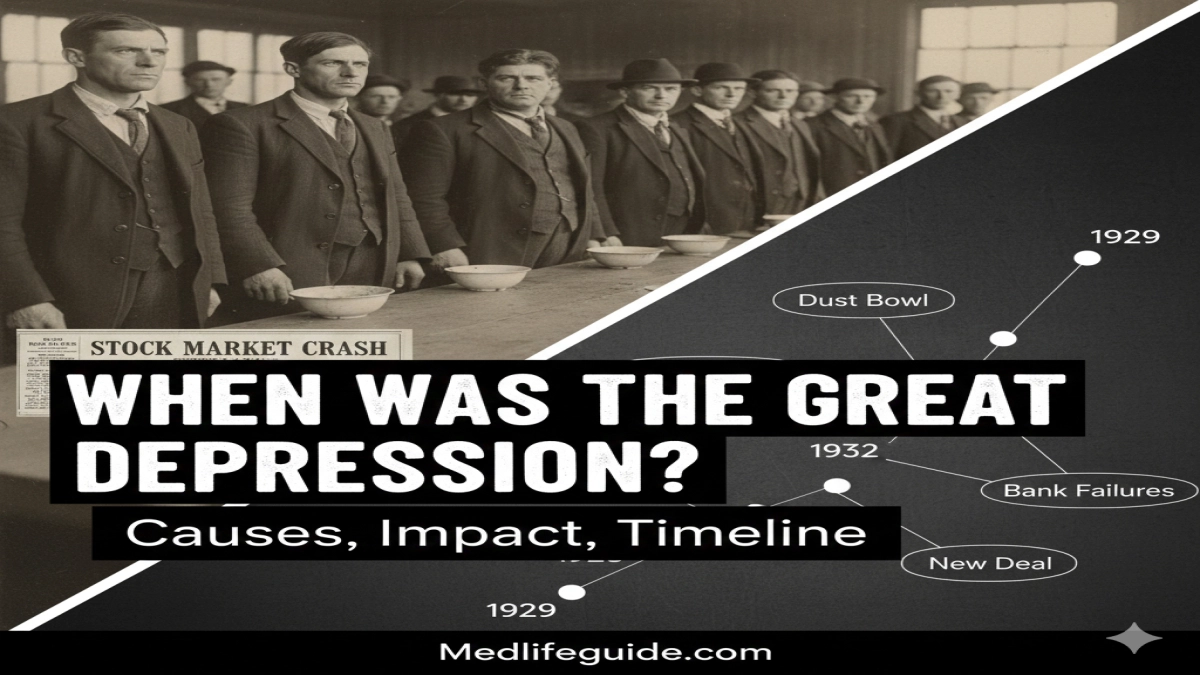
The Great Depression was a severe, worldwide economic downturn that began in 1929 and lasted through the late 1930s, with recovery largely occurring during the early 1940s in most industrialized countries. It was triggered by a combination of financial instability, stock market collapse, bank failures, and systemic economic imbalances, resulting in unprecedented unemployment, poverty, and social disruption.
Introduction: Understanding the Great Depression
The Great Depression represents the most significant economic crisis in modern history. Its effects were multifaceted, spanning economic, social, and psychological dimensions. Beyond financial losses, it profoundly influenced public health, mental well-being, social policy, and global geopolitics.
Clinically and socially, the Great Depression provides an important case study of population-level stressors. Researchers have documented increased incidence of malnutrition, psychological distress, and chronic disease during this period, making it relevant to both historical and medical analysis.
Understanding the Great Depression requires examining its chronology, causes, worldwide impact, policy responses, and lessons learned.
Timeline: When Was the Great Depression?
Early Precursors (1928–1929)
- Stock market speculation intensified in the 1920s.
- High consumer debt and overproduction created economic vulnerability.
The Stock Market Crash (October 1929)
- The U.S. stock market crash, beginning October 24, 1929 (Black Thursday), marked the onset.
- Panic selling intensified on October 29, 1929 (Black Tuesday), wiping out billions of dollars.
1930–1933: Peak of Economic Collapse
- U.S. unemployment rose to approximately 25%.
- Industrial production fell by nearly 50%.
- Widespread bank failures eroded savings.
- Global trade contracted sharply due to protectionist policies such as the Smoot-Hawley Tariff Act (1930).
Mid-1930s: Partial Recovery and Persistence
- Some economic stabilization occurred under government intervention (e.g., New Deal programs in the U.S.).
- Europe faced ongoing economic hardship with high unemployment and social unrest.
Late 1930s–Early 1940s: Recovery
- Full recovery accelerated with industrial mobilization for World War II.
- By 1941, U.S. unemployment fell below pre-Depression levels due to wartime production.
Causes of the Great Depression
Financial Factors
- Over-speculation in the stock market
- Bank failures and poor banking regulations
- Collapse of investment and consumer confidence
Economic Imbalances
- Agricultural overproduction
- Industrial overcapacity
- Declining international demand
Policy Failures
- Contractionary monetary policy
- Protectionist trade policies
- Insufficient social safety nets
Global Context
- Debt burdens from World War I
- Declining exports and global economic interdependence
- Gold standard constraints limiting monetary flexibility
Social and Economic Impacts
Unemployment and Poverty
- Millions lost jobs globally
- U.S. unemployment peaked at 25%
- Breadlines and shantytowns (Hoovervilles) proliferated
Health and Nutrition
- Malnutrition and hunger were widespread
- Increased incidence of infectious disease due to poor living conditions
- Rising mental health issues, including depression and anxiety
Migration and Displacement
- Internal migration in search of work (e.g., Dust Bowl migration in the U.S.)
- Urban-rural population shifts
- Changes in labor demographics, including women entering the workforce
Psychological and Clinical Impacts
- Surge in depression, anxiety, and suicidal ideation
- Chronic stress contributing to cardiovascular and gastrointestinal disorders
- Children affected by malnutrition showed long-term cognitive and developmental delays
Clinical insight: Economic crises can serve as large-scale natural experiments demonstrating links between financial stress and population health outcomes.
Global Reach of the Great Depression
United States
- Stock market crash and bank failures
- New Deal policy interventions
- Massive infrastructure projects (e.g., TVA, WPA)
Europe
- Germany: Unemployment exceeding 30%, political instability
- Britain: Industrial stagnation, social unrest
- France: Moderate decline but slow recovery
Latin America
- Decline in commodity exports
- Economic nationalism and policy shifts
Asia and Africa
- Commodity-dependent economies suffered from falling global demand
- Colonial economies experienced trade contraction and social instability
Unique Clinical Takeaways
1. Long-Term Mental Health Effects
Economic depression increased rates of depression, anxiety, and suicide. Psychological distress persisted even after economic recovery.
Actionable insight: Recognizing economic stressors as determinants of mental health can guide modern public health preparedness strategies.
2. Nutritional Deficits and Developmental Delays
Chronic malnutrition during the Great Depression had measurable effects on child development and adult health outcomes decades later.
Actionable insight: Population-level economic crises require integrated nutritional and health interventions to prevent long-term morbidity.
3. Occupational Stress and Chronic Disease
Unemployment and financial insecurity were linked to cardiovascular disease, hypertension, and other stress-mediated disorders.
Actionable insight: Monitoring population health during financial crises can inform proactive healthcare and social policy measures.
4. Intergenerational Effects
Children who grew up during the Great Depression exhibited long-term socioeconomic disadvantages and increased vulnerability to chronic disease.
Actionable insight: Economic crises have intergenerational health consequences, emphasizing the importance of early-life interventions.
Policy Responses and Lessons Learned
The New Deal (United States)
- Social Security Act
- Banking reforms (FDIC establishment)
- Job creation programs (CCC, WPA)
- Regulatory measures for stock markets
International Approaches
- Abandonment of the gold standard
- Expansion of social welfare programs
- Fiscal stimulus and monetary policy adjustments
Modern Implications
- Early detection of financial instability
- Importance of social safety nets
- Integration of economic policy with public health preparedness
When Was the Great Depression? Summary Timeline
| Year | Event |
|---|---|
| 1928 | Early warning signs: stock speculation, debt expansion |
| Oct 1929 | Stock market crash (Black Thursday & Black Tuesday) |
| 1930–1933 | Peak economic collapse: high unemployment, bank failures |
| Mid-1930s | Partial recovery with government intervention |
| Late 1930s–1941 | Recovery accelerated by industrial mobilization for WWII |
Frequently Asked Questions
Globally, the Great Depression lasted roughly from 1929 to the early 1940s, with varying timelines in different countries.
The combination of the 1929 stock market crash, bank failures, overproduction, debt, and policy missteps triggered the economic collapse.
Yes. Studies documented increased depression, anxiety, and suicide rates, as well as long-term physical health consequences.
Medical Disclaimer
All content published on medlifeguide is intended for informational and educational purposes only and does not substitute professional medical advice, diagnosis, or treatment. Always consult a qualified healthcare provider regarding any medical condition, symptoms, or treatment decisions.