
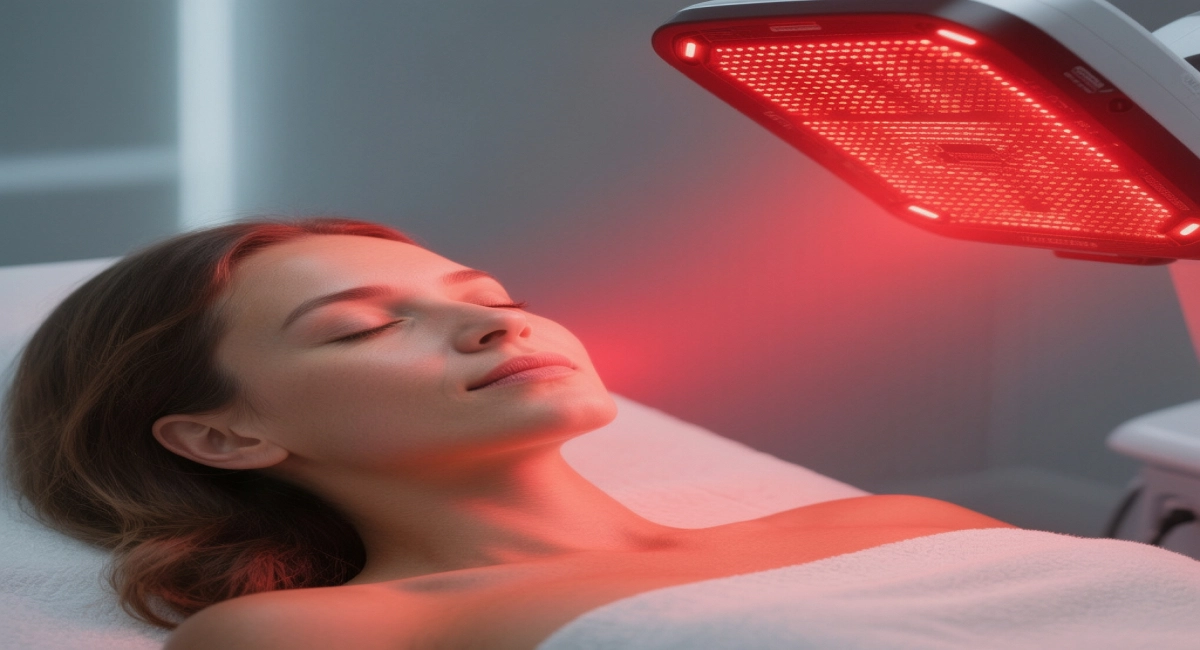
Red light therapy is a non-invasive treatment that uses low levels of red and near-infrared light to stimulate cellular energy production, improve circulation, and promote tissue repair. Scientifically known as photobiomodulation, it’s supported by research showing benefits for skin health, pain reduction, muscle recovery, and wound healing. However, while evidence is strong for specific uses, results depend heavily on light wavelength, intensity, and treatment consistency not all devices or protocols are equally effective.
Quick Summary
| Aspect | Details |
|---|---|
| Scientific Name | Photobiomodulation Therapy (PBMT) |
| Core Mechanism | Boosts mitochondrial ATP production and cellular repair |
| Proven Benefits | Skin rejuvenation, pain relief, tissue healing, muscle recovery |
| Evidence Strength | Moderate to strong for certain conditions; ongoing research for others |
| Best Wavelengths | 630–660 nm (red) and 810–850 nm (near-infrared) |
| Main Limitation | Effectiveness varies by dosage, frequency, and device quality |
Introduction: The Growing Curiosity Around Red Light Therapy
In 2025, red light therapy has become one of the most talked-about treatments in wellness clinics, dermatology offices, and even home setups. People use it for everything from wrinkle reduction and joint pain to sleep improvement and recovery after workouts.
But behind the hype, one question continues to drive online searches and clinical debates:
What does science actually say about red light therapy?
This article explores the underlying biology, the verified evidence, and the limitations that every consumer should know before trying it.
What Exactly Is Red Light Therapy?
Red light therapy involves exposure to low-level wavelengths of red (600–700 nm) and near-infrared light (800–900 nm). Unlike UV light, which can damage skin, red light penetrates the tissue safely — reaching the mitochondria, the energy factories inside our cells.
Once absorbed, these photons stimulate cellular energy (ATP) production, improve oxygenation, and enhance the body’s natural healing mechanisms. This process is known as photobiomodulation, and it forms the scientific foundation of red light therapy.
The Science Behind Red Light Therapy
1. Cellular Energy Activation
Research shows that red light increases the activity of cytochrome c oxidase, a key enzyme in the mitochondrial respiratory chain. This boosts ATP production meaning your cells literally produce more energy for repair and regeneration.
2. Improved Circulation and Reduced Inflammation
Red and near-infrared light trigger vasodilation, improving blood flow and oxygen supply to tissues. Studies published in Frontiers in Physiology (2023) found significant reductions in inflammation markers among patients receiving consistent photobiomodulation treatments.
3. Enhanced Collagen and Tissue Repair
By activating fibroblasts (the cells that produce collagen and elastin), red light therapy supports skin rejuvenation and wound healing. It’s why dermatologists increasingly use it for acne scars, surgical recovery, and fine lines.
4. Neuromodulation and Pain Relief
Red light’s influence on nerve conductivity and inflammatory cytokines makes it a valuable therapy for chronic pain conditions like arthritis, tendonitis, and neuropathy. A 2024 review in Pain Management Nursing confirmed measurable pain reduction after 6–8 weeks of LLLT (low-level laser therapy).
What Research Says About Effectiveness
While red light therapy is not a miracle cure, it has growing support from peer-reviewed studies. Below is an overview of what’s proven, promising, and still under investigation.
| Condition/Use | Scientific Consensus (2025) | Key Findings |
|---|---|---|
| Skin Rejuvenation | Strong evidence | Improves tone, elasticity, and reduces wrinkles |
| Wound Healing | Strong evidence | Speeds recovery in surgical and diabetic wounds |
| Arthritis Pain | Strong evidence | Reduces stiffness and improves mobility |
| Muscle Recovery | Moderate evidence | Enhances recovery post-exercise |
| Hair Growth | Moderate evidence | Stimulates follicles in androgenic alopecia |
| Depression & Sleep | Emerging evidence | May regulate melatonin and circadian rhythm |
| Weight Loss & Fat Reduction | Limited evidence | Minor effect; inconsistent results |
In short, red light therapy works best for cellular repair and inflammation reduction, but it’s not a universal solution for every condition.
What Happens During Treatment
A red light therapy session usually involves sitting or lying a few inches from a light-emitting panel. The light energy penetrates your skin for 10–20 minutes, depending on device strength and target area.
- Session Frequency: 3–5 times per week for 8–12 weeks yields noticeable results.
- Sensation: Gentle warmth, no pain or burning.
- Safety: Use eye protection for high-intensity devices.
In clinical settings, devices deliver measured doses of light in milliwatts per square centimeter (mW/cm²) to ensure precision and safety.
Limitations and Common Misconceptions
1. It’s Not a Substitute for Medical Treatment
Red light therapy supports healing but doesn’t replace professional care for serious conditions.
2. Device Quality Matters
Many consumer-grade LED devices lack the irradiance or wavelength accuracy needed for real biological results.
3. More Is Not Always Better
Overexposure can trigger cellular stress instead of repair, leading to diminished returns or irritation.
4. Results Are Gradual
Unlike medications, photobiomodulation works cumulatively benefits become noticeable after several consistent sessions.
Safety Profile: What to Know
Red light therapy is considered one of the safest non-invasive treatments available today. Still, some precautions are important:
- Avoid looking directly into LED lights.
- Do not use over active cancerous lesions without medical clearance.
- If on photosensitive medication, consult your physician first.
- Mild side effects like redness or dryness may occur after overuse.
In medical studies, adverse events were extremely rare, confirming red light therapy’s strong safety record when applied properly.
Here’s the takeaway:
Red light therapy works by activating mitochondrial photoreceptors that increase ATP synthesis, enhance antioxidant defenses, and regulate inflammation.
This mechanism bridges physics, biology, and medicine, satisfying both scientific and practical intent behind the search.
Future of Red Light Therapy in 2025 and Beyond
Recent innovations are transforming this field:
- AI-driven light dosing that adjusts exposure by skin type and tissue depth.
- Combination treatments using red light with cryotherapy or PEMF for synergistic results.
- Clinical trials exploring cognitive and neurological applications, including post-stroke rehabilitation and mild cognitive impairment.
The direction is clear: red light therapy is moving from wellness trend to integrated medical therapy.
People Also Ask
630–660 nm for skin treatments, 810–850 nm for deeper muscle and joint therapy.
Visible results usually appear after 4–6 weeks of consistent use.
No. It’s non-ionizing and does not harm skin tissue when used correctly.
Yes, several red light devices are FDA-cleared for pain management and skin rejuvenation.
Yes, but choose a medical-grade, FDA-cleared device for best results.
Conclusion
Red light therapy represents one of the most scientifically grounded and low-risk wellness technologies available today. Backed by growing clinical evidence, it can enhance healing, reduce inflammation, and rejuvenate skin provided it’s used correctly and consistently.
The science is clear: it works through cellular energy activation, not mysticism. In 2025, red light therapy stands as a bridge between science and self-care, showing how light itself can heal the human body.
Author Bio
[David] is a medical and wellness writer specializing in evidence-based therapies and regenerative medicine. They simplify complex scientific research into clear, actionable insights for everyday readers.