
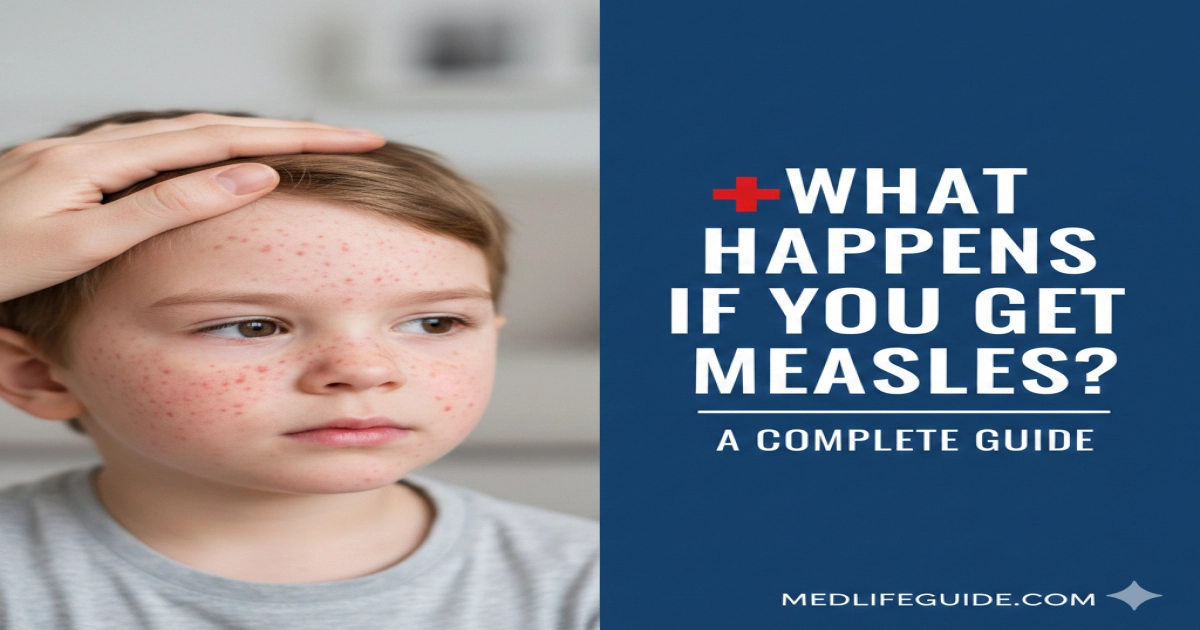
If you get measles, you go through a predictable sequence:
- A symptom‑free incubation period after exposure
- A flu‑like “prodrome” phase with high fever and specific early signs
- The classic rash phase with peak contagiousness
- Recovery—or progression to complications such as pneumonia or brain inflammation
The outcome ranges fro
If you get measles, you go through a predictable sequence:
- A symptom‑free incubation period after exposure
- A flu‑like “prodrome” phase with high fever and specific early signs
- The classic rash phase with peak contagiousness
- Recovery—or progression to complications such as pneumonia or brain inflammation
The outcome ranges from full recovery with rest and fluids to life‑threatening disease, especially in young children, pregnant women, and people with weak immune systems.
[CDC, WHO, Mayo Clinic]
1. What Happens in Your Body After Measles Exposure
Infection and Incubation (Days 0–10+)
- Virus enters through the nose, mouth, or eyes from droplets in the air or on surfaces
- It infects the cells lining the nose and throat
- Then spreads into the bloodstream and throughout the body, especially:
- Lungs
- Lymph nodes
- Skin
- Brain
You feel well during this time, but you are already becoming contagious a few days before any obvious rash.
Example
You sit near an infected coworker on Monday. You feel normal for about 9–10 days, go to work, see family, and think everything is fine. By the time you get a fever the following Thursday, you’ve already exposed your household and colleagues.
2. Early Measles Symptoms: What You Notice First
Prodromal Phase (Usually Days 10–14 After Exposure)
Early symptoms resemble a severe viral illness, but the combination and intensity stand out:
- High fever: often 103–105°F (39.4–40.6°C)
- Dry, hacking cough
- Runny nose with clear or watery discharge
- Red, watery, light‑sensitive eyes (conjunctivitis)
- Extreme tiredness and irritability
A key sign is Koplik spots:
- Tiny white or bluish dots on a red background
- Usually on the inside of the cheeks (opposite the molars)
- Appear 1–2 days before the rash
Example
A 7‑year‑old develops a 104°F fever, nonstop cough, and bright‑red, watery eyes. The parent notices tiny white specks inside the cheek while trying to give fever medicine. The child looks more unwell than with past colds. This pattern—high fever + cough + runny nose + red eyes + cheek spots—is highly suspicious for measles.
3. The Measles Rash: What It Looks Like and How It Spreads
Rash Phase (Usually Days 14–18 After Exposure)
Classic features:
- Starts on the face: around hairline and behind ears
- Spreads downward to:
- Neck and upper chest
- Trunk and back
- Arms and legs
- Eventually hands and feet
- Rash consists of flat red spots (macules), sometimes slightly raised (maculopapular)
- Spots may merge into large blotches
- Fever often peaks when the rash is most intense
- After several days, rash darkens slightly and fades in the same order it appeared, sometimes leaving mild peeling or temporary discoloration
You are highly contagious from:
- 4 days before the rash appears
- Through 4 days after rash onset
Example
An adult with no documented measles vaccination develops 4 days of high fever and cough, then a red rash that starts at the hairline and quickly spreads down the body over 24 hours. They continue going to the gym and grocery store during the first rash day—this period is when they are most likely to infect others around them.
4. How Measles Affects Your Immune System (Even After Recovery)
Measles is not just a rash and fever; it disrupts your immune system:
- The virus infects and destroys memory immune cells
- This causes “immune amnesia”—you lose some protection from infections you were previously immune to
- For 2–3 years after measles, research shows:
- Higher risk of serious infections like pneumonia and diarrhea
- Higher overall risk of hospitalization or death from other infections
[Science, 2019; CDC; WHO]
Practical impact
A child who had measles at age 5 may seem to “catch everything” for the next couple of years and become sicker from infections that were previously mild. This is one reason measles vaccination dramatically reduces overall child mortality worldwide—far beyond preventing the measles illness itself.
Example
A 6‑year‑old who recovered from measles without being hospitalized starts getting repeated ear infections and bronchitis for the next 18 months, needing multiple antibiotics. Before measles, they rarely saw a doctor. This pattern is consistent with post‑measles immune vulnerability.
5. Common Effects You Can Expect If You Get Measles
For otherwise healthy, vaccinated adults who still get infected (rare), or healthy unvaccinated children, these outcomes are frequent:
Expected Course in Uncomplicated Measles
- High fever for 4–7 days
- Rash for 5–6 days
- Severe fatigue lasting 1–2 weeks or more
- Dry cough and sore throat slowly improving after the rash fades
- Appetite loss and weight loss
- Temporary sensitivity to light, especially during conjunctivitis
Most uncomplicated cases start to improve a few days after the rash peaks.
Example
A teen with measles spends about a week mostly in bed with high fever and rash, then another week at home recovering, weak and easily exhausted. They return to school after 2½ weeks but feel tired by mid‑day for another week. This is a typical, uncomplicated recovery.
6. Short‑Term Complications: What Can Go Wrong
Even in high‑income countries, measles causes serious complications in a significant number of cases. Risks are higher for:
- Children under 5
- Adults over 20
- Pregnant women
- People with weakened immune systems
- People who are undernourished or vitamin A deficient
A. Respiratory Complications
- Ear infections (otitis media)
- Very common in children
- Can cause ear pain, temporary hearing loss
- Repeated infections increase the risk of long‑term hearing problems
- Pneumonia (viral or bacterial)
- The most common cause of measles‑related death
- Symptoms: persistent high fever, rapid breathing, chest pain, trouble breathing, bluish lips or face
Example
A 3‑year‑old with measles seems to be improving, then develops faster breathing, grunting, and refuses to lie flat. At the ER, a chest X‑ray shows pneumonia, and they need oxygen and IV antibiotics.
B. Neurologic Complications (Brain and Nerves)
- Acute encephalitis (brain inflammation)
- Usually develops within days to 2 weeks after rash
- Symptoms:
- Confusion
- Severe headache
- Seizures
- Weakness or paralysis
- Can cause permanent brain damage or death
- Febrile seizures
- Triggered by very high fever in young children
- Frightening but often not linked to long‑term epilepsy
- Still require urgent assessment to rule out encephalitis or meningitis
Example
An 8‑year‑old who seemed to be recovering from measles suddenly becomes confused and has a seizure. In the hospital, they are diagnosed with measles encephalitis and need intensive care. Even months later, they struggle with memory and concentration at school.
C. Digestive and Eye Complications
- Severe diarrhea and dehydration
- Particularly dangerous in infants and in settings with limited clean water
- Corneal infection and scarring
- In combination with vitamin A deficiency, can cause permanent blindness
- More common in low‑income countries
Example
A 9‑month‑old with measles in a low‑resource setting has persistent diarrhea and eye discharge. Without prompt rehydration and vitamin A supplementation, the baby becomes severely dehydrated and later shows signs of visual impairment due to corneal damage.
7. Long‑Term and Delayed Effects of Measles
A. Lasting Health Impact After Seeming Recovery
- Weakened immune protection for 2–3 years (immune amnesia)
- Higher risk of:
- Bacterial pneumonia
- Severe diarrhea and other infections
- Hospitalizations from illnesses that previously were mild
[WHO, Science (Mina et al.), CDC]
B. Subacute Sclerosing Panencephalitis (SSPE)
A very rare but fatal complication that appears years later:
- Caused by persistent measles virus in the brain
- Onset: usually 7–10 years after infection (sometimes as early as 2 years)
- Symptoms:
- Behavior changes and school decline
- Memory loss and confusion
- Muscle spasms, jerks, seizures
- Progressive loss of ability to walk, speak, and see
- Leads to coma and death
Risk is much higher for children infected with measles before age 2.
Example
A child who had measles at 10 months appears healthy for years. At age 8, teachers notice falling grades and odd behavior. Over the next 18 months, the child develops muscle jerks and loses the ability to walk independently. Neurologic testing confirms SSPE linked to the measles infection in infancy.
8. What Happens If You’re Pregnant and Get Measles
Measles during pregnancy is dangerous for both mother and baby:
Risks to the Mother
- Higher risk of:
- Severe pneumonia
- Hospitalization
- Need for intensive care
Risks to the Pregnancy and Baby
- Miscarriage
- Preterm birth
- Low birth weight
- Fetal loss (stillbirth)
Pregnant women should not receive the live measles vaccine, so preventing exposure is critical. After high‑risk exposure, doctors may use immune globulin as post‑exposure prophylaxis in some cases. [CDC, ACOG]
Example
A pregnant teacher in the second trimester, without measles immunity, is exposed during an outbreak. She develops measles, is hospitalized with pneumonia, and later delivers a premature baby who needs care in a neonatal intensive care unit.
9. When Measles Becomes an Emergency (Red Flag Signs)
If you or your child has suspected or confirmed measles, seek urgent medical care or emergency services if any of the following occur:
Breathing and Circulation Red Flags
- Trouble breathing, fast or labored breathing
- Chest pain or ribs pulling in with each breath
- Bluish lips or face
- Inability to drink or keep down fluids
Neurologic Red Flags
- Seizure (any shaking episode with loss of consciousness or confusion afterward)
- Severe headache, stiff neck, or bright‑light intolerance that is sudden and extreme
- Confusion, disorientation, hard to wake, or unusual drowsiness
- Sudden behavior changes or weakness in arms/legs
General Red Flags
- Fever ≥ 104°F (40°C) that does not improve with medication
- Fever returning after it had gone down
- No urine for 8 hours in a child, or very dark, minimal urine in an adult
- Signs of dehydration:
- Dry mouth
- No tears when crying
- Sunken eyes or sunken soft spot on infant’s head
- Rash with rapid worsening, areas of bruising, or purple spots
Example
A 4‑year‑old with measles starts breathing faster and cannot speak in full sentences without gasping. Their lips look slightly blue, and they haven’t urinated since morning. This is an emergency and needs immediate evaluation for pneumonia and dehydration.
10. What To Do If You Think You Have Measles
Step 1: Call Before You Go
- Contact your healthcare provider or urgent care by phone first
- Inform them that you suspect measles so they can:
- Arrange a separate entrance or isolation room
- Protect other patients in the waiting area
Step 2: Isolation at Home
Until cleared by a clinician:
- Stay home and avoid all public places (work, school, daycare, public transport, religious gatherings, gyms)
- Stay away from:
- Pregnant women
- Babies
- People with cancer, transplants, HIV, or other immune‑suppressing conditions
- Use a separate room and bathroom if possible
- Ventilate the room—measles virus can linger in the air for up to 2 hours after an infected person leaves
Step 3: Symptom Management (Under Medical Guidance)
- Fluids: frequent small sips of water, oral rehydration, broth
- Fever control: acetaminophen or ibuprofen (check dosing and age restrictions, never give aspirin to children due to Reye’s syndrome risk)
- Darken the room or use sunglasses if eyes are very light‑sensitive
- Ask your clinician about:
- Vitamin A supplementation for children (shown to reduce complications and death in measles, especially where deficiency is likely) [WHO]
- When you are no longer contagious and can safely be around others
Example
An unvaccinated college student with high fever, cough, and a spreading facial rash calls student health services. They are instructed to stay in their dorm room, keep the door closed, and use a mask if leaving the room for bathroom use. A nurse arranges a scheduled, masked entry through a side door for evaluation and testing.
11. How Vaccination Changes What Happens If You’re Exposed
Even though this keyword is about what happens if you get measles, in real life the MMR vaccine largely determines the outcome of an exposure.
If You’re Fully Vaccinated (2 Doses)
- Protection is about 97% against measles infection
- If breakthrough infection occurs, it is usually:
- Milder
- Shorter
- Less contagious
- Less likely to lead to severe complications
If You’re Partially Vaccinated (1 Dose)
- Protection is about 93%
- Still at risk, but far lower than if unvaccinated
If You Are Unvaccinated or Have Unknown Status
- High chance of infection after close contact (up to 90% of susceptible household contacts get measles)
- Much higher risk of:
- Hospitalization
- Pneumonia
- Encephalitis
- Death
[CDC, WHO, NIH]
Example
In a household of four, the unvaccinated 2‑year‑old and unvaccinated parent both develop classic measles with high fever and severe rash. The vaccinated 8‑year‑old and vaccinated other parent remain well despite the same exposure, highlighting the protective effect of prior immunization.
12. Summary: The Real‑World Consequences of Getting Measles
If you get measles:
- You go through an incubation phase, then high fever and respiratory symptoms, then a spreading rash
- You are highly contagious from a few days before the rash until 4 days after it starts
- Even if you recover, your immune system can be weakened for years, increasing your risk of serious infections
- Short‑term complications include ear infections, pneumonia, severe diarrhea, and encephalitis
- Long‑term complications include progressive brain disease (SSPE), especially if infected in early childhood
- Outcomes are worst in:
- Young children
- Adults over 20
- Pregnant women
- People with weakened immune systems or poor nutrition
Because of these risks, public‑health agencies worldwide stress prevention through vaccination, rapid isolation of suspected cases, and urgent care when red‑flag symptoms appear.
Key references for further reading
- Centers for Disease Control and Prevention (CDC) – Measles (Rubeola)
- World Health Organization (WHO) – Measles Fact Sheet
- Mayo Clinic – Measles: Symptoms and Causes
- NIH / NCBI – Measles virus infection and immune amnesia
Thank You For Visiting MedLifeGuide We Value Your Feedback!