
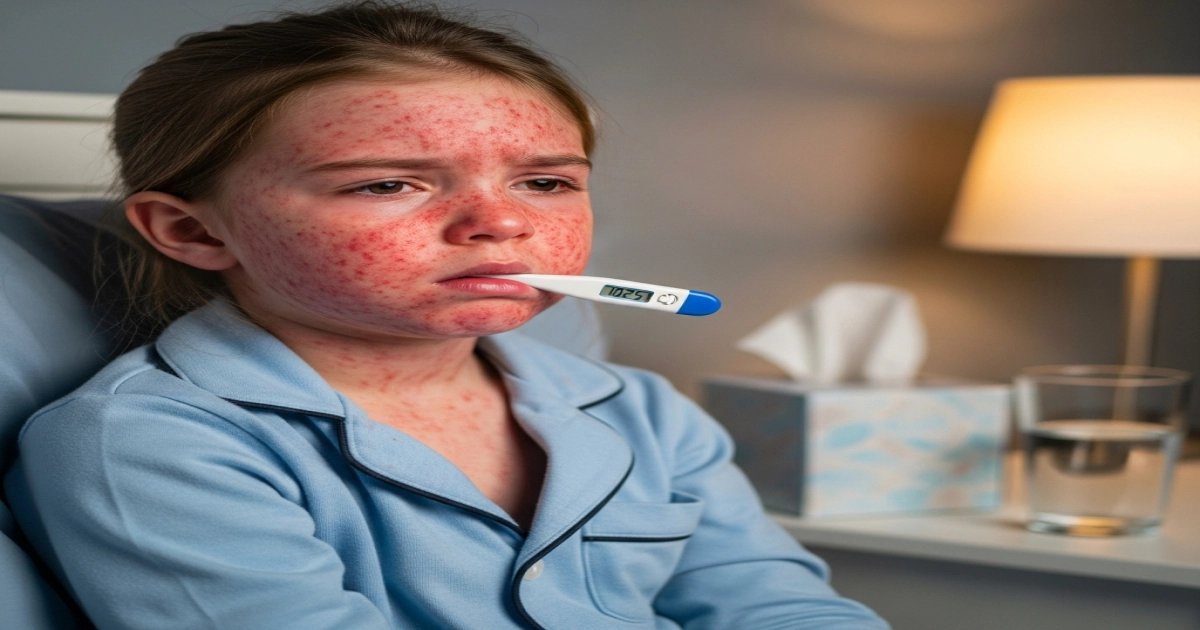
Measles (rubeola) is far more than a simple childhood rash; it is a highly contagious respiratory infection that can lead to severe, life-altering complications. If you suspect exposure, knowing the timeline and warning signs is critical for both individual care and public safety.
The Measles Timeline: A Stage-by-Stage Breakdown
A measles infection typically follows a predictable 10- to 14-day progression.
- Incubation (Days 1–10): After exposure, the virus replicates silently. You will have no symptoms and likely won’t know you are infected.
- The Prodromal Phase (Days 10–14): Symptoms begin with a high fever (often spiking above 104°F), a persistent hacking cough, a runny nose, and red, watery eyes.
- Koplik Spots (Days 12–13): Two to three days after the first symptoms, tiny white “Koplik spots” may appear inside the cheeks—a hallmark sign unique to measles.
- The Breakthrough Rash (Days 14–20): A flat, red, blotchy rash typically begins at the hairline and face, spreading downward over the next few days to the trunk, arms, and feet.
- Recovery and Immunity: Symptoms usually fade within a week. Survivors generally develop lifelong immunity.
Why It’s Dangerous: Common and Severe Complications
While many recover, approximately 1 in 5 unvaccinated people in the U.S. who contract measles require hospitalization.
Immediate Health Risks
- Pneumonia: The most common cause of measles-related death in young children, occurring in about 1 in 20 cases.
- Encephalitis: Roughly 1 in 1,000 people develop brain swelling, which can lead to permanent brain damage, deafness, or intellectual disability.
- Ear Infections and Diarrhea: Common complications that can lead to permanent hearing loss or severe dehydration.
Long-Term “Immune Amnesia”
One of the most dangerous features of measles is its ability to “reset” the immune system. The virus can wipe out the body’s memory of other pathogens, leaving children vulnerable to other diseases they were previously immune to for up to three years.
Rare but Fatal Reactivation (SSPE)
In very rare cases, the virus can lie dormant in the brain and reactivate 7 to 10 years later as Subacute Sclerosing Panencephalitis (SSPE), a progressive and always fatal neurological disease.
What to Do If You Are Exposed
- Call Ahead: Do not walk directly into a clinic. Call your doctor first so they can arrange for you to be seen in an isolation room to protect others.
- Post-Exposure Prophylaxis: If administered within 72 hours of exposure, the MMR vaccine may prevent or lessen the disease.
- Supportive Care: There is no specific antiviral “cure” for measles. Treatment focuses on hydration, rest, and Vitamin A supplements, which the World Health Organization recommends to reduce the risk of complications.
Prevention remains the most effective tool. Two doses of the MMR vaccine are 97% effective at providing lifelong protection.