
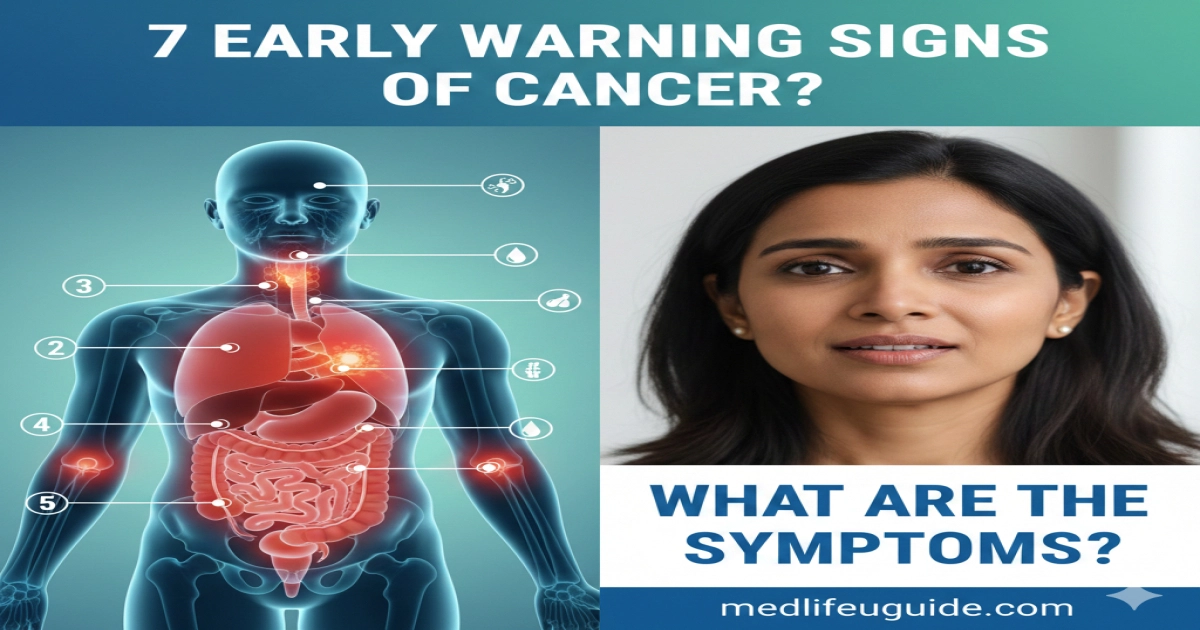
Cancer is not a single disease but a group of more than 100 conditions that share one defining feature: uncontrolled growth of abnormal cells. While symptoms vary by cancer type, location, and stage, medical organizations commonly group early warning signs into seven core symptom categories. Recognizing these symptoms early can significantly improve outcome
Cancer is not a single disease but a group of more than 100 conditions that share one defining feature: uncontrolled growth of abnormal cells. While symptoms vary by cancer type, location, and stage, medical organizations commonly group early warning signs into seven core symptom categories. Recognizing these symptoms early can significantly improve outcomes by prompting timely medical evaluation.
This guide explains what are the 7 symptoms of cancer, why they occur, when they are concerning, and how they are evaluated clinically.
Understanding Cancer Symptoms
Cancer symptoms arise when abnormal cells interfere with normal body functions. Some symptoms are local (caused by a tumor pressing on nearby tissues), while others are systemic (caused by inflammation, immune response, or metabolic changes).
Not all symptoms indicate cancer. However, symptoms that are persistent, unexplained, or progressively worsening require medical assessment.
The 7 Symptoms of Cancer Explained
1. Unexplained Weight Loss
What it looks like
- Losing 10 pounds or more without diet or exercise changes
- Occurs over weeks to months
Why it happens
Cancer cells consume large amounts of energy and can alter metabolism. Certain cancers release substances that suppress appetite or increase calorie burning.
Commonly associated cancers
- Pancreatic cancer
- Stomach cancer
- Lung cancer
- Esophageal cancer
When to act
Unintentional weight loss without a clear cause lasting more than one month.
2. Persistent Fatigue
What it looks like
- Extreme tiredness not relieved by rest
- Interferes with daily activities
Why it happens
Cancer-related fatigue can result from:
- Anemia due to bone marrow involvement
- Inflammatory cytokine release
- Nutrient depletion
Commonly associated cancers
- Leukemia
- Lymphoma
- Colon cancer
Clinical note
Cancer-related fatigue is typically more severe and persistent than lifestyle-related fatigue.
Related topic:
3. Persistent Pain
What it looks like
- Pain that does not resolve or worsens over time
- No clear injury or cause
Why it happens
Pain may result from:
- Tumor pressure on nerves or organs
- Bone destruction
- Inflammation
Examples
- Headaches: brain tumors
- Back pain: spinal or pancreatic cancer
- Bone pain: bone cancer or metastasis
4. Skin Changes
What it looks like
- New moles or changes in existing moles
- Yellowing of skin or eyes (jaundice)
- Darkening, redness, or itching
Why it happens
Skin changes may reflect:
- Direct skin cancers
- Liver or pancreatic dysfunction
- Hormonal effects of tumors
Warning signs
- Asymmetry, irregular borders, color changes, or bleeding in moles
5. Changes in Bowel or Bladder Habits
What it looks like
- Chronic diarrhea or constipation
- Blood in stool or urine
- Painful or frequent urination
Why it happens
Tumors may obstruct or irritate the gastrointestinal or urinary tract.
Commonly associated cancers
- Colorectal cancer
- Bladder cancer
- Prostate cancer
6. Unusual Bleeding or Discharge
What it looks like
- Blood in urine, stool, sputum, or vomit
- Abnormal vaginal bleeding
Why it happens
Cancer can erode blood vessels or disrupt tissue integrity.
Examples
- Coughing blood: lung cancer
- Postmenopausal bleeding: endometrial cancer
7. Lumps or Thickened Tissue
What it looks like
- New lumps under the skin
- Firm, painless masses that persist
Common locations
- Breast
- Neck
- Testicles
- Lymph nodes
Why it happens
Tumors or enlarged lymph nodes due to cancer cell accumulation.
Unique Clinical Takeaways
1. Symptom Clusters Matter More Than Single Symptoms
Single symptoms are often benign. Cancer suspicion increases when multiple symptoms occur together, such as weight loss combined with fatigue and pain. Clinicians assess symptom patterns rather than isolated complaints.
2. Age and Risk Profile Change Symptom Interpretation
The same symptom has different implications depending on age and risk factors. For example:
- Rectal bleeding in a young adult is often benign
- The same symptom in adults over 50 raises concern for colorectal cancer
Risk factors such as smoking, family history, obesity, and occupational exposures heavily influence diagnostic urgency.
3. Symptom Duration Is a Critical Diagnostic Factor
Transient symptoms are rarely cancer-related. Persistence beyond 2–4 weeks, especially with progression, is a key red flag. Clinicians prioritize duration over intensity when deciding further testing.
When to See a Doctor
Seek medical evaluation if you experience:
- Any of the 7 symptoms lasting more than two weeks
- Rapid worsening of symptoms
- Symptoms combined with known cancer risk factors
Early evaluation does not mean a cancer diagnosis, but it ensures serious conditions are not missed.
How Doctors Evaluate Cancer Symptoms
Initial evaluation may include:
- Detailed medical history
- Physical examination
- Blood tests
- Imaging (X-ray, CT, MRI)
- Biopsy if indicated
Early-stage cancers often have subtle symptoms, making clinical vigilance essential.
Medical Disclaimer
This article is for educational purposes only and does not replace professional medical advice, diagnosis, or treatment. Always consult a qualified healthcare provider for symptoms, concerns, or medical decisions.