
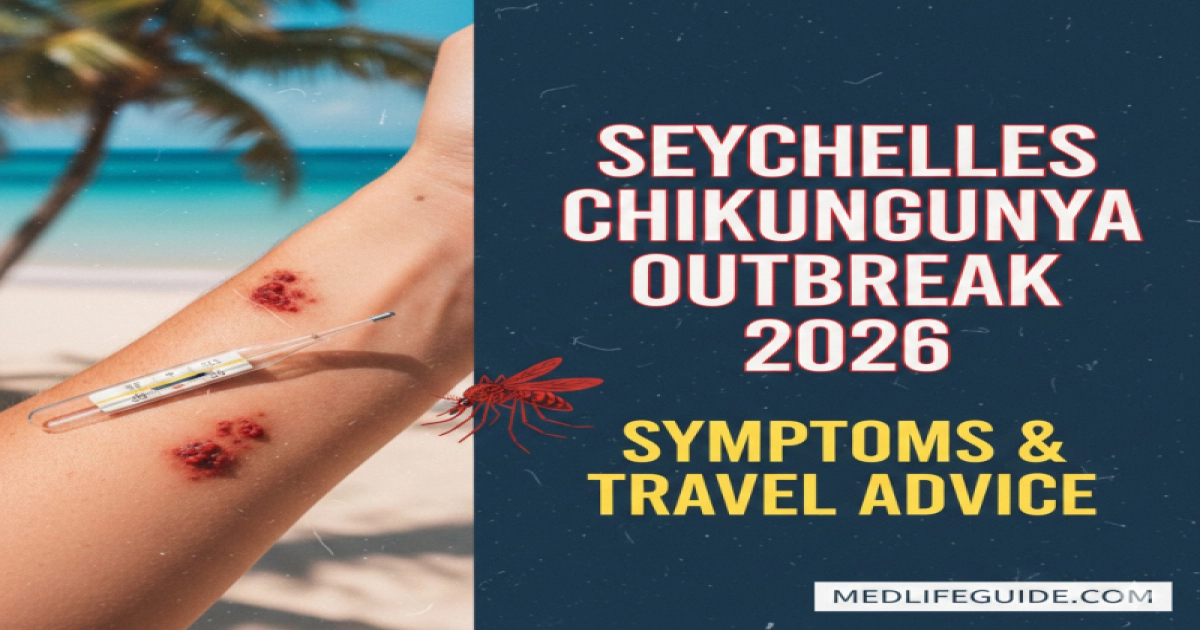
Quick Answer: As of February 2026, the Seychelles is experiencing a significant outbreak of the Chikungunya virus, prompting the U.S. CDC to issue a Level 2 Travel Health Notice. The outbreak, which began in late 2025, is driven by the rainy season and active local transmission by Aedes mosquitoes. Travelers are urged to use EPA-approved repellents, wear protective clothing, and consider the newly available Chikungunya vaccine before visiting.+2
Medically Reviewed and Compiled by Dr. Adam N. Khan, MD.
The 2026 Seychelles Chikungunya Outbreak: A Complete Guide
The Seychelles is famous for its blue waters and white sandy beaches. However, in early 2026, a new health concern has surfaced. Health officials have confirmed a rise in Chikungunya virus cases across the islands. This outbreak has caught the attention of international health groups like the CDC and WHO. If you live in the Seychelles or are planning a vacation there, understanding this virus is the best way to stay safe.+2
What is Happening Right Now?
Since mid-December 2025, the number of Chikungunya cases in the Seychelles has grown steadily. This spike coincided with the tropical rainy season, which typically runs from November to March. The rain leaves behind pools of standing water—the perfect breeding ground for mosquitoes.+1
By February 2026, the U.S. Centers for Disease Control and Prevention (CDC) officially raised the travel alert to Level 2. This means travelers should “practice enhanced precautions.” While the country remains open to tourists, the risk of catching the virus is much higher than usual. Cases have been reported not just in locals, but also in travelers returning to Europe and Asia from islands like Mahé and La Digue.+1
How the Virus Spreads
Chikungunya is not like the flu; you cannot catch it by shaking hands or breathing the same air as a sick person. Instead, it moves through the bite of an infected mosquito.
The main culprits are the Aedes aegypti and Aedes albopictus mosquitoes. These are the same insects that spread Dengue and Zika. They are most active during the day, especially just after sunrise and right before sunset. When a mosquito bites a person who has the virus, it becomes a carrier and can pass the virus to the next person it bites.+1
Recognizing the Symptoms
Symptoms usually show up 3 to 7 days after a mosquito bite. The name “Chikungunya” comes from a word in the Makonde language meaning “that which bends up.” This refers to how people look when they are in pain.+1
Common signs to watch for include:
- Sudden High Fever: A fever that comes on very fast.
- Severe Joint Pain: This is the most famous symptom. It often affects the hands, feet, and knees.
- Muscle Aches: General body soreness.
- Headache: Persistent and sharp pain.
- Skin Rash: Small red spots that may appear on the trunk or limbs.
- Fatigue: Feeling extremely tired for no clear reason.
While most people feel better within a week, the joint pain can be stubborn. For some, the “aches” can last for months or even years, making it hard to do daily tasks.+1
Who is at Most Risk?
Most people recover fully from Chikungunya. However, certain groups should be extra careful because they can get very sick:
- Newborn Babies: Especially those born to mothers who have the virus at the time of delivery.
- Older Adults: People aged 65 and older often have a harder time fighting the virus.
- People with Medical Conditions: If you have high blood pressure, diabetes, or heart disease, the virus can cause more complications.
How to Protect Yourself
There is no “cure” for Chikungunya, so prevention is your best friend. Follow these steps to stay safe:
1. Use Insect Repellent
Apply bug spray that contains DEET, Picaridin, or Oil of Lemon Eucalyptus. Make sure it is EPA-approved. If you are using sunscreen, put the sunscreen on first and the bug spray second.
2. Dress Wisely
Even though it is hot in the Seychelles, try to wear long-sleeved shirts and long pants. Mosquitoes cannot bite through most fabrics.
3. Secure Your Living Space
Stay in places with air conditioning or good window and door screens. If you are sleeping in an area without screens, use a mosquito net treated with insecticide.
4. Eliminate Standing Water
Check around your home or hotel for places where water collects. Empty flowerpots, buckets, and old tires. If there is no water, mosquitoes cannot lay eggs.
5. Consider the Vaccine
In 2026, a vaccine for Chikungunya is available in some countries for people aged 12 and older. If you are traveling from the U.S. or parts of Europe, talk to a travel doctor about getting the shot before you fly.
What to Do If You Get Sick
If you start feeling feverish or your joints hurt after being in the Seychelles, see a doctor right away.
Standard care includes:
- Rest: Give your body time to fight the virus.
- Fluids: Drink plenty of water or electrolyte drinks to stay hydrated.
- Medication: Use over-the-counter medicine like Acetaminophen (Tylenol) to lower your fever and reduce pain.
- Important Note: Avoid Aspirin or Ibuprofen (Advil/Motrin) until a doctor confirms you do not have Dengue fever, as these can increase the risk of bleeding in Dengue patients.
Summary Checklist for Travelers
| Task | Action |
| Pre-Travel | Consult a doctor about the Chikungunya vaccine. |
| Packing | Bring DEET-based repellent and long-sleeved clothing. |
| During Stay | Keep windows closed/screened and empty standing water. |
| Post-Travel | Monitor your health for 14 days after returning home. |
The Seychelles remains a beautiful destination, but the 2026 outbreak reminds us that nature requires respect. By staying informed and taking simple steps to avoid mosquito bites, you can enjoy the islands while keeping your health a top priority.