
Medically Reviewed and Compiled by Dr. Adam N. Khan, MD.
In a historic leap for medicine, researchers have developed a “universal donor kidney.” By using special enzymes to strip away blood-type markers, they can turn a Type A or Type B kidney into a neutral “Type O” organ. This means a kidney from almost any donor could soon b
Medically Reviewed and Compiled by Dr. Adam N. Khan, MD.
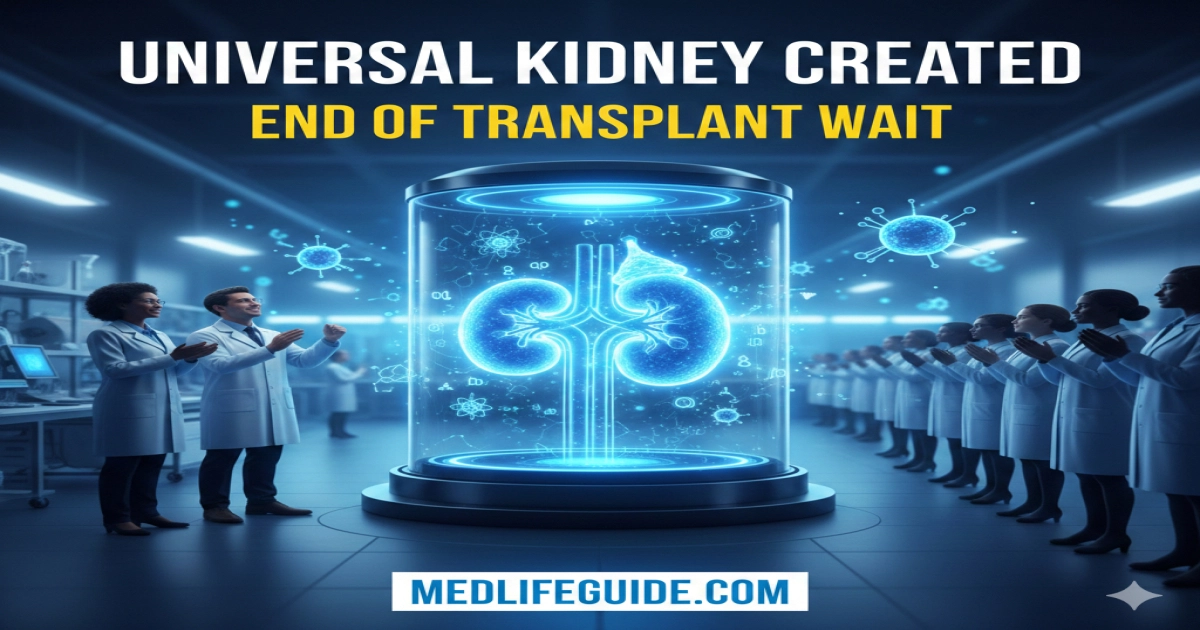
In a historic leap for medicine, researchers have developed a “universal donor kidney.” By using special enzymes to strip away blood-type markers, they can turn a Type A or Type B kidney into a neutral “Type O” organ. This means a kidney from almost any donor could soon be safely given to any patient, potentially ending the years of waiting that many people face today.
The Breakthrough: A Kidney for Everyone
For decades, the biggest hurdle in organ transplants has been the “blood type barrier.” If you have Type O blood, you can usually only receive a Type O kidney. Because Type O kidneys are also given to people with other blood types, the wait for Type O patients is often years longer than for anyone else.+2
But in early 2026, the medical world is buzzing with news of a “universal kidney.” A team of scientists from Canada and China has successfully used molecular technology to change the “identity” of a donor kidney. They have essentially figured out how to make an organ invisible to the recipient’s immune system.+1
How Do They Do It?
Think of blood types like different colors of paint on a car. If a patient’s body sees a “red” (Type A) kidney but needs a “blue” (Type O) one, the immune system attacks it immediately.
The scientists found a way to “strip the paint.” They used two powerful enzymes—acting like tiny molecular scissors—to snip off the sugar molecules (antigens) on the surface of the kidney’s blood vessels. Once these sugars are gone, the kidney looks like a neutral Type O organ.
“It’s like removing the red paint from a car and uncovering the neutral primer,” says Dr. Stephen Withers, a lead researcher on the project. “Once that’s done, the immune system no longer sees the organ as foreign.”
Testing the “Universal” Organ
The team didn’t just stop at a lab bench. They tested this “universal” kidney in a human model—a patient who was clinically brain-dead whose family gave permission for the study.
The results were incredible:
- Instant Function: The kidney started working right away, filtering blood and making urine.
- No “Hyper-Rejection”: Usually, a mismatched kidney is destroyed by the body in minutes. This modified kidney lasted for days without that violent reaction.
- The “Reappearance” Challenge: By the third day, some of the original blood-type markers began to grow back. While this caused a small immune response, it was much weaker than a normal rejection.
Why This Matters for Patients
Currently, over 90,000 people in the United States alone are waiting for a kidney. Sadly, about 13 people die every single day because a matching organ didn’t arrive in time.
1. Shorter Wait Times
If every donated kidney becomes “universal,” doctors won’t have to wait for a perfect blood-type match. This could cut years off the waiting list, especially for people with Type O blood who currently face the longest delays.
2. Fewer Drugs
Patients who get transplants usually have to take heavy “anti-rejection” drugs for the rest of their lives. These drugs can have harsh side effects. A universal kidney that the body doesn’t recognize as “foreign” might eventually require much lower doses of these medicines.
3. More Lives Saved
This technology doesn’t just apply to kidneys. The same “molecular scissors” could potentially be used for hearts, lungs, and livers, making every donated organ a potential match for anyone in need.
What Happens Next?
While the 2025 and 2026 breakthroughs are massive, we aren’t quite at the point where every hospital can do this. Scientists are now working on:
- Staying Power: Finding ways to keep the blood-type markers from growing back so the kidney stays “neutral” forever.
- Gene Editing: Some teams are using CRISPR (a gene-editing tool) to change the DNA of the organ so it never produces those “red paint” markers again.
- Clinical Trials: More tests with living volunteers are expected to start soon to ensure the process is 100% safe for long-term use.
The dream of a world where “no one dies waiting” is closer than ever. This isn’t just a lab experiment anymore; it is the beginning of a new era in human health.
Medical Disclaimer: This article is for informational purposes only and does not constitute medical advice. Always seek the advice of your physician or other qualified health provider with any questions you may have regarding a medical condition or organ transplantation.
How the Universal Kidney Works This video explains the science of removing blood-type markers and why it is a game-changer for the global organ shortage.